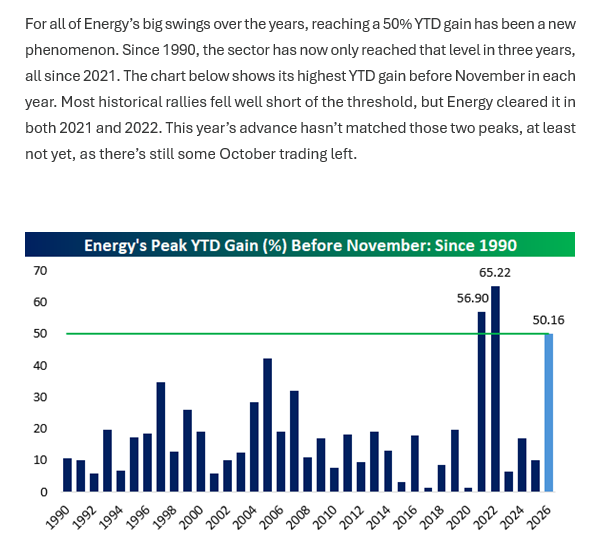
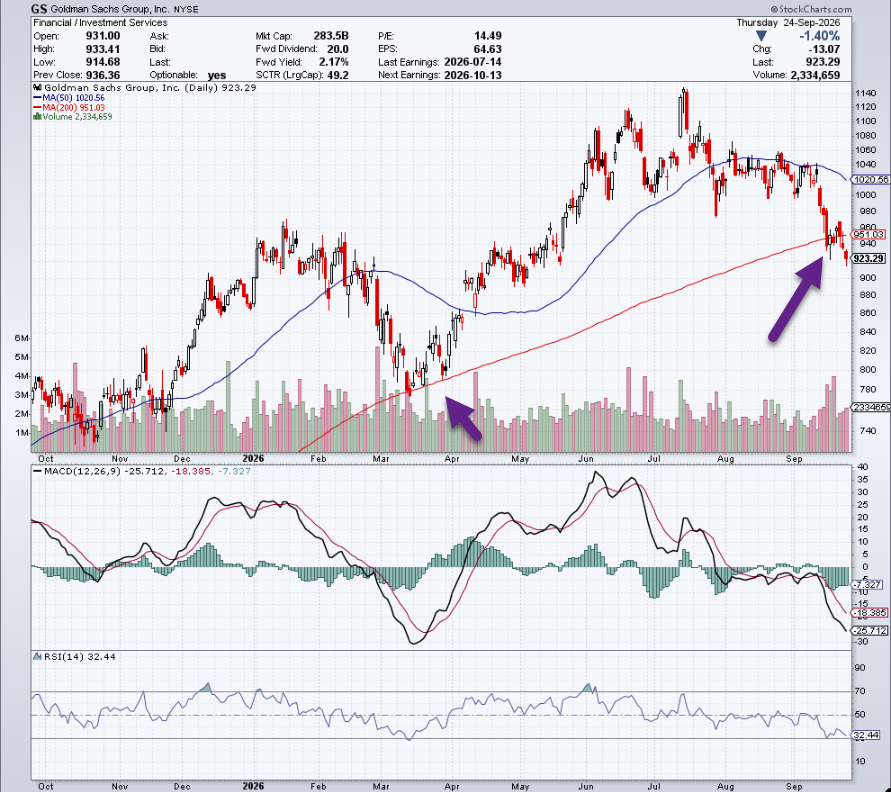
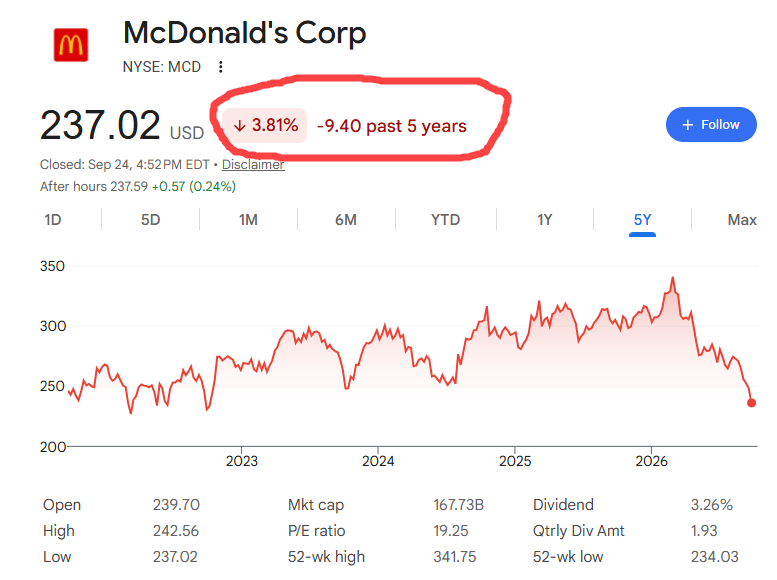
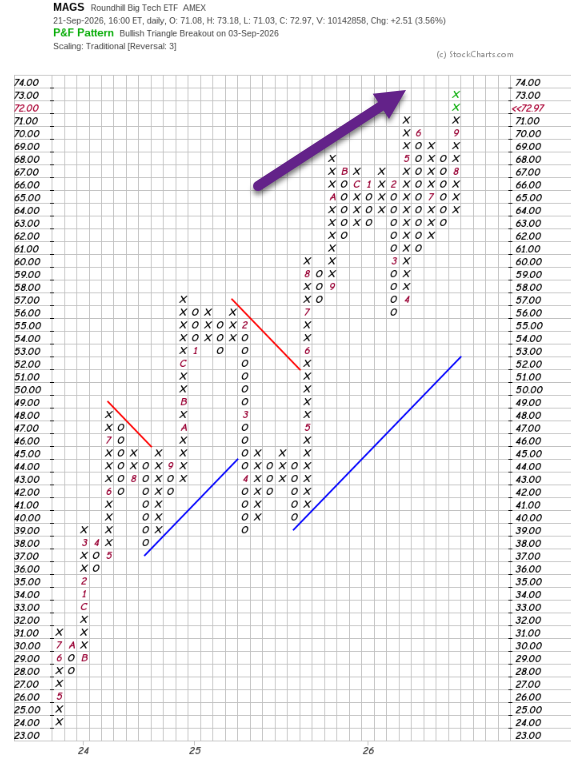
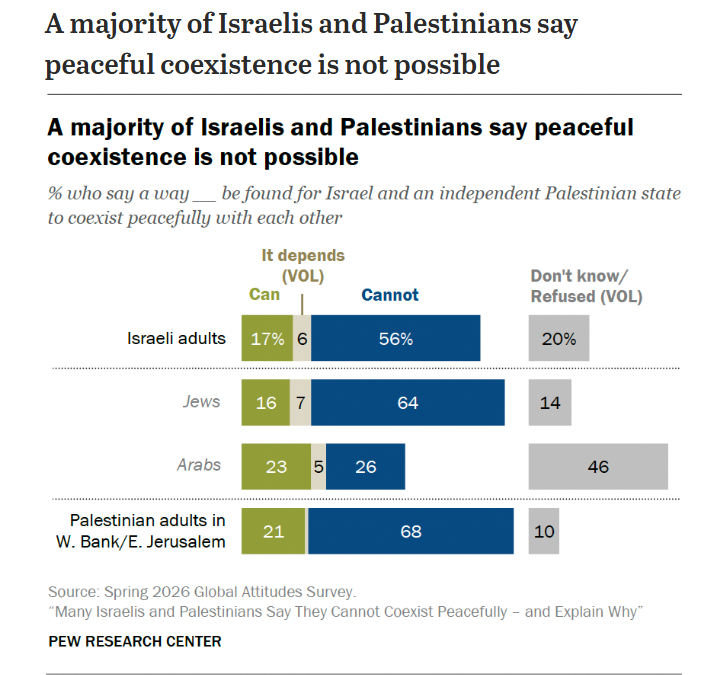
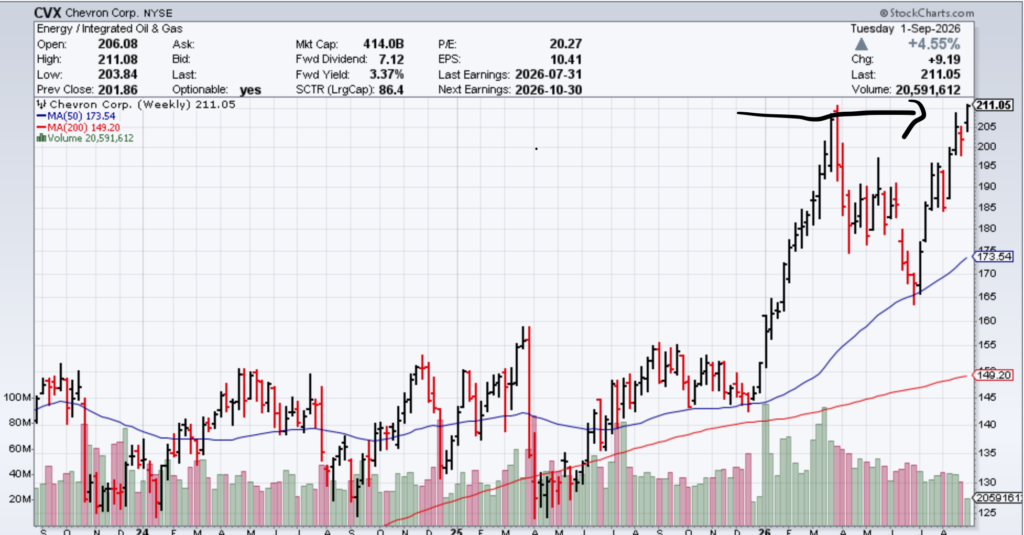
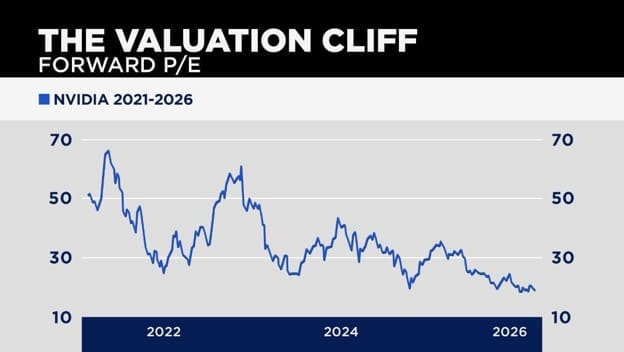
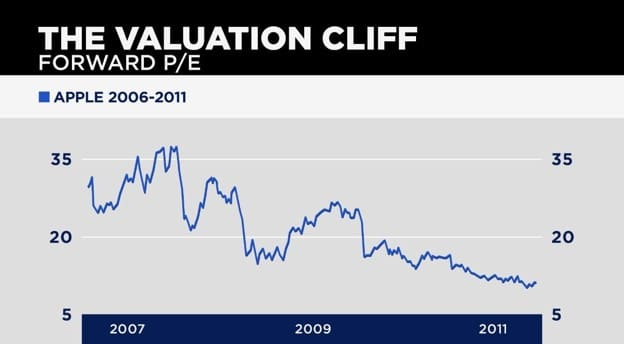
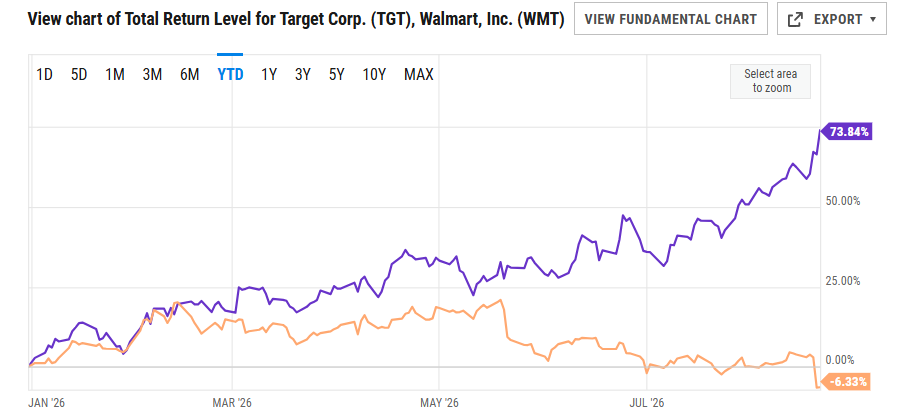
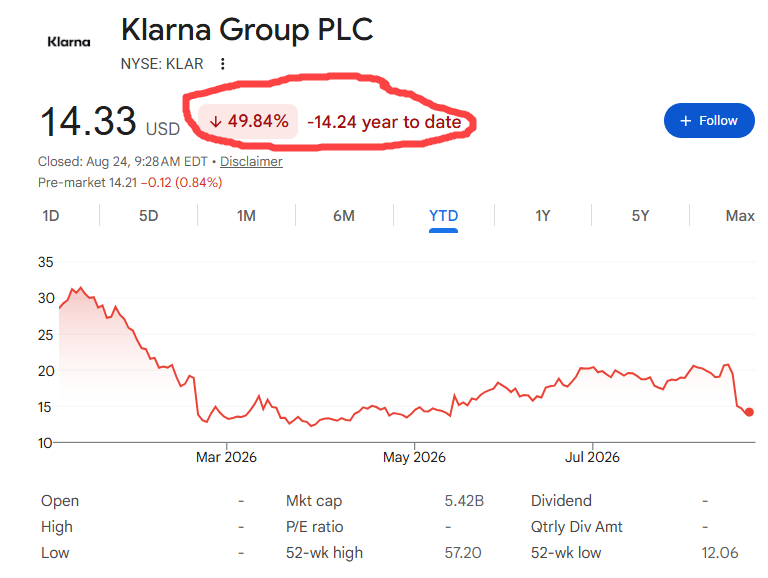
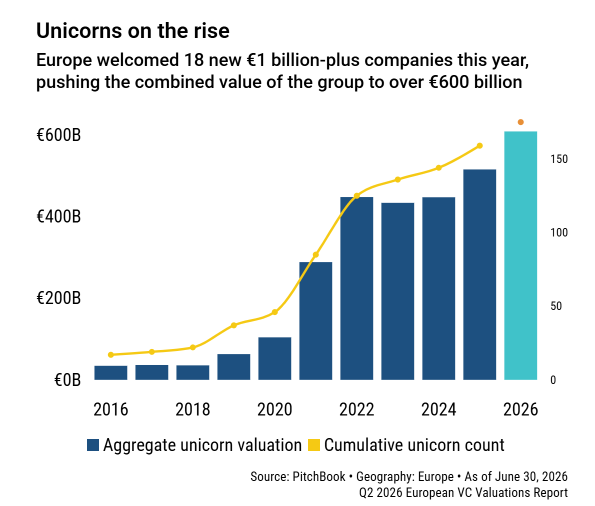
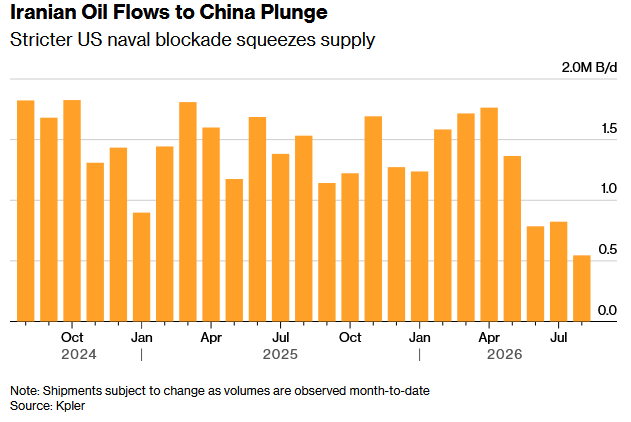
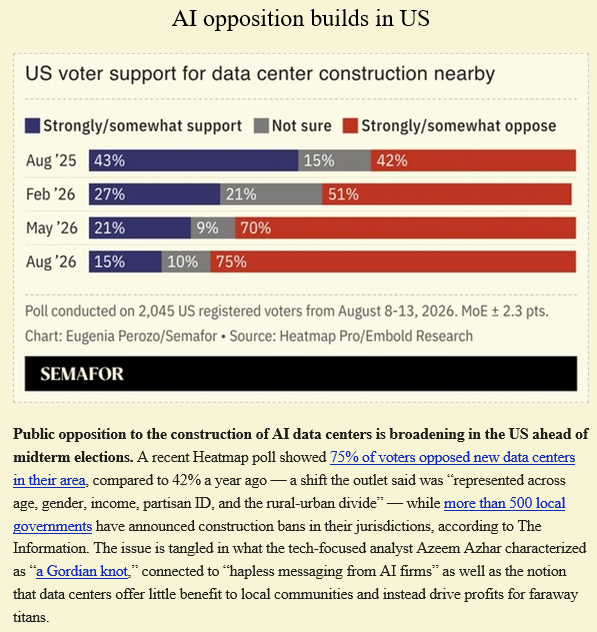
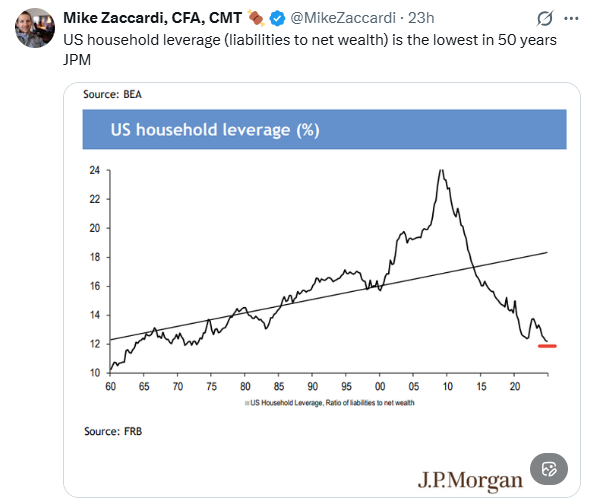
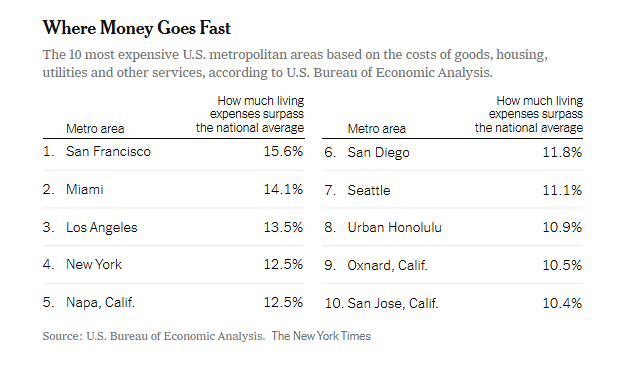
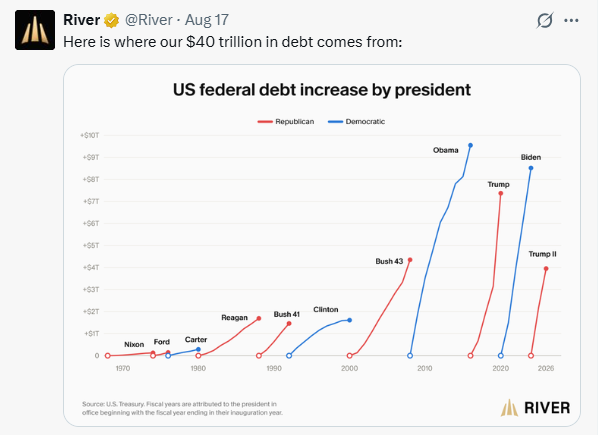
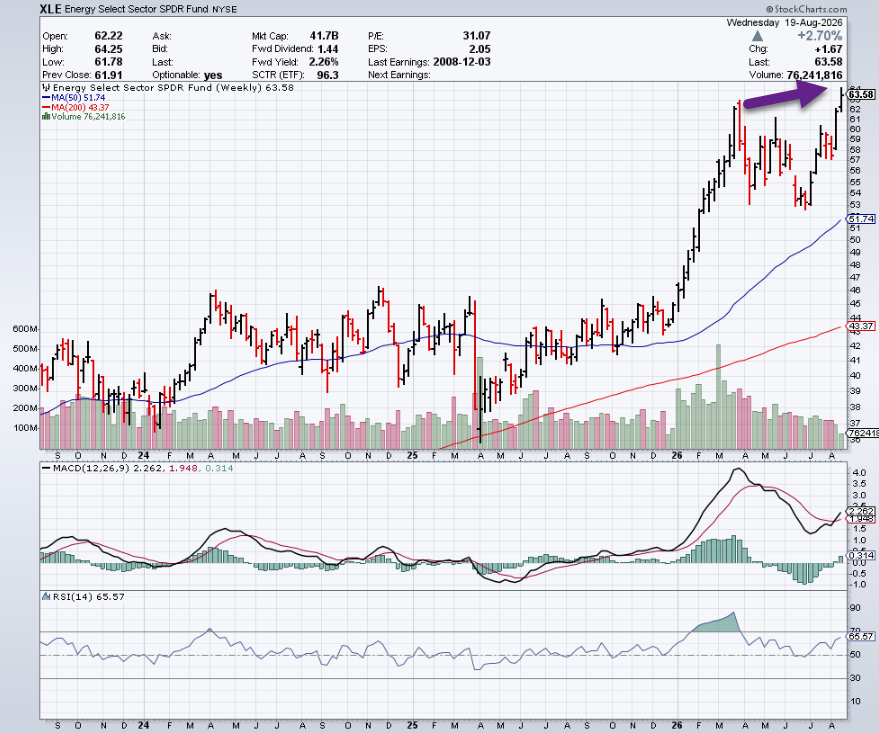
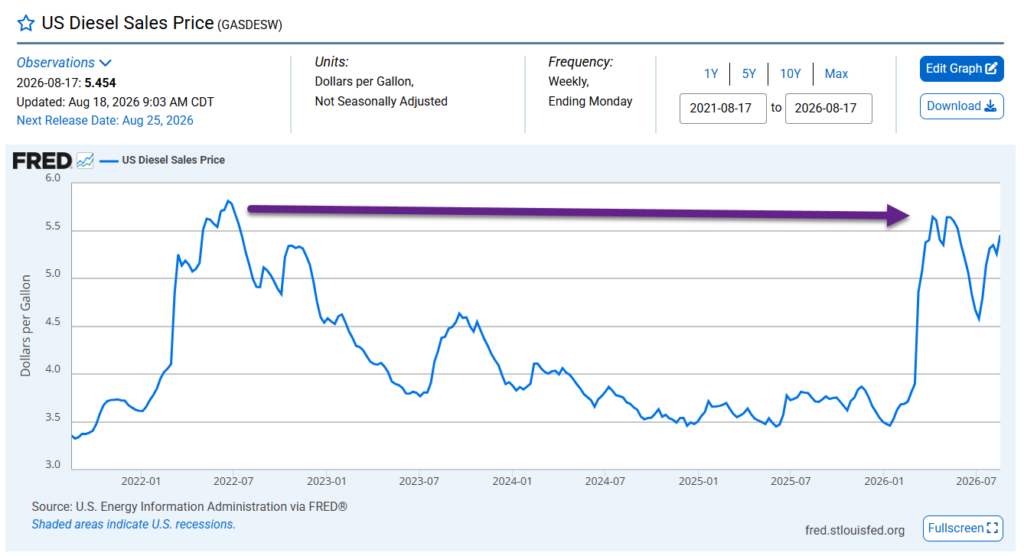
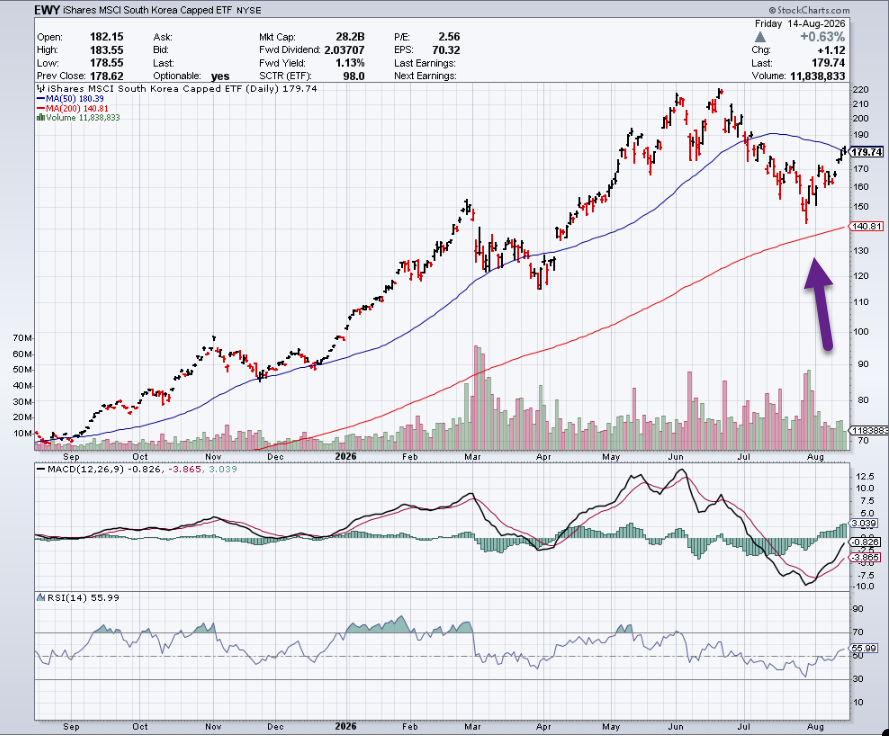
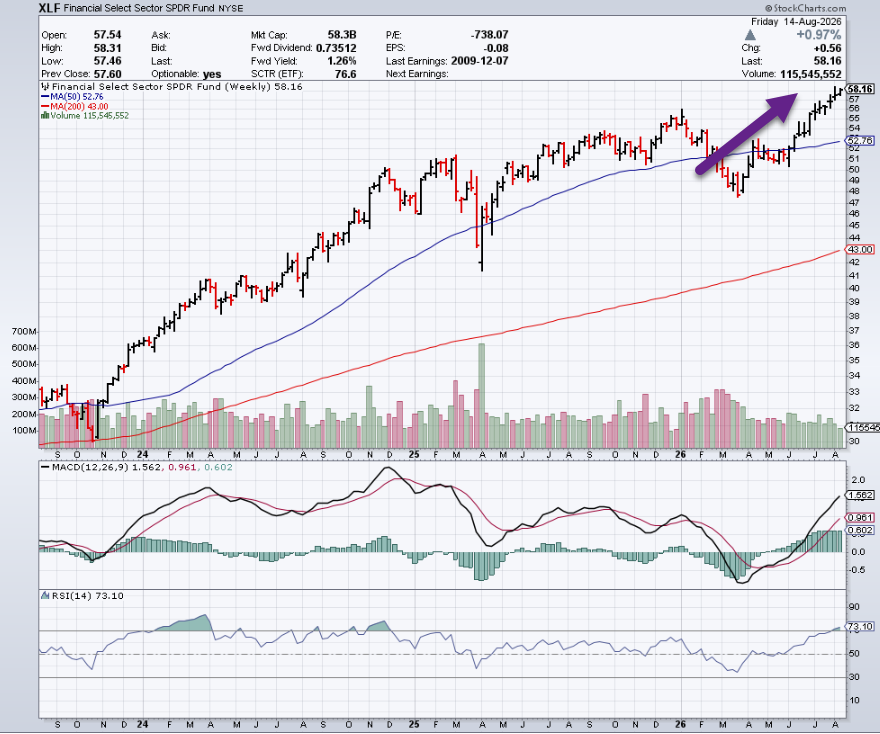
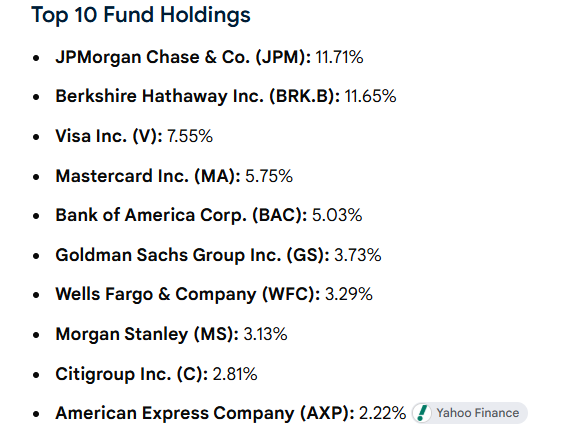
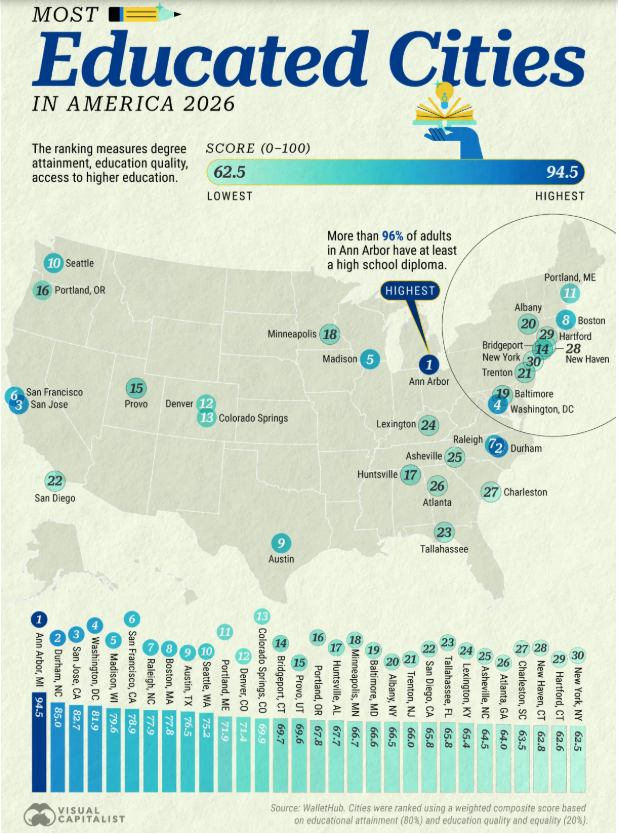
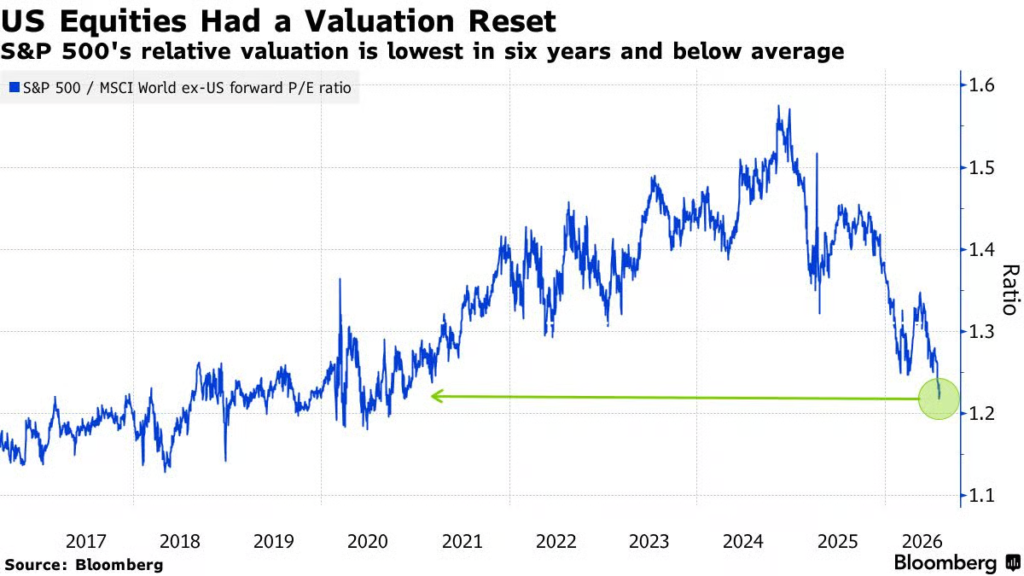
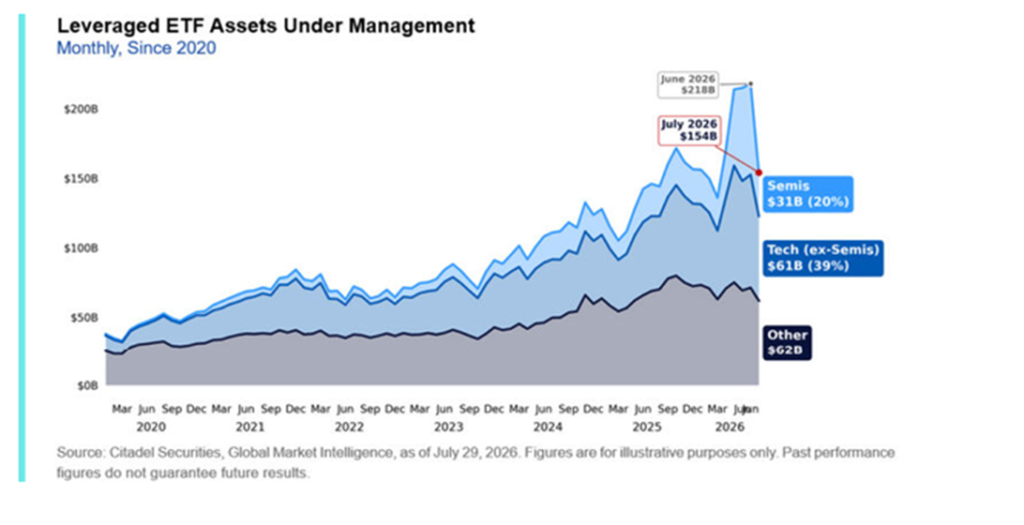
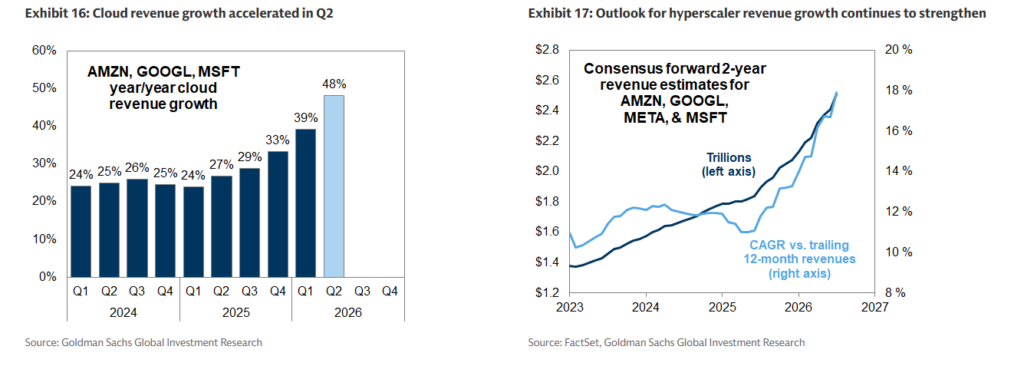
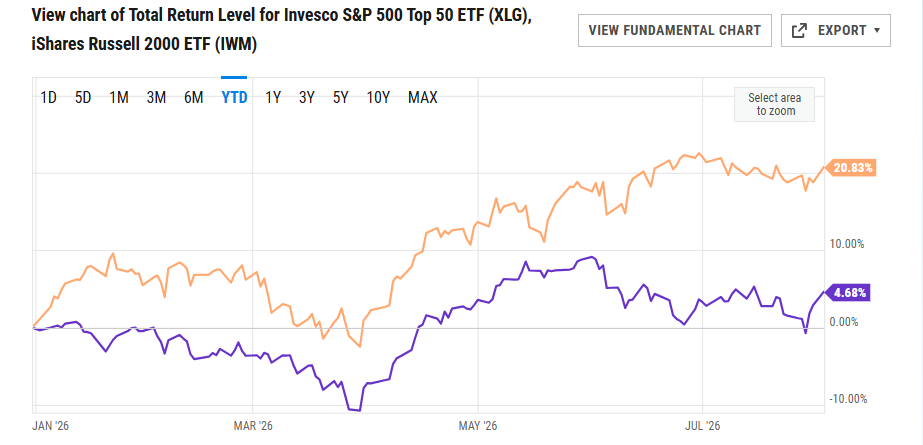
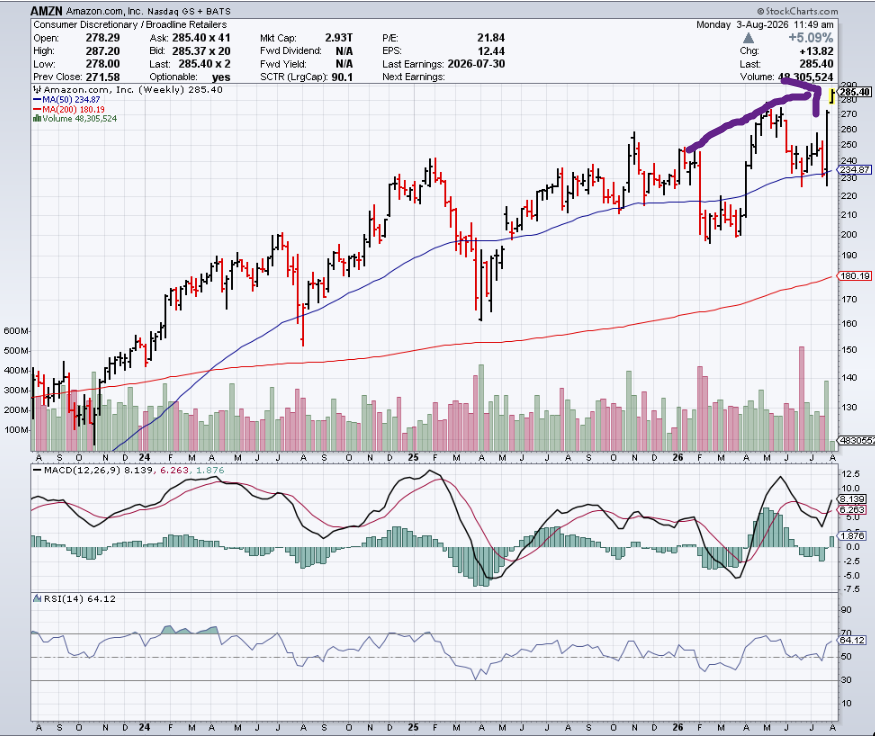
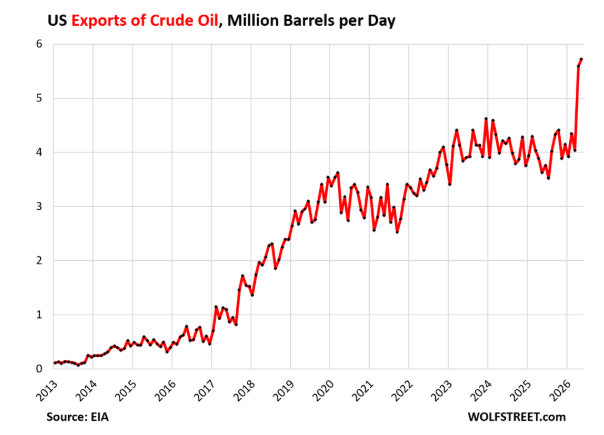
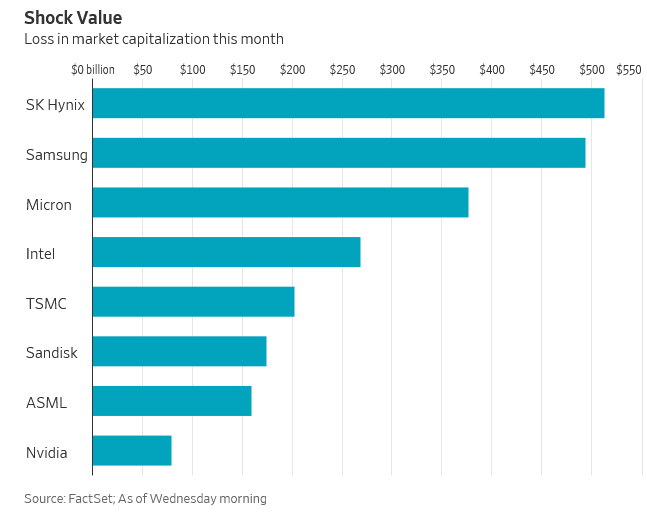
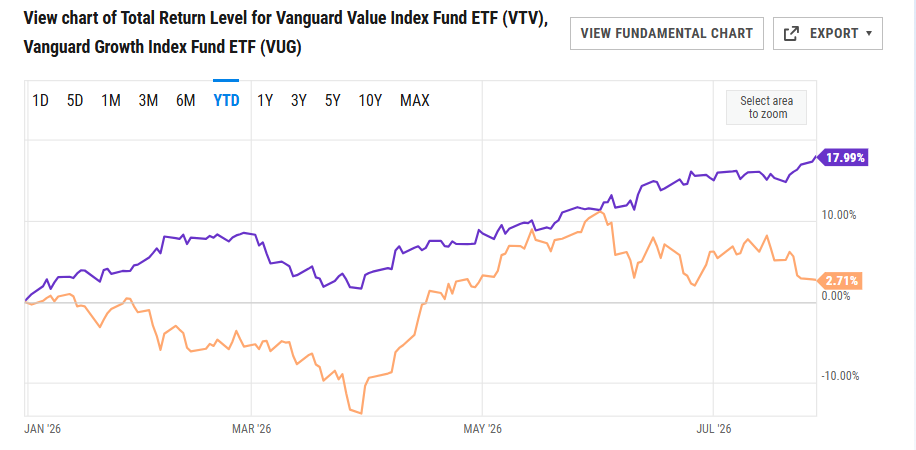
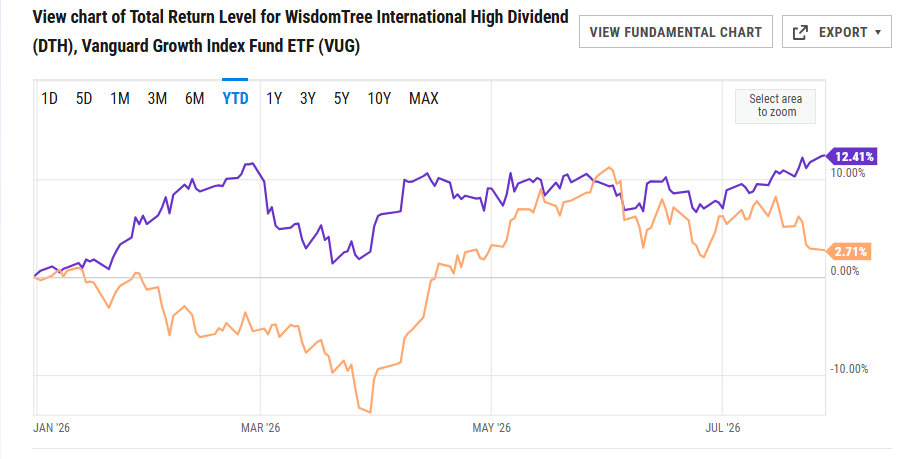
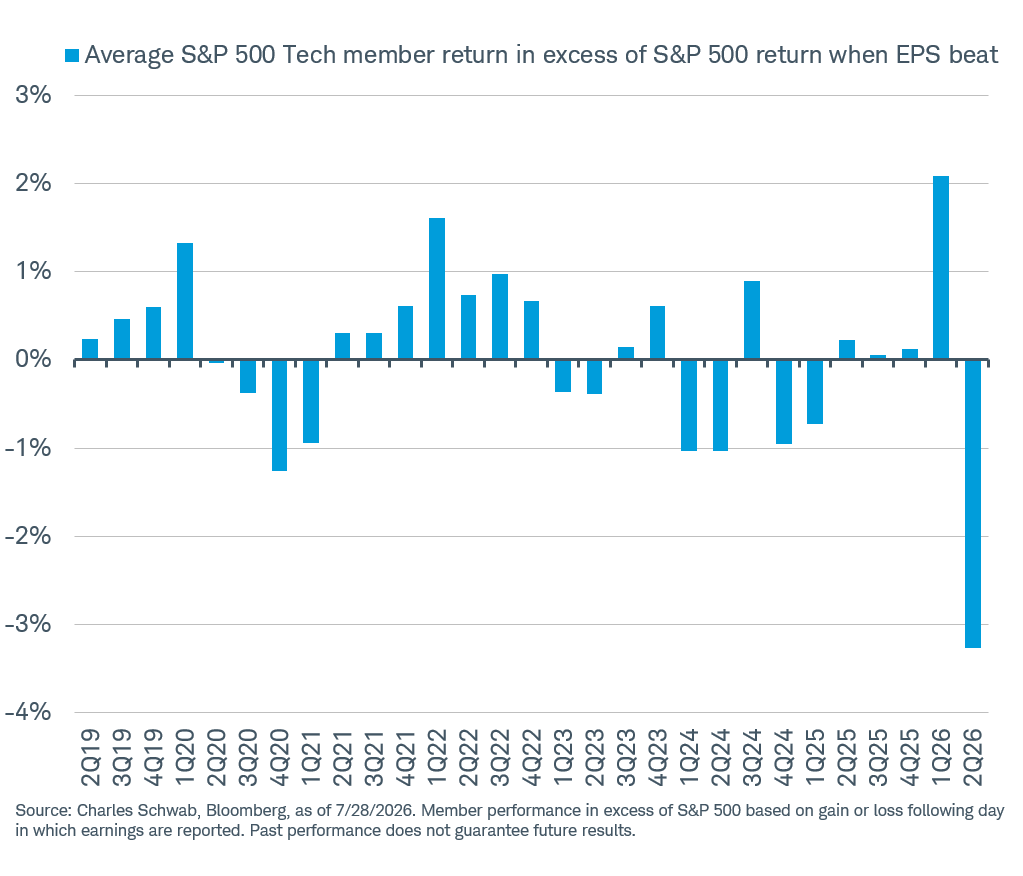
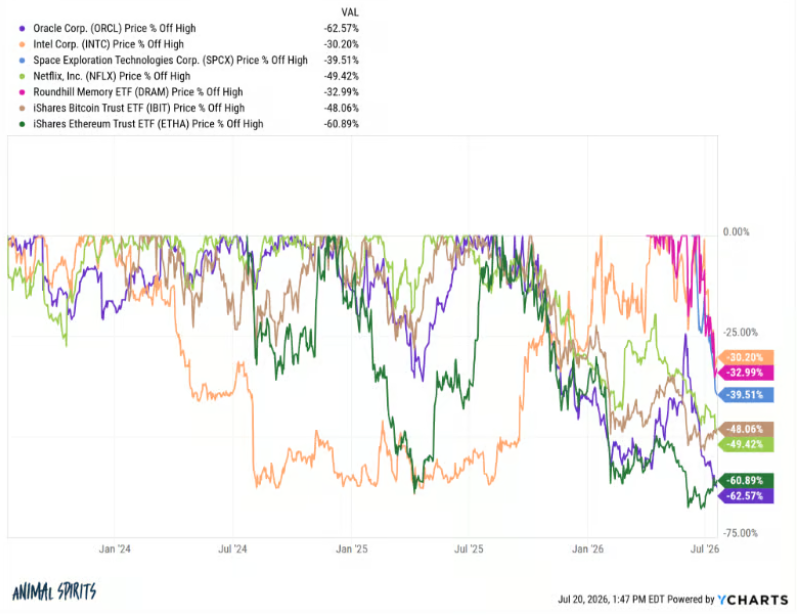
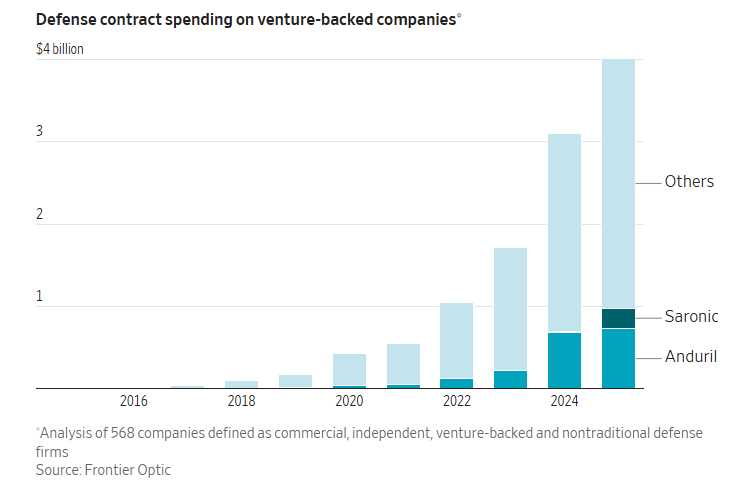
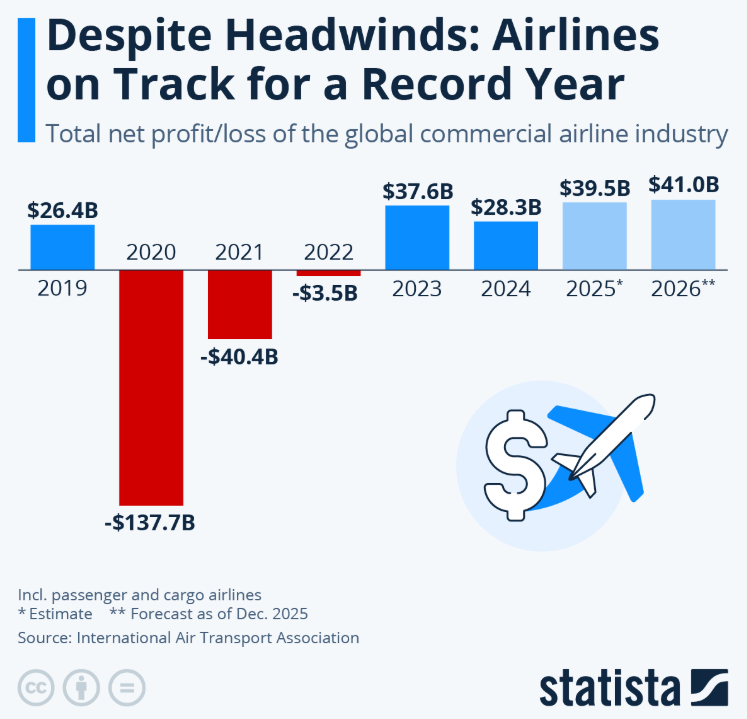
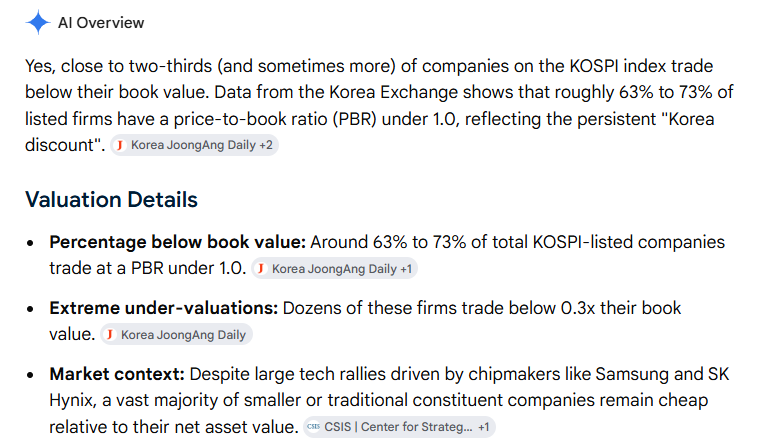
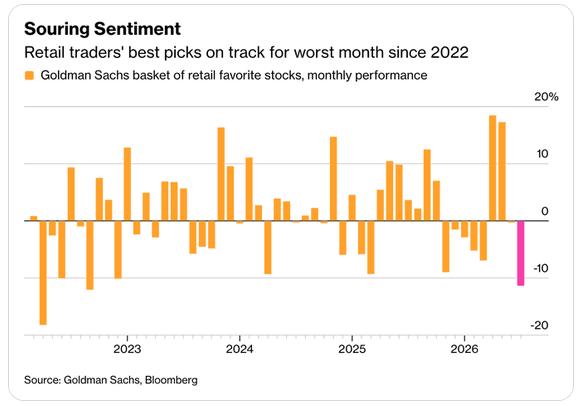
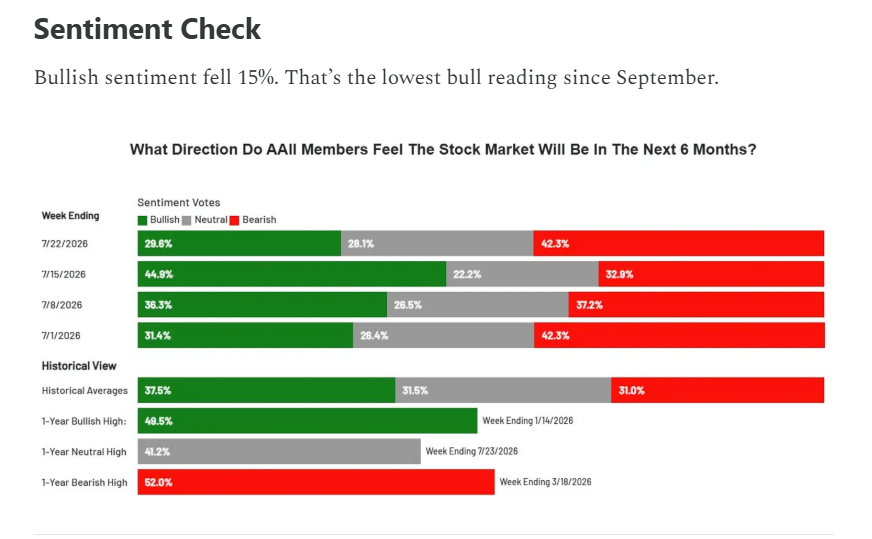
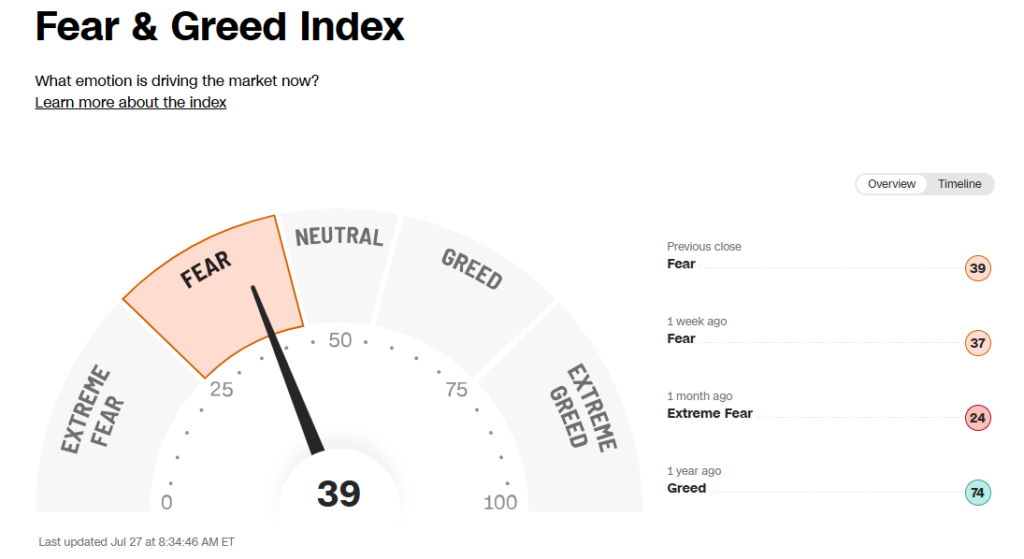
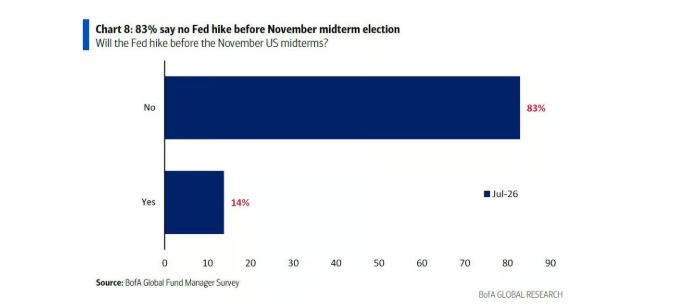
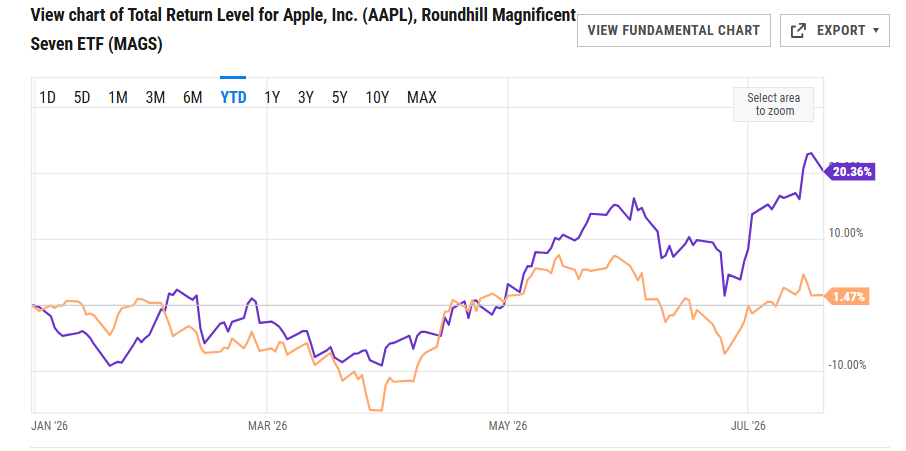
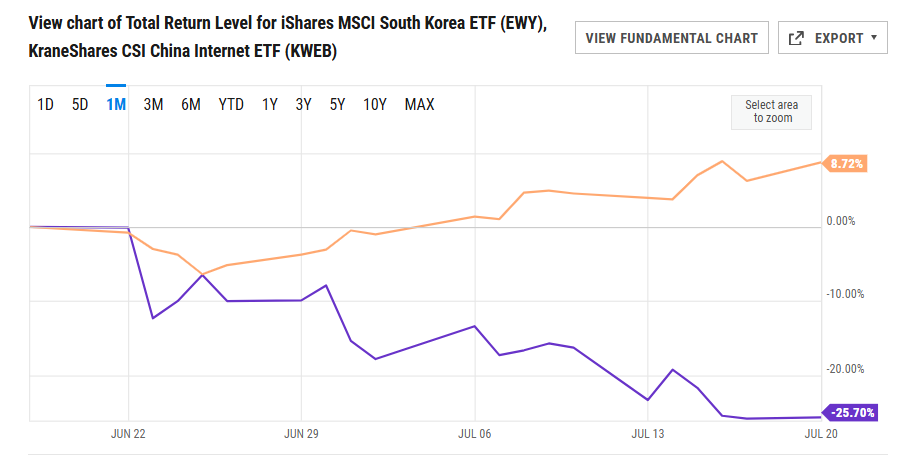
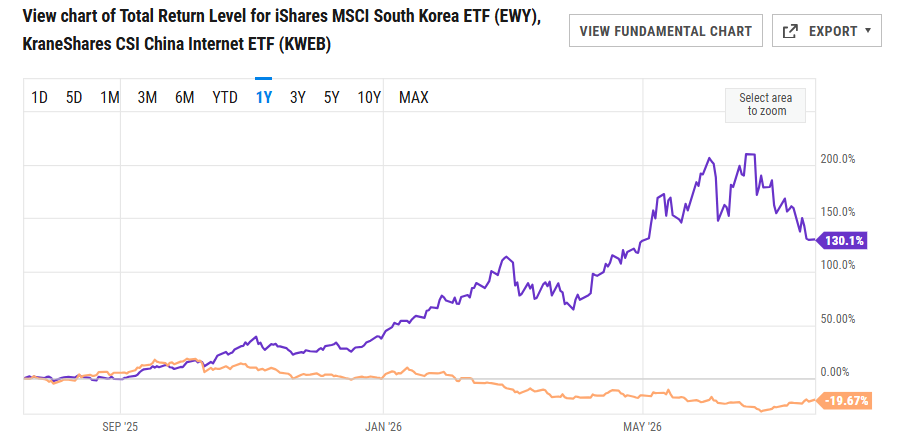
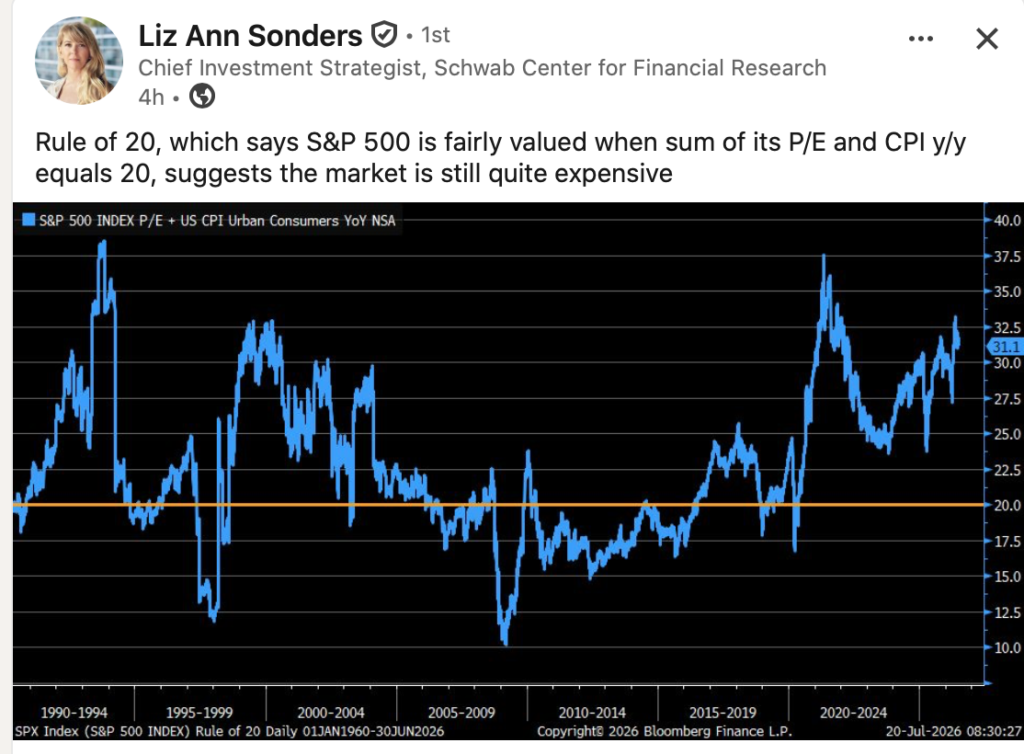
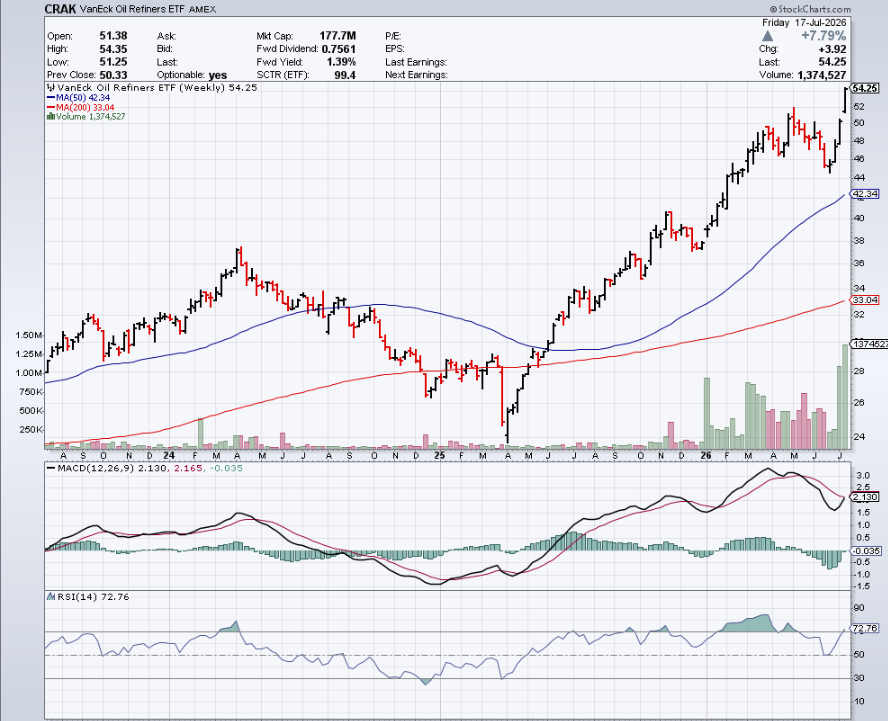
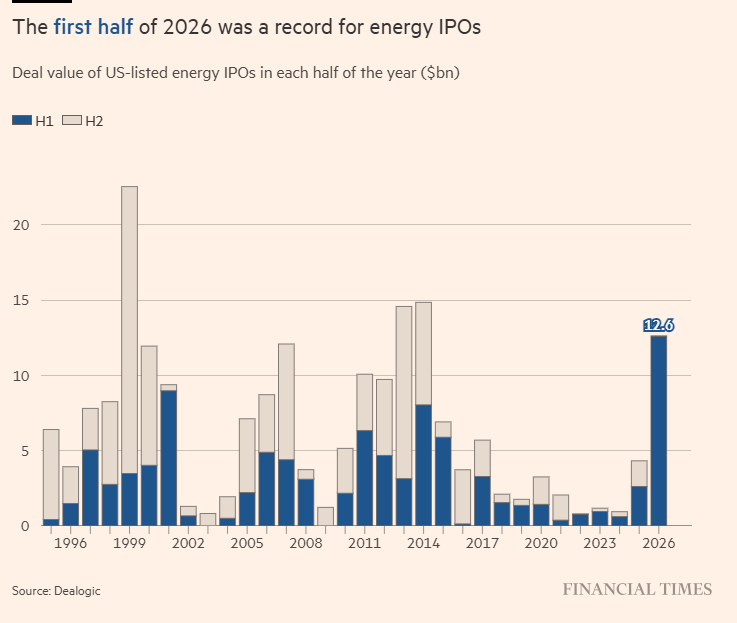
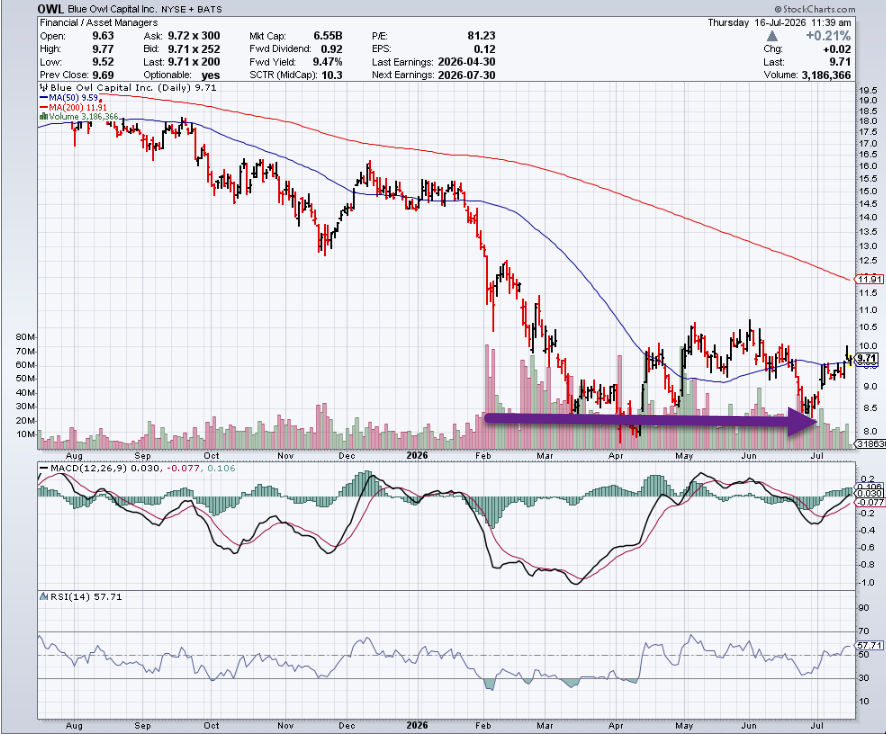
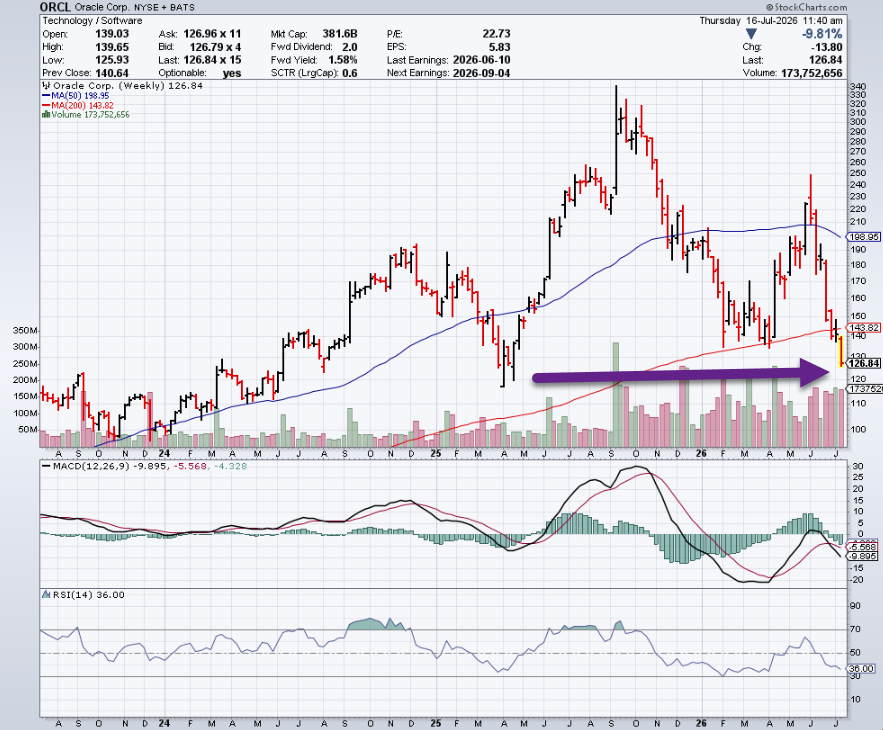
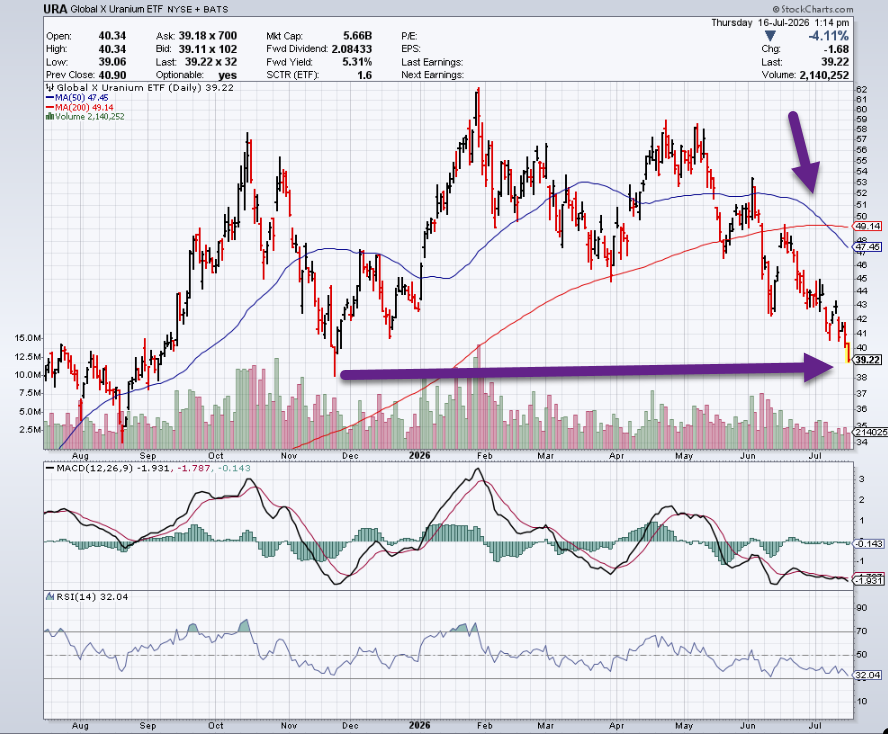
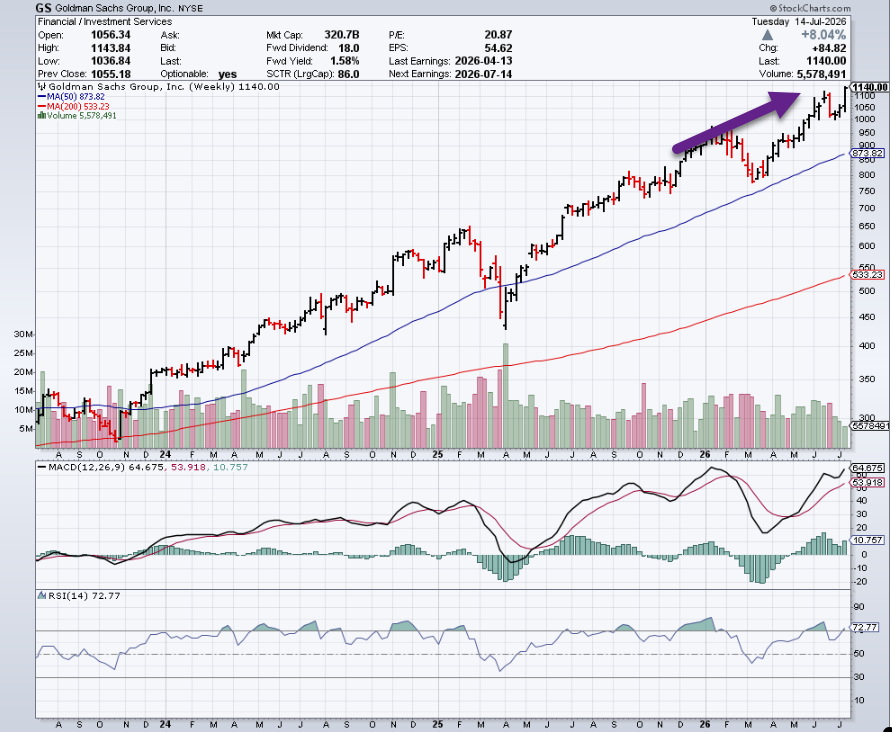
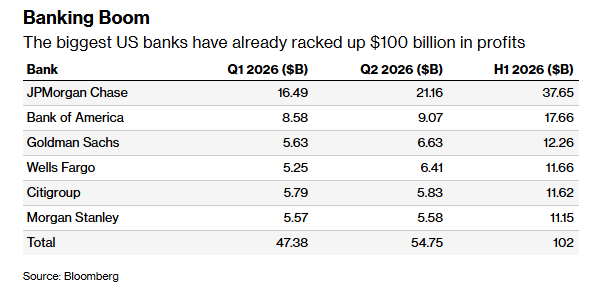
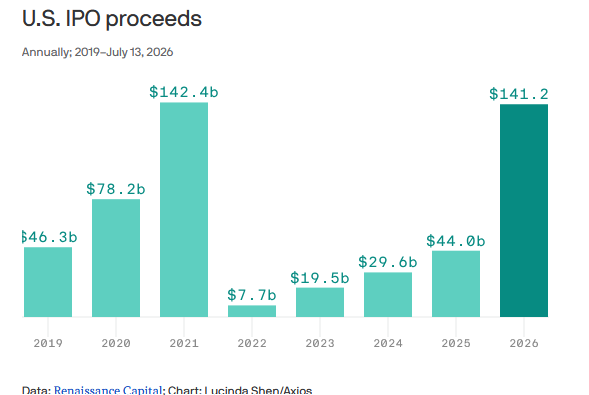
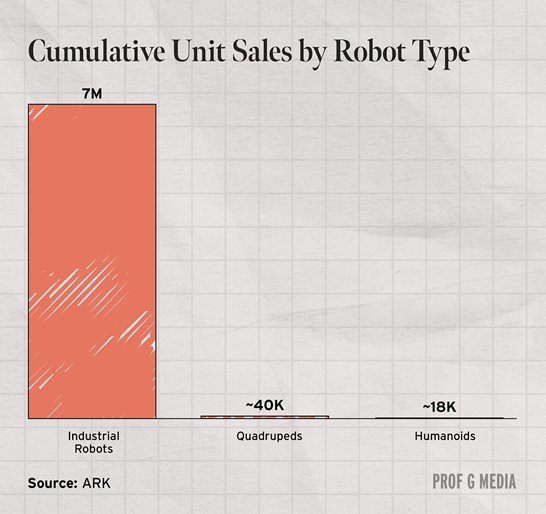
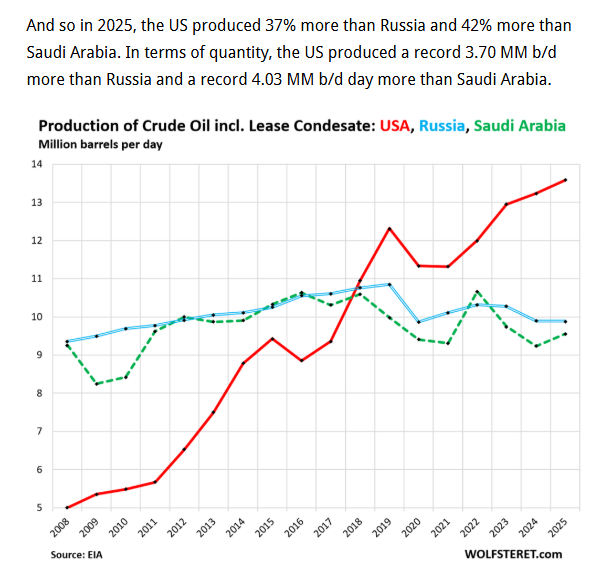
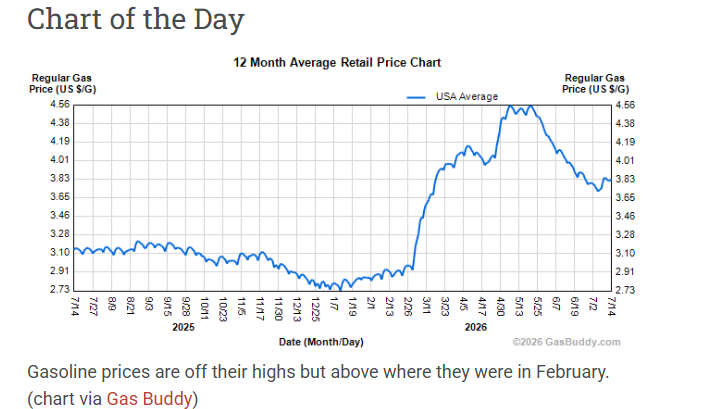
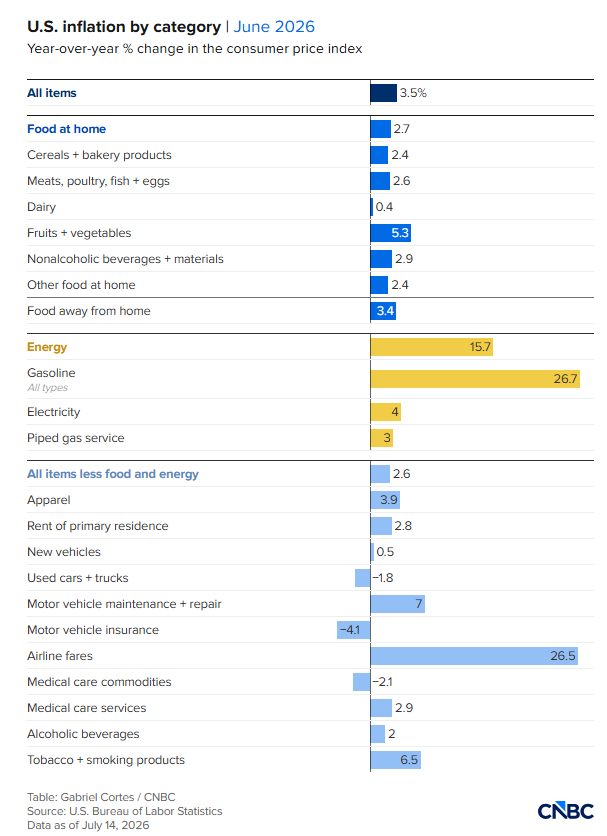
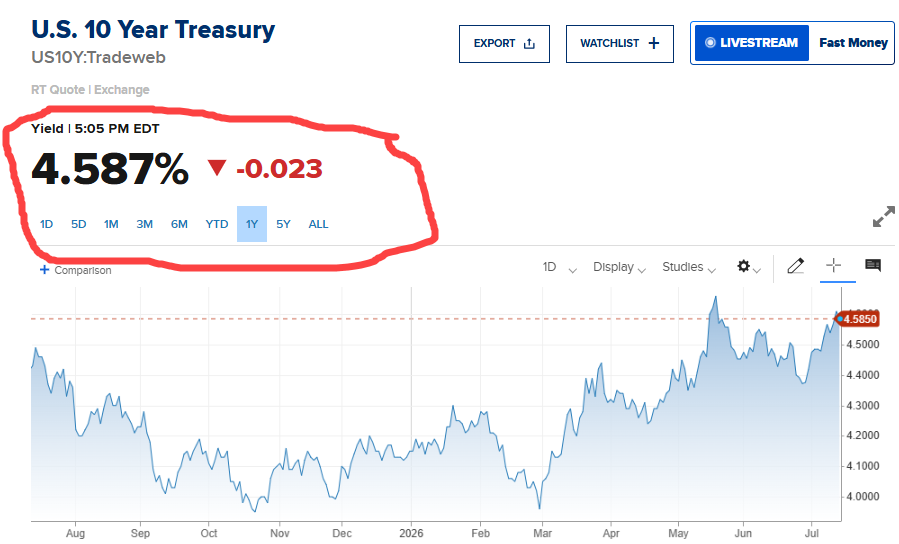
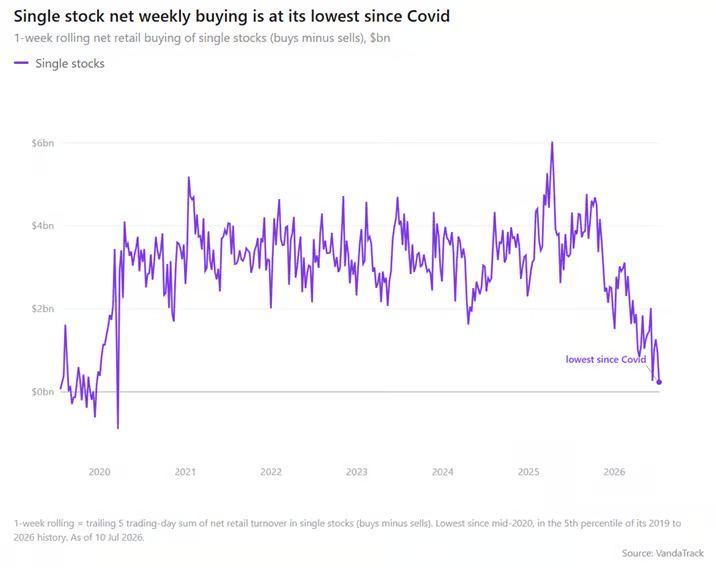
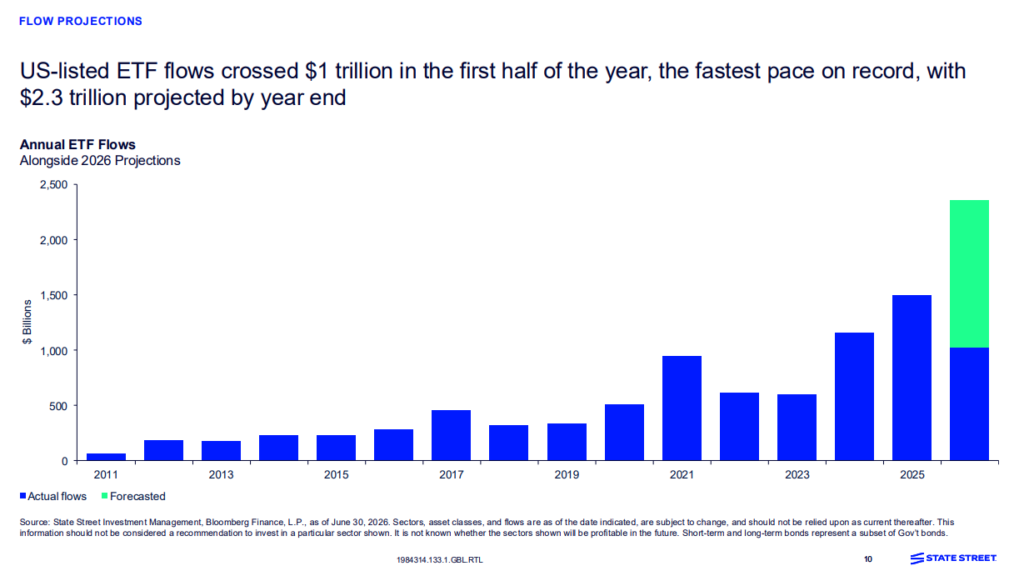
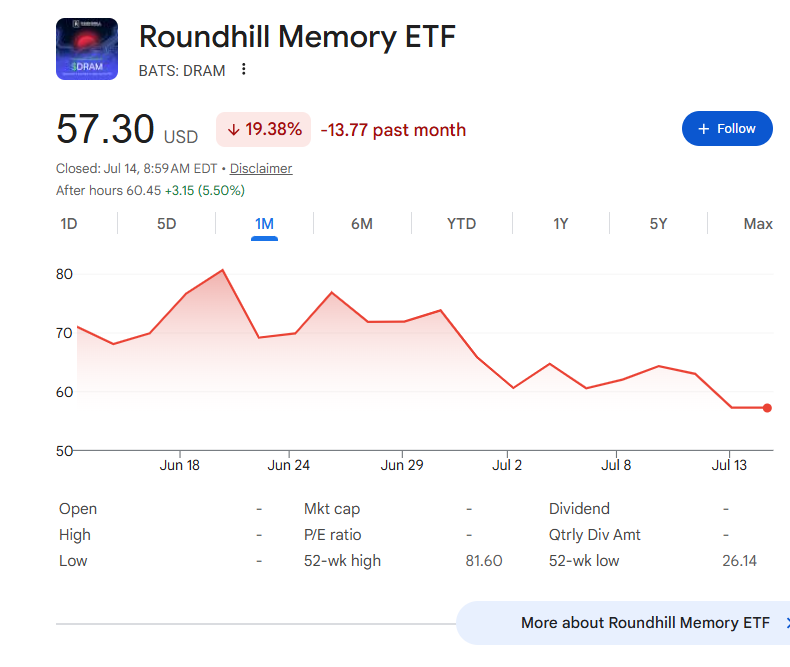
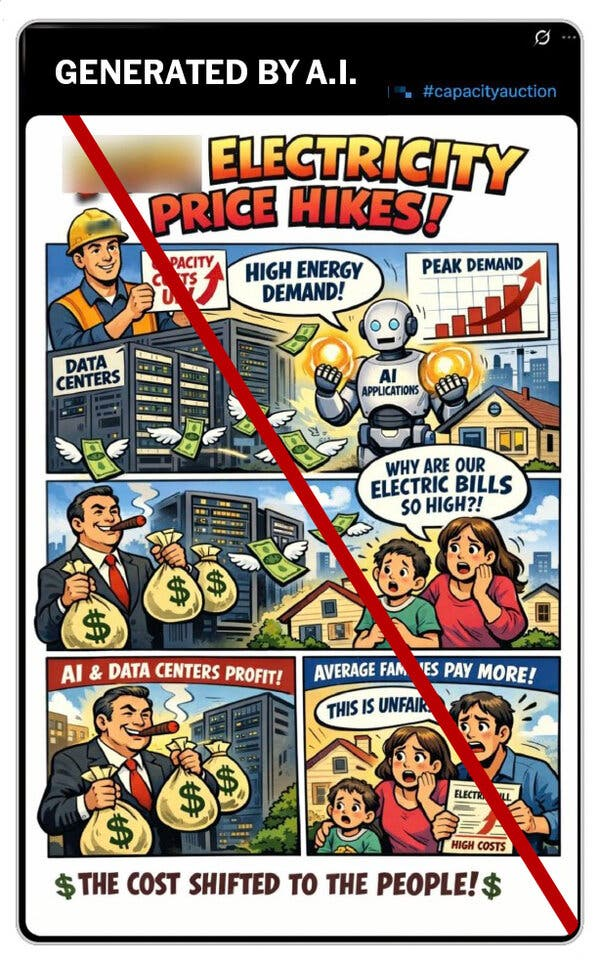
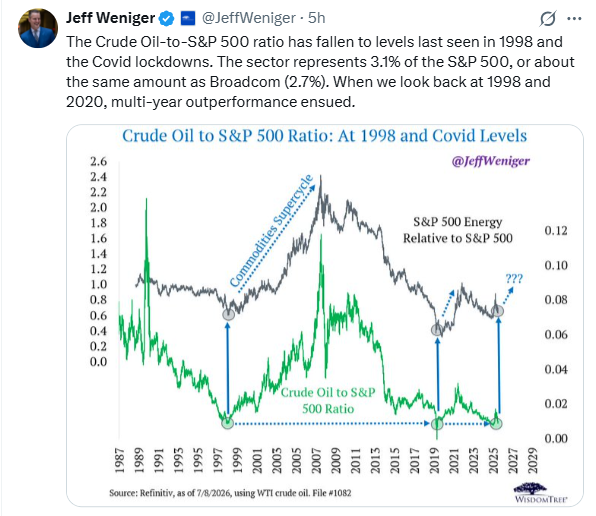
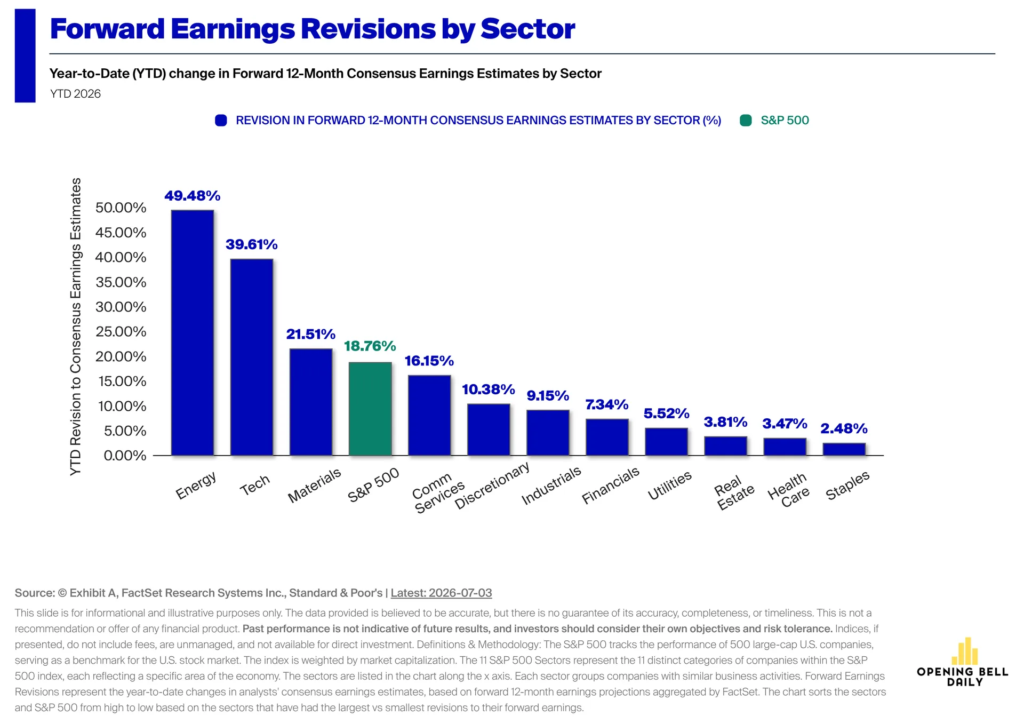
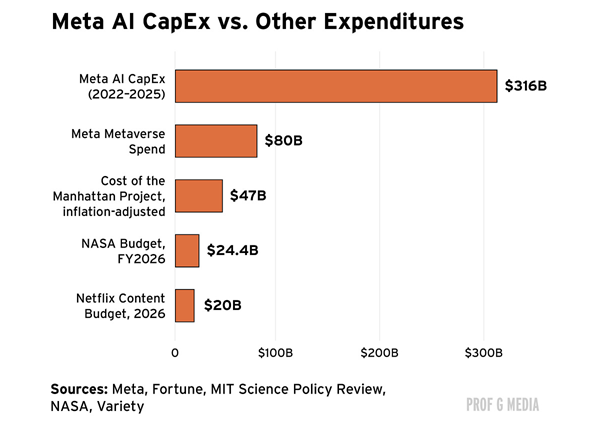
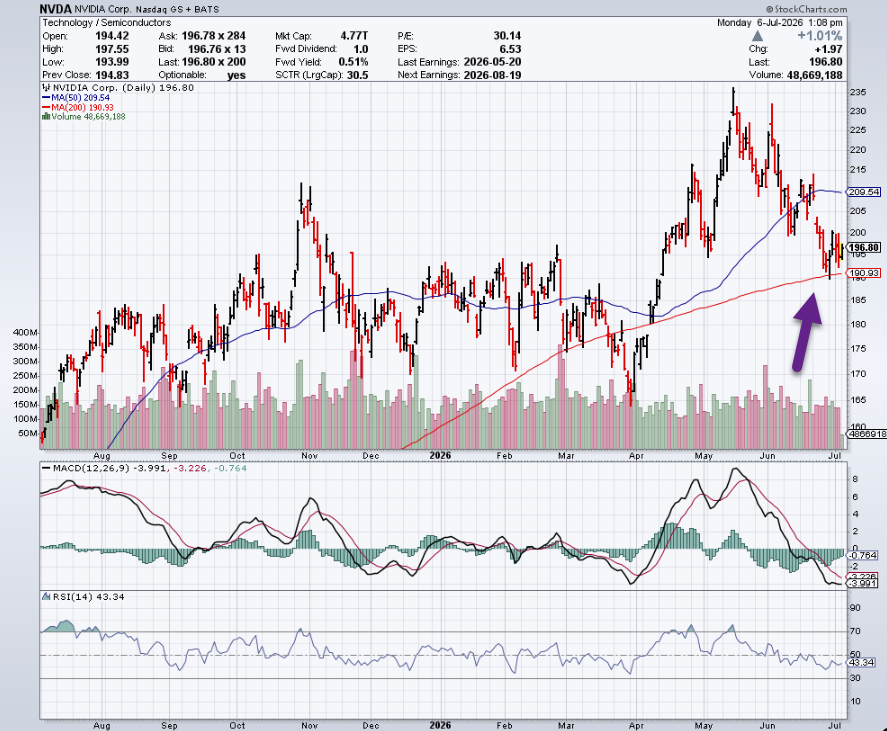
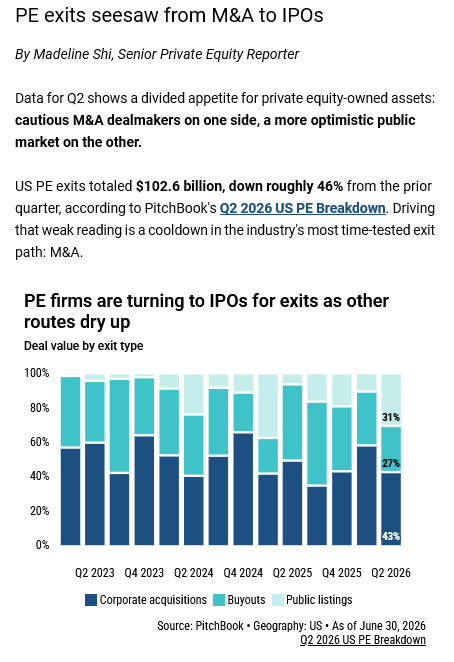
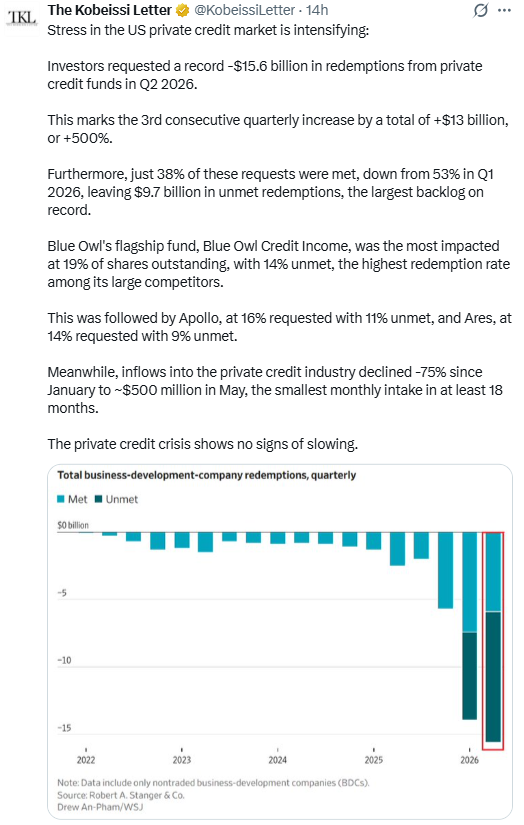
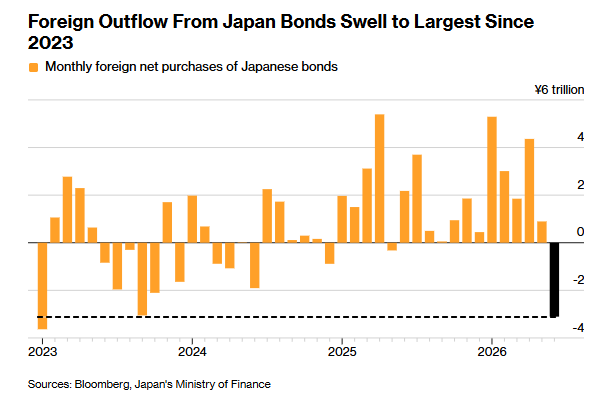
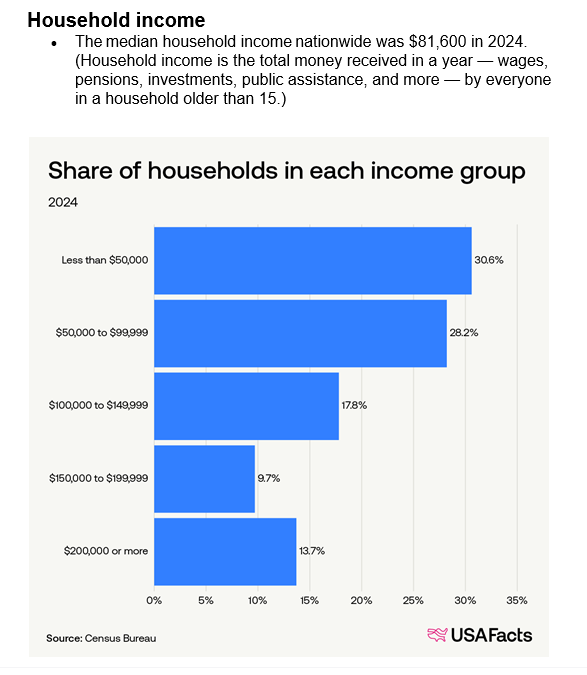
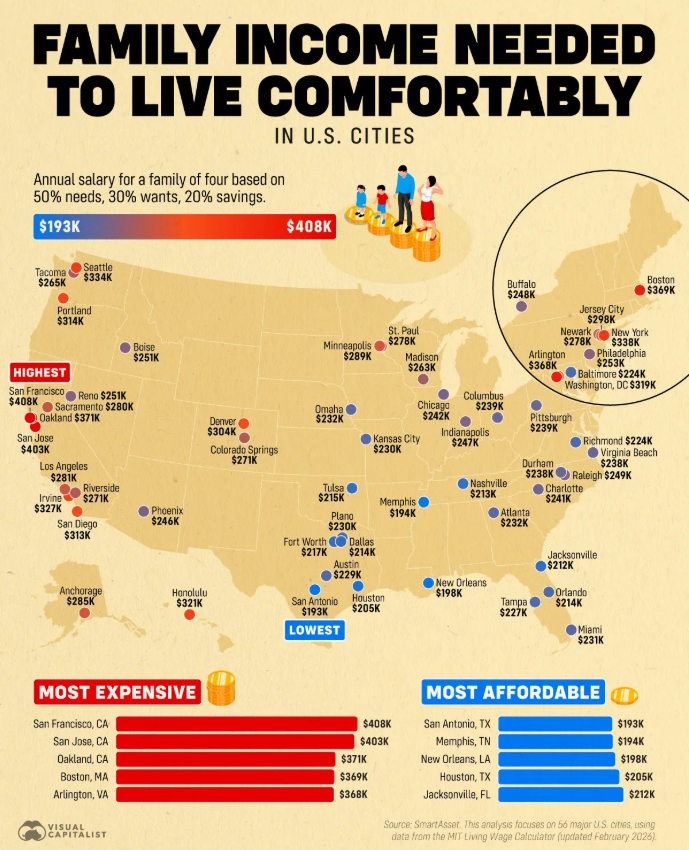
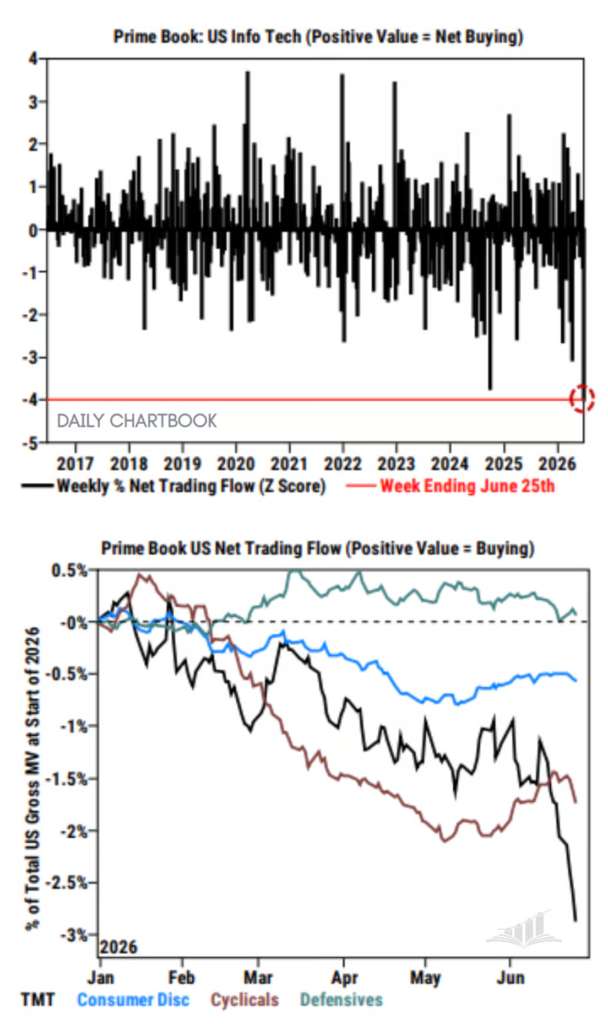
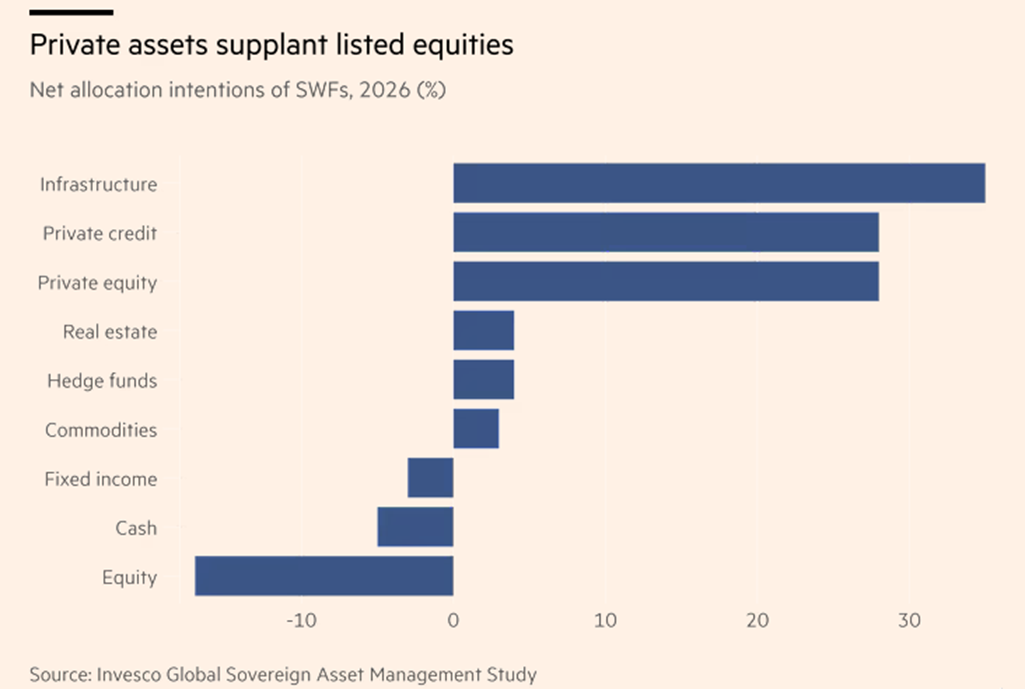
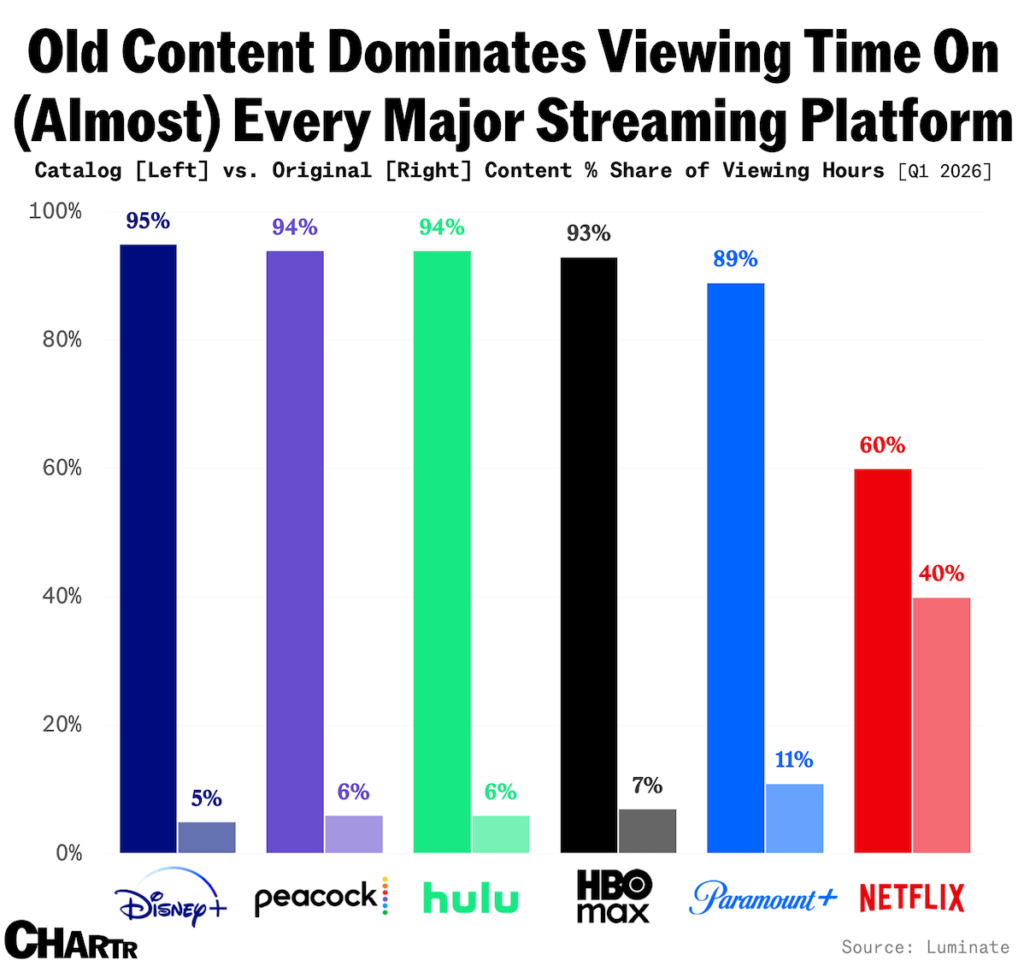
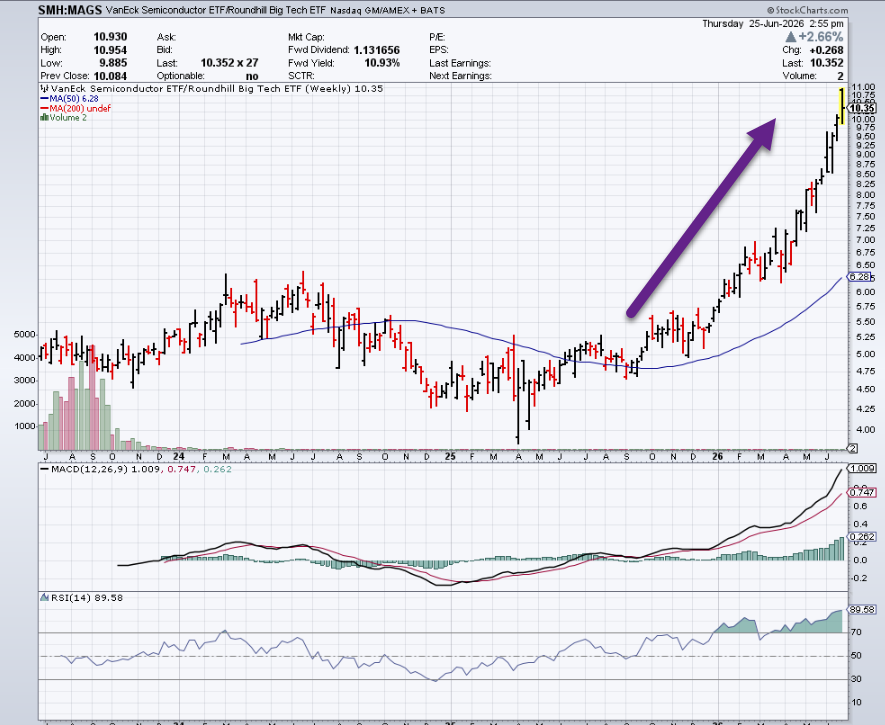
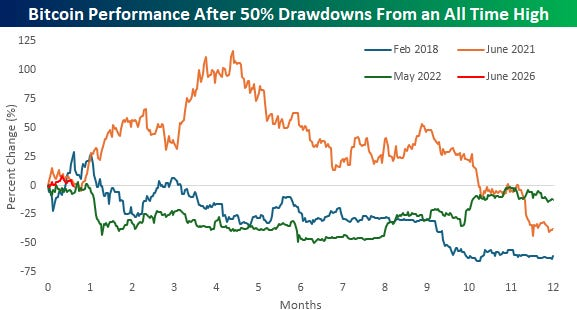
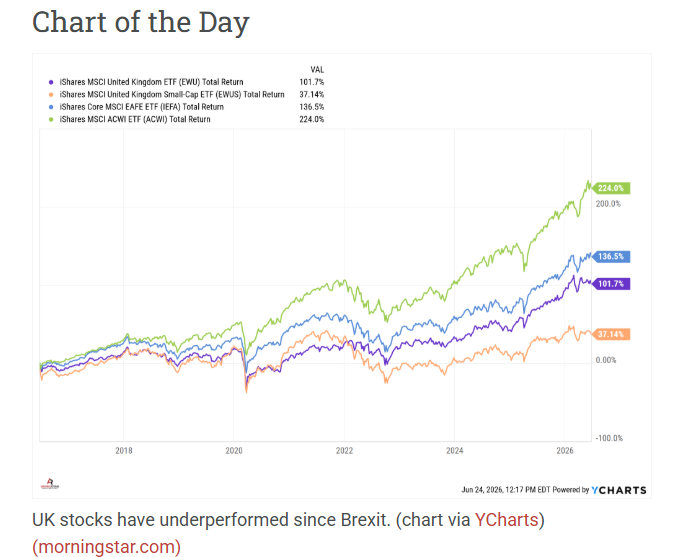
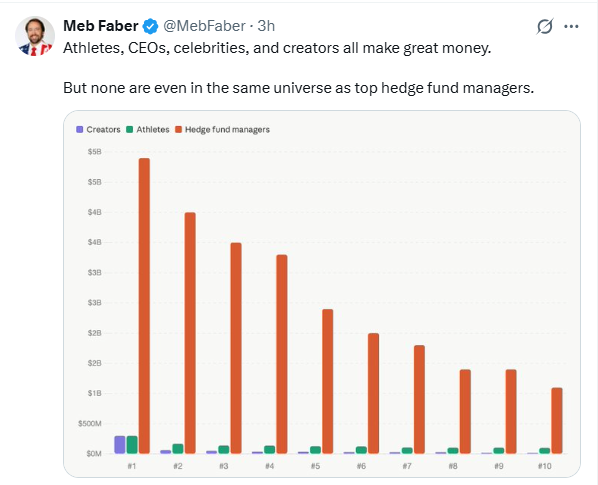
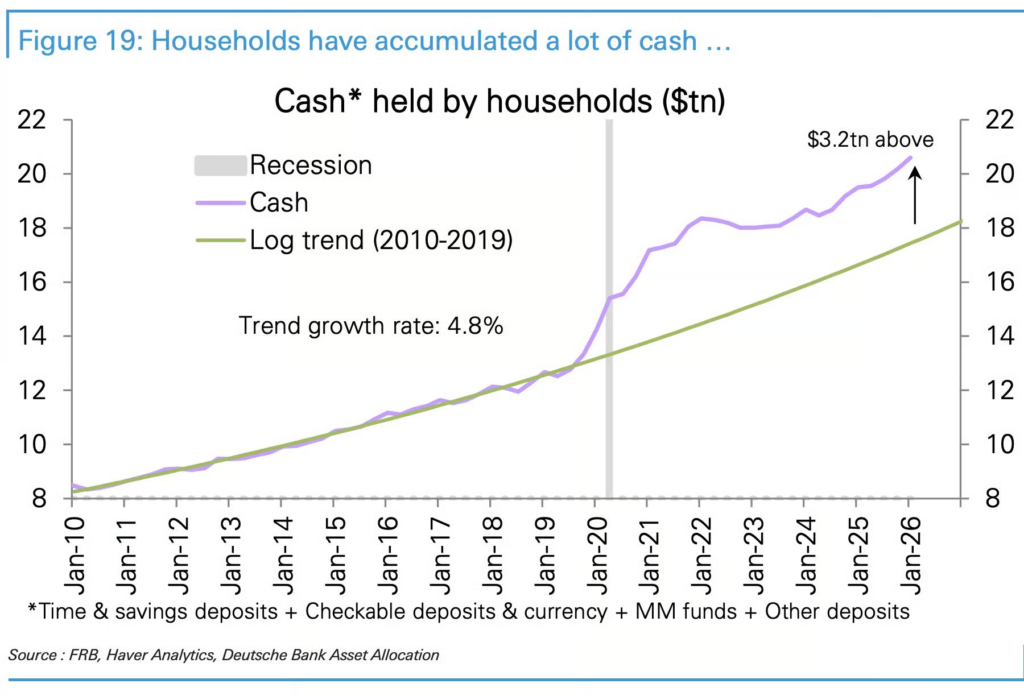
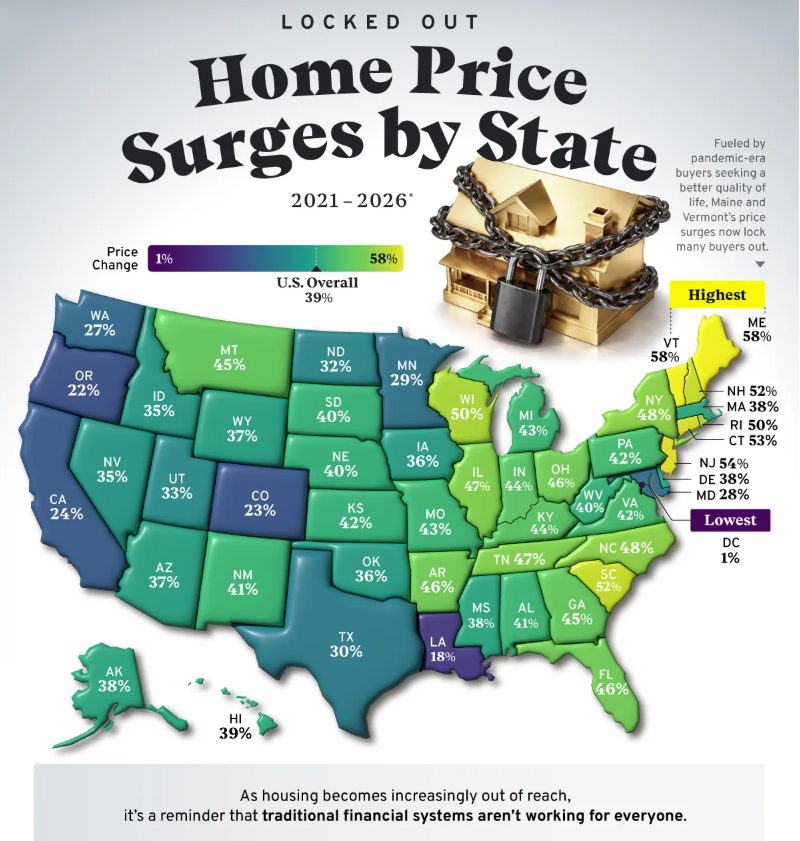
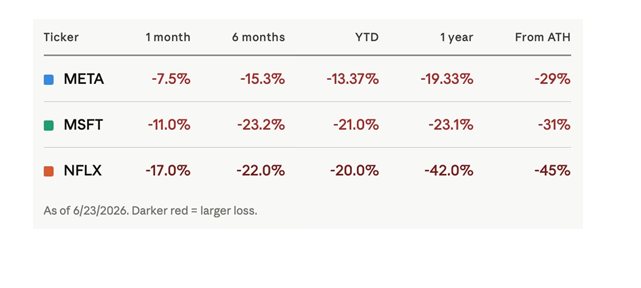
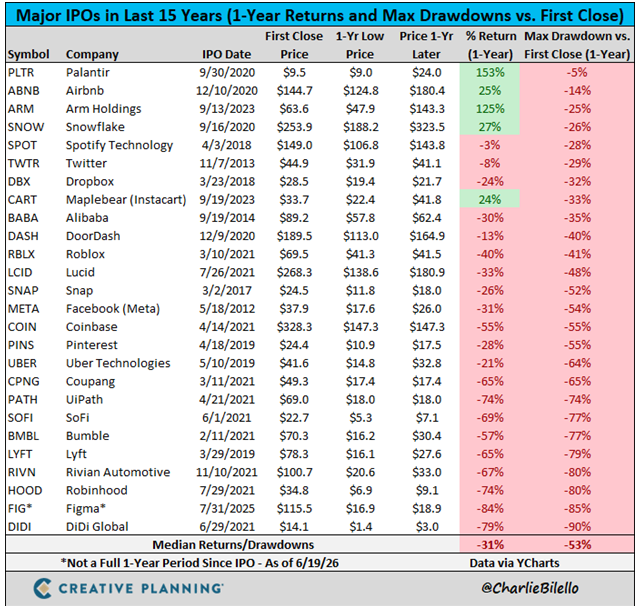
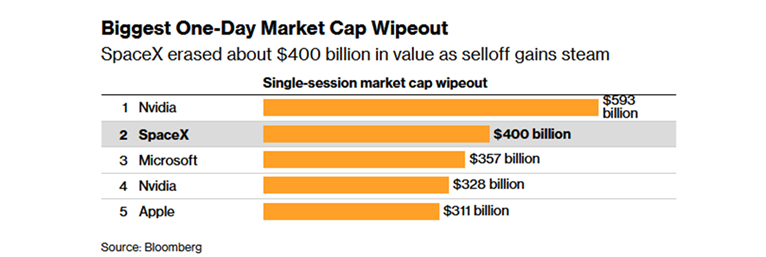
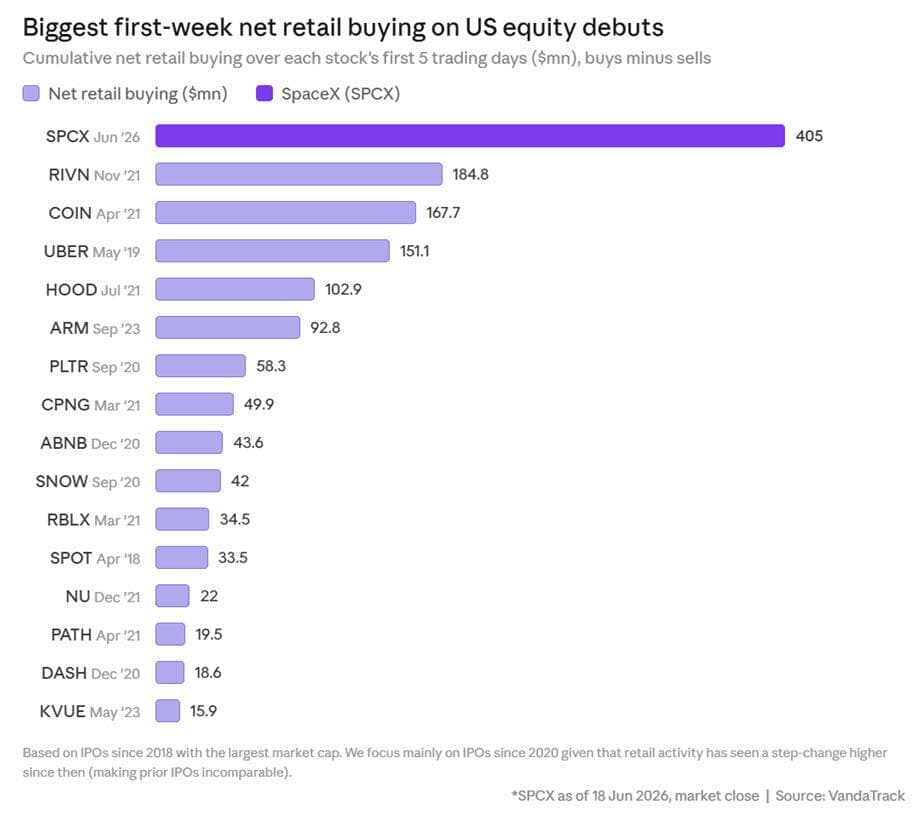
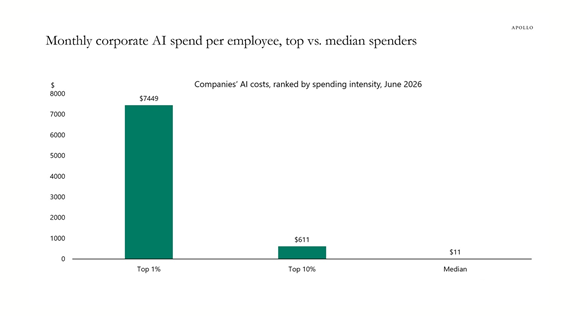
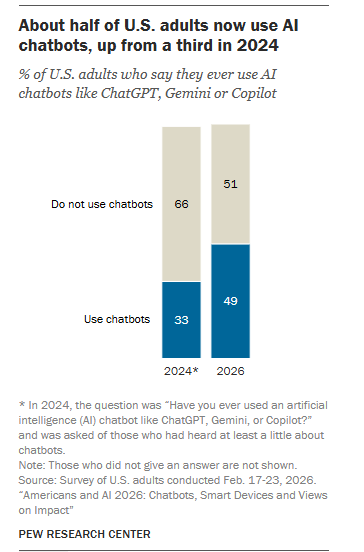
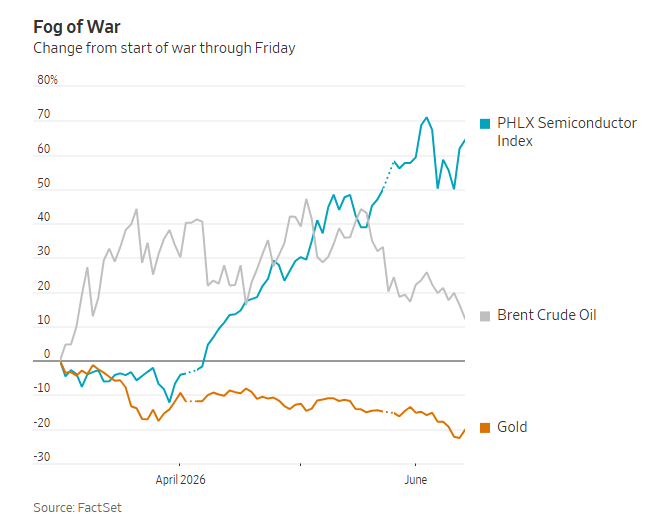
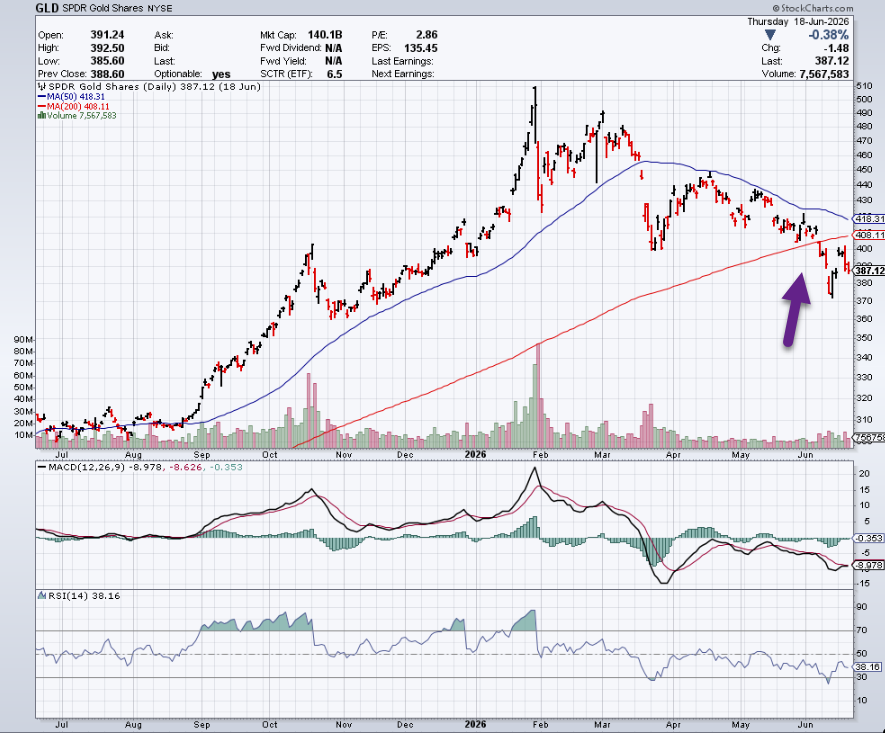
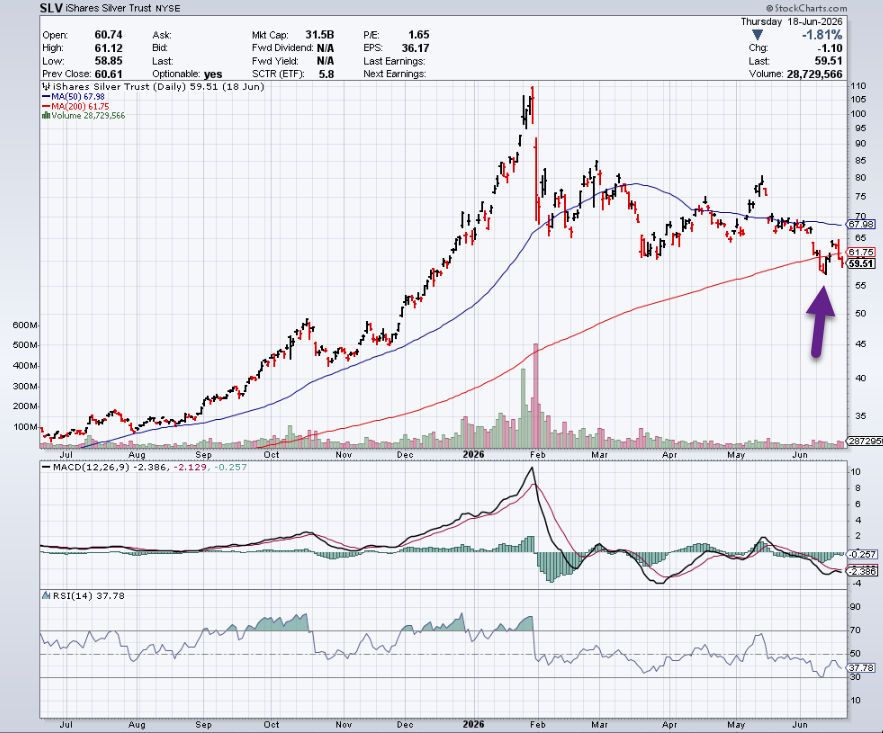
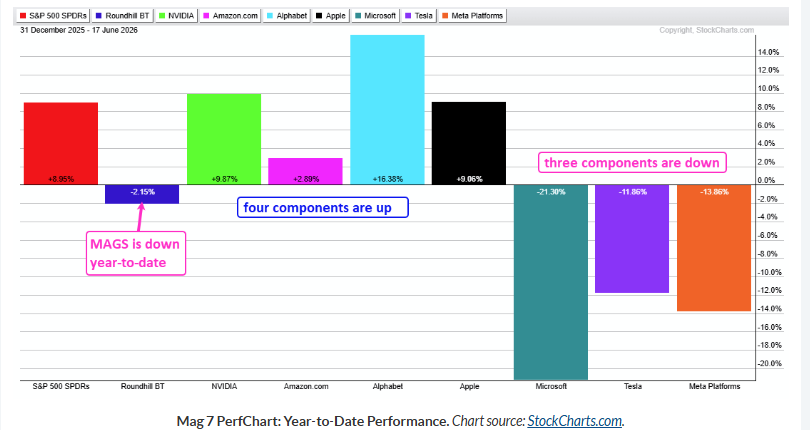
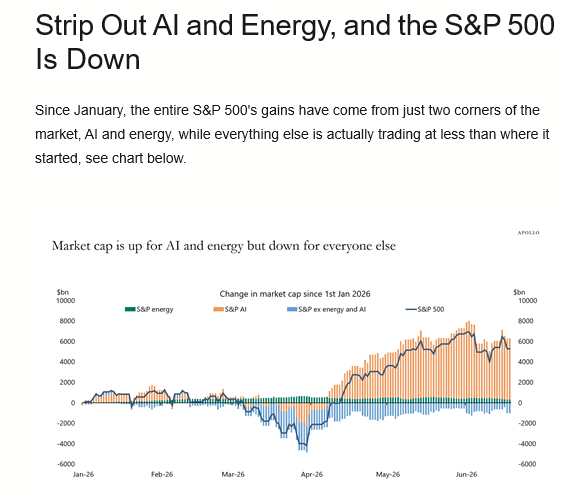
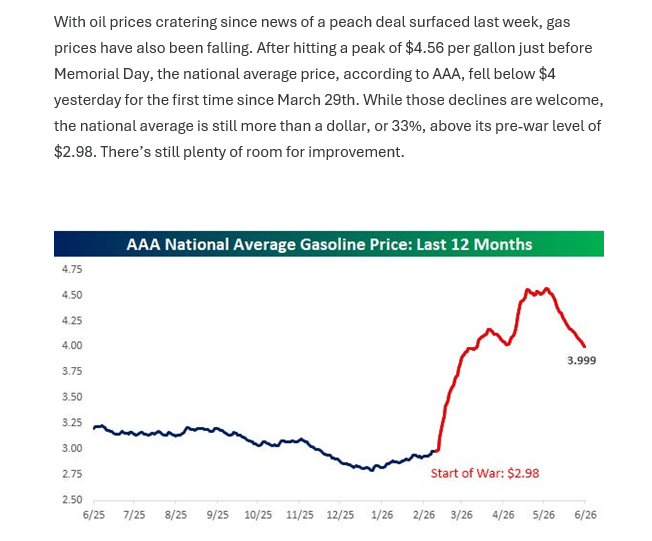
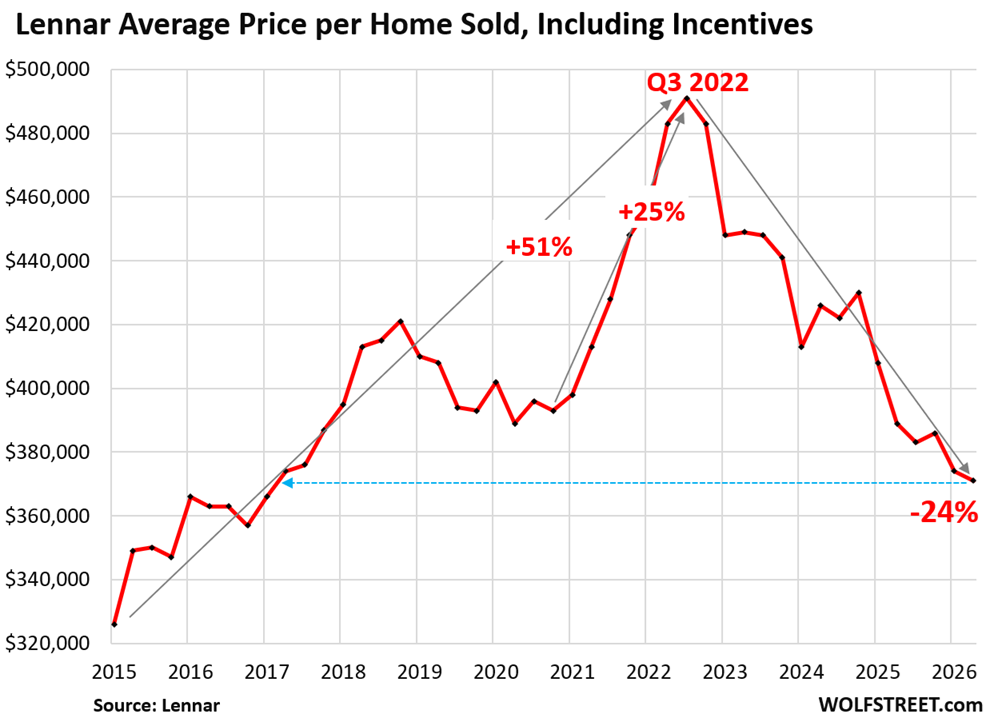
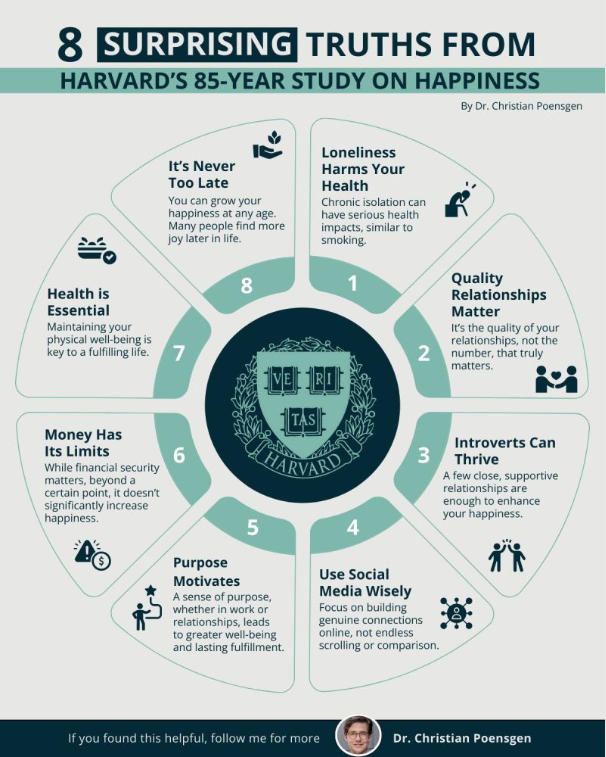
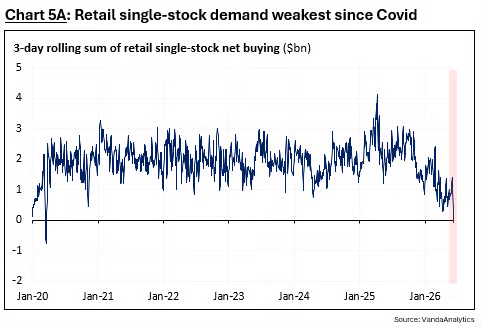
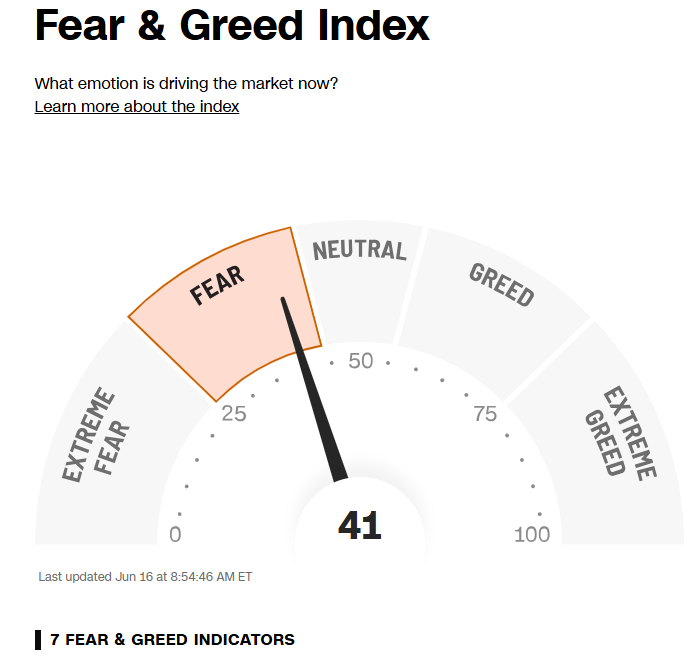
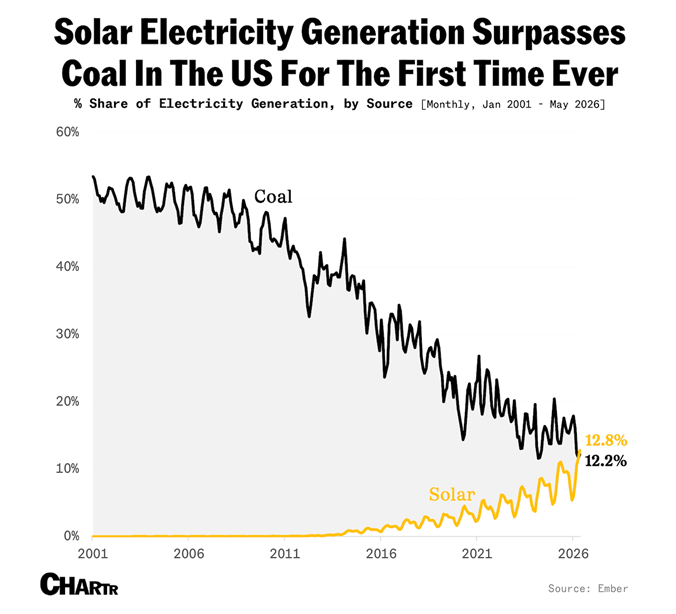
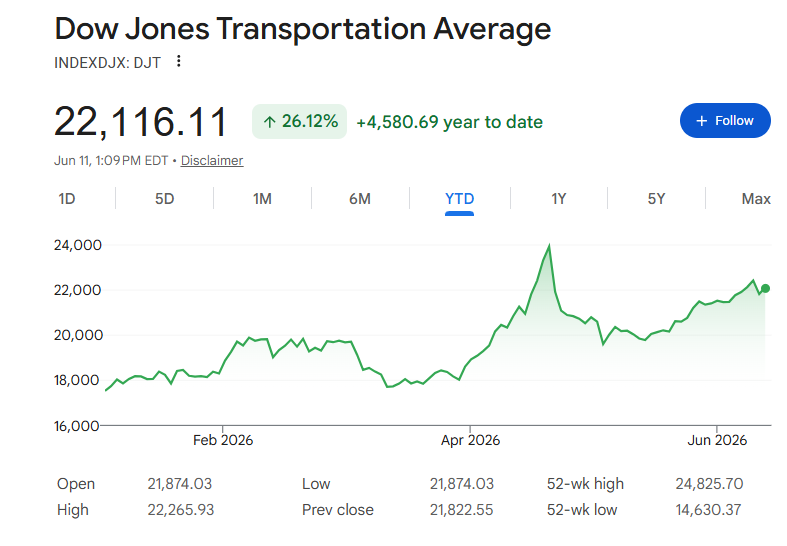
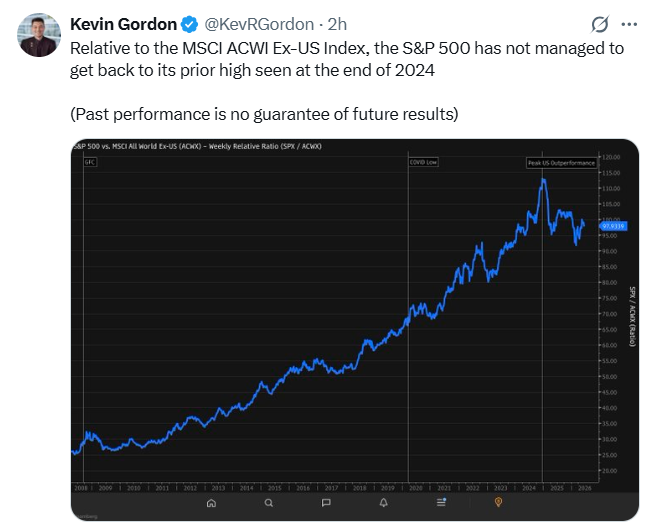
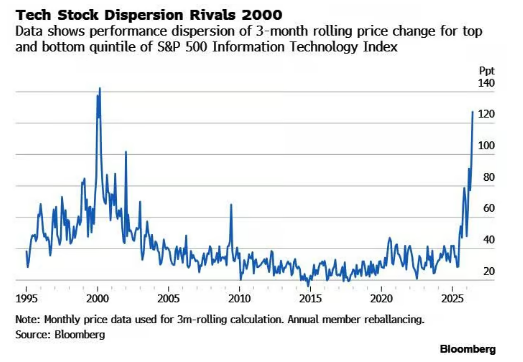
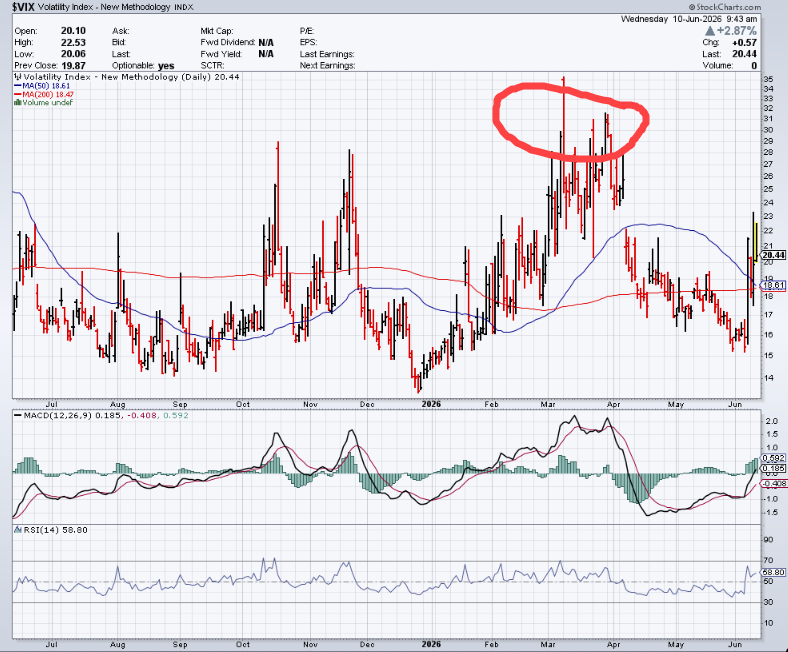
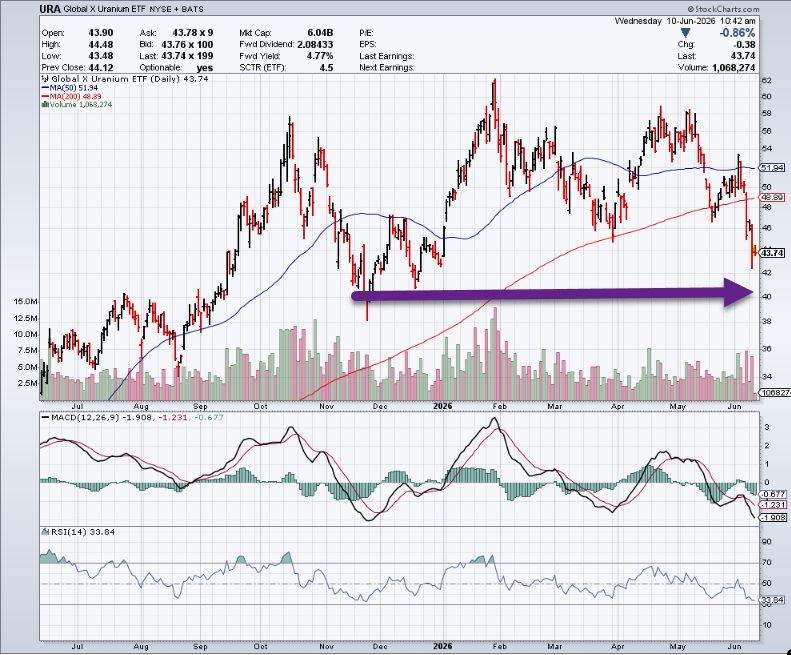
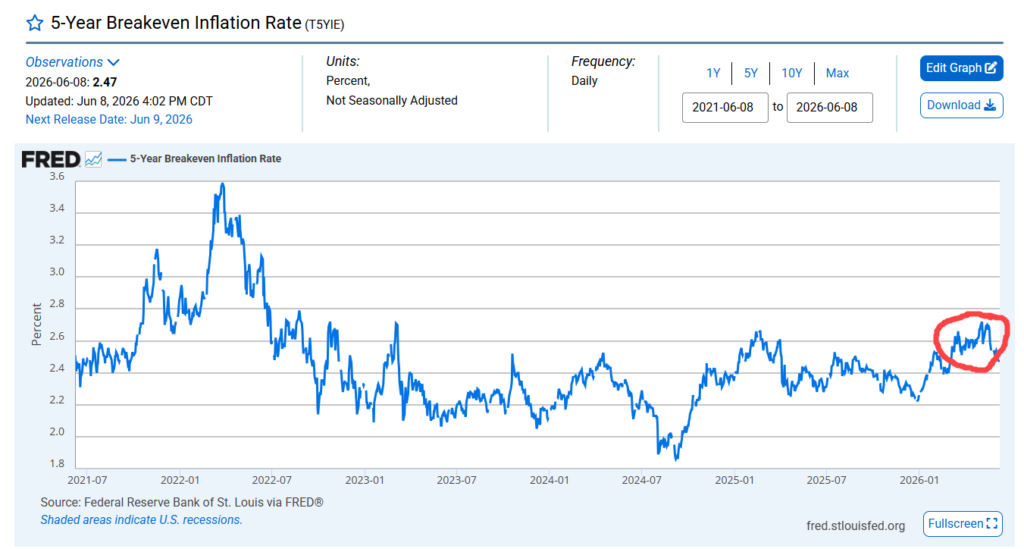
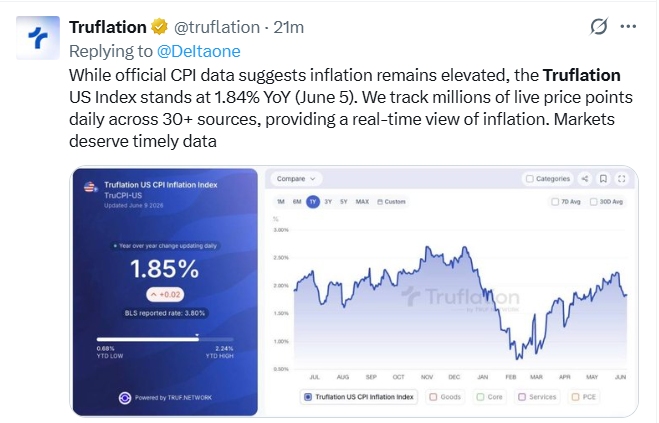
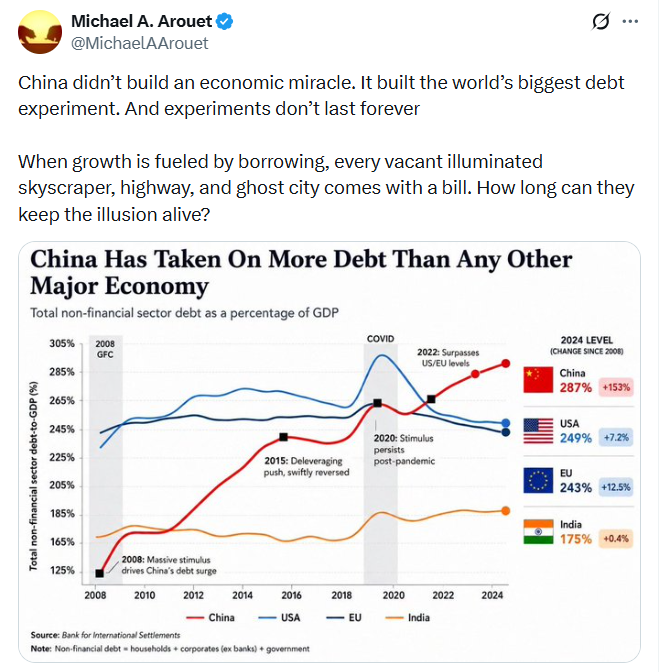
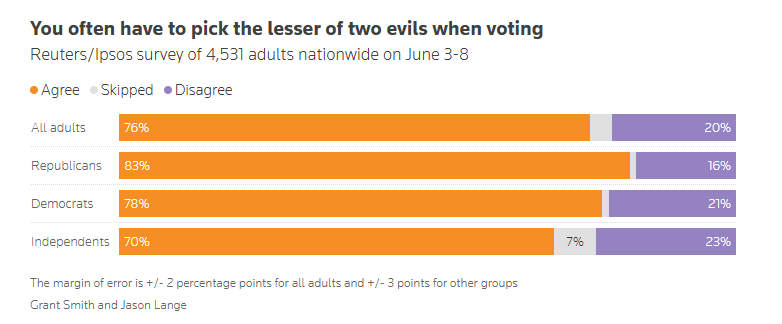
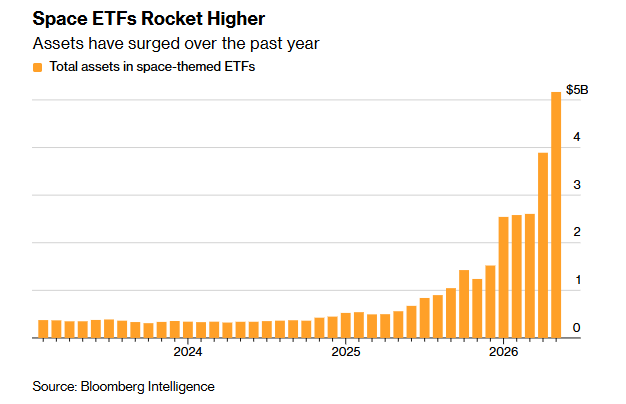
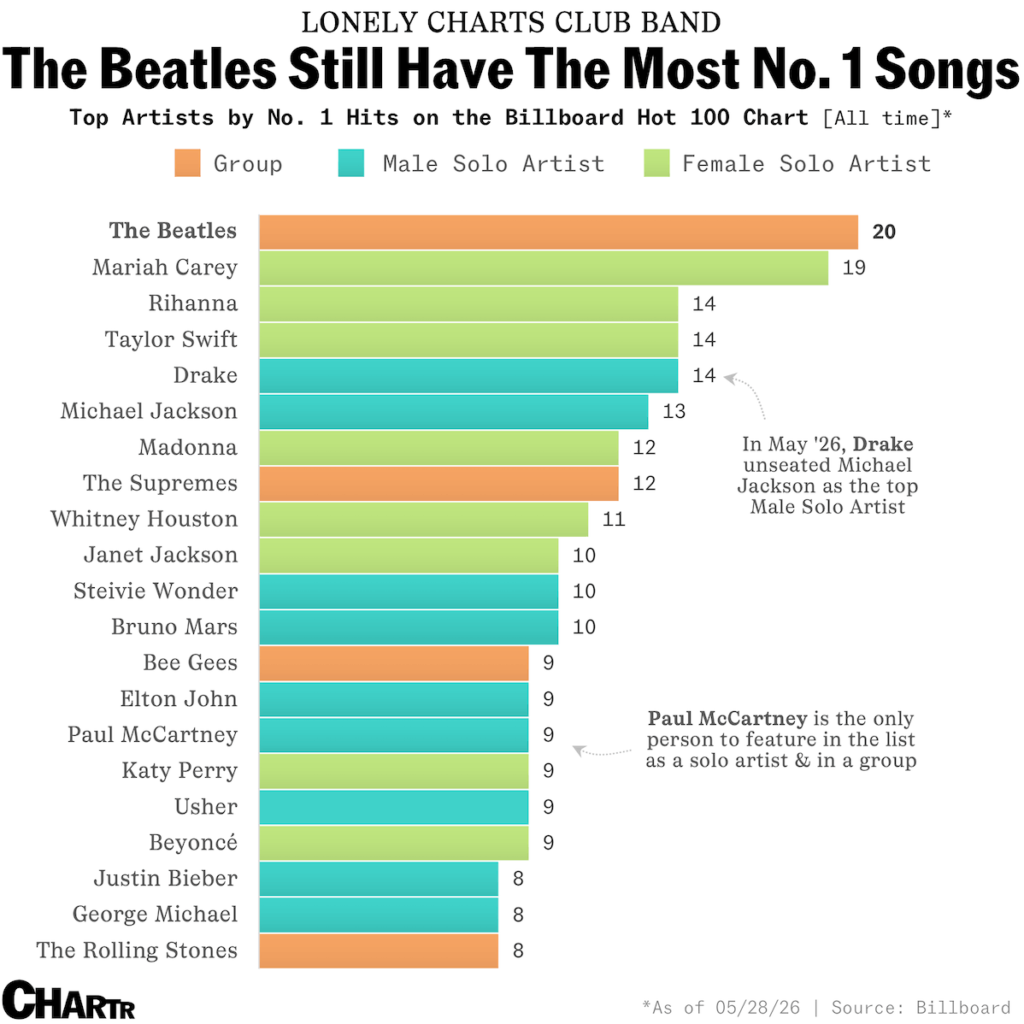
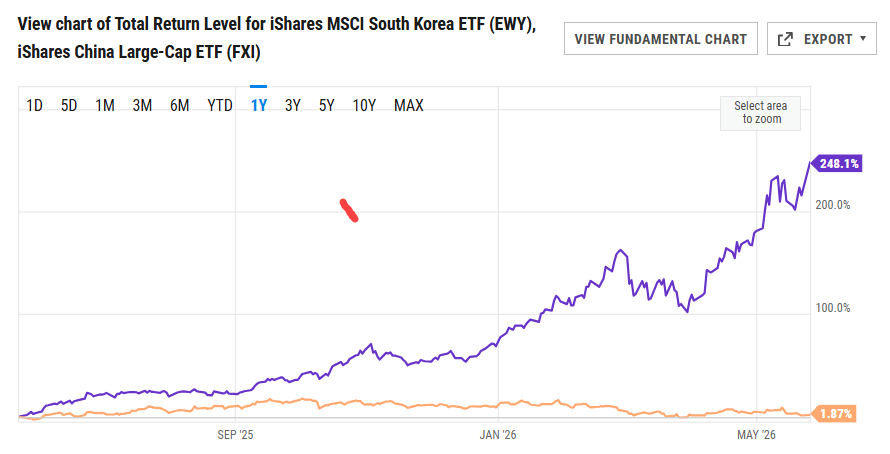
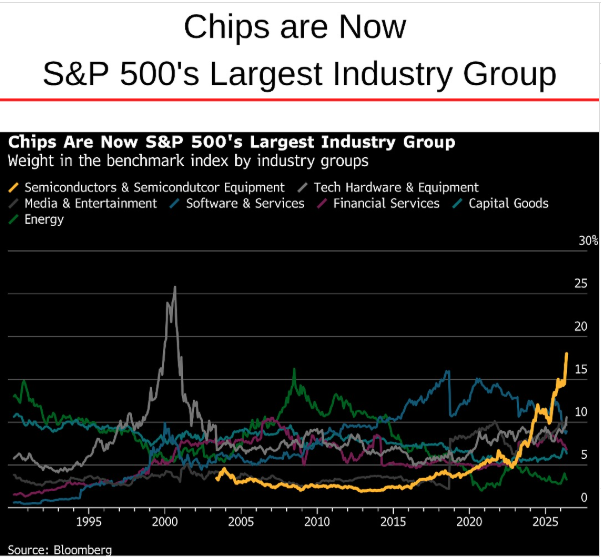
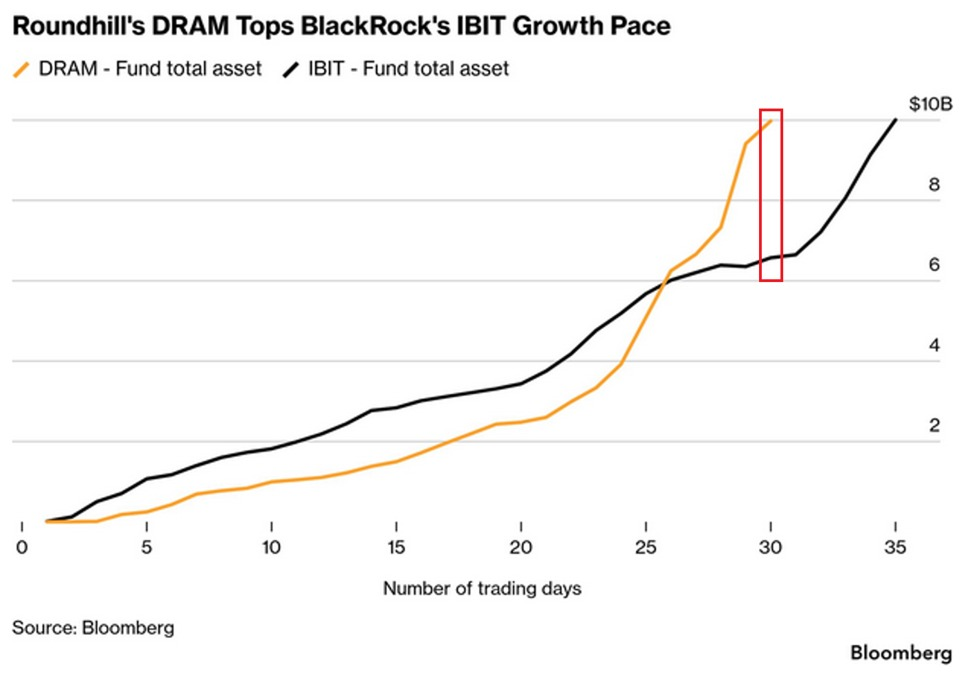
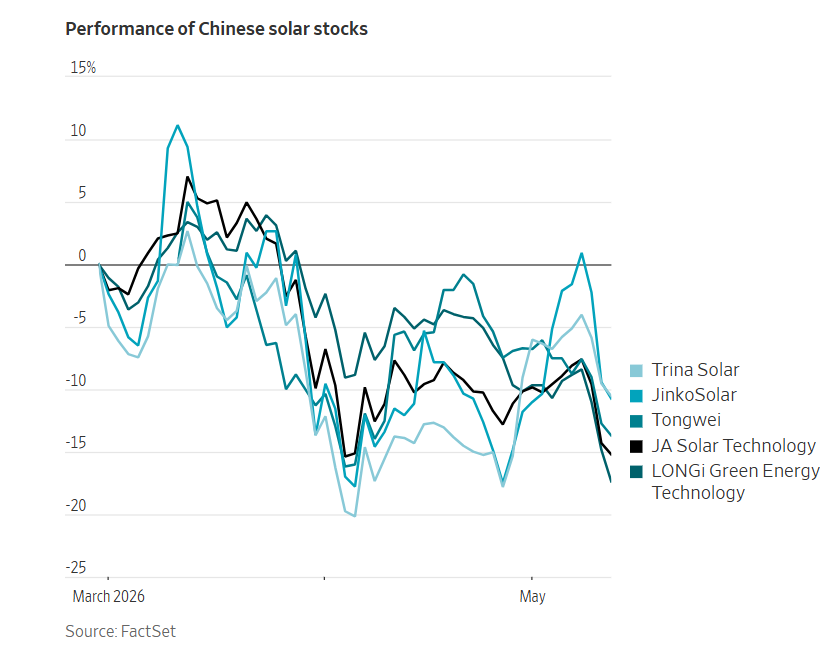
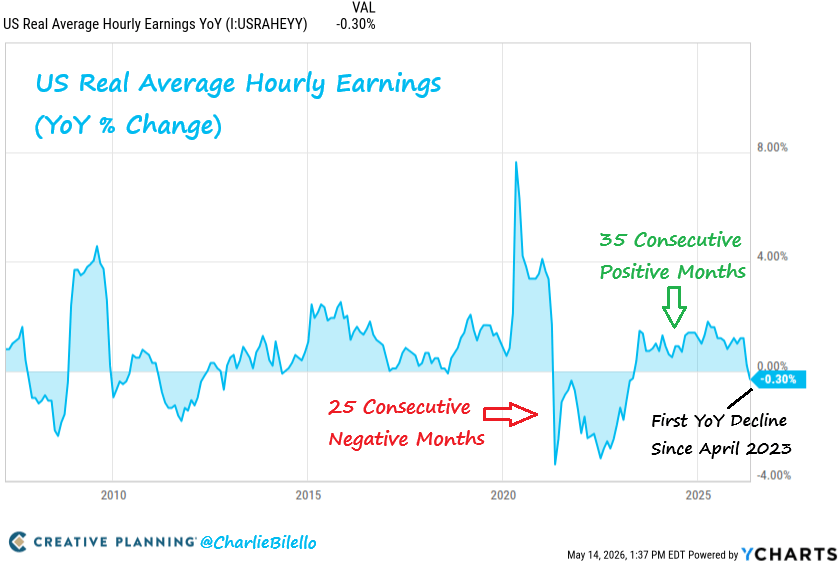
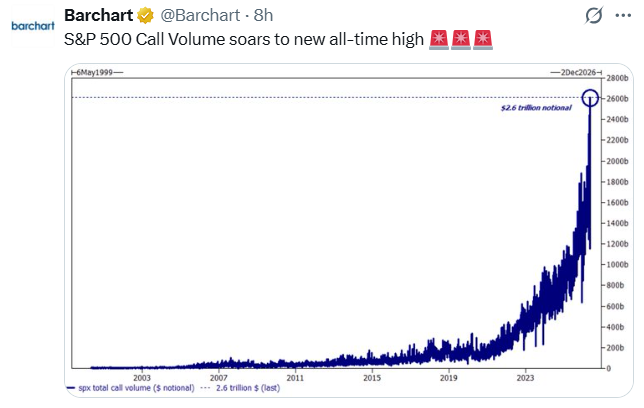
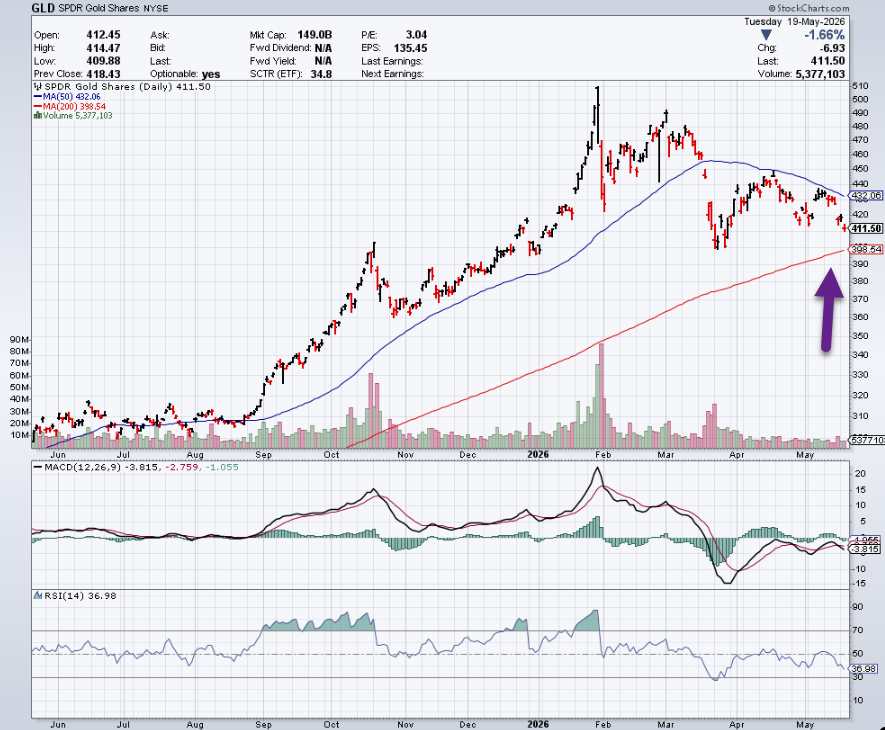
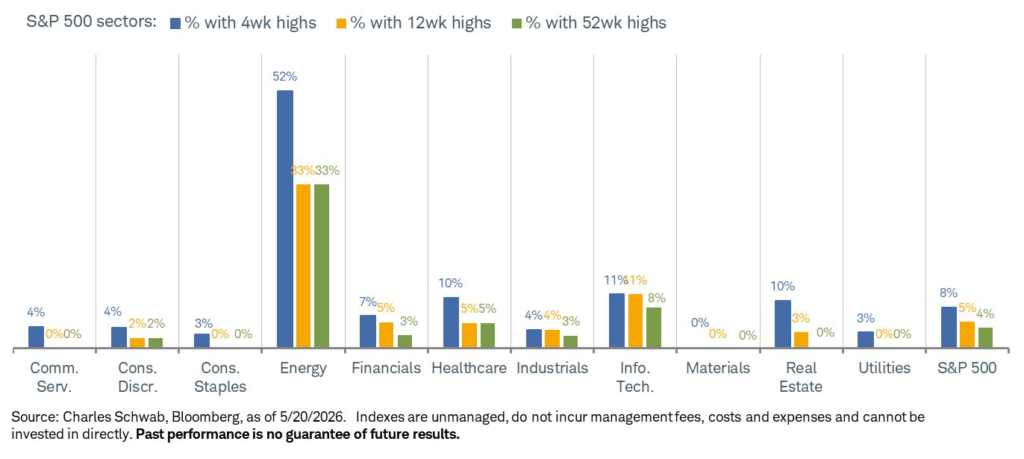
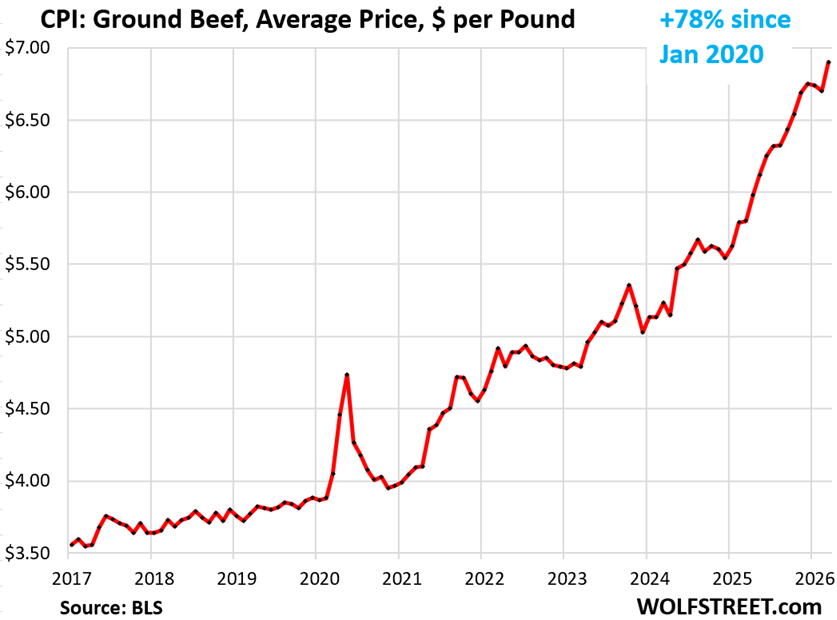
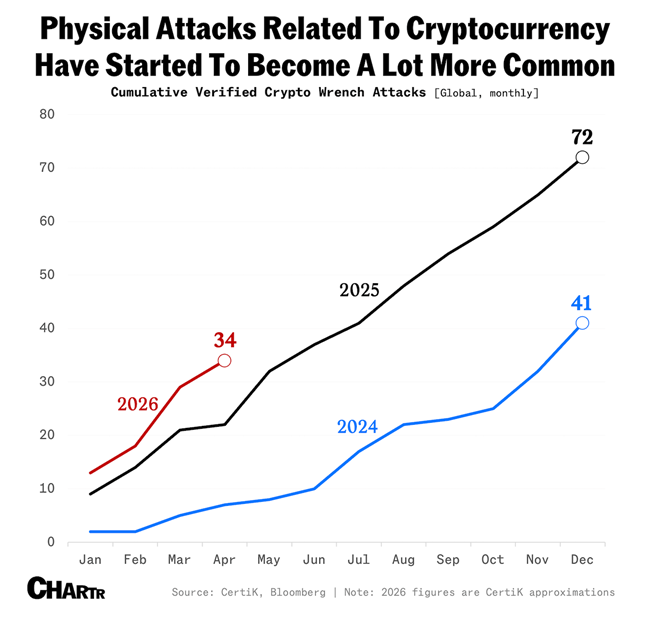
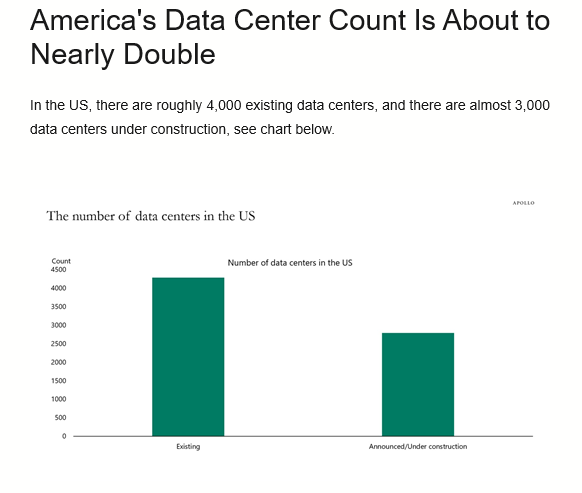
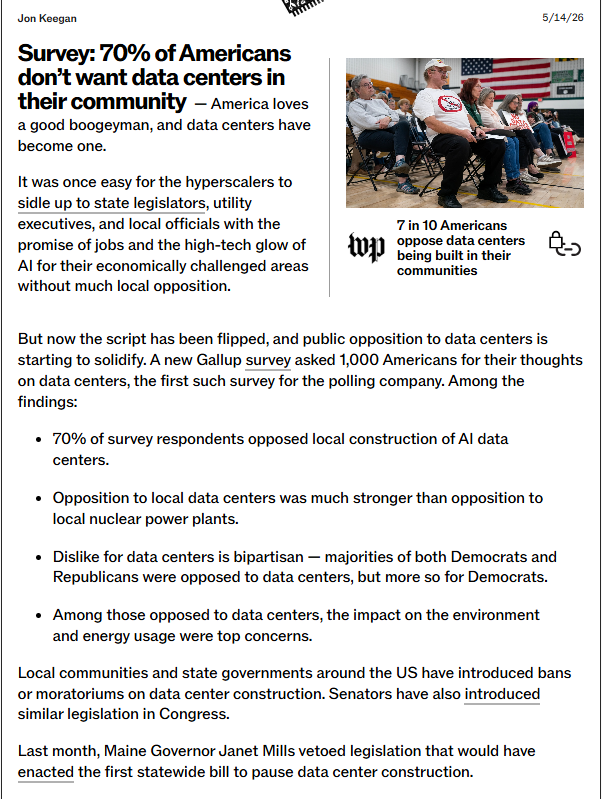
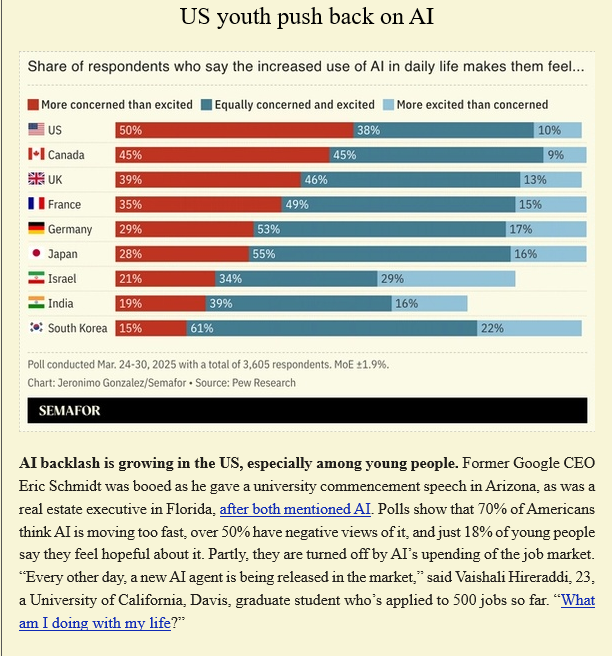
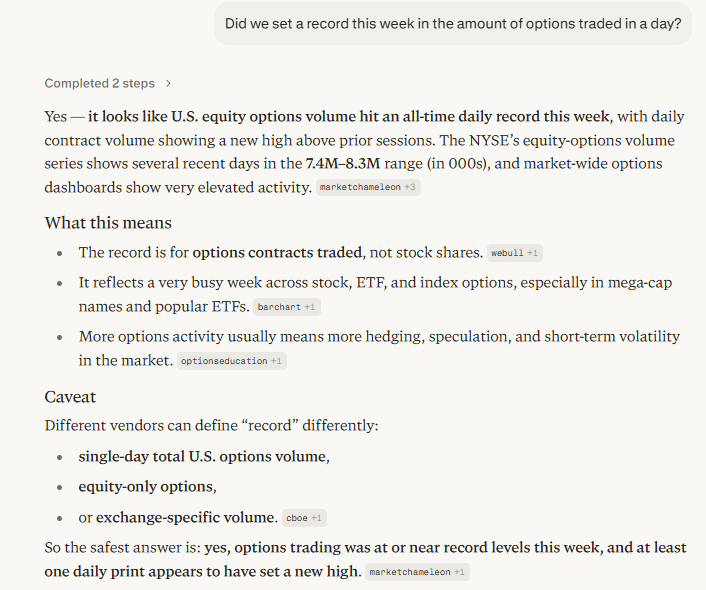
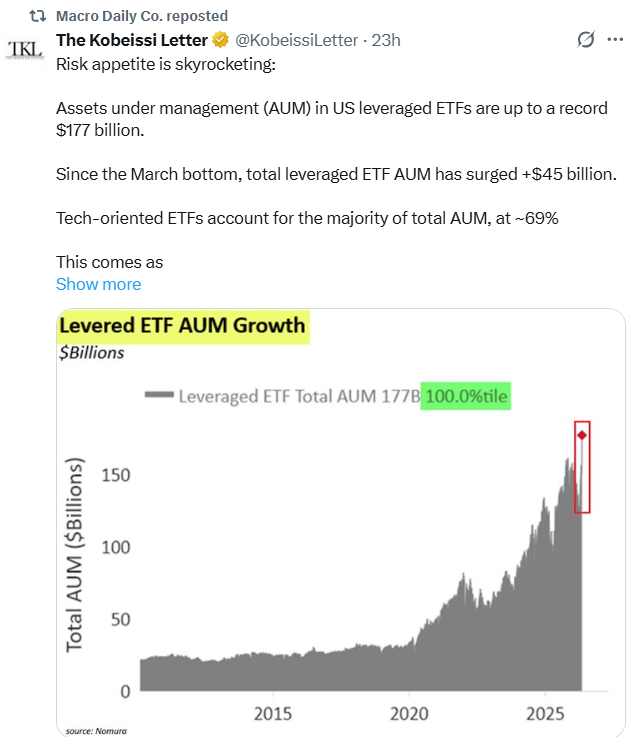
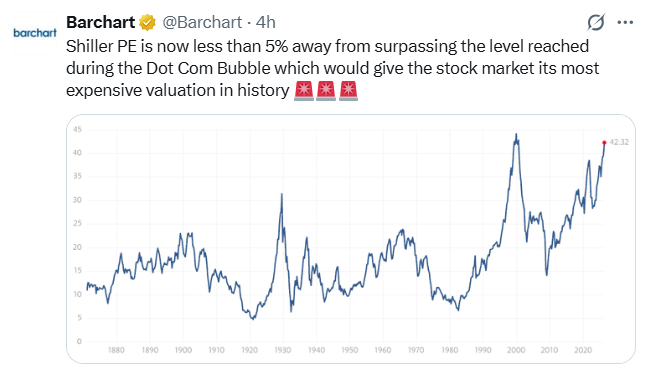
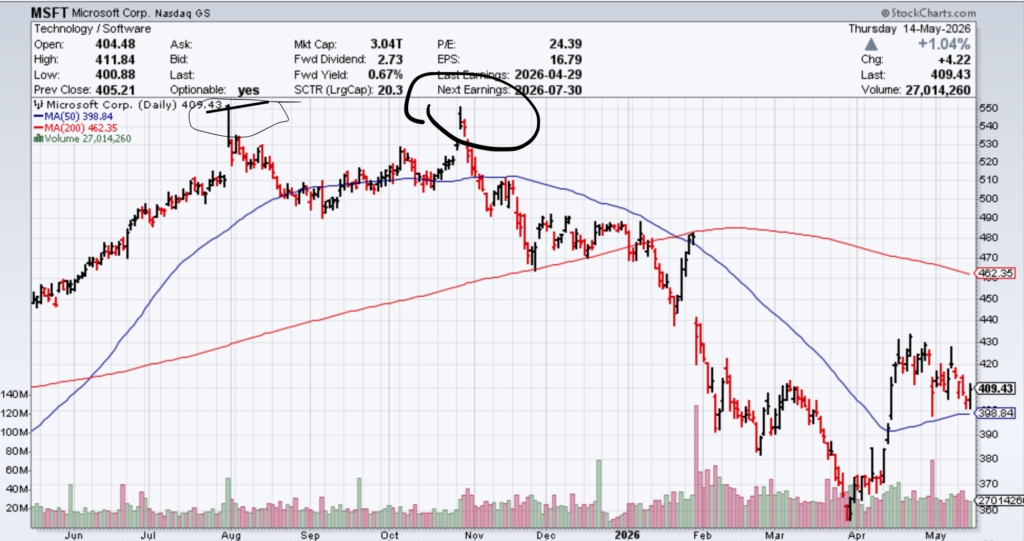
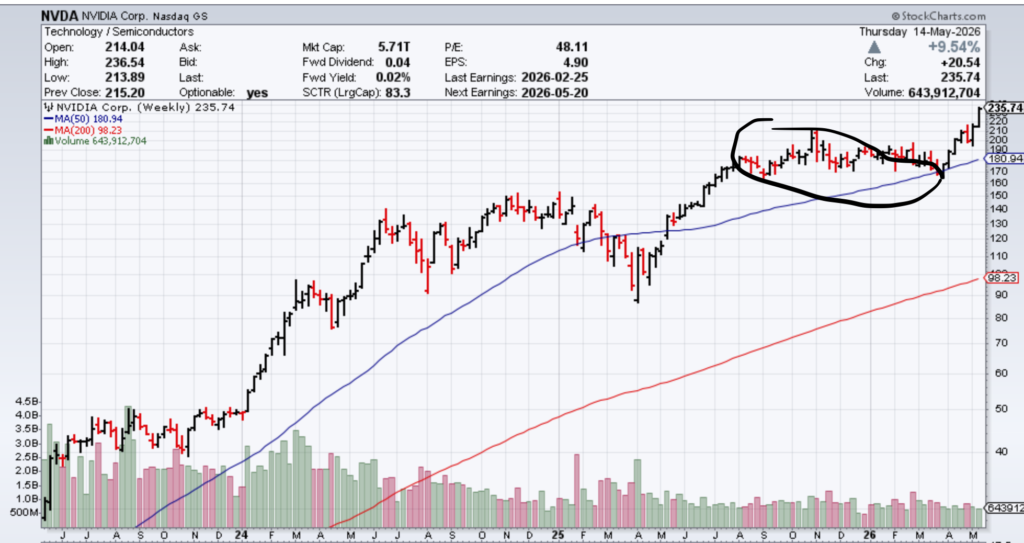
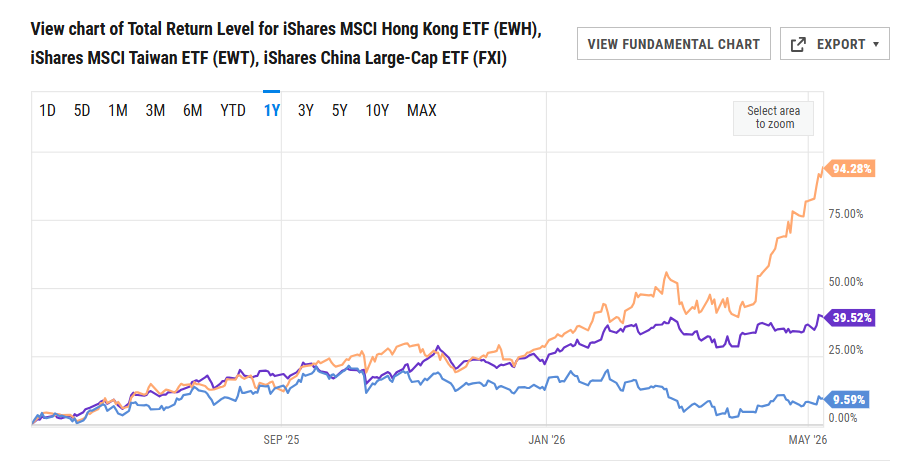
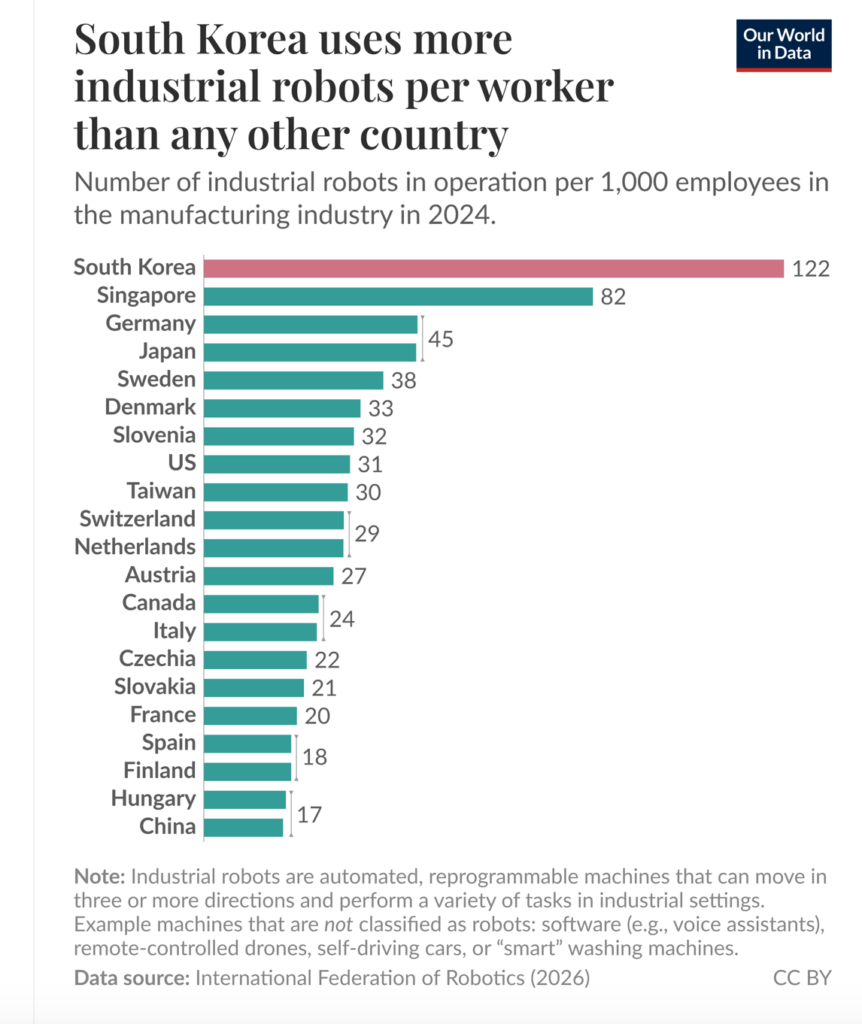
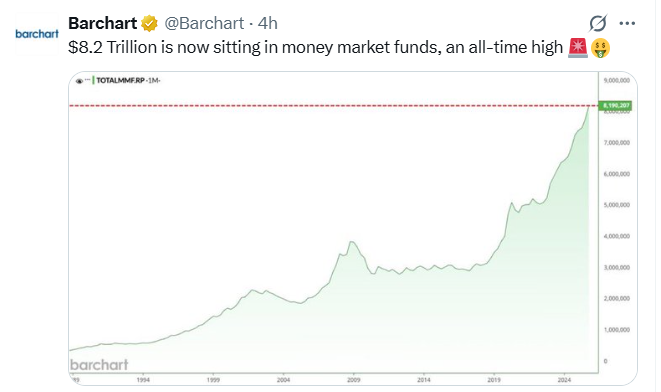
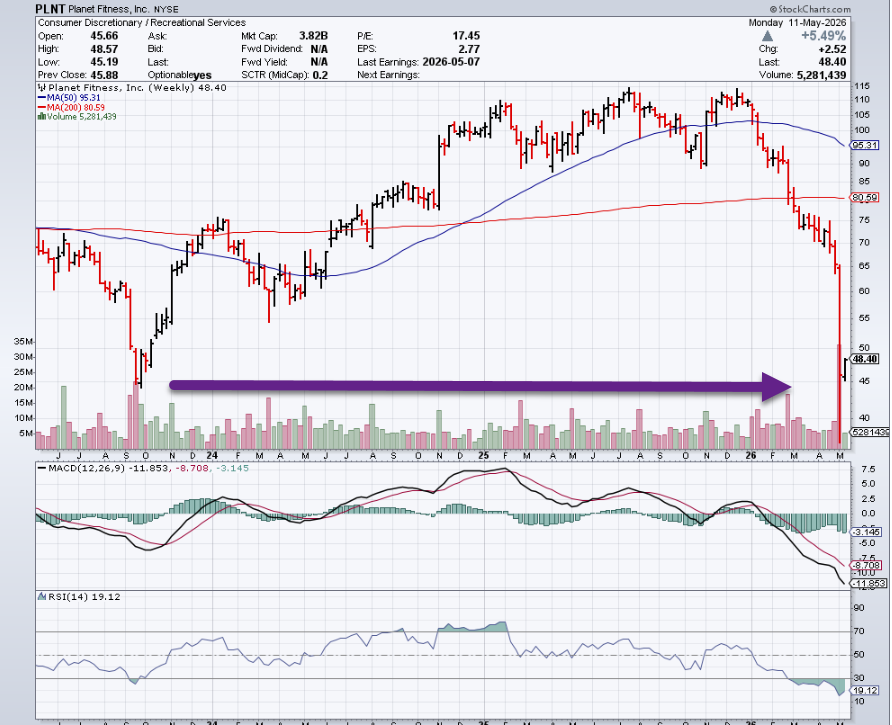
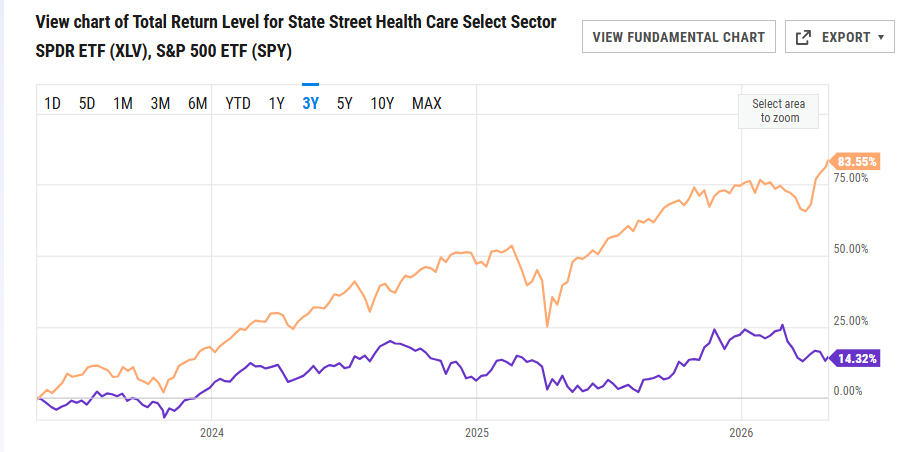
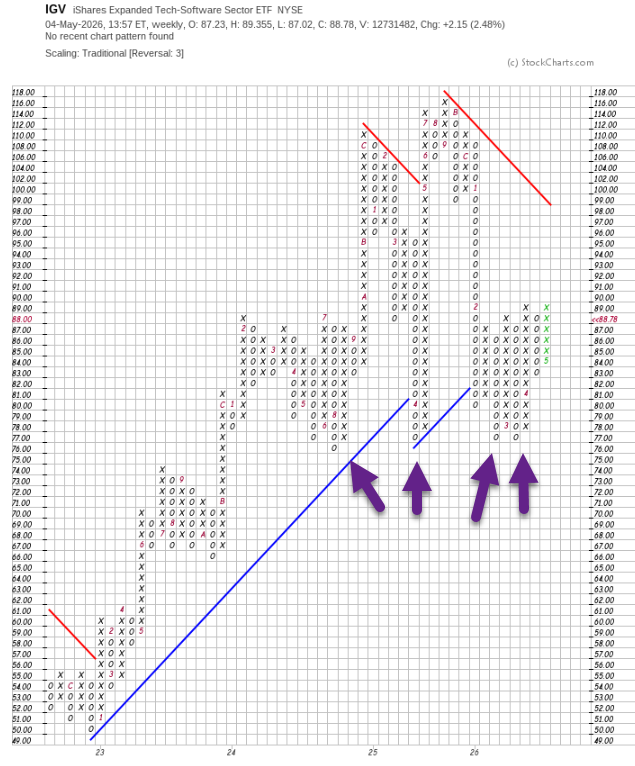
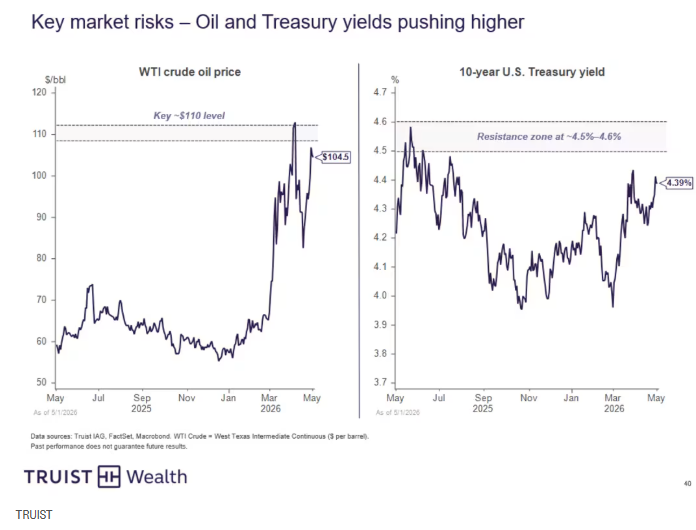
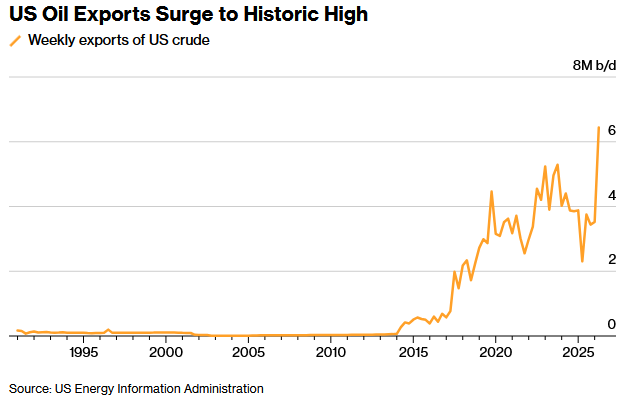
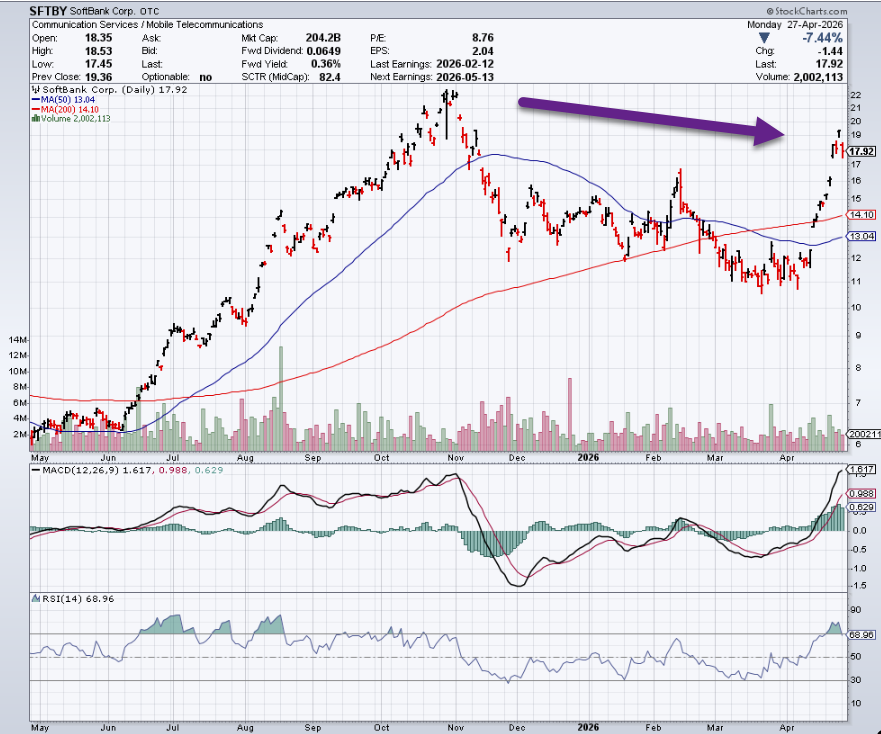
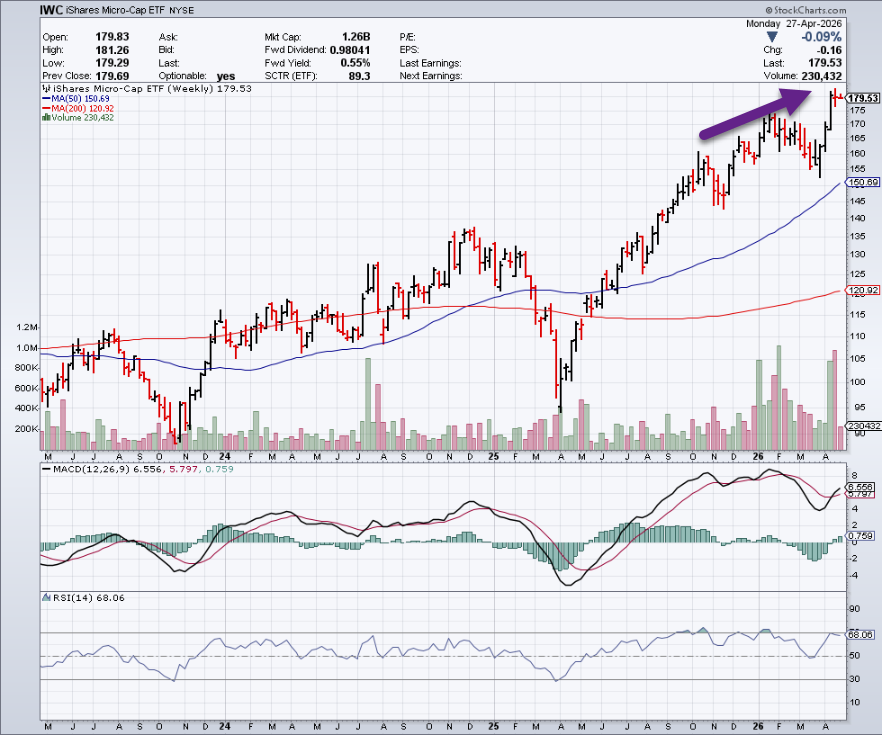
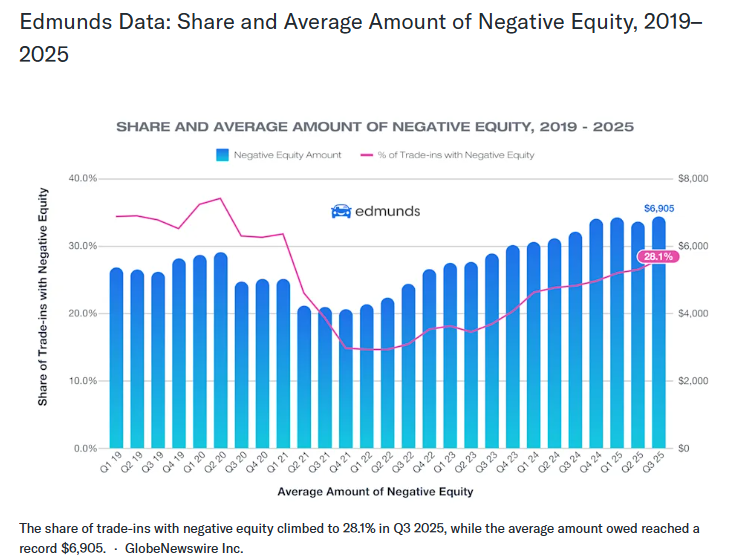
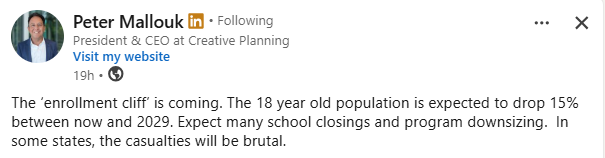
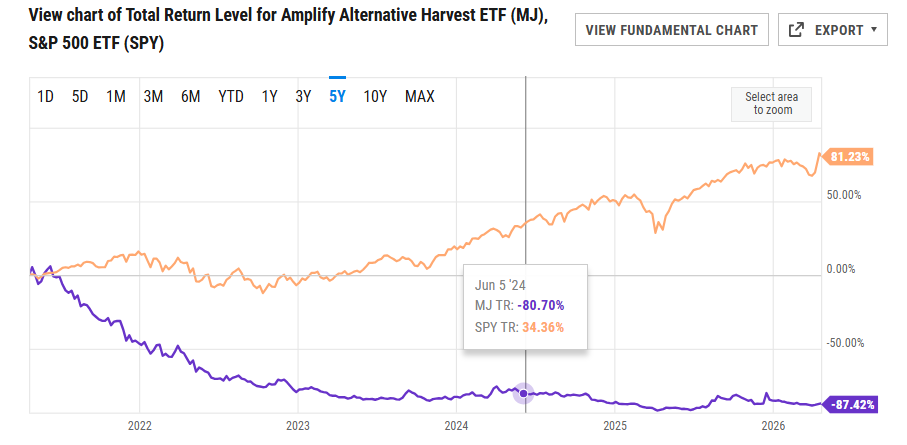
5. Three Years Since 2021 50%+ Energy Sector Rallies
Bespoke
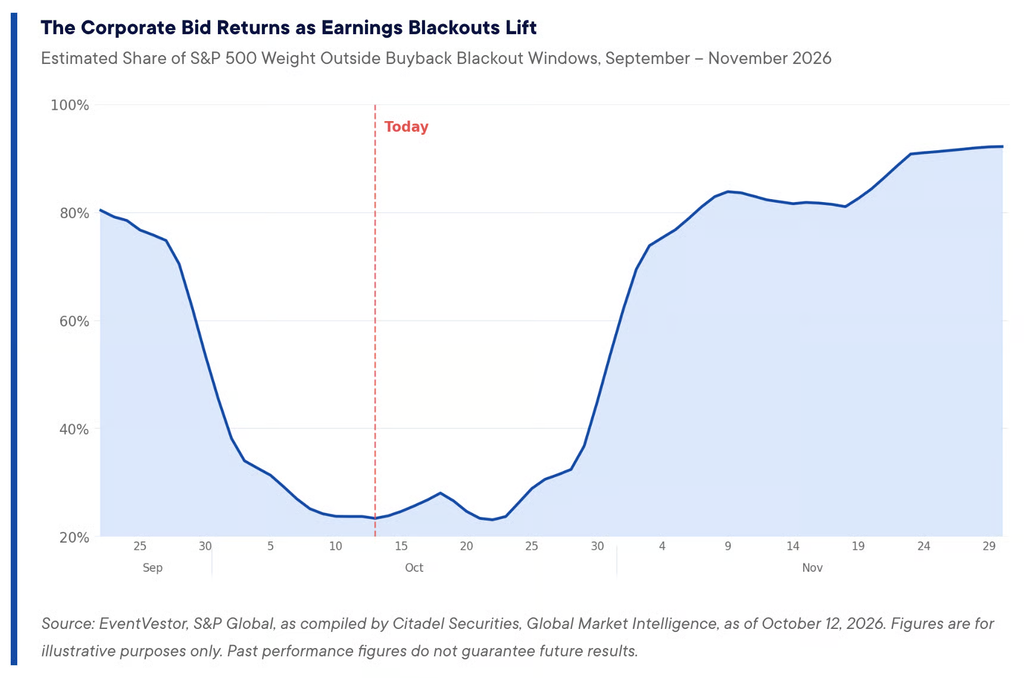
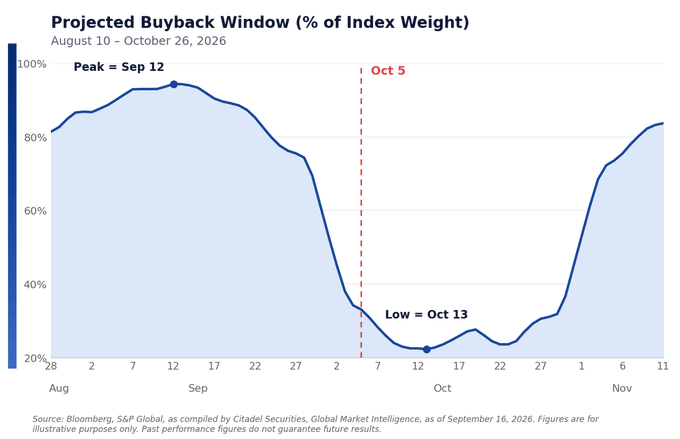
6. Stock Buybacks in Peak Blackout Period….Buybacks Re-Start November
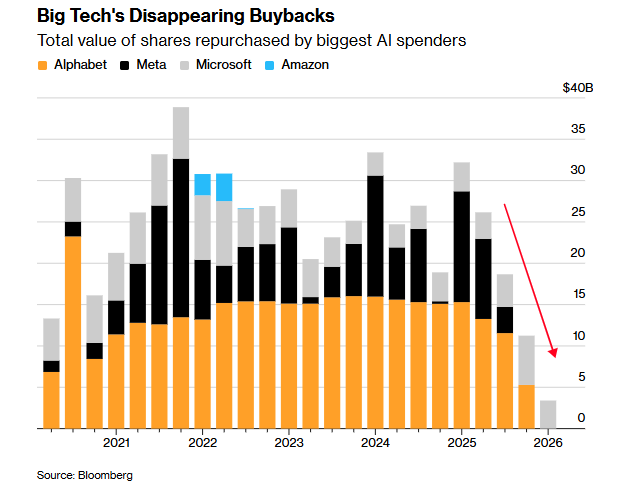
Buybacks. “We are currently in peak earnings blackout, with just 24% of S&P 500 index weight outside repurchase blackout windows. That figure rises to ~55% by month-end, ~75% by November 3 (Midterm Election Day), and ~85% by November 9, as companies report earnings and trading windows reopen.”
The fear of the unknown. The fear of failure. The fear of uncertainty.
Mostly, we’d like safety. And when the world changes, safety feels like it’s in short supply.
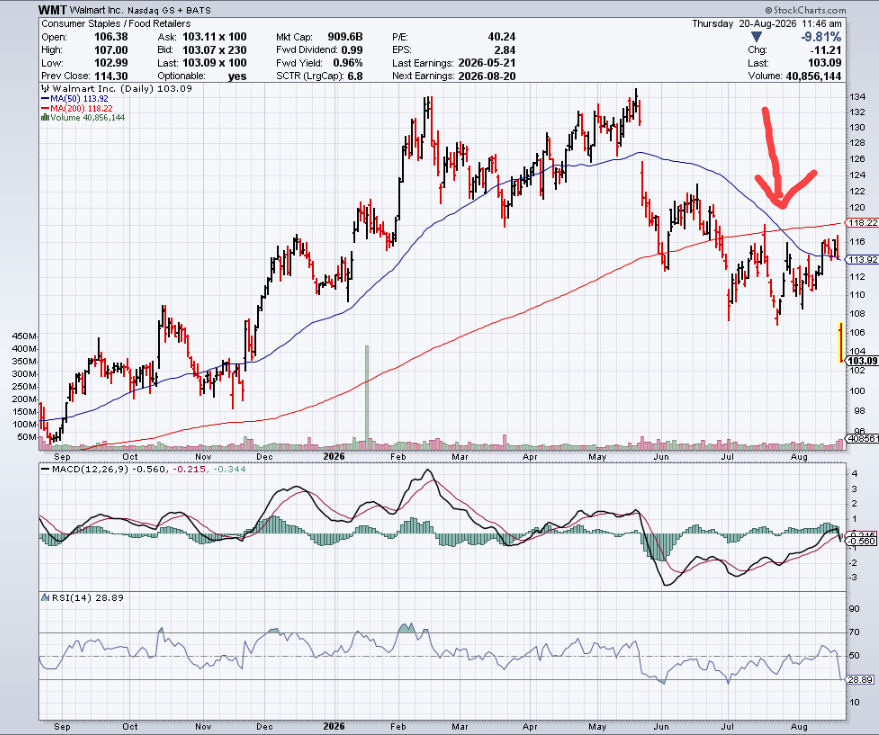
One reason we have security theatre is that the performance of security often creates more of the feeling we seek than actual safety.
Taking your shoes off before you enter the airport. Installing a giant, clunky, loud, armored garage door. Viewing strangers with suspicion. Using false proxies and useless shortcuts to insulate ourselves (or seek to do so) from the changes and the unknowns we fear.
Statistics rarely overcome stories.
So what does?
Familiarity. And conversation.
“What would make you feel safe?” is a different approach than “there’s nothing to be afraid of.”
Until we get familiar enough with the new status quo, what performance would be a helpful way to create the feeling of safety?
What if we could create even more of that feeling with a different approach?
And while we’re at it, what if we spent time becoming familiar with the thing you’re afraid of?
The most useful spreadsheets and facts are the ones that fearful people create to help them see their world differently.
1. Calendar Days Without -10% Correction in S&P…QQQ has Two -10% Corrections 2026
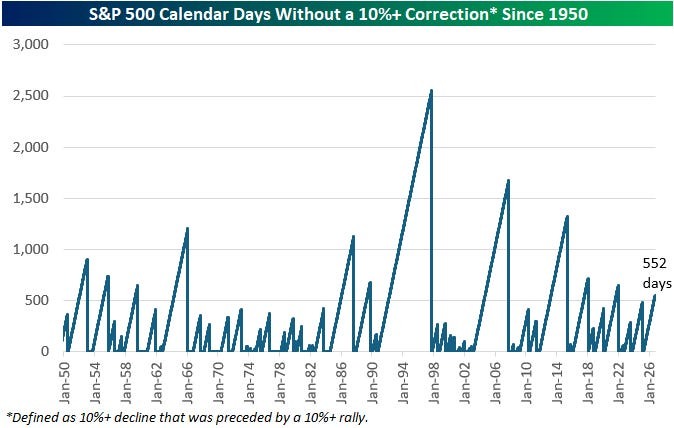
Bespoke Investment Group-As shown below, the current 552-day streak without a correction is the sixth-longest since 1990, and it’s more than twice as long as the average gap of 246 days between corrections going back to 1928. If you think the last 552 days have been calm, however, remember that we went nearly seven years without one from late 1990 to late 1997!
2. Investors Max Overweight Tech
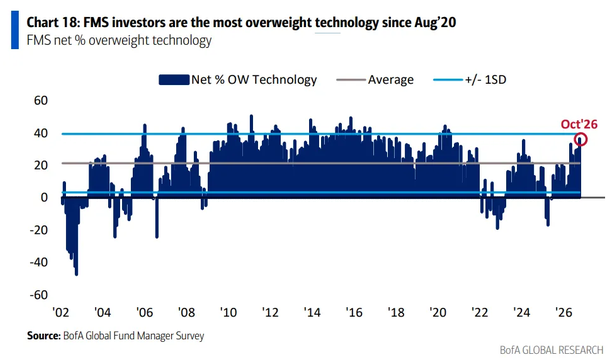
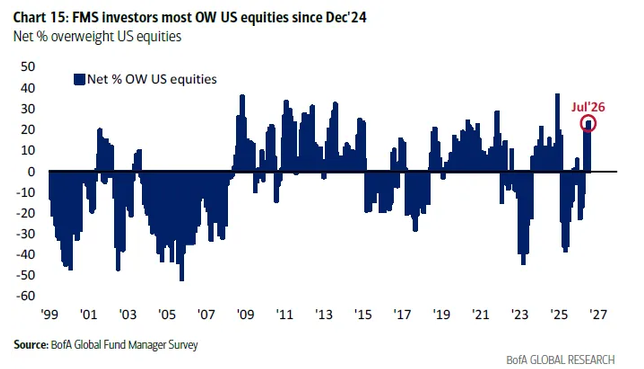
Dave Lutz Jones Trading Global investors chasing the AI-powered equity rally are the most exposed to technology stocks since the rebound from the Covid pandemic six years ago, according to Bank of America. Respondents in the October BofA survey said global semiconductor stocks were the market’s most crowded trade.
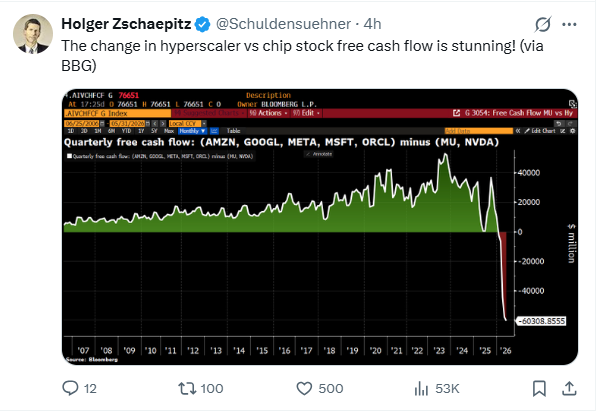
3. Free Cash Flow from AI Players
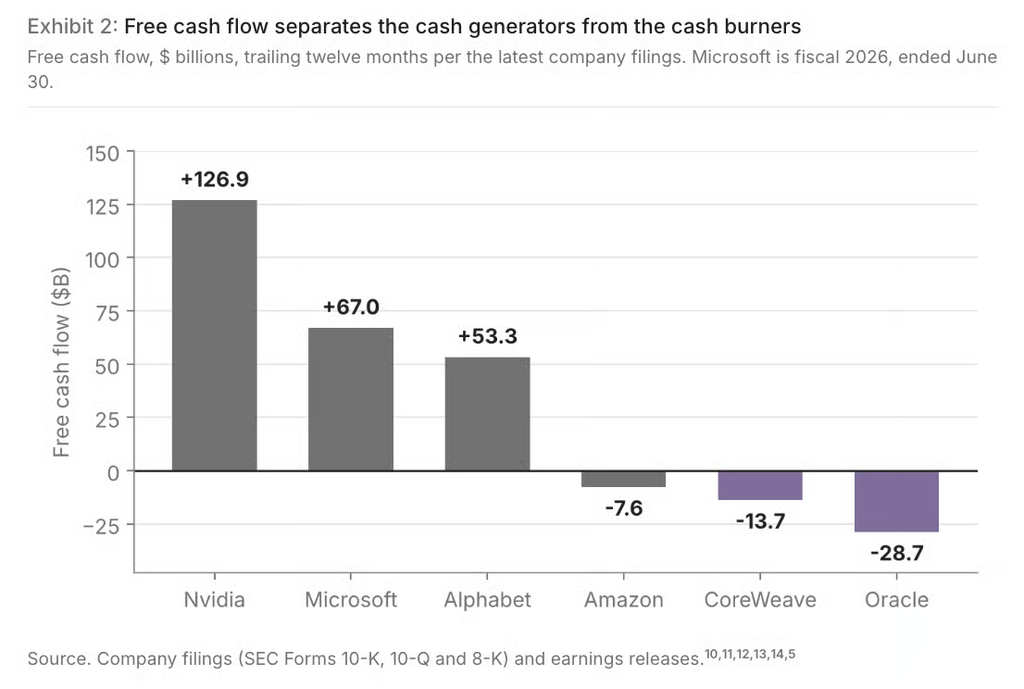
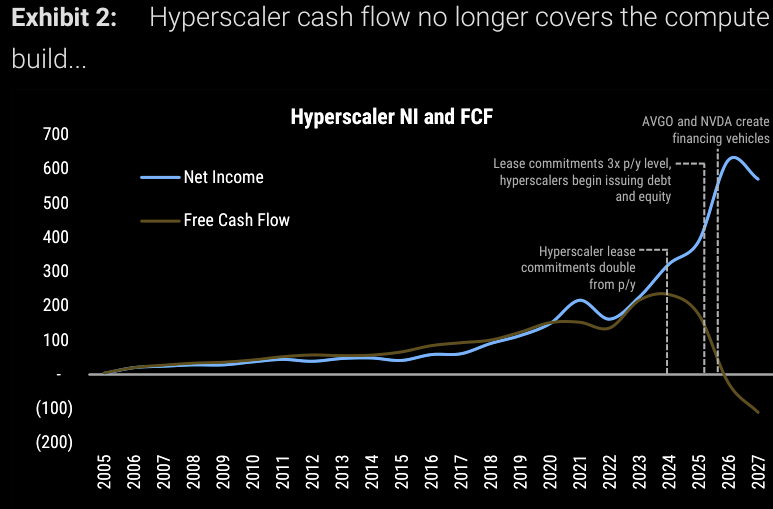
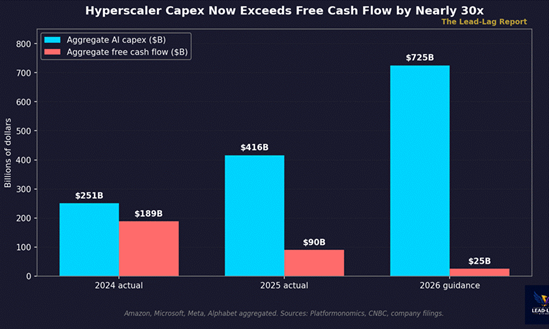
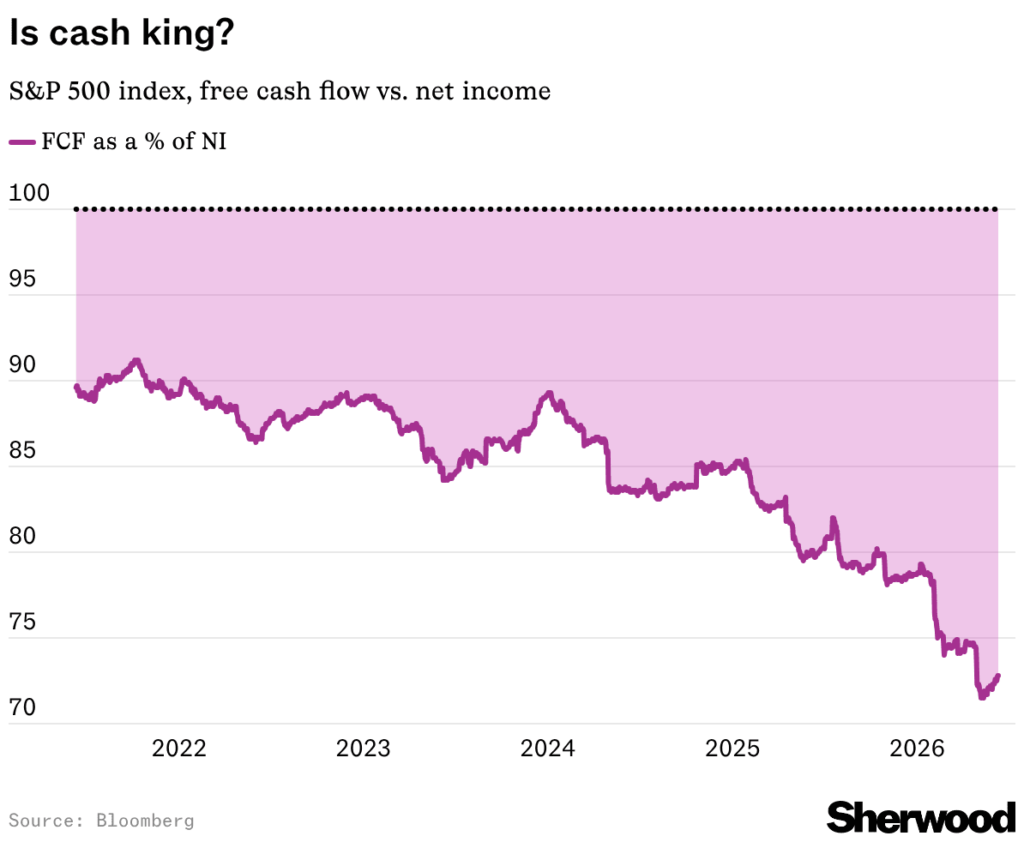
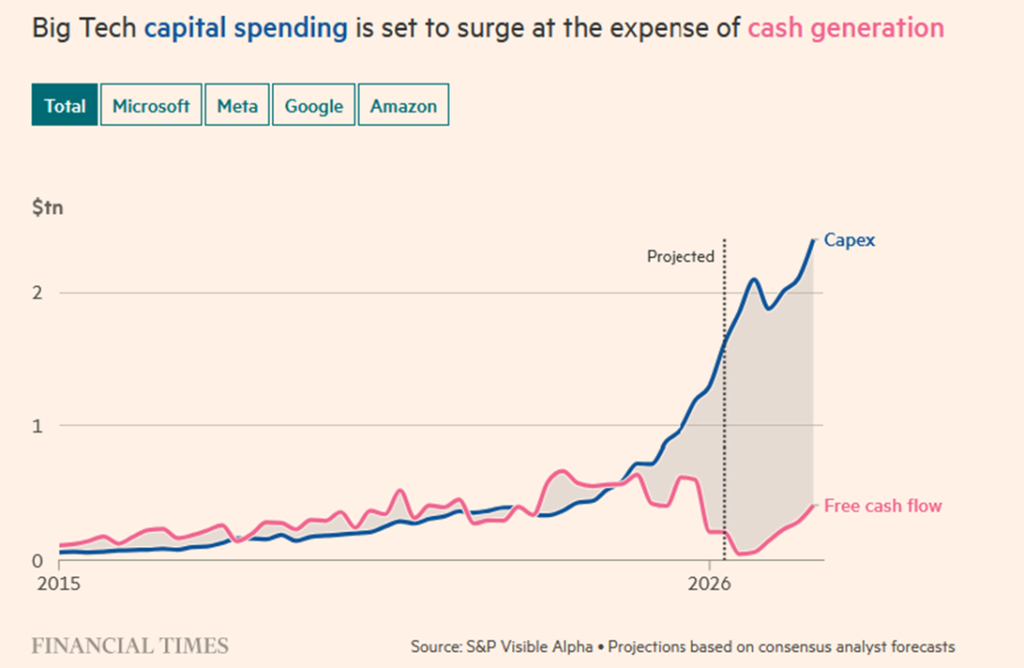
Free cash flow is where the AI buildout shows up first, and at Amazon, Alphabet and Microsoft it is still falling.
Phil Rosen
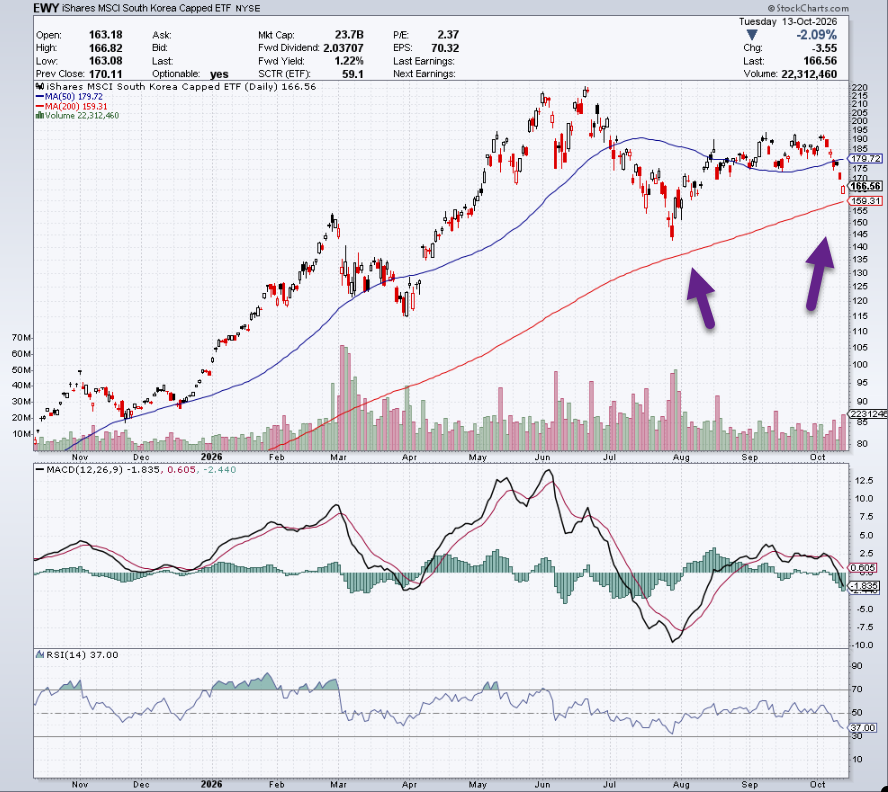
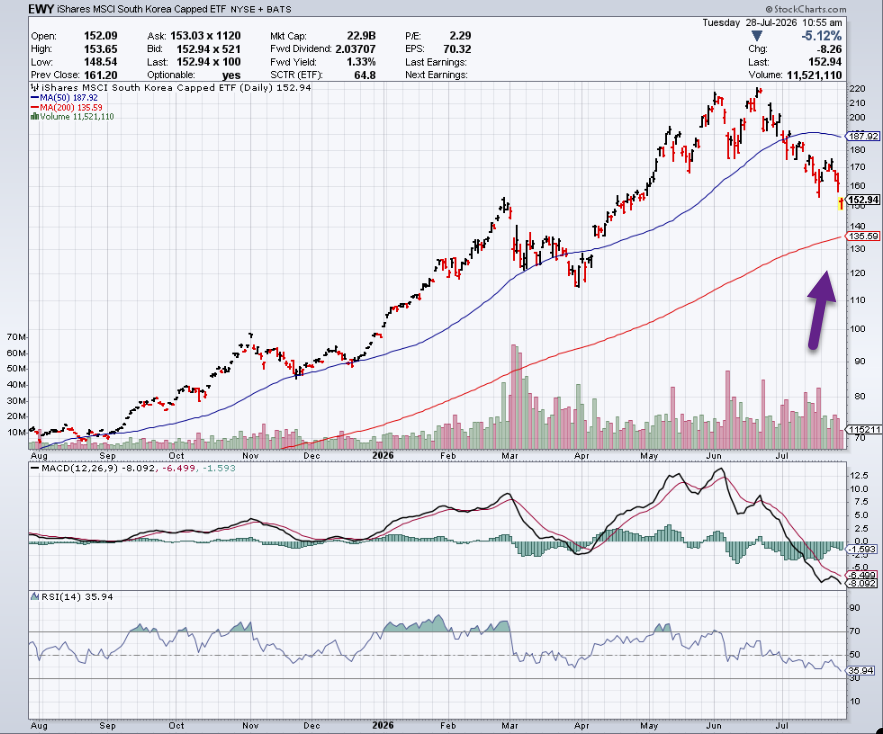
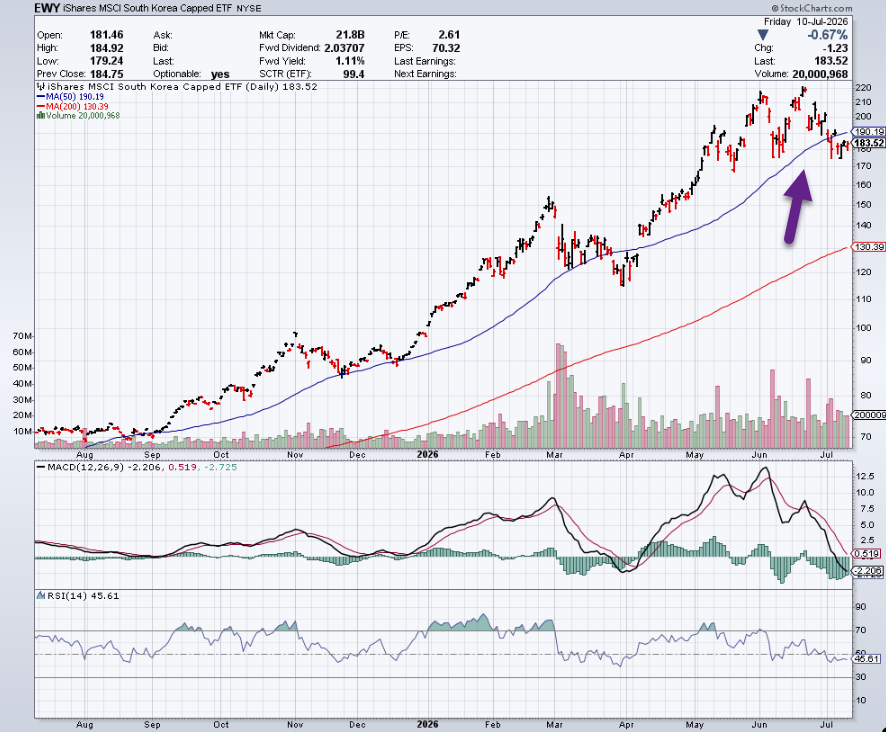
4. South Korea EWY Second Pullback to 200 Day in 3 Months
Stockcharts
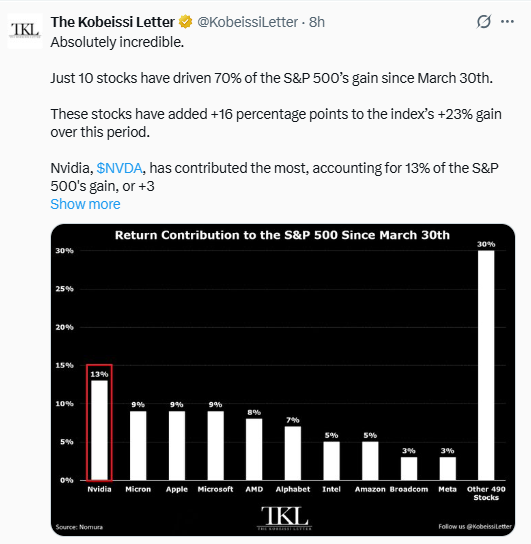
5. Just 10 Stocks Have Driven 70% of the S&P 500 Gains Since March 30th
The Kobeissi Letter
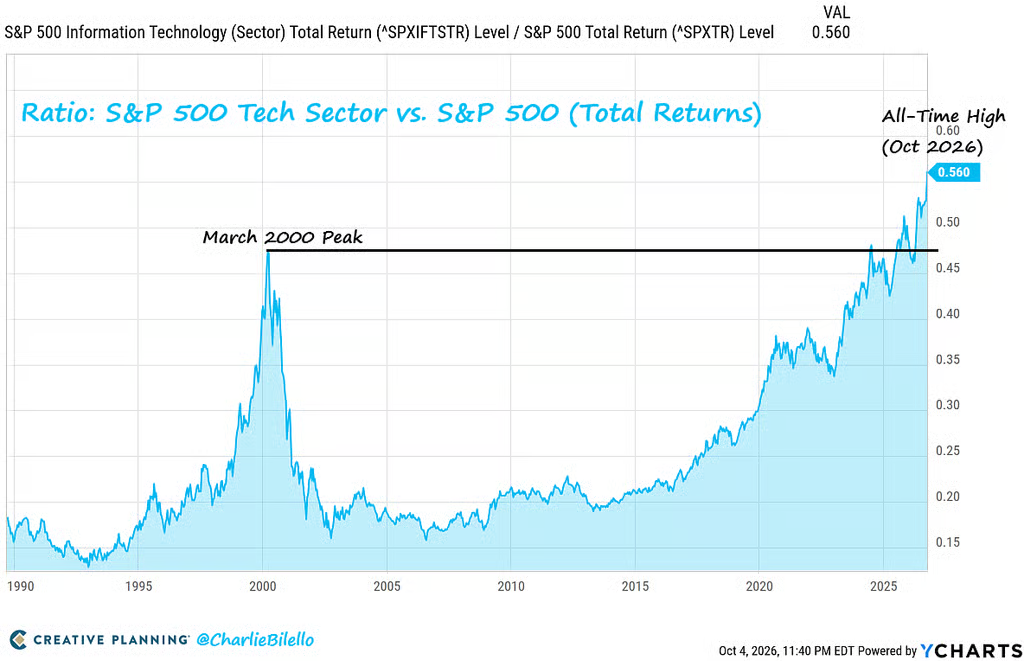
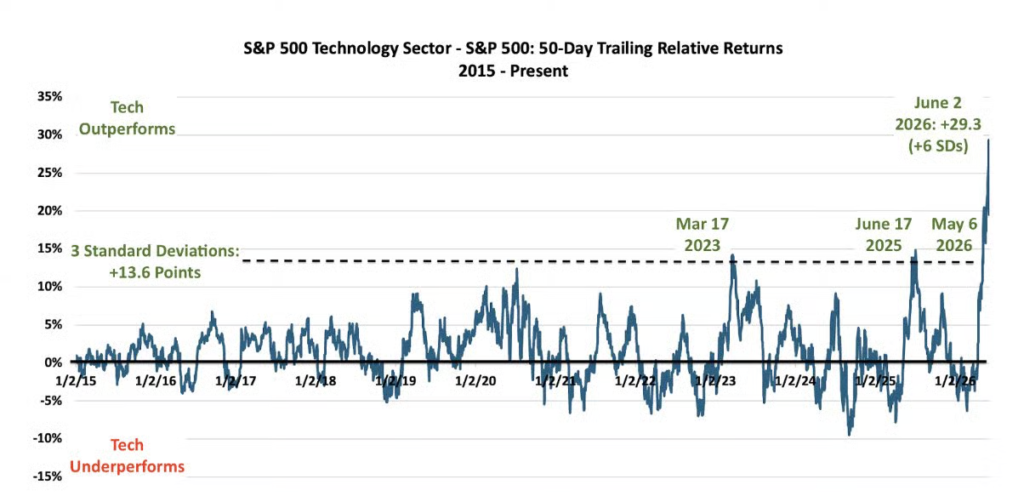
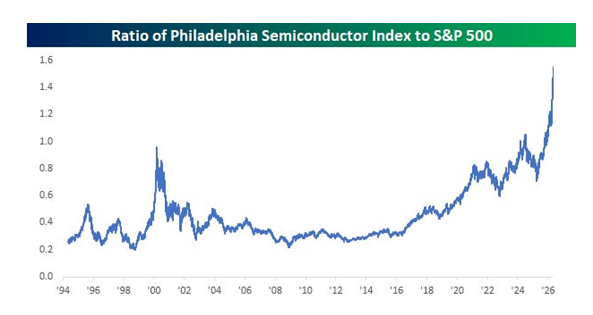
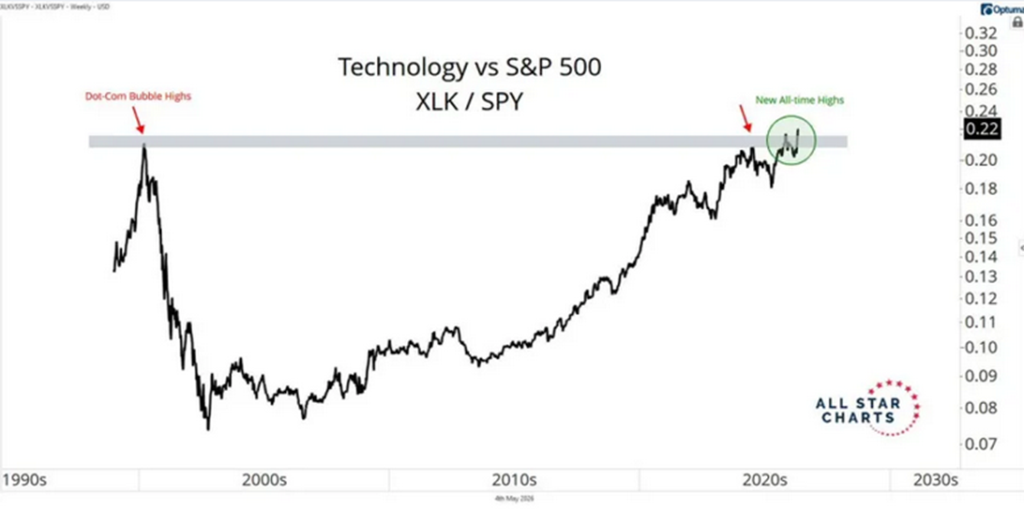
6. Tech vs. S&P Relative Strength at Record High
The relative strength of the technology sector hit another all-time high this month. @Charlie Bilello
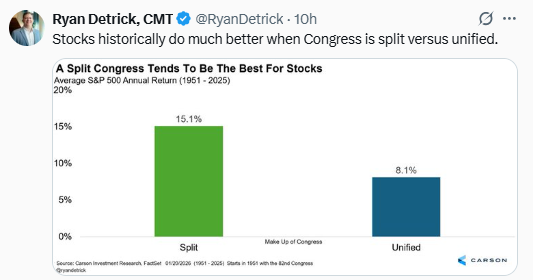
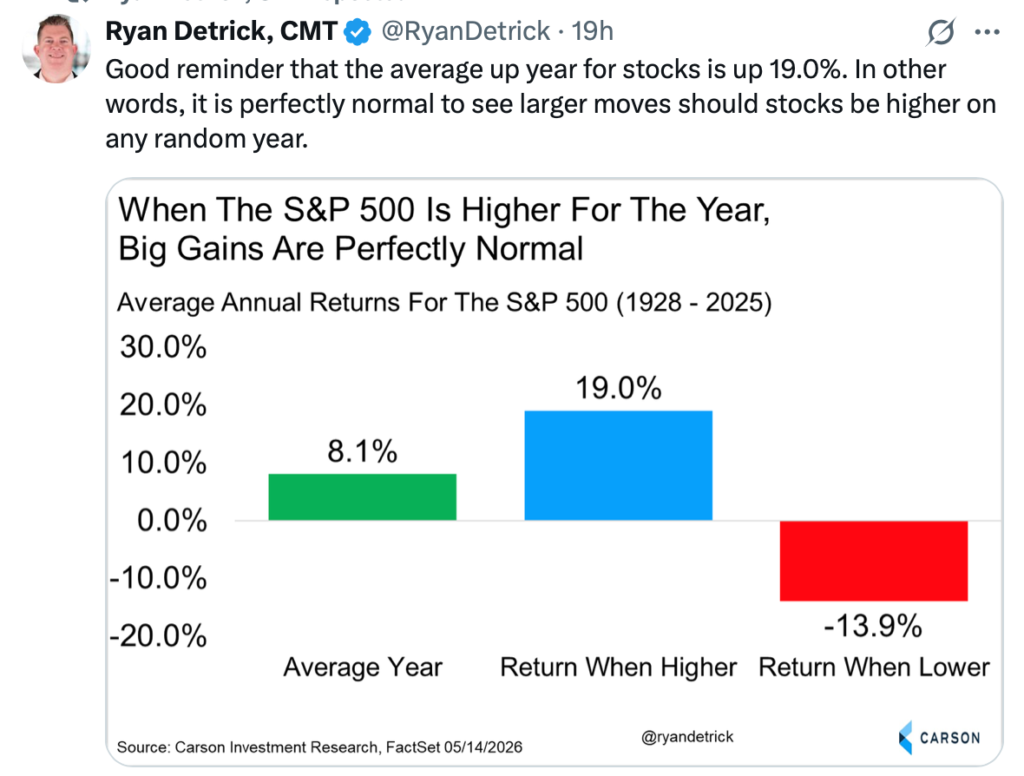
7. Split Congress is Bullish
Ryan Detrick
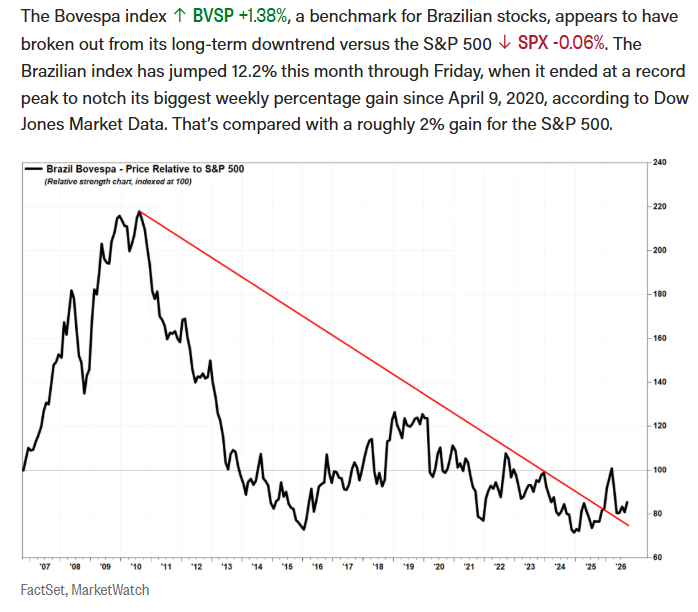
8. Brazil Stocks vs. S&P
Marketwatch
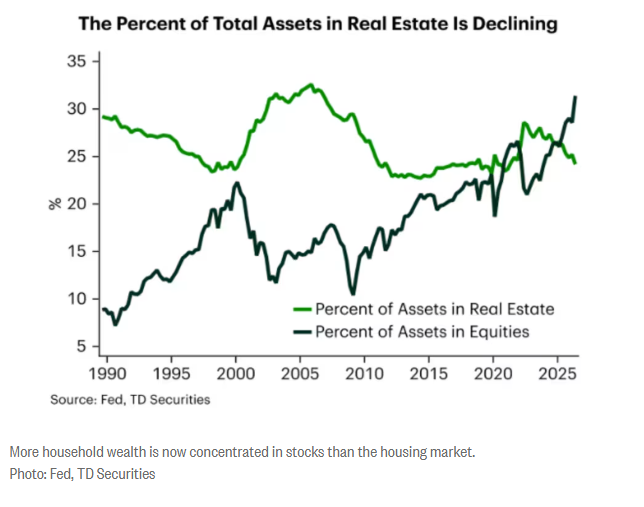
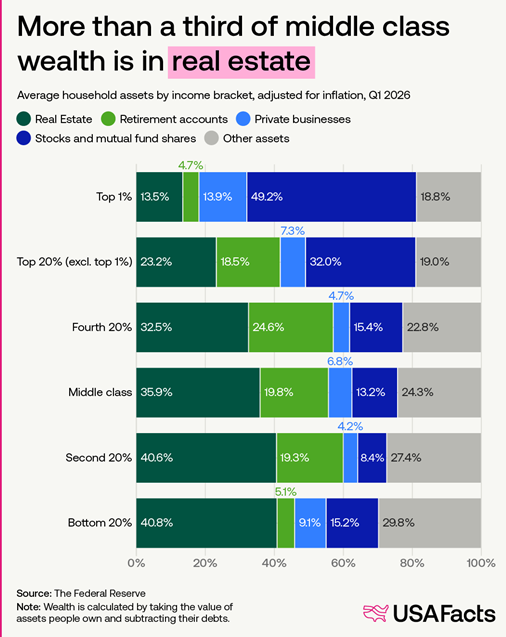
9. American Stock Holdings are Larger than Real Estate Holdings
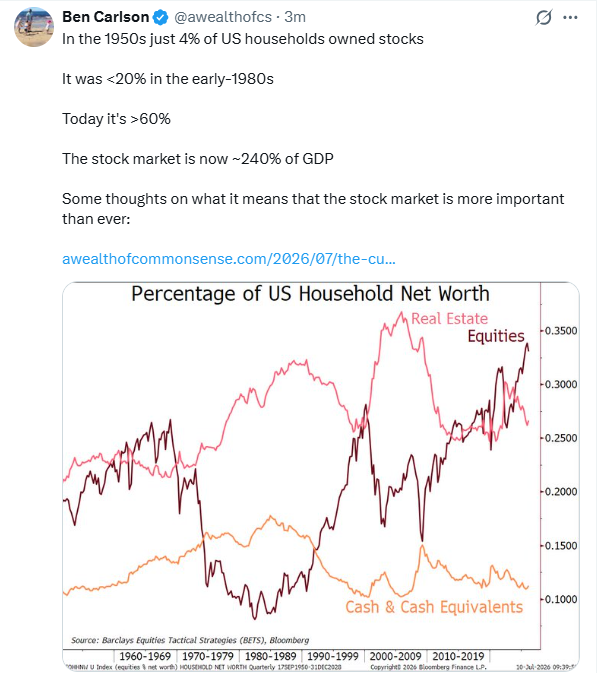
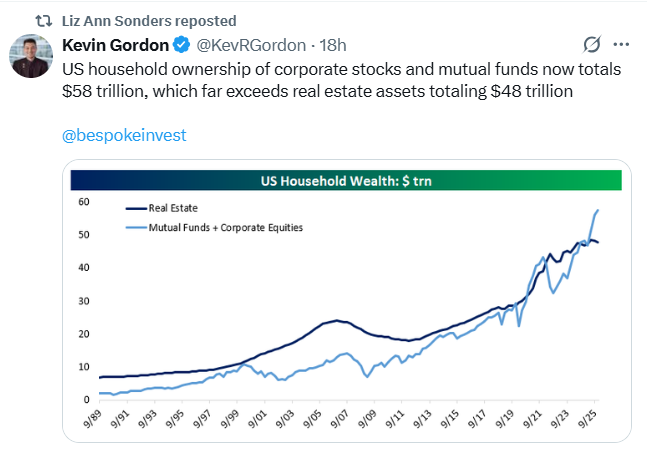
Marketwatch-Stocks now account for more than a 30% share of total U.S. household assets, versus real estate at closer to 25%, according to the below chart from TD Securities. That wasn’t always the case. Back in the mid-2000s, real estate was a much larger share of total household wealth at more than 30%, while stocks were around 15%.By Joy Wiltermuth
Marketwatch
10. The Secret to Maintaining Happiness as You Age
Preserving contentment through perceived control.-Psychology Today
Wendy L. Patrick, J.D.
Key points
The perception of control counteracts the negative effects of age-related changes.
Interventions to improve developmental adaptation over time improve perceptions of aging.
Perceiving loss can decrease happiness by undermining one’s concept of self.
“Young people don’t realize how good they have it,” we remark as adults. Young life flourishes with defining moments, age-related milestones, and motivation for the future. Mid-life experiences, in contrast, range from perceived crises to the wisdom of maturity, often both. Yet aging does not need to be a negative experience, particularly for people who are able to maintain a sense of peace and happiness throughout the lifespan through a perception of control. Research explains.
Age Is Just a Number: The Comfort of Control
As we age, change happens. The key to preserving peace and contentment may have less to do with the changes, whether positive or negative, and more to do with perceived control over changing circumstances.
Maria Wirth et al. (2026) examined how perception of control impacts individual awareness of age-related change and happiness.[i] They begin by acknowledging that in late adulthood, an awareness of age-related losses and the absence of age-related gains is associated with decreased feelings of well-being, including lower amounts of happiness. Yet the perception of control is a promising method of counteracting the negative effects of perceived age-related changes. In their research, studying 268 middle-aged and older adults ranging in age from 50 to 91, they found that perceptions of age-related losses were linked with lower levels of happiness only for participants who experienced a low level of perceived control. Wirth et al. thus recognize the importance of the perception of control on maintaining happiness in the face of age-related changes, and that interventions designed to improve developmental adaptation in later years should include improved self-perceptions of aging and a stronger sense of control.
Realistic Recognition of Loss
As we age, we confront and accept changes in a variety of areas—physically, mentally, and financially, to name a few. Yet the awareness of age-related losses, whether we accept them or not, can impact personal happiness. Wirth et al. note, for example, that merely accommodating something as basic as changes in physical fitness might include limiting physical activity to avoid injury, which could lead to additional loss of existing physical capability. More broadly, avoiding or limiting pleasurable activities or behaviors can negatively impact enjoyment of life, which is a basic contributor to happiness.
Wirth et al. recognize that the perception of loss may decrease feelings of happiness by undermining one’s concept of self. Perceiving gains, on the other hand, should improve happiness and can enhance strivings for resource accumulation, improve the appreciation of social life and relationships, enhance life experiences, and spark desire to engage in pleasant activities. Conversely, a perceived absence of age-related gains can cause individual happiness to decrease.
Controlling the Narrative Cultivates Contentment
Wirth et al. recognize that maintaining or improving quality of life strongly relies on individual perception of control—the extent to which actions can bring results. Perceiving oneself as at the mercy of external factors could exacerbate the perception of age-related loss, while perceiving a high level of control could act as a motivational response that can spark active coping and adapting to age-related challenges. They note that perceiving a high level of control can even counteract negative stereotypes that are linked to perceived age-related losses.
Growing older involves gaining life experience and appreciation, acquiring wisdom and maturity in the process. Considering the fact that everyday happiness later in life is linked to daily changes in self-observations of aging and perceived control, there is cause to consider the positive aspects of aging. Credibility, experience, wisdom, patience, and other benefits of a life well-lived are personally fulfilling, are interpersonally engaging, and contribute to health, happiness, and peace.
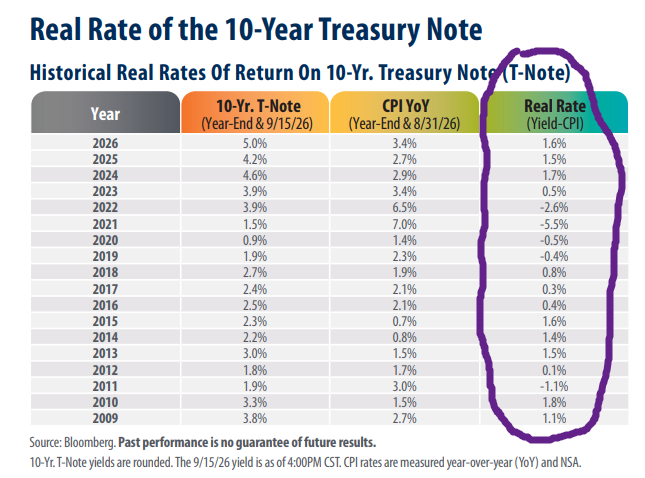
1. Inflation Adjusted Return of 10-Year Treasury Note-Bob Carey Firstrust
First Trust Portfolios
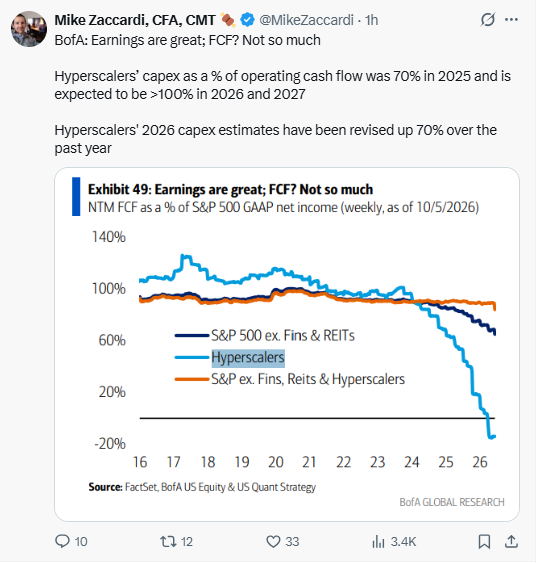
2. Earnings vs. Free Cash Flow
Mike Zaccardi
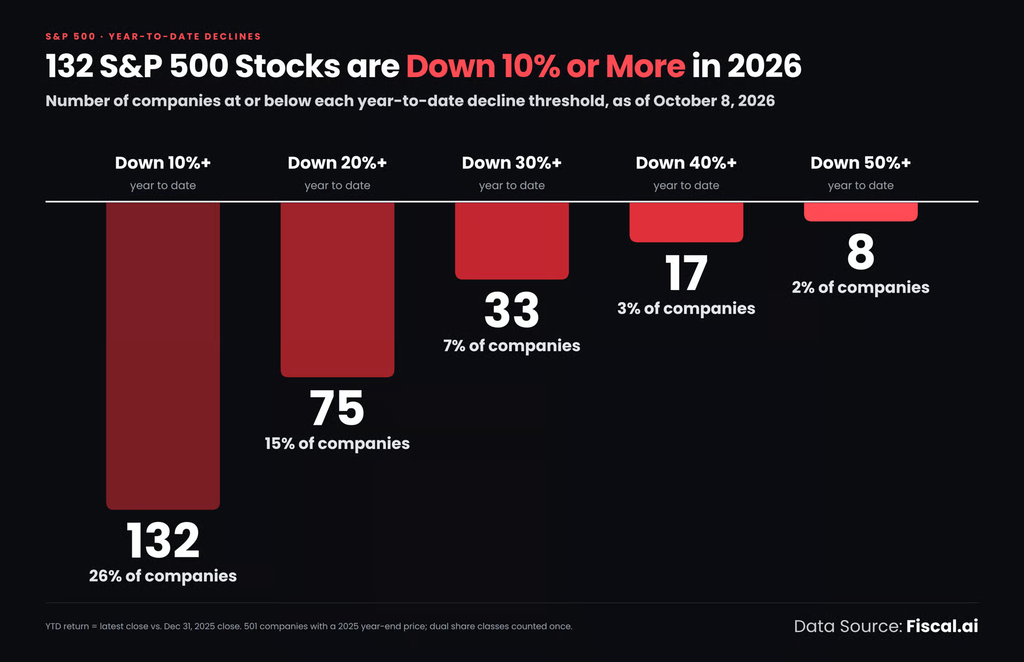
3. 132 S&P Companies are Down Over -10% 2026
On a year-to-date basis, there are 132 companies now down more than 10%.
Fiscal.ai
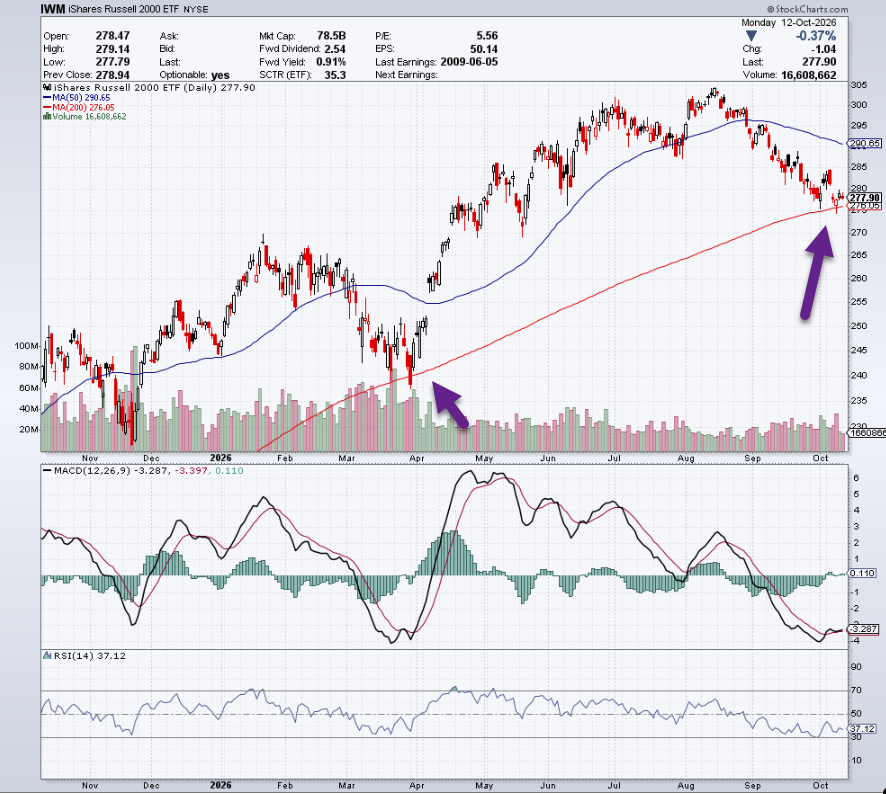
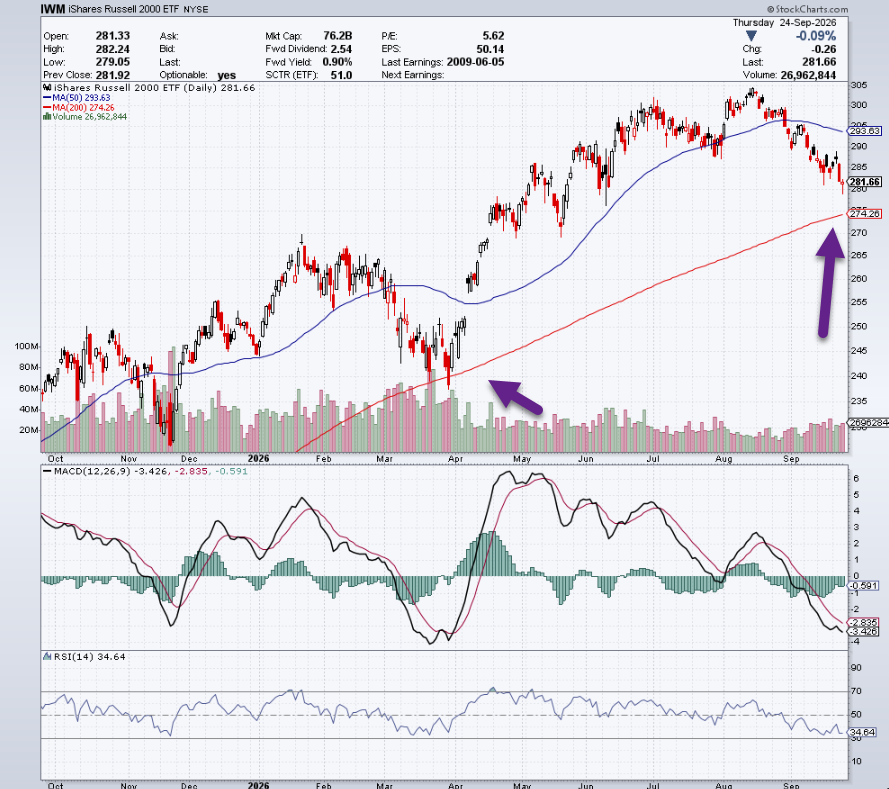
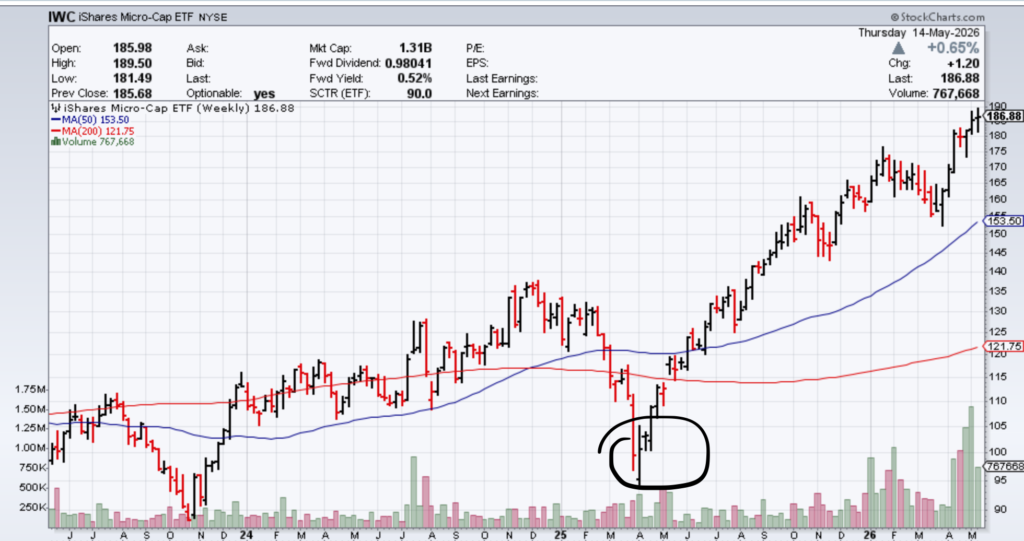
4. Small Cap Stocks Pullback to 200-Day
StockCharts
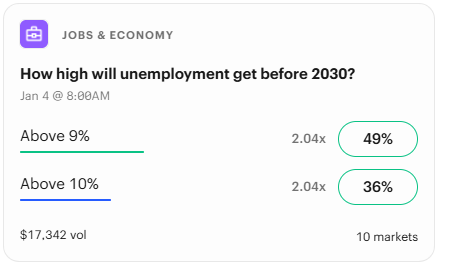
5. AI Layoffs Have Not Come Yet…Kalshi Line for 2030
Kalshi
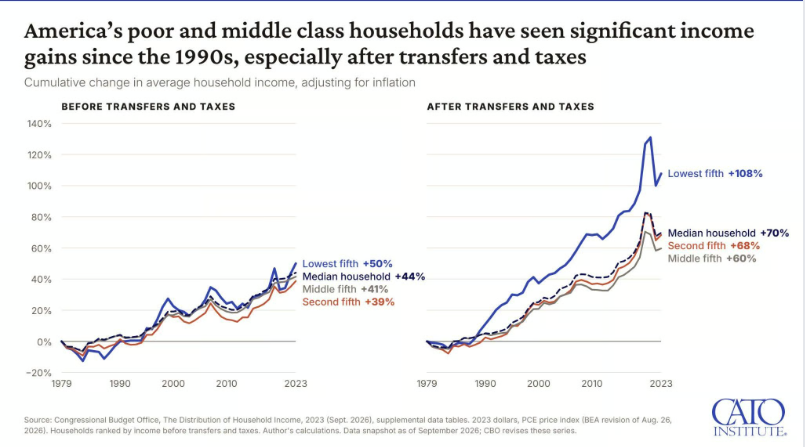
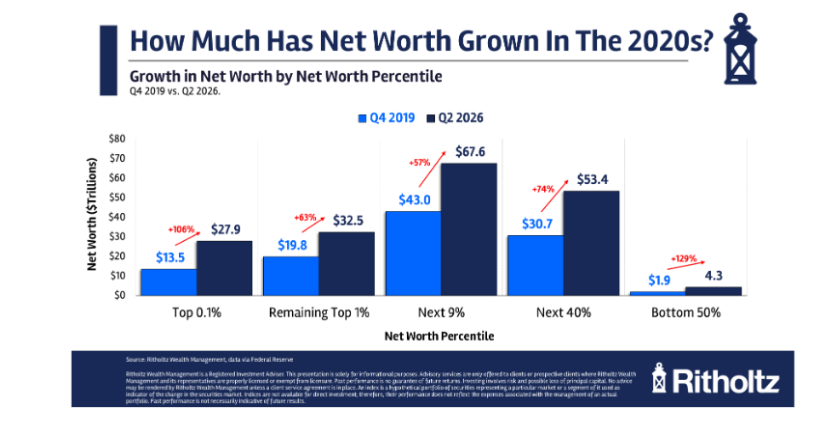
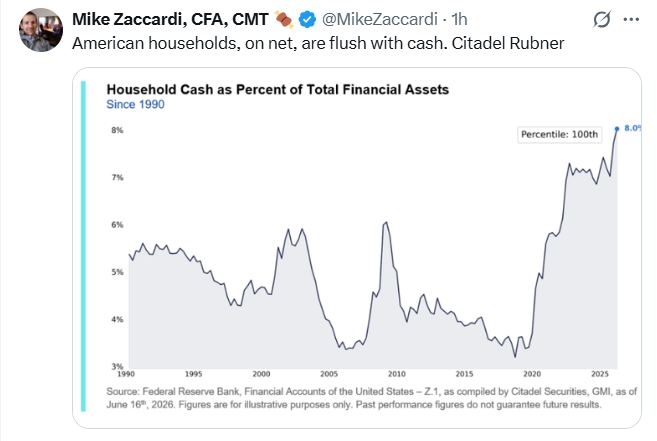
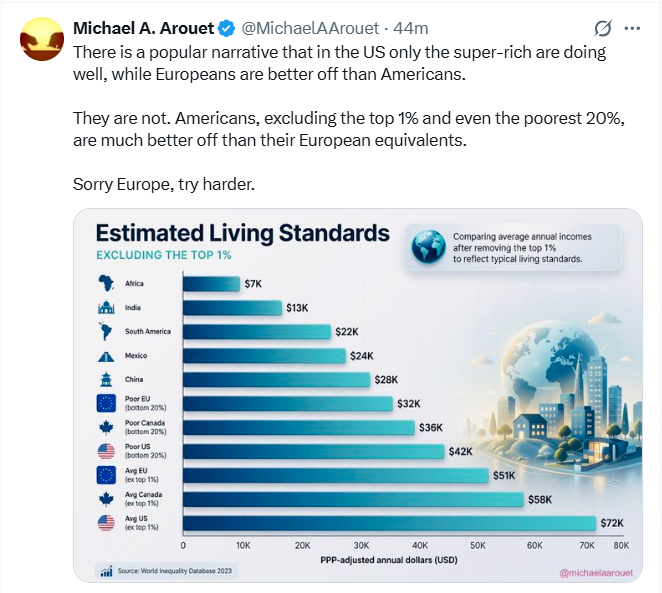
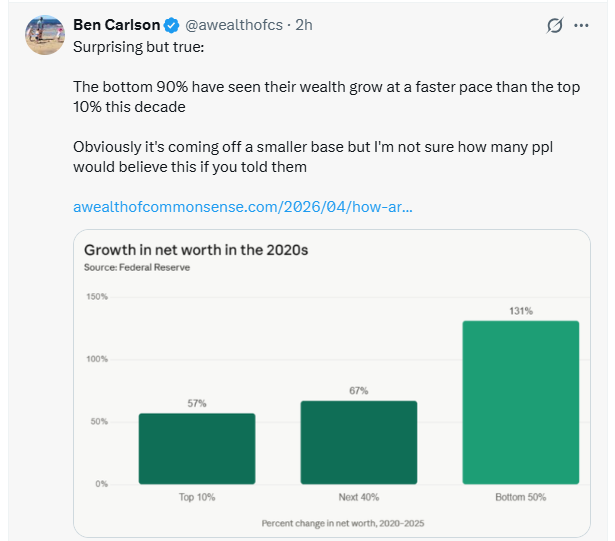
6. American Poor and Middle Class Households See Significant Gains
The Irrelevant Investor
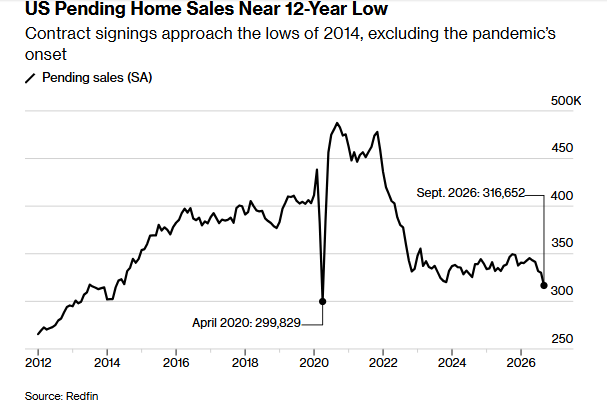
7. U.S. Pending Home Sales Near 12-Year Low
Bloomberg
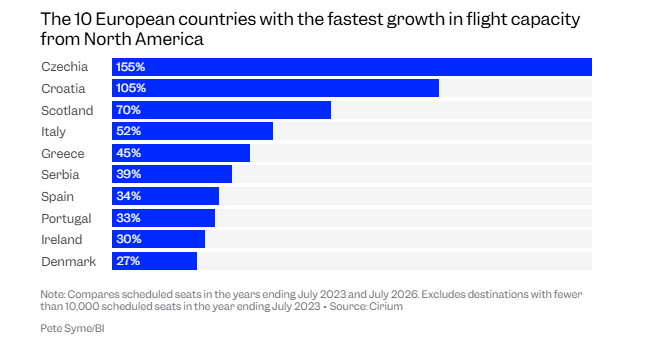
8. 10 Fastest Growing Euro Destinations for Americans
Business Insider
9. Where are U.S. Troops Based?
Where are US troops based overseas?
Unlike reservists, active duty personnel are continuously engaged in full-time military service, making them the primary force deployed to maintain US military presence and operations around the world.
Data can provide insight into what unclassified locations troops are assigned to. It does not include all personnel on temporary duty or deployed in support of emergency missions.
Out of the 1.35 million active duty troops with known locations, 13.1 percent, or about 174,400 troops, were stationed abroad (including US territories) in March 2026. The top five countries with the highest number of stationed US troops are:
Japan (54,900)
Germany (37,000)
South Korea (23,400)
Italy (12,800)
United Kingdom (10,400)
Where are US troops based in the US?
Active-duty troops are also stationed domestically. As of March 2026, about 1.16 million troops were stationed in the US. About 48.9% of these troops are in five states:
California (163,900)
Virginia (123,700)
Texas (116,100)
North Carolina (96,000)
Florida (68,600)
Twenty-three states and Washington, DC, have over 10,000 troops.
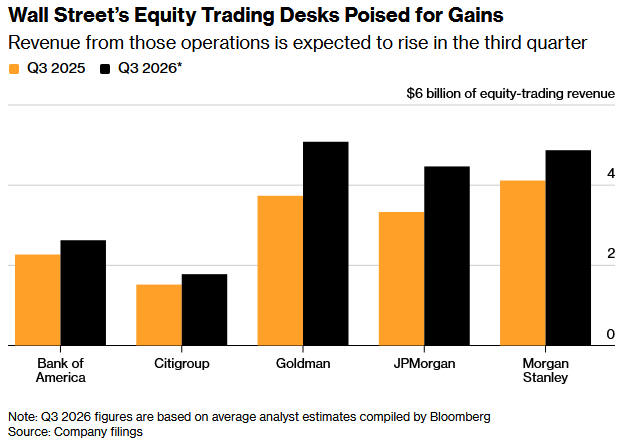
1. Investment Banks Reporting This Week….Trading Desk Projected Gains
Bloomberg
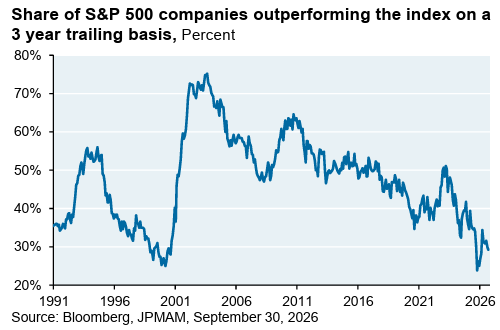
2. Share of S&P Companies Outperforming the Index Hit Internet Bubble Levels
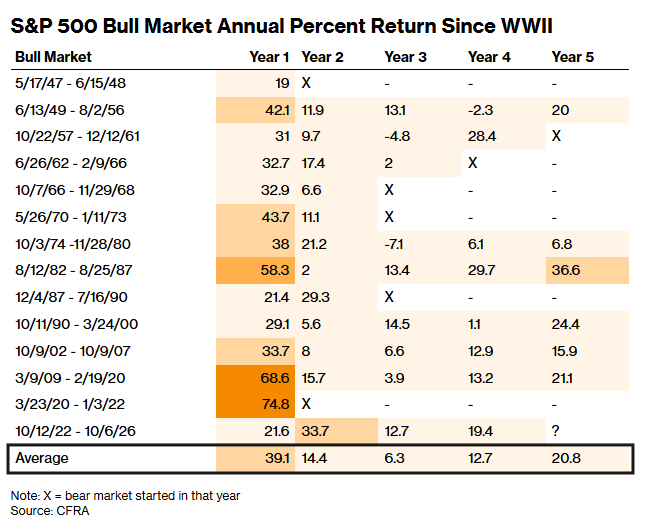
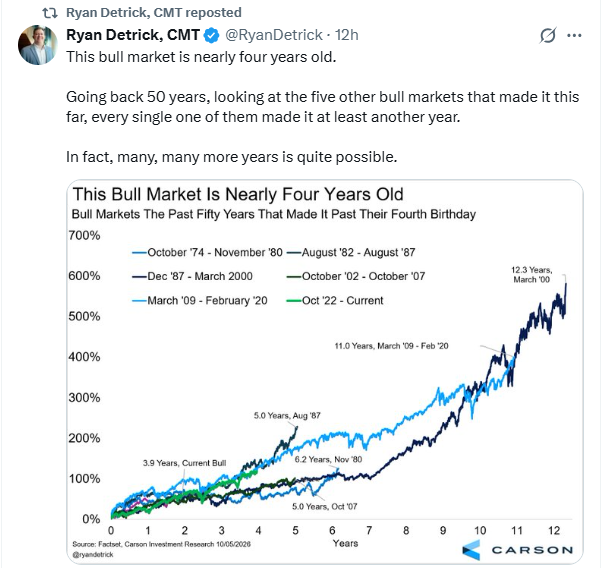
3. 2026 Bull Market vs. History
At 117%, the advance in the S&P 500 since 2022 is the third-largest for bull markets at their fourth anniversary, according to CFRA data going back 1947. And when the rally extended to a fifth year, the average gain was 21%, the data shows.
Zack Goldberg Jefferies
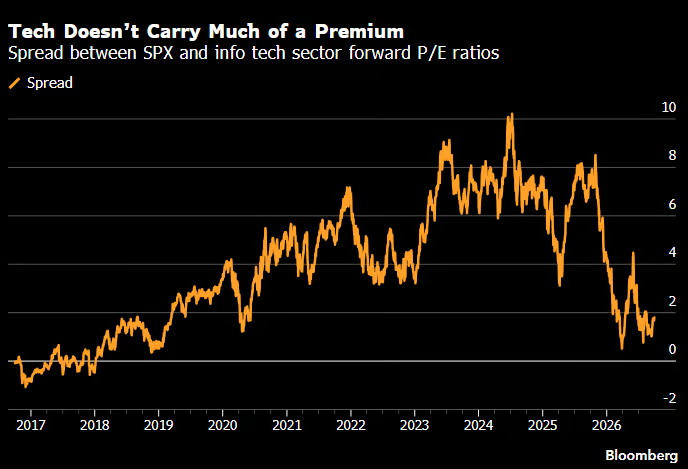
4. Tech Stocks Not Much of a Premium Over S&P
The chart below from Tatiana Darie, a macro strategist at Bloomberg, illustrates the point.
She told me on Full Signal that the spread between the S&P 500 and information technology sector’s forward P/E ratios has fallen to levels last seen at the start of the pandemic.
Phil Rosen
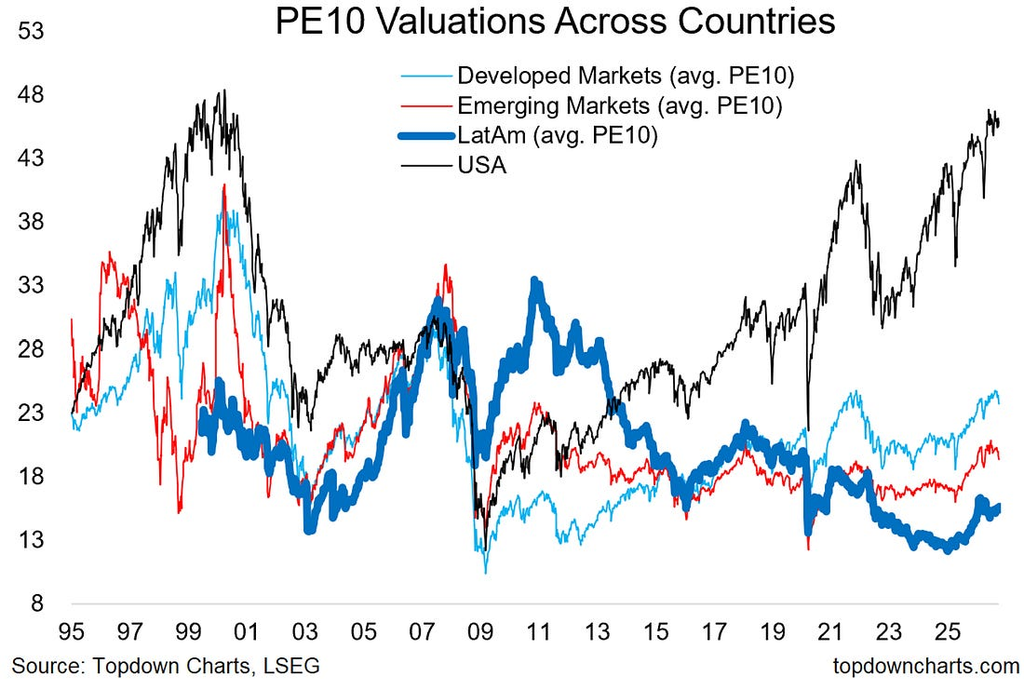
5. Latin America Post Big Move in Brazil….Still Cheapest P/E Region
Topdown Charts
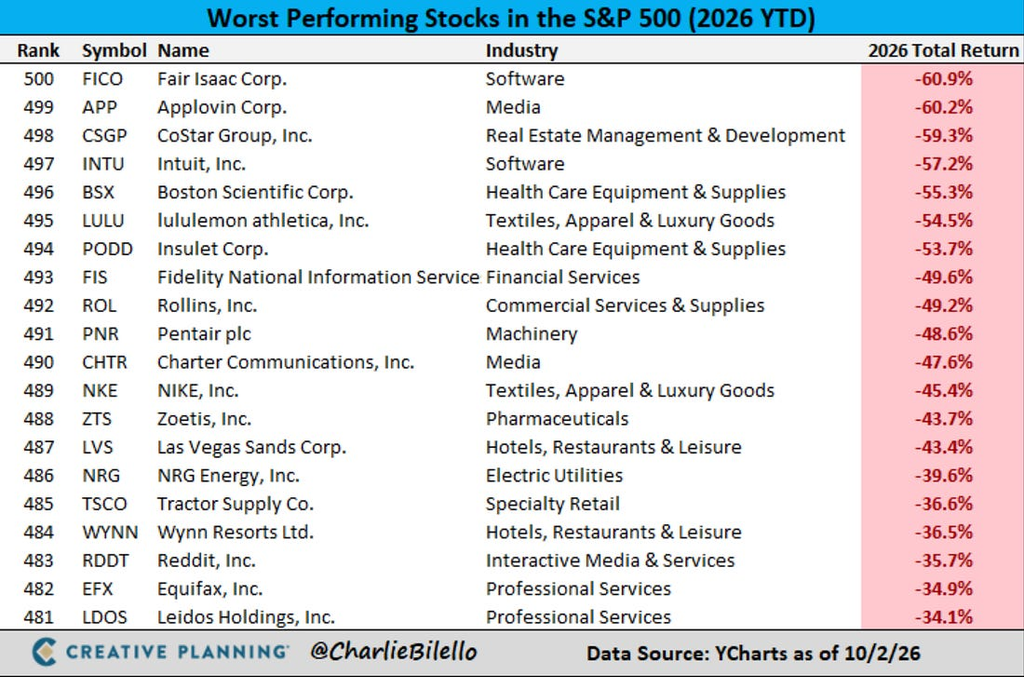
6. Worst Performing Stocks Year to Date
Worst Performing S&P 500 Stocks YTD
Charlie Bilello
7. China Offering Lucrative Research Grants to Researchers But None Are Coming
In Race With U.S., China Struggles to Recruit Foreign A.I. Researchers-NYT
China’s booming artificial intelligence sector has given local researchers good reason to remain in the country, but it has yet to lure overseas scientists despite a government push.
Chinese A.I. companies like Deepseek and Moonshot have made a name for themselves internationally. But China still struggles to recruit foreign researchers.Credit…Jade Gao/Agence France-Presse — Getty Images
By Zeyi Yang
As the United States and China vie for A.I. dominance, the Trump administration has made it more difficult for companies to hire foreign researchers, while China has made recruiting the world’s best scientists a national priority.
Over the past two years, China has flung open its doors to international researchers, introducing a visa for scientists and offering lucrative research grants.
Despite those efforts, foreigners are not coming.
Worse still for China’s ambitions, the number of Chinese scientists working in the United States has risen rather than declined, according to a new study about global A.I. research.
For every 30 Chinese researchers in the United States working on artificial intelligence in 2025, only one in China made the opposite journey, according to the study, conducted by the Carnegie Endowment for International Peace, a think tank.
“Despite U.S.-China tensions, the number of Chinese-origin researchers working in the U.S. actually rose by four percentage points rather than declined” compared with three years ago, said Damien Ma, who led the study.
8. Saudi Departures Yesterday from King Khalid Airport–1
Semafor
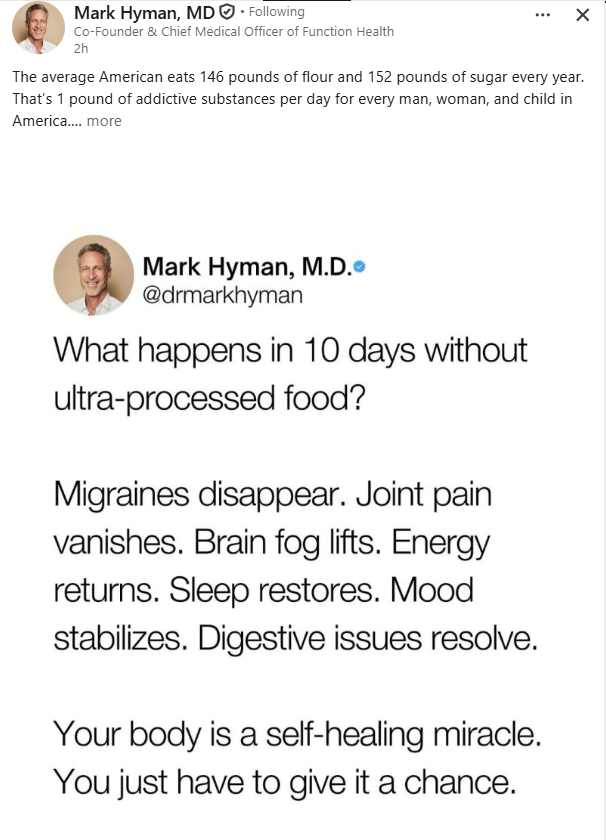
9. Mark Hyman Ultra Processed Food
The habits that matter most for skin longevity
I asked Dr. Mamina for the highest-value things you can do. Here’s her list:
Protect your skin from the sun. UV radiation is the number one outside factor in skin aging. Wear sunscreen, limit time outdoors between 10 a.m. and 2 p.m., and use hats and UPF clothing. You still want morning light for vitamin D and your circadian rhythm. Just avoid baking for hours.
Don’t smoke. Studies of identical twins show a dramatic difference in the twin who smokes and spends time in the sun.
Cut back on sugar. Sugar binds to collagen and forms advanced glycation end products, or AGEs, which make collagen brittle.
Eat the rainbow. Colorful foods rich in vitamin C, polyphenols, and carotenoids help fight oxidative stress.
Sleep and manage stress. Poor sleep and circadian disruption accelerate aging.
Exercise. Movement supports collagen production.
Build a simple topical routine. Start with a cleanser, moisturizer, and sunscreen. Then add vitamin C in the morning and a retinoid at night. Peptides and growth factors come after that.
She’s also on team collagen. Collagen peptides don’t go straight to your skin, but they send signals that help your body build better collagen. They work best once sleep, sun protection, stress, and strength training are already dialed in
Open ChatGPT or Claude and ask either one to recommend the best company in your category. Then read the answer.
If you’re not in it, you already know the feeling. You have happy customers, a good website, and maybe even some great media features. But the tool your buyers now turn to for recommendations doesn’t seem to know you exist.
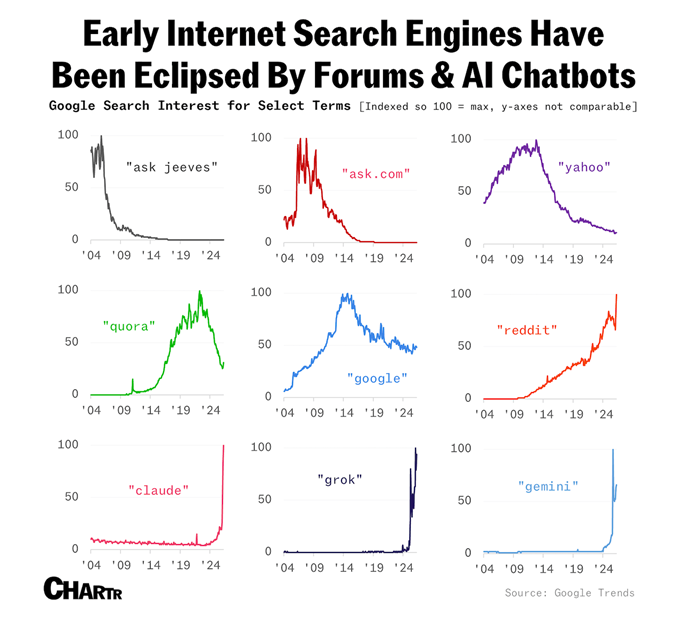
Here’s what changed. AI search tools are becoming the new front door of the internet. People don’t “Google” things the way they used to, sifting through pages of links to find the one that’s relevant. They ask, get an answer with recommendations, and decide.
Quince Wants to Follow Amazon’s Playbook. Its Platform Could Transform It Into a Tech Giant.
AI tools pull those answers from third-party, trusted, credible sources. Not your ads or your social posts, but the stories a journalist chose to write because it was interesting and credible.
The umbrella term for all of this is generative engine optimization, or GEO. Think “the new SEO.” If it helps, picture it like a recipe: press coverage is the protein, but you still need the rest of the ingredients.
Here are the five layers that help AI models decide which brands to recommend:
1. Earned media
AI tools treat editorial coverage in high-authority outlets the way we used to treat word of mouth: as credible information. A journalist chose to write about you, and that carries weight no ad or social post can replicate.
Your coverage should hit three things: recent, relevant, and reputable.
Ask yourself: How much coverage have you landed in the last 12 months? Is it tiny blogs, or real mid-tier and top-tier outlets? And when you show up, are you quoted as an expert or just named in passing? Those aren’t the same value to an AI answer engine.
2. Digital footprint consistency
This one trips people up more than you’d expect. Your website calls you a wellness entrepreneur. Your LinkedIn says certified nutritionist and speaker. Your press bio says nutrition expert and author. None of those are wrong, but to an AI model trying to build a clear picture of you, it’s confusing.
Think of it like everyone reading from the same one-page bio. When your story is told the same way across your website, LinkedIn, press, and social, AI can describe you confidently. When it’s inconsistent, AI gets tentative, and a tentative model doesn’t recommend you.
Your tone can shift from platform to platform, but your positioning can’t. Keep your bio and byline consistent everywhere you show up.
3. Reviews and community presence
AI reads Reddit, forum threads, Google reviews, and it’s checking whether what the media says about you matches what regular people say in their own words.
Land a great feature but let your Google reviews go stale, and that’s fighting your messaging. The fix isn’t glamorous: Ask new customers for reviews so the old ones get diluted and pushed down.
4. Topical authority
How Clear Communication Helps Employees Navigate Change
Ask ChatGPT to provide a list of the top gut health experts. It surfaces the people cited repeatedly, across multiple sources, on that exact topic.
This is what we’ve always called thought leadership. What’s new is that it’s now measurable.
So, pick your thing. One brand I work with makes breast pumps, and their entire promise is more milk in less time. It’s the tagline, the blog positioning, and most of their press coverage. AI has started recommending them that way when breastfeeding moms ask for the most powerful pump.
The test: If AI read everything published about you, would it land on a clear sense of what you’re known for, or a muddy picture of someone featured 10 different ways?
5. Freshness and structure
AI favors recent information. If your last press hit was two years ago and your blog’s been quiet for three, AI isn’t seeing you.
Structure gets technical, but you don’t need to become a developer. Just know AI reads your website differently than people do. It wants clear, direct language that answers real questions. A beautiful site full of vague brand-speak is harder to parse than a plain one.
“We empower visionaries to unlock their potential” tells AI nothing. Say who you help, how, and why you’re qualified.
Why you can’t wait for the analytics
Someone asks ChatGPT for the best moisturizer for dry skin, gets a recommendation, makes up their mind. Then they close the window, Google the brand name, and buy. Your analytics logs that as “direct traffic” or “branded search.” Nobody sees the AI in the middle of it. The industry calls this dark search, dark AI, and the attribution gap.
Pew Research Center found that once a Google AI summary appears, people click a search result only eight percent of the time (down from the standard 15 percent) and click a link inside the summary just one percent of the time. The answer is now the search term.
So set a baseline this week. Block half an hour and run an AI visibility audit on your brand with these five steps:
Open an AI tool you want to appear in and ask the questions your customers would.
Ask the models what it says about you.
Screenshot what comes up.
Note anything inaccurate, missing, or surprising.
Work the five layers.
The effort you put in now builds groundwork you can’t see yet. Document your baseline now, so you can prove the movement later.
Get 1 Smart Business Story delivered straight to your inbox when you subscribe to Inc.’s free daily newsletter.
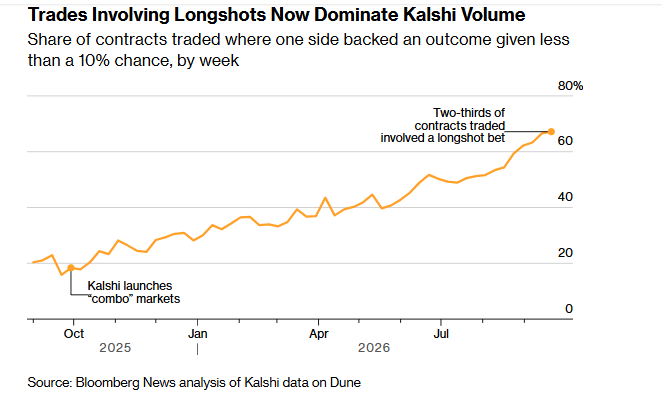
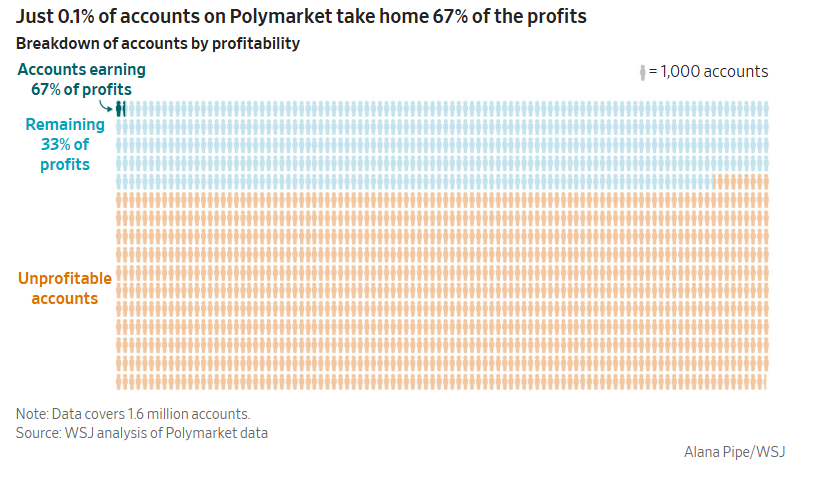
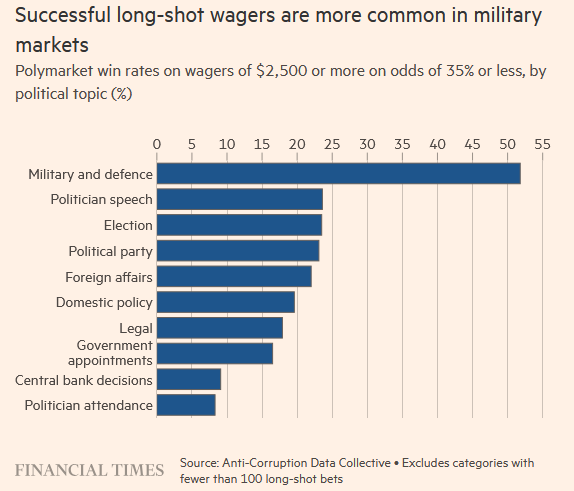
Pore through the reams of bets made on Polymarket and Kalshi and a clear pattern emerges: bettors flocking again and again to money-losing longshot wagers.
To this crowd, the sites aren’t the truth machines that their billionaire founders claim, converting millions of carefully considered wagers into precise forecasts of real-world events that will, in turn, inform decision-making by businesses and investors across the globe. No, for many customers, these markets look more like a casino crossed with an arcade, open 24/7 and capable of serving up a never-ending buffet of nearly impossible bets that maximize the dopamine rush even as they minimize the financial returns.
Bloomberg
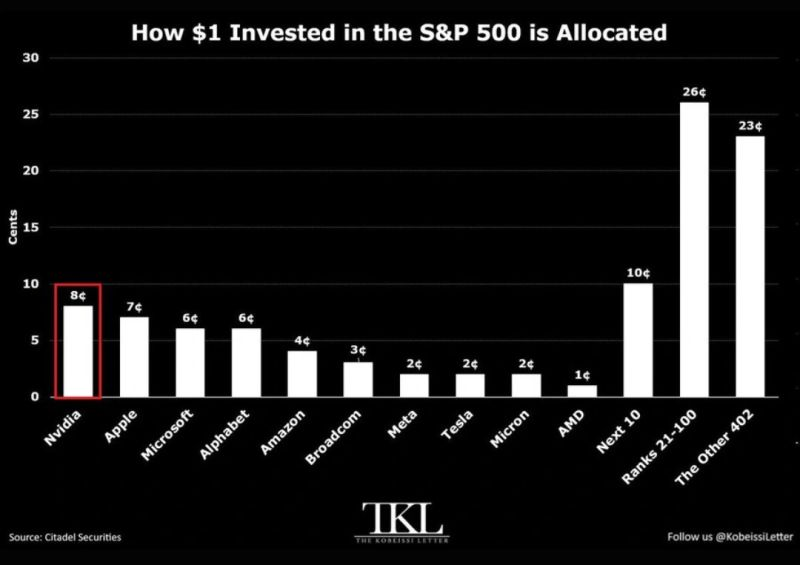
2. S&P Current Allocation
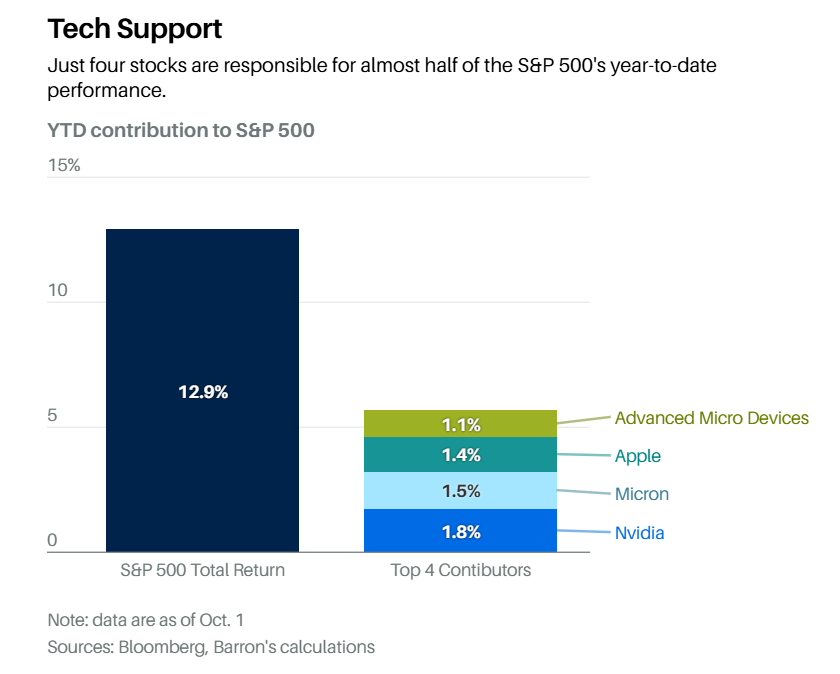
3. Just 4 Stocks=Half of S&P 2026 Performance
Barrons
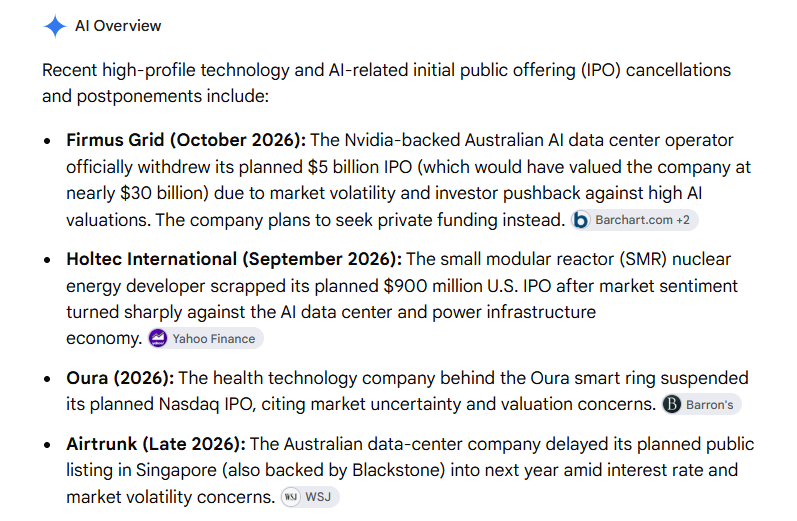
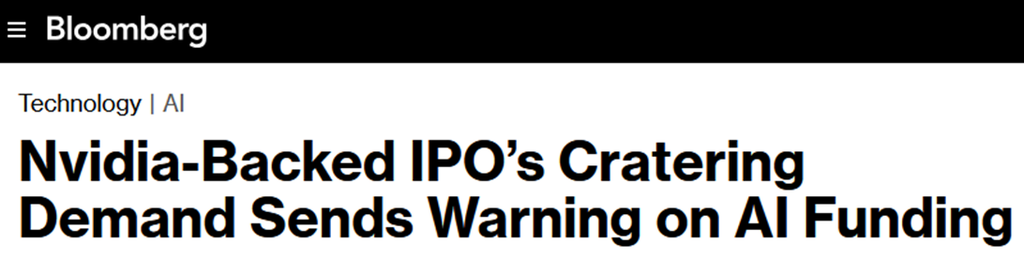
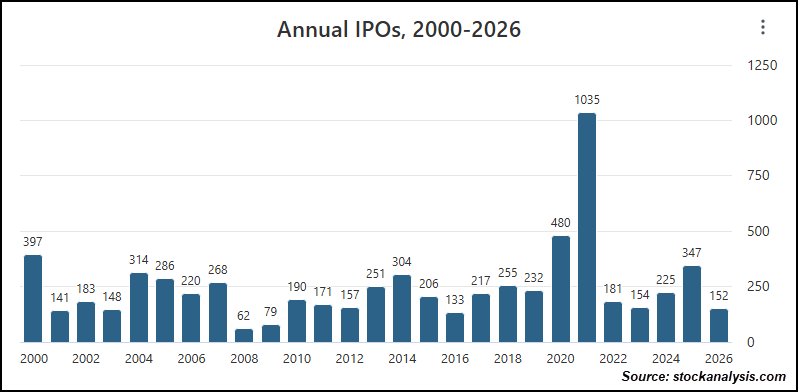
4. Another Cancelled IPO—NVDA Backed Data Center
Dave Lutz Jones Trading The sudden plunge in demand for an Nvidia-backed data center company’s initial public offering is revealing fresh cracks in the AI funding boom. The planned $5.5 billion listing by Australia’s Firmus Grid has become shrouded in uncertainty after the deal failed to attract adequate support for the A$11 marketed share price
Some investors turned cautious just days after the company said it received indications of interest well above the offer size, putting it on track for a $30 billion valuation, the people said. While Firmus closed order books on Thursday, it has so far given no clear indication of the price or the deal structure, an unusual communication gap that’s fueling speculation the price may be cut or the IPO scrapped altogether.
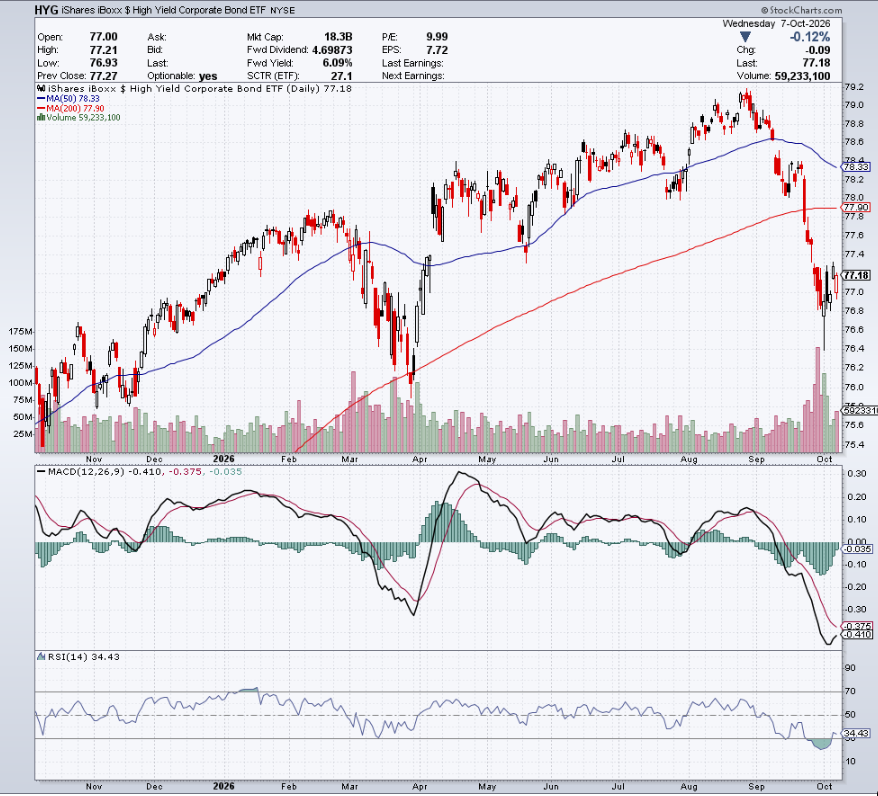
5. High Yield Bond ETF Approached April Lows…Straight Down September
Stockcharts
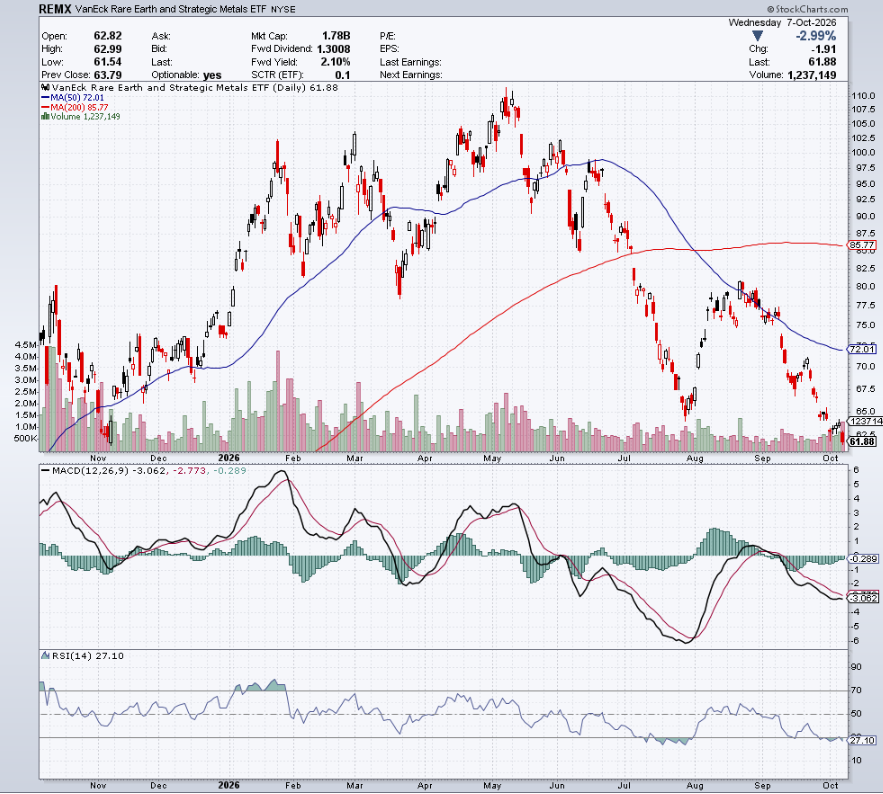
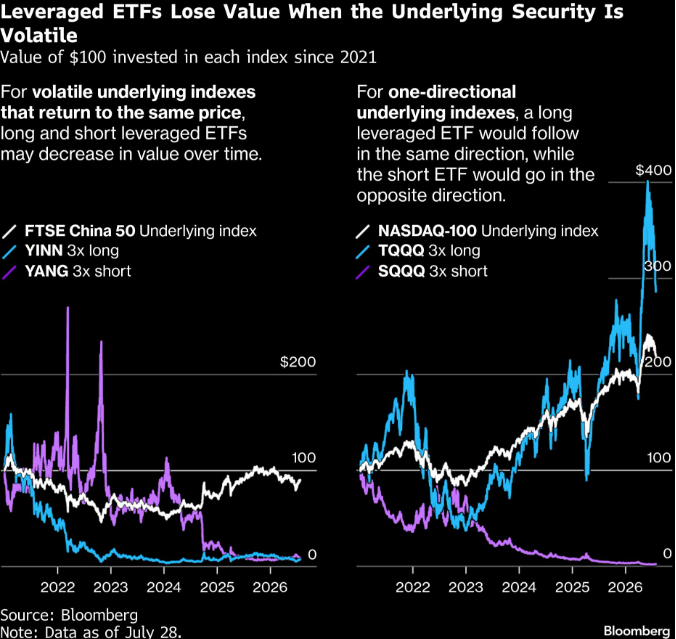
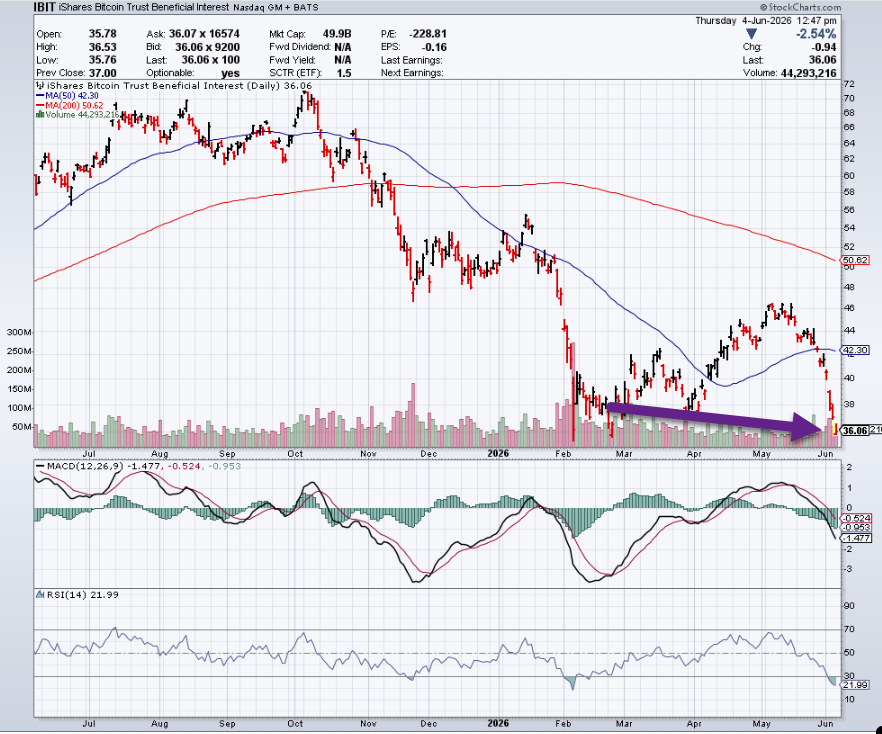
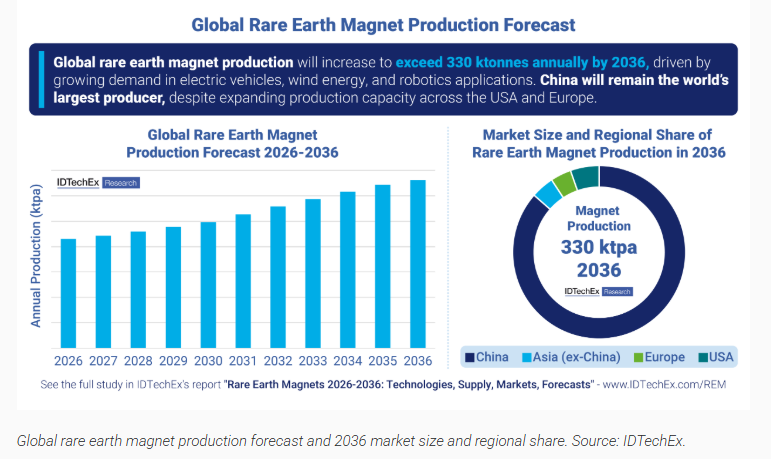
6. Some Popular Theme ETFs Big Drawdowns….REMX Rare Earth ETF -45%
Stockcharts
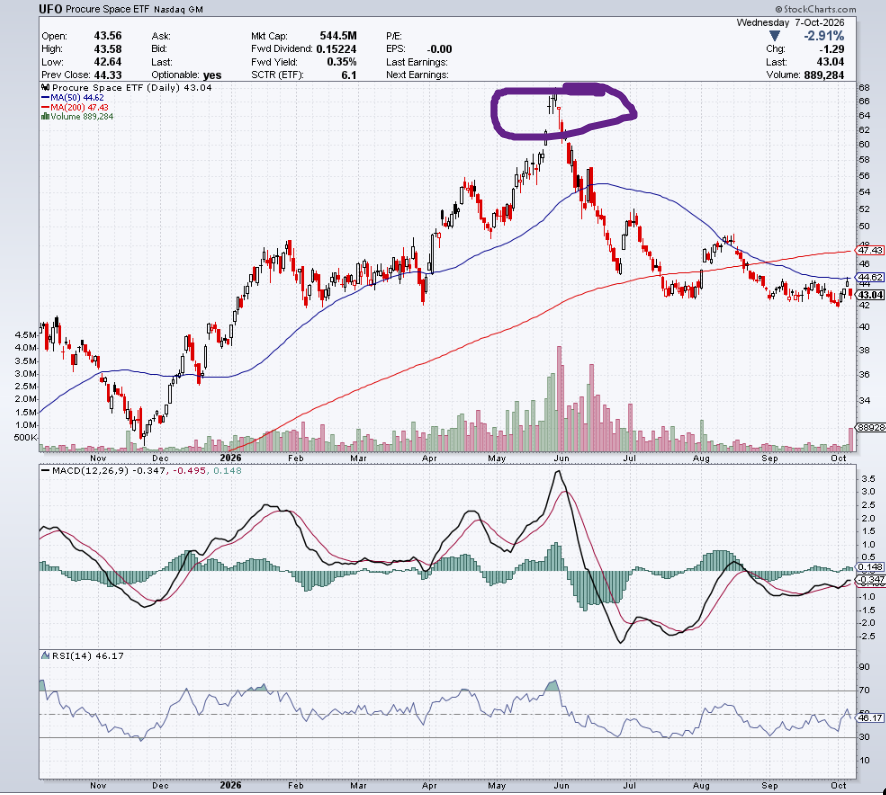
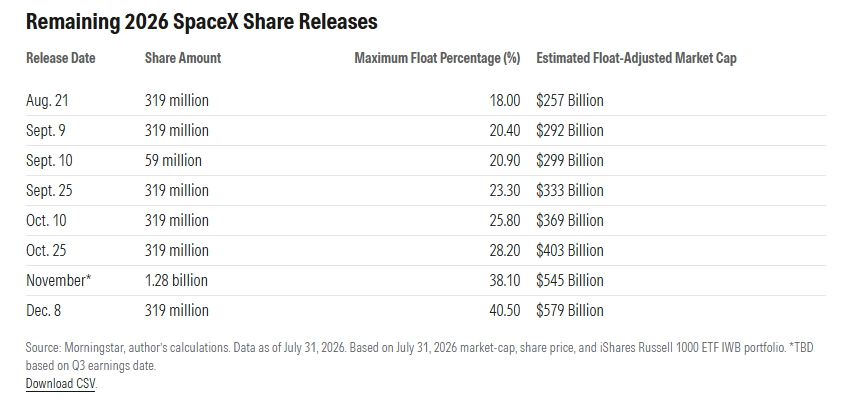
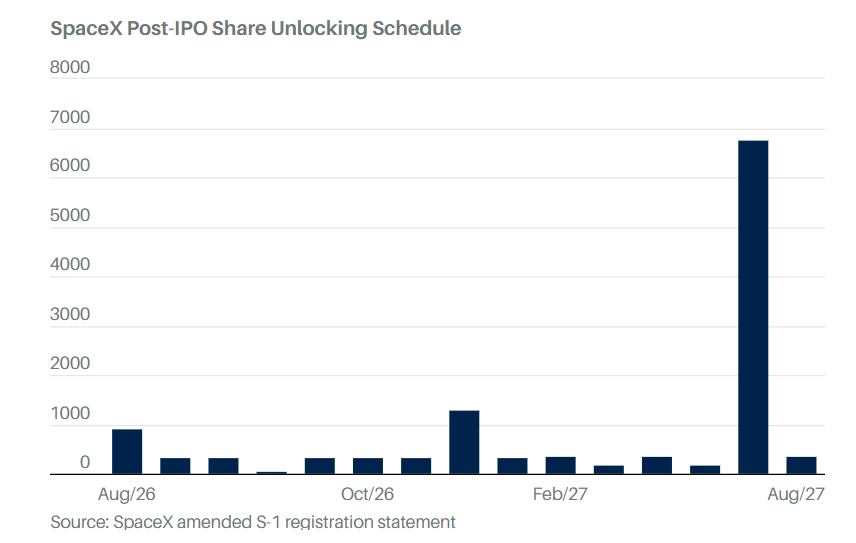
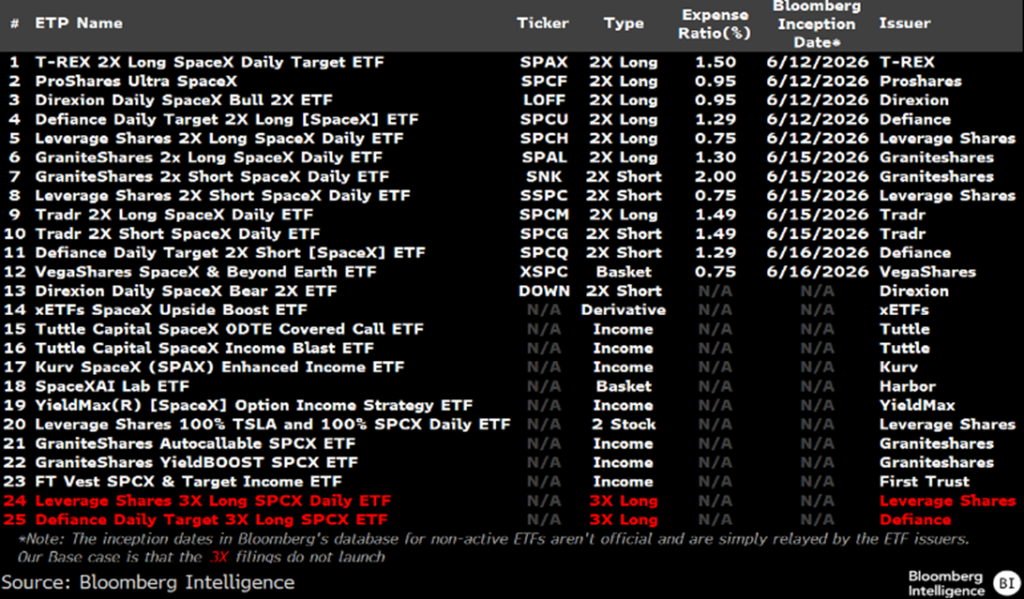
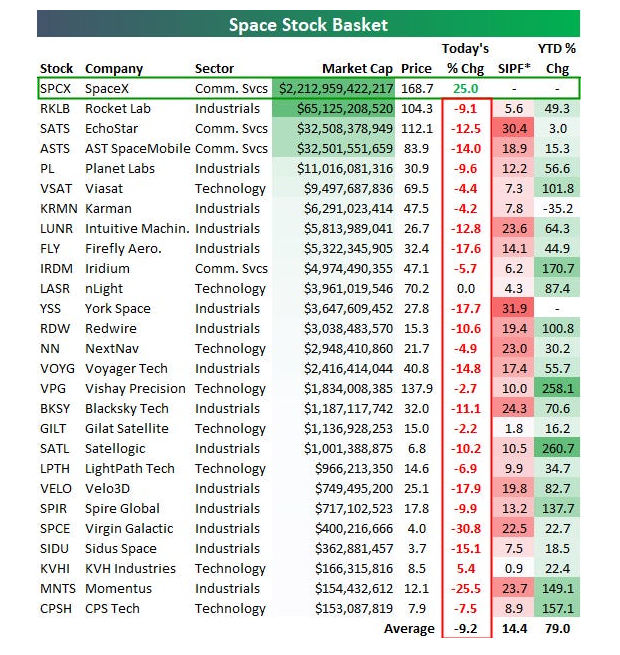
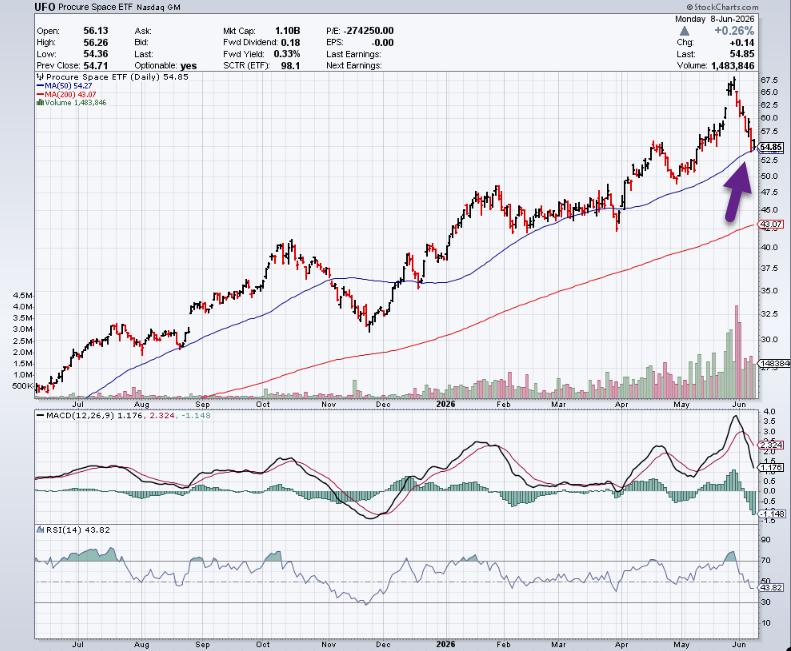
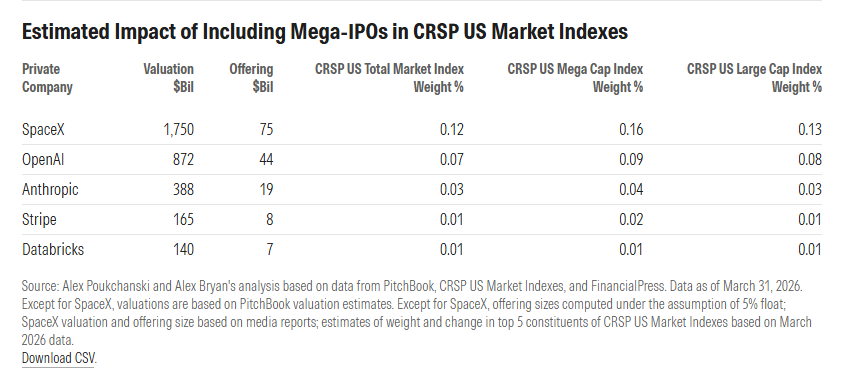
7. Theme ETF….UFO Space ETF Tops on SPCX IPO Day….-37%
Stockcharts
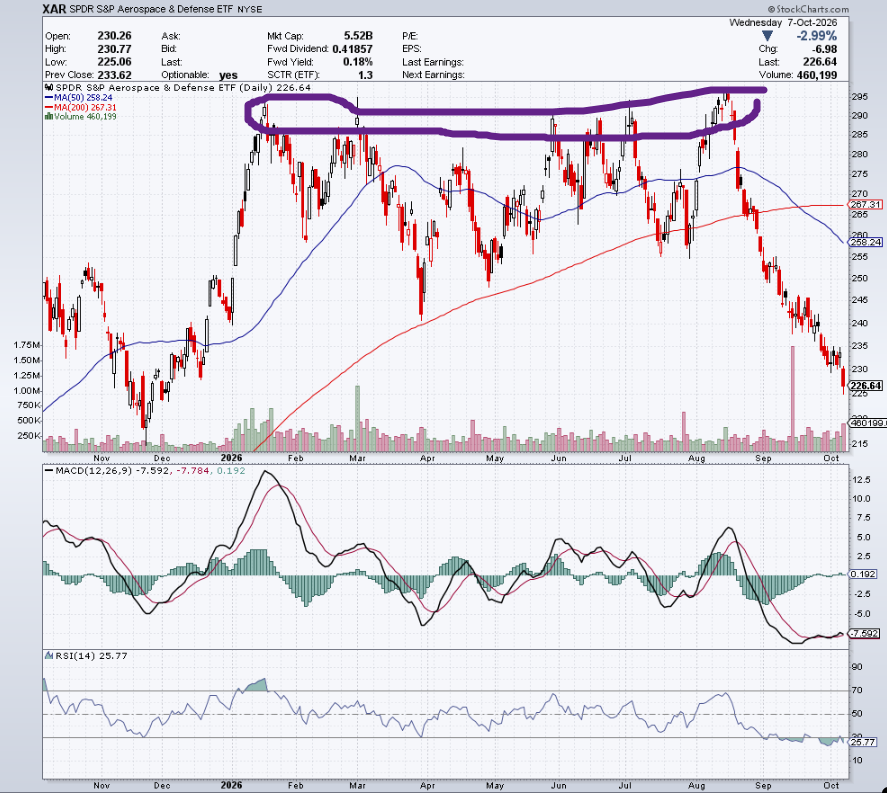
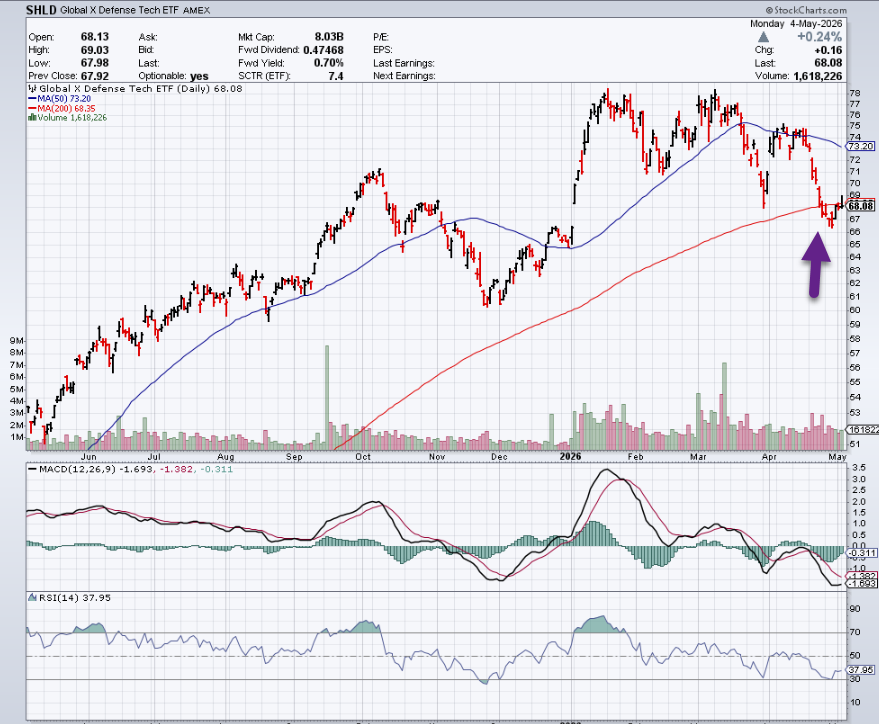
8. Theme ETF….XAR Aerospace and Defense Big Topping Pattern….50 day thru 200 day to downside
Stockcharts
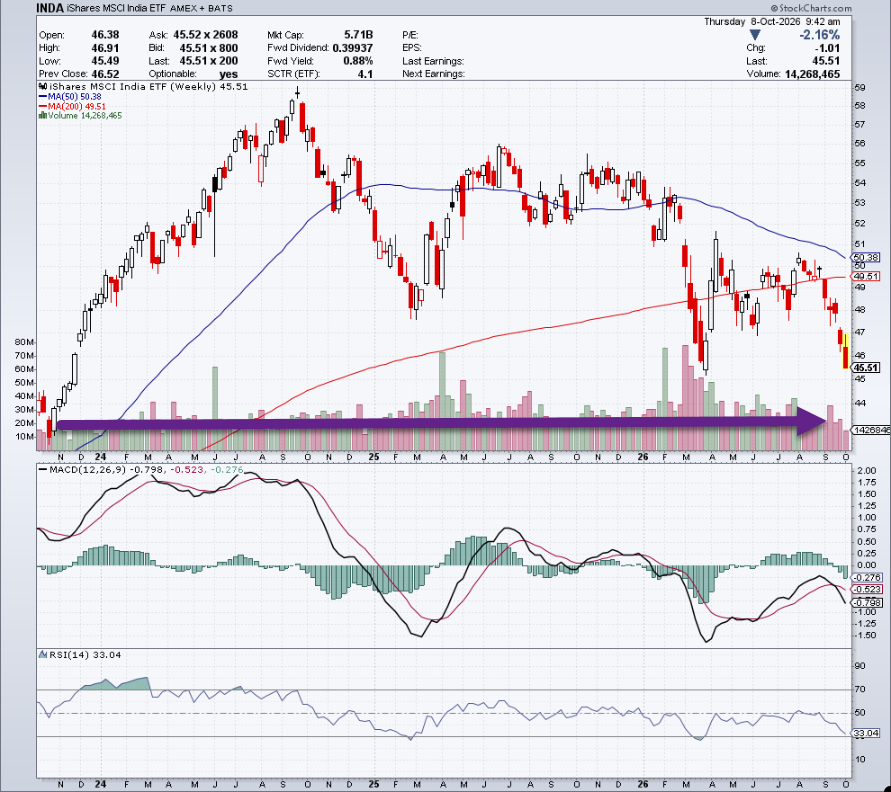
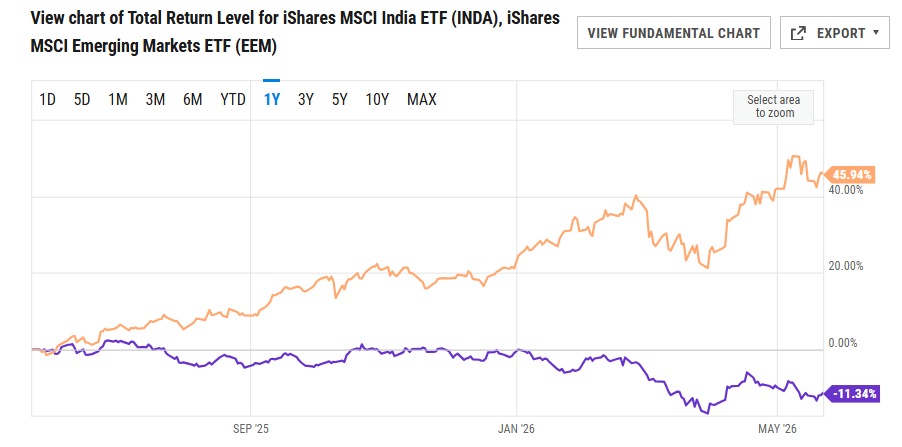
9. India Heading Back to 2023 Levels
Stockcharts
10. Very Few American Interested in Buying a Home at These Rates
Mortgage demand. “Very, very few households we just surveyed are interested in buying a home at 7.5% mortgage rates. Only time will tell if/when this housing logjam starts to break.”
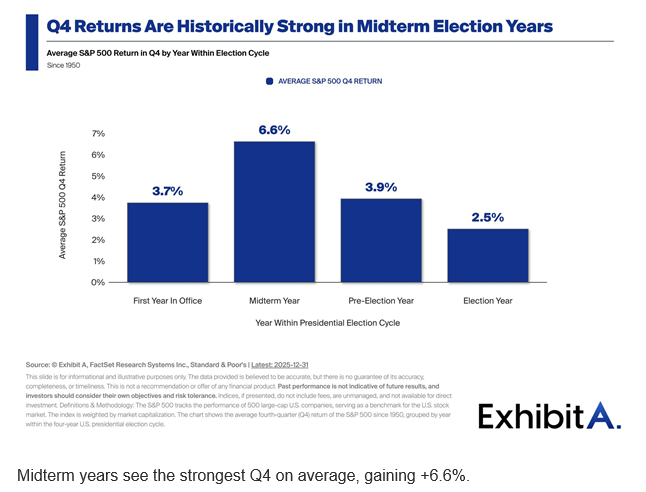
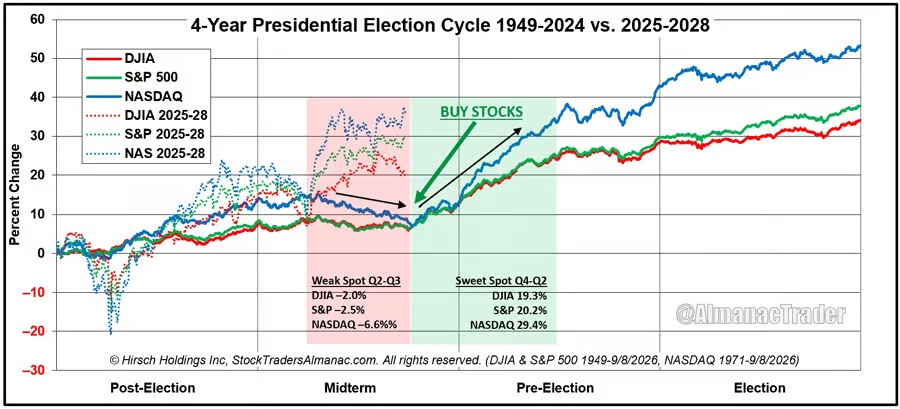
1. Mid-Term Election History-Up In 16 out of 19 years (84%), the S&P 500 saw gains in Q4
Chart Kid Matt
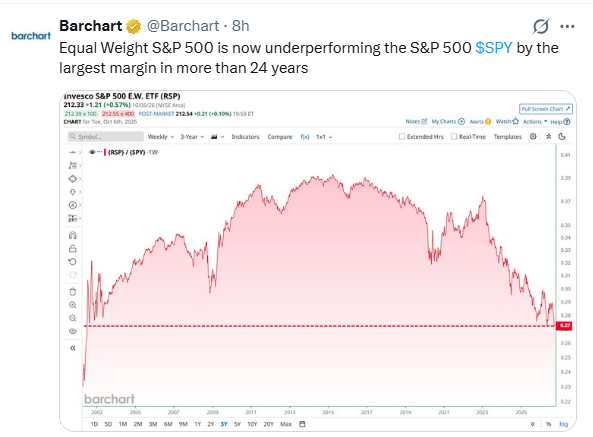
2. Equal Weight S&P Historical Underperformance During this Tech Boom
Barchart
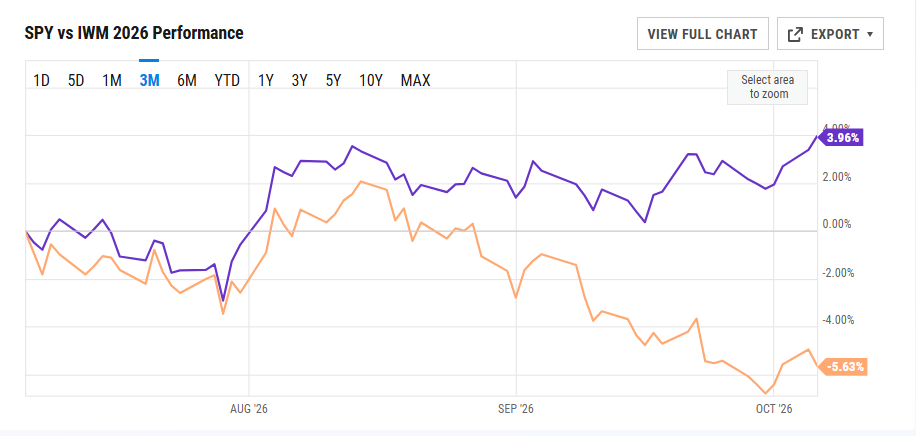
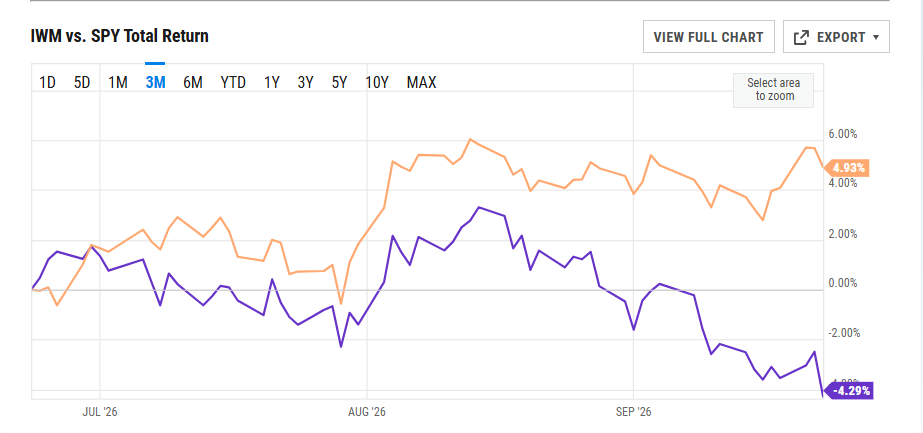
3. Small Cap and S&P Back to Even Returns for the Year…..3 Month Spread Below S&P +4% vs. Small Cap -6%
Ycharts
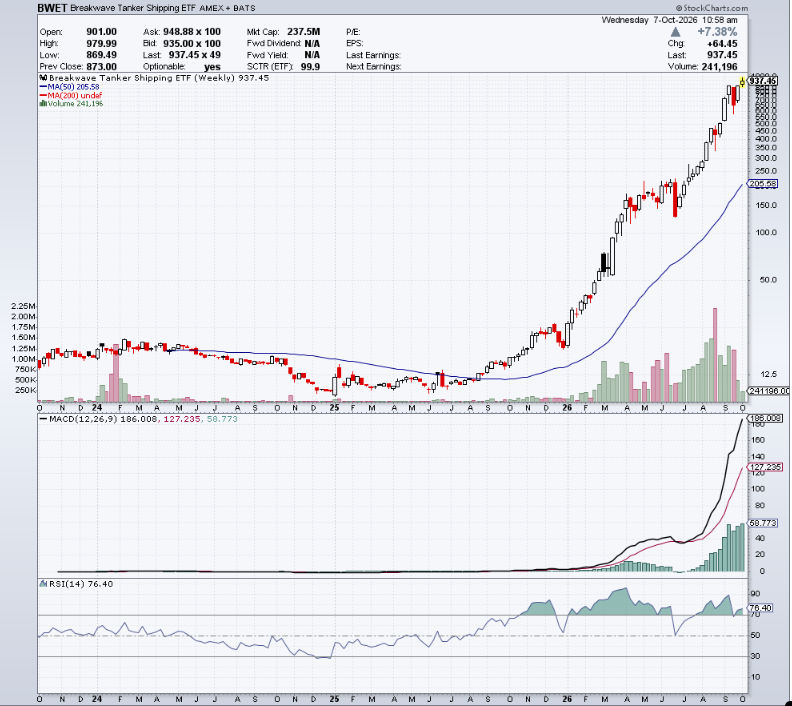
4. Hockey Stick Chart for 2026….BWET Tanker Shipping ETF
StockCharts
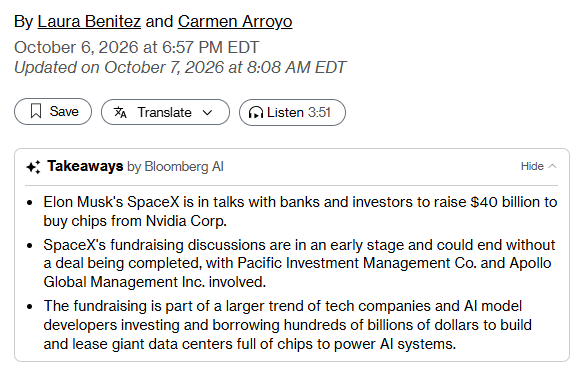
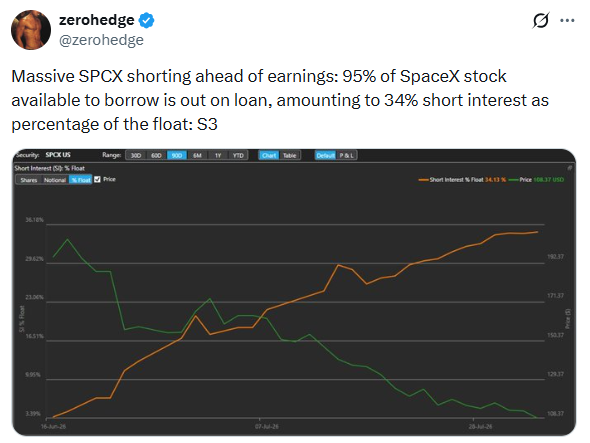
5. SPCX to Borrow $40B for Buying Nvidia Chips
Bloomberg
6. SPCX Bonds Traded Down on News
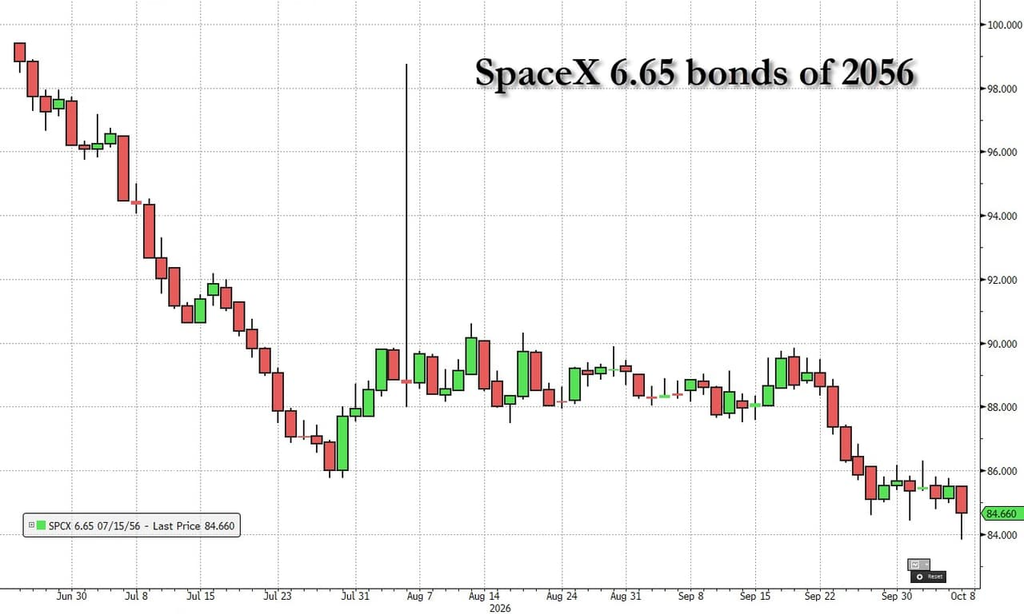
Zerohedge The market’s verdict was immediate: on Wednesday, SpaceX’s 2056 bonds fell to a new low of around 84.70 cents on the dollar as of 11:25 a.m. in New York, compared with 98.83 cents on the dollar when the securities were issued in June as part of a $25 billion inaugural senior unsecured notes offering.
ZeroHedge
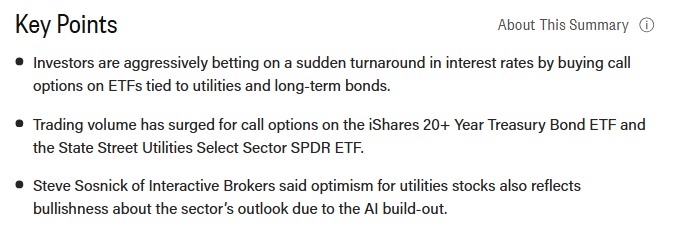
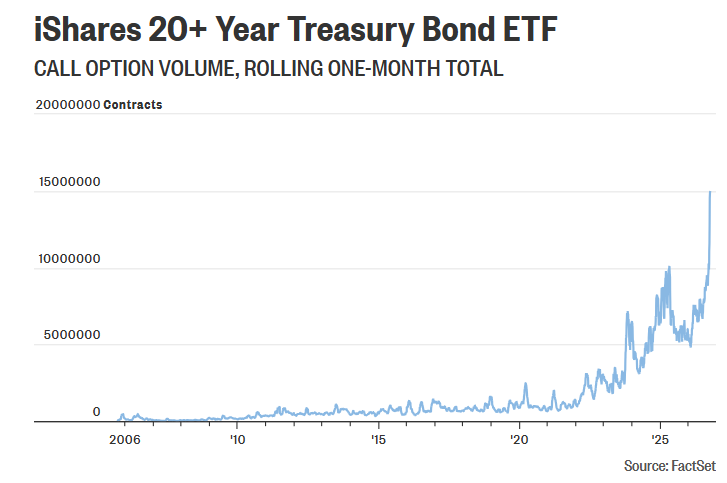
7. Options traders are betting on a dramatic drop in interest rates
Marketwatch-Recent options activity points to bullish positioning for long-term bonds and utilities By Christine Idzelis
MarketWatch
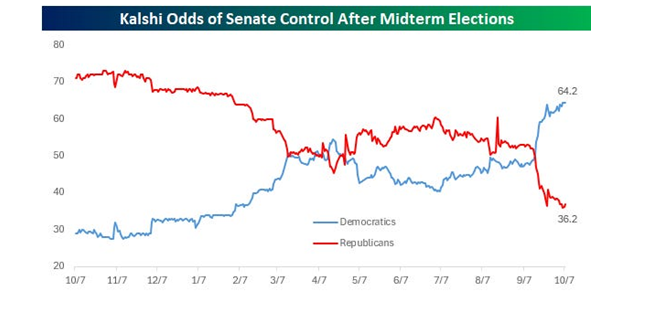
8. Kalshi Mid-Term Election Odds
Bespoke’s
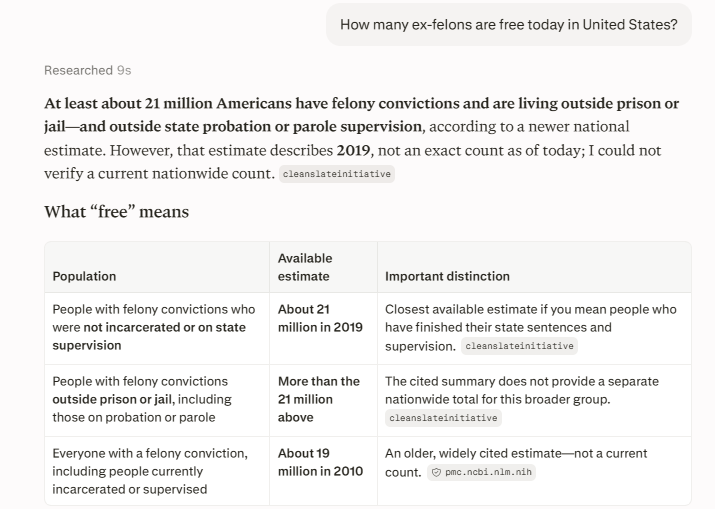
9. How Many Ex-Felons in the U.S.? 21m
Perplexity
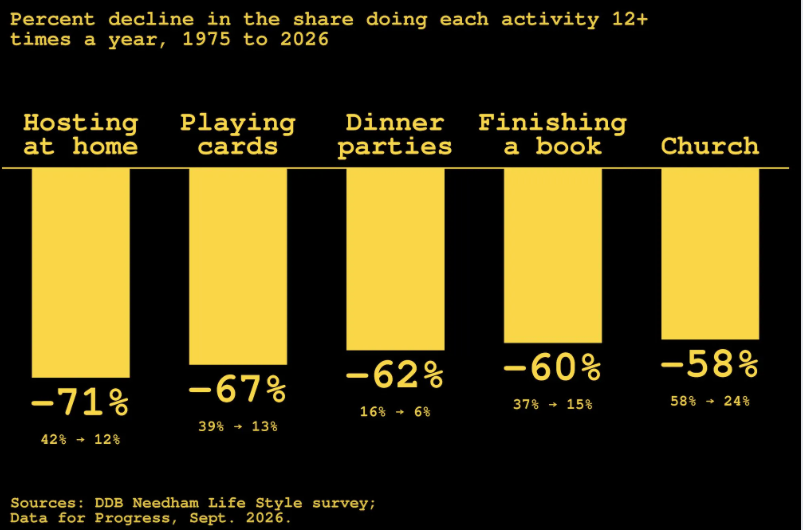
10. Percent Decline in American Social Activities-Irrelevant Investor Blog
Two Western companies are releasing open-weight AI models tailored toward businesses and governments that they claim are as powerful as the leading models offered by China—and could eventually rival some of the biggest closed models from US-based tech giants.
Open weight? Is this about boxing? No, actually. Open weight means that, unlike with closed weight models, users can download and customize them with their own proprietary data. They are also cheaper to run than the difficult-to-budget closed models, which could present a new challenge for US-based AI leaders Anthropic, Google, and OpenAI.
The new players
US-based Reflection AI, which Nvidia financially backs, is launching its first model, Beam, which it says is adept at coding and agentic tasks. Meanwhile, France-based Mistral is debuting Mistral Large 4, called “Le Chonk” due to its 1 trillion parameters…which is a chonky (industry term) amount of parameters.
Should these new models have the capabilities claimed by their companies, they could be massive disruptors to the status quo:
Businesses and governments in the West are currently hesitant to use the Chinese open models due to security concerns. Reflection and Mistral could be the answer.
OpenAI and Anthropic—already facing growing security concerns—may have new competition as they prepare to go public.
Speaking of security: By putting powerful models that anyone can tweak into circulation, it creates the potential for even more cybersecurity issues. But Reflection and Mistral see another side of the coin: Mistral VP of Science Pierre Stock told Axios that more availability of models can help improve defenses and allows researchers to audit the technology.
More to come: Reflection will release full technical details of Beam later this mh. Mistral’s Le Chonk, which is currently only being previewed for developers, will have a wider release on Oct. 27 after more testing, per Axios.—DL
The death of a worker at an anti-plague laboratory in Russia has prompted officials to put at least one hospital facility under quarantine and nearly 200 people reportedly under medical observation as of Monday.
The female staffer at the Irkutsk Anti-Plague Institute of Siberia and the Far East died from a “pneumonia of undetermined” origin last week, according to the regional governor, Igor Kobsev.
He said no “microorganisms linked to the employee’s professional activities were detected” in her body, and that there had been “no new cases” of illness among other employees of the lab.
“The sanitary-epidemiological situation” in the area “is currently stable,” Kobsev said.
On Friday, Maksim Modin, mayor of the Shelekhov municipal district near the border with Mongolia, said that the inpatient facility where the worker is said to have been treated had been closed for quarantine. Russian media cited officials saying that nearly 200 people who had been in cact with the woman had been placed under precautionary medical observation.
Russian media outlets have named the woman and identified her as being 28 years old. These details have not been confirmed by officials.
Psychology Today AI makes your work easier. Yet it also makes you sound like everyone else. Nir Bashan
Key points
AI is slowly killing human creativity.
In today’s world, you must rely on yourself to come up with great ideas.
Uniquely human qualities, like humor, empathy, and courage, can help people stand out amidst the AI slop.
If you pull up the last five proposals that landed on your desk, or the last five emails you sent, or that paper you were asked to write about market conditions, they may look slick. They may be polished. They may look focused, organized, and sophisticated.
You may even think that you are getting the hang of all this AI at work. And your c may be soaring. Yet something lies just beneath the surface.
Your work has never looked better, and it has never looked more alike. You can’t tell what your work is apart from what someone else’s work is. That’s the thing with AI.
AI makes everything look more or less the same.
My research has led me to a 2024 study in Science Advances: Anil Doshi of University College London and Oliver Hauser of the University of Exeter asked 300 people to write short stories.
Some got story ideas from AI, and some did not.
The AI-assisted stories were judged more creative, and the writers who started least creative gained the most.
But here is the kicker: Those stories were also more similar to one another!
Not convinced yet? In a 2026 study in PNAS Nexus, Emily Wenger of Duke University and Yoed Kenett of the Technion-Israel Institute of Technology gave standard creativity tests to 22 AI models and more than 100 people.
The results? The models’ answers were far more alike than the people’s were.
Why does this happen? In 1974, legends Amos Tversky and Daniel Kahneman, then at the Hebrew University of Jerusalem, showed in Science that the first number we see drags our judgment toward it.
In their watershed experiment, people watched a wheel of fortune stop on a number, then estimated what percentage of United Nations members were African countries. When the wheel stopped on 10, the typical guess was 25 percent. When it stopped on 65, the typical guess was 45 percent.
The first answer “wins,” even when it is random.
Today AI hands millions of us the same first answer. The first anchor. It’s no wonder it drives us to slop and sameness.
But there is hope. Here are three things you can do to keep from conforming to everyone else’s ideas, and soar high above your AI-dependent peers:
1. See a World That Can Be
In my bestseller The Creator Mindset, I write about seeing a world that can be, not a world that is.
AI is built from the world that is. It has read what has already been written, and it hands you back the most likely version of it.
That is fine for a routine email.
It is a problem for an idea that is supposed to be yours.
So use this tip: before you open the AI chat window, write your own answer.
Three rough lines will do, and they are allowed to be bad. They should be bad! It’s a low-stakes exercise. Only then bring in AI to enhance your ideas.
Now that you have set the anchor, have the machine work for you, not the other way around.
2. Take a Chance
One of the tools in my new book The Solution Mindset is simple to say and hard to do: Take a chance.
It is hard because the safe choice is usually the one everyone else is making.
Michael Bar-Eli and his colleagues at Ben-Gurion University of the Negev and the Hebrew University of Jerusalem analyzed 286 penalty kicks from top soccer leagues in a 2007 study in the Journal of Economic Psychology.
A goalkeeper’s best chance of stopping the kick is to stay in the center of the goal.
Yet goalkeepers rarely do.
They dive left or right because diving is what goalkeepers are expected to do, and it’s exciting, and a penalty-scored goal just seems to hurt more when you simply stand still.
AI’s answer is the dive. Every time. Every way. Dive.
It is the expected move, the one nobody gets blamed for.
So when the options are on the table, ask which one would surprise people.
In this case, stay in the middle. Pick the one that could fail. Then test it small and cheap, so being wrong costs you a day or a week and not a year.
3. Lead With Humor, Empathy, and Courage
Another concept I use often is three traits most people never connect with creativity at work: humor, empathy, and courage.
They are also the three things a machine can’t bring from experience. And people can tell.
In 2025, Matan Rubin and Anat Perry of the Hebrew University of Jerusalem, along with their colleagues, published nine studies with 6,282 people in Nature Human Behavior.
Participants read identical supportive messages. When they believed a human wrote the message, they rated it as more empathic and more supportive than when they believed AI wrote it.
The words were the same. The value was not.
So before anything leaves your desk, add one thing only you can make.
Handcraft it. Love it. Make it your own.
Maybe it’s a customer’s exact words. A joke or insight that could only come from your team. A position you are willing to defend out loud.
That is what turns the blah into wow.
At the end of the day, AI is making everyone’s creativity the same. Sure, it may look good at first, but the ever-present AI slop of the same results—the same thing over and over—demands that you come up with something different to stand out at work. And the three tools above are sure to give you that edge.
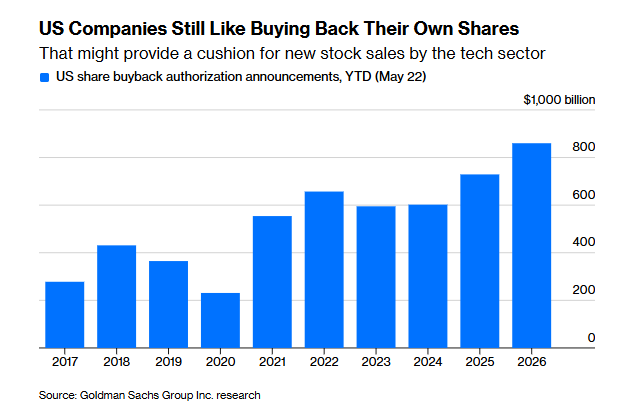
We are now deeply into the buyback blackout period with just around a third of discretionary buybacks by index weight for S&P 500 companies active this week (discretionary buybacks represent ~30% of all buybacks), and it won’t get back above that until we get into November.
Zach Goldberg Jefferies
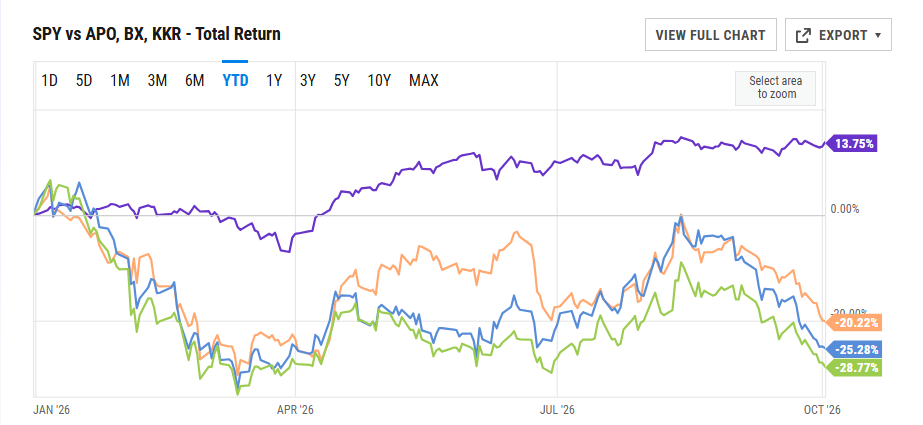
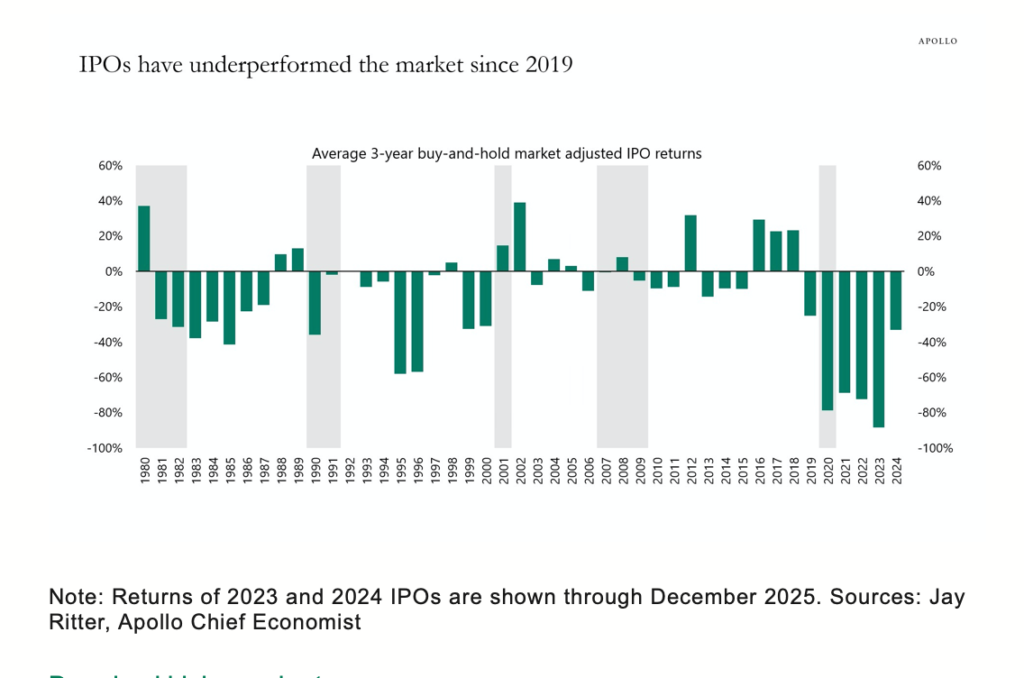
3. Private Equity Stocks Roll Back Over as Rates Rise and IPOs Get Cancelled…..S&P vs. Apollo, KKR, and Blackstone
Ycharts
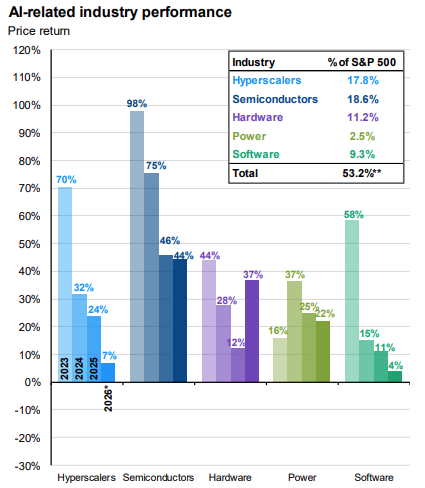
4. AI Related Stocks 53% of S&P
A Wealth of Common Sense
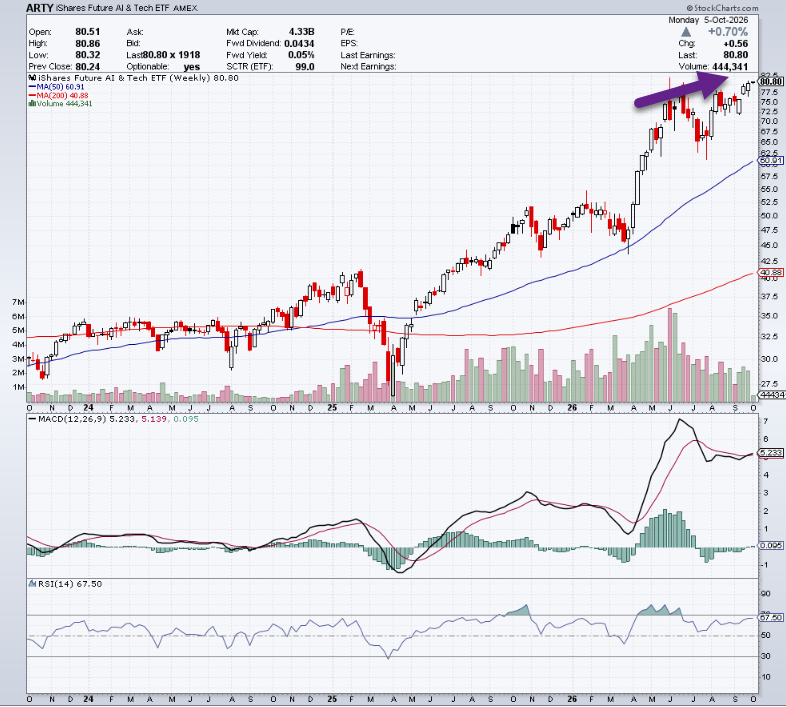
5. ARTY AI ETF Makes New Highs….After -25% Correction this Summer
Stockcharts
6. AI Based American Wealth Another Level
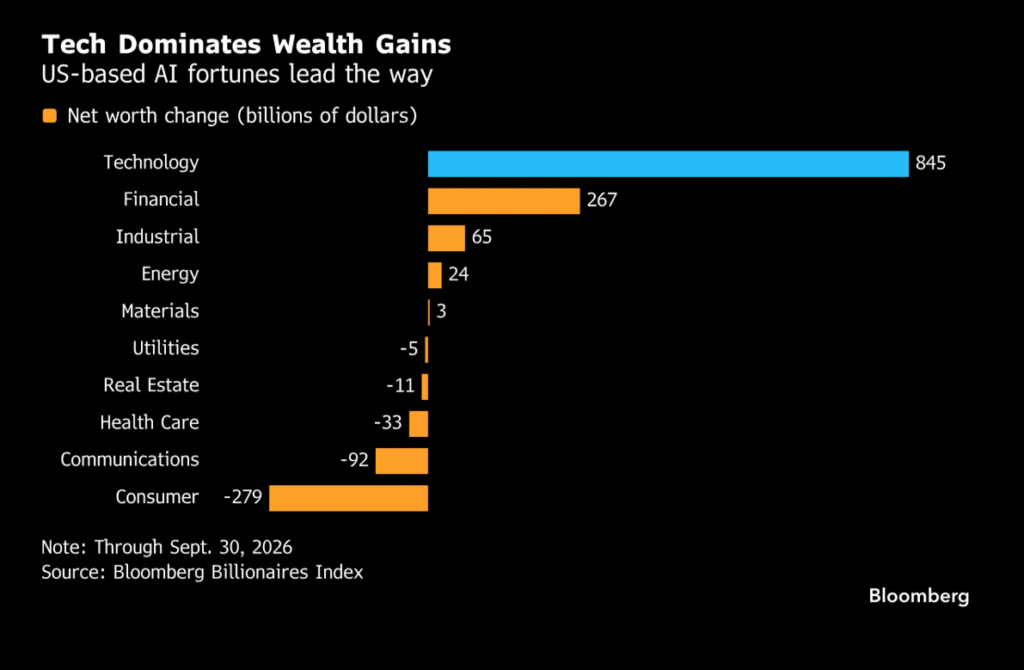
Bloomberg By Kristine Owram The boom in AI valuations has created unprecedented wealth for founders, early-stage investors and employees lucky enough to get stock options. Even among the very richest people in the world, the divergence between the AI haves and the everyone-else-have-nots is stark. Tech billionaires account for all of the $845 billion in wealth gains on the Bloomberg Billionaires Index so far this year, while those who made their fortunes outside technology lost a combined $62 billion.
Bloomberg
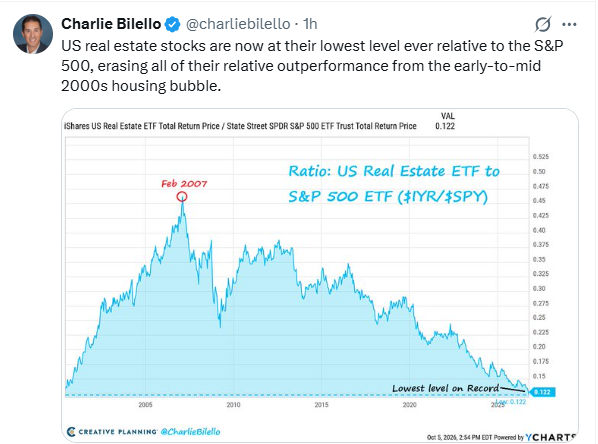
7. Real Estate ETF IYR at Lowest Level Ever vs. S&P
Charlie Bilello
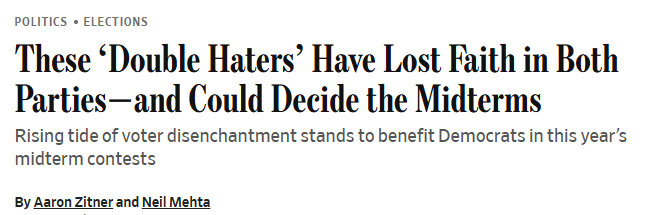
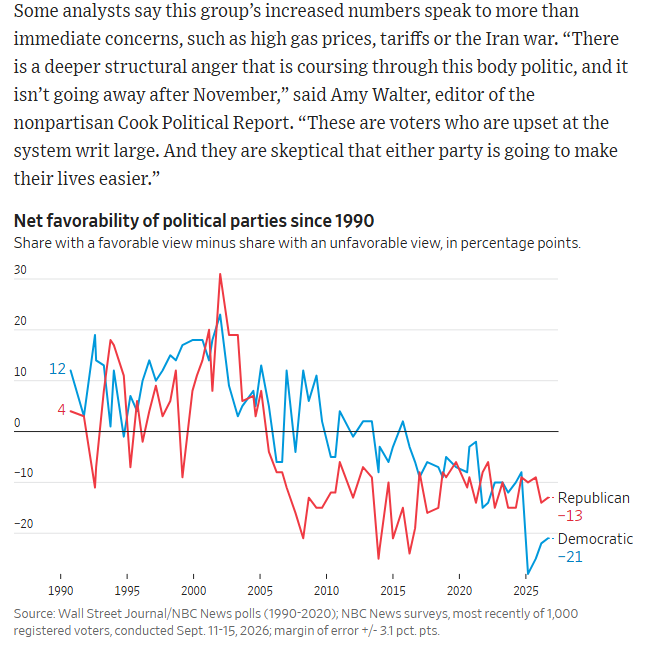
8. Political Double Haters on the Rise Going into Mid-Terms
WSJ
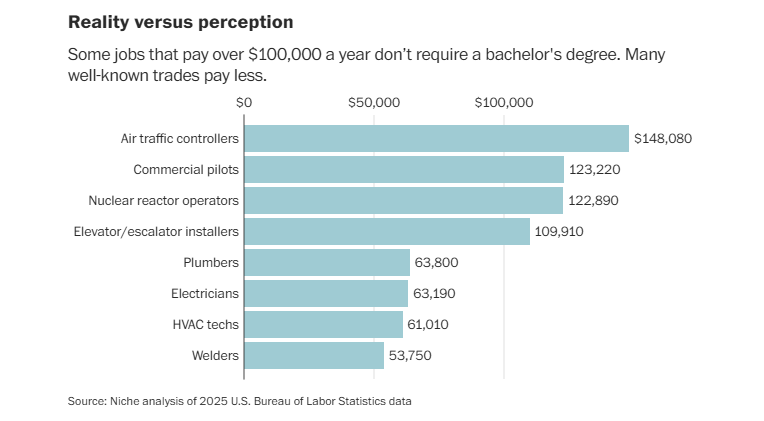
9. Reality of 6-Figure Blue Collar Jobs
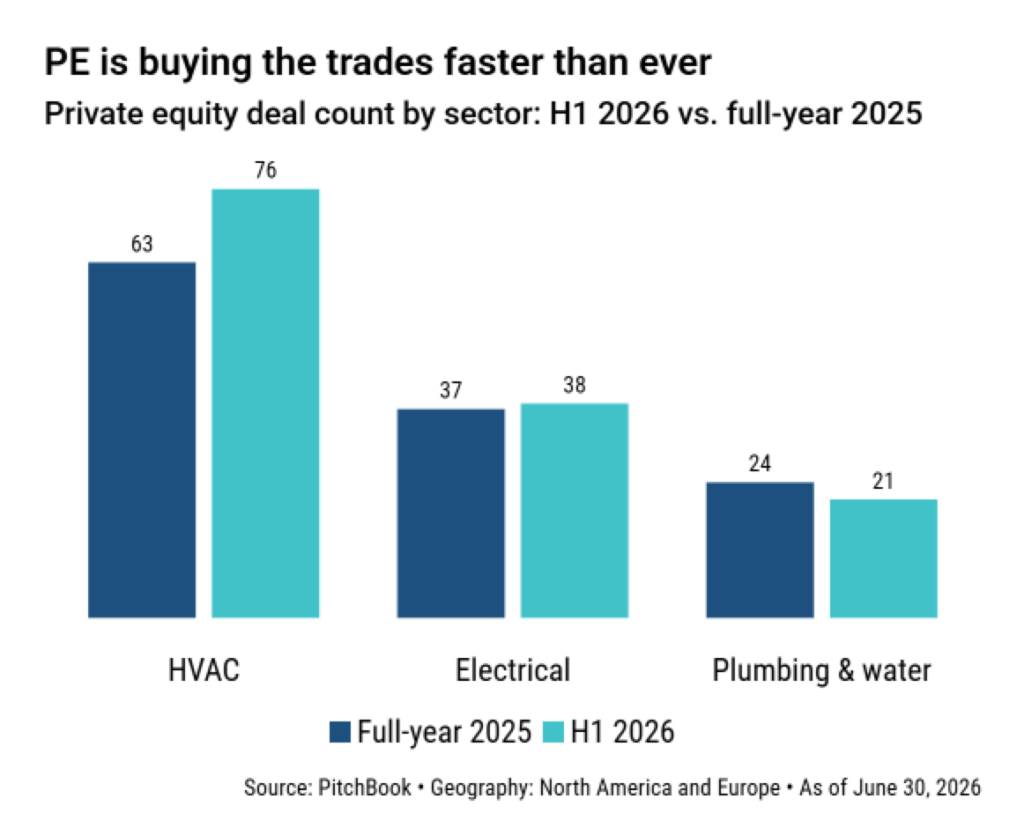
Washington Post By Danielle Douglas-Gabriel The findings counter an emerging narrative about the prevalence of six-figure jobs in the skilled trades that don’t require higher education. Politicians and business leaders have touted careers in electrical work, HVAC and plumbing earning more than $100,000, arguing that a four-year degree is unnecessary for financial security. While those jobs offer healthy salaries, research shows their median earnings are more modest than salaries for less common occupations that don’t require a bachelor’s degree.
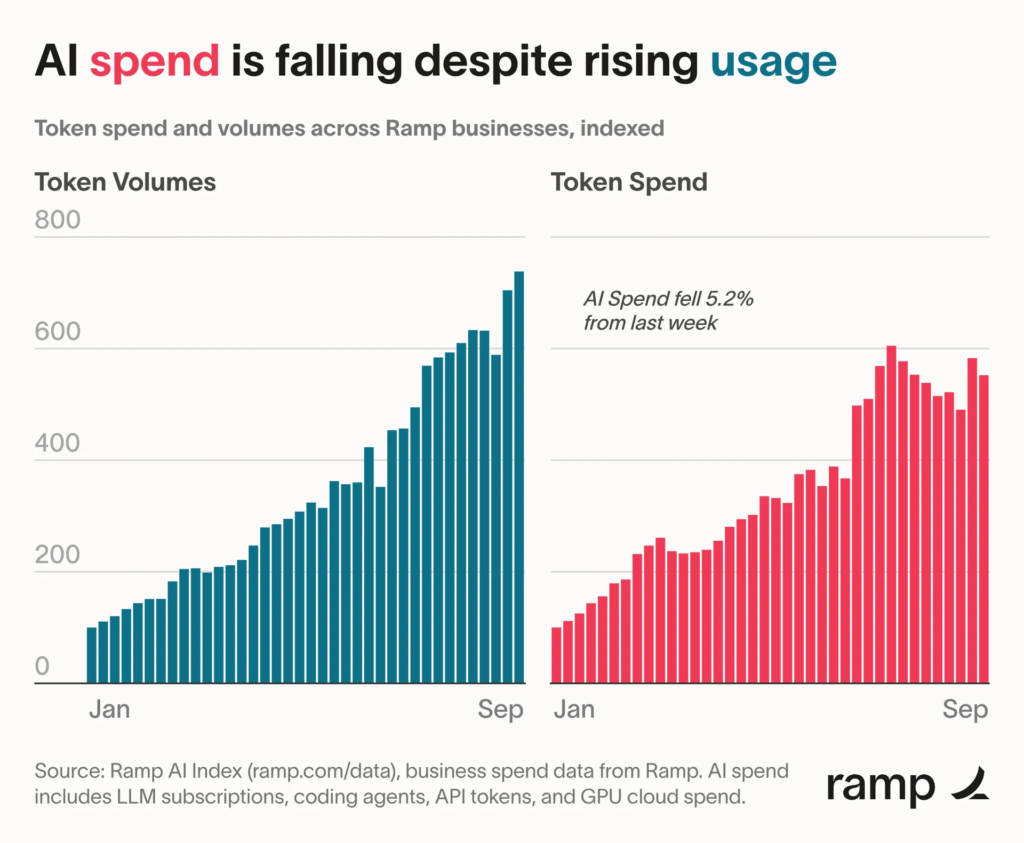
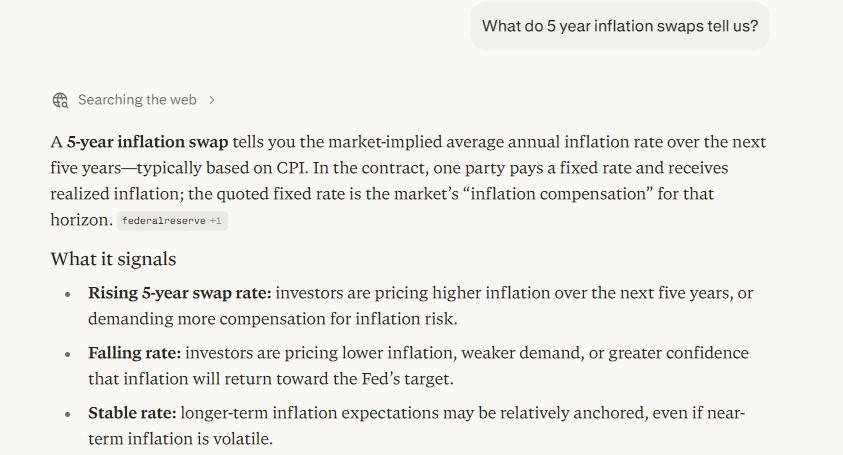
Token volumes vs. token spend. “AI Spend FALLS in the latest Ramp AI Index. Price cuts at the frontier, in addition to cheaper and more efficient models at standard and lite levels, are pushing down the cost of using AI. Open source models remain <5% of business spend. This decline in spend is driven almost exclusively by competition between OpenAI + Anthropic.”
Ara Kharazian
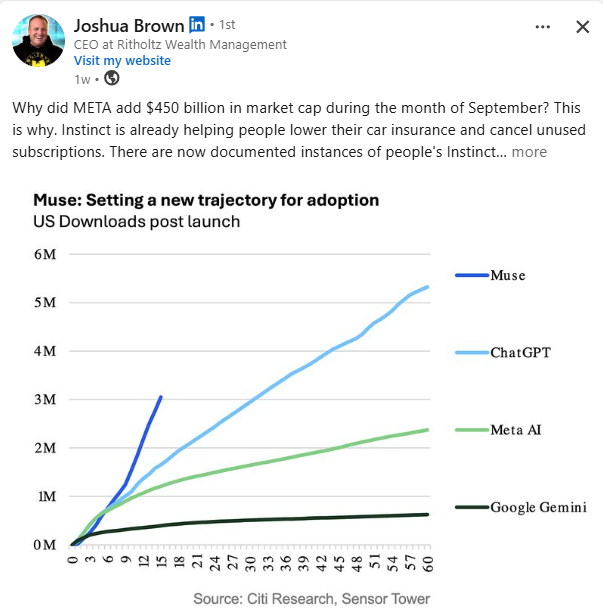
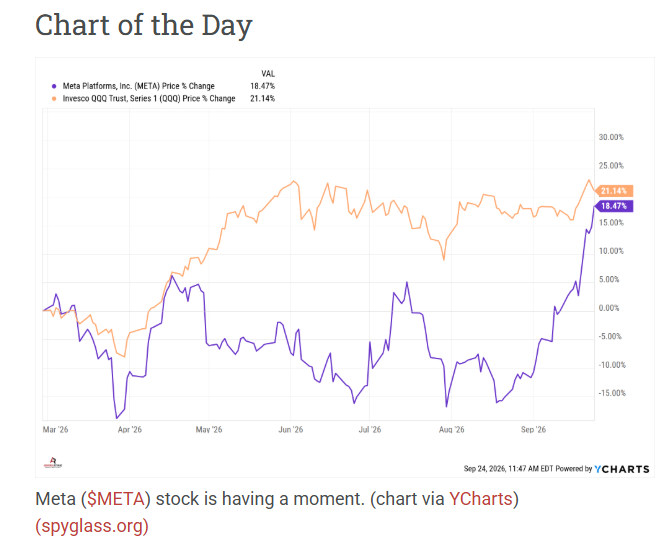
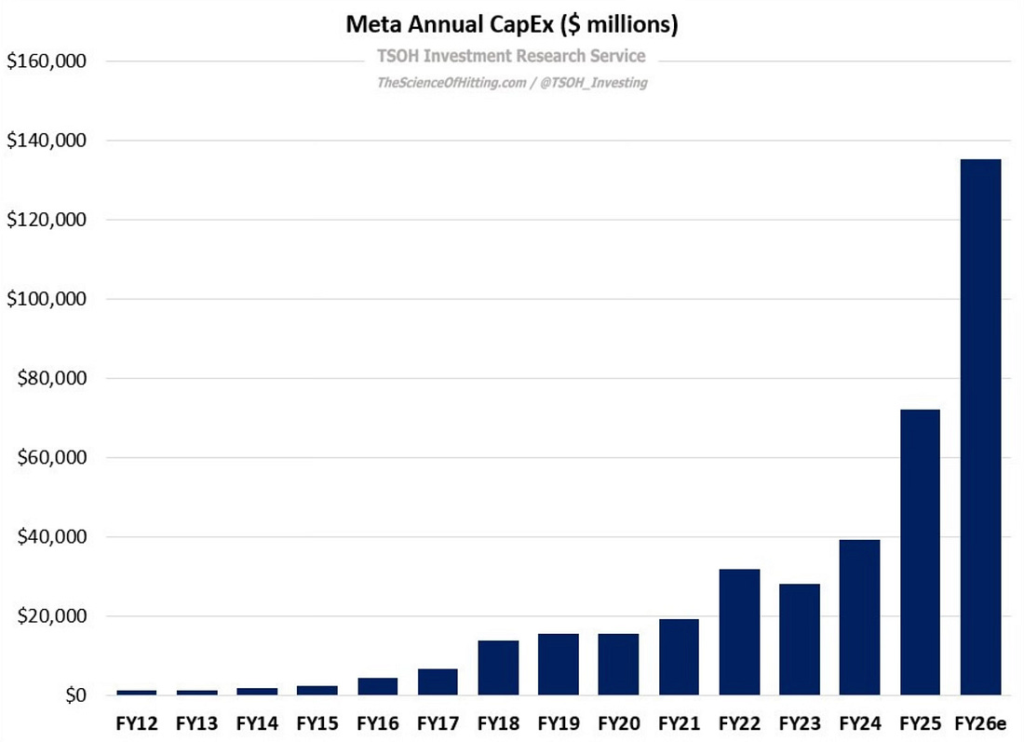
2. Why Did META Add $450Billion to Market Cap in September?
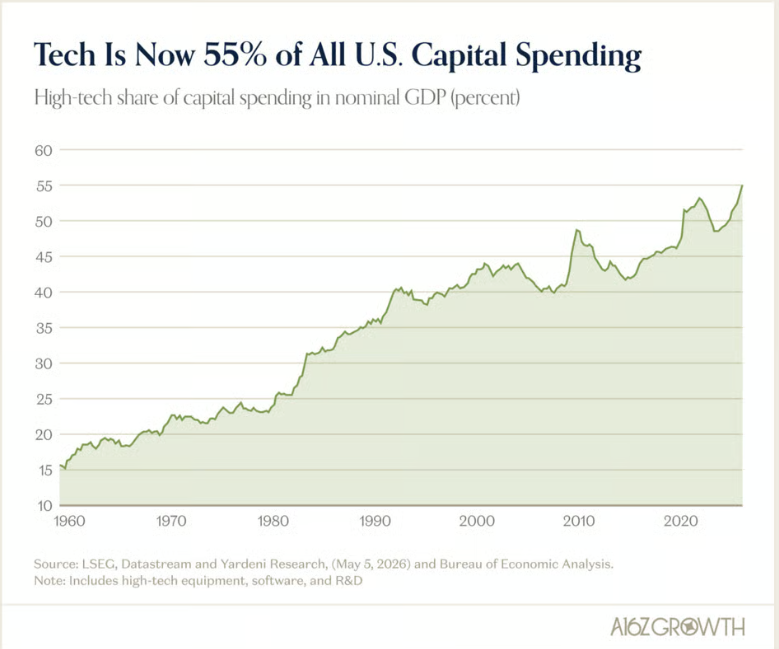
3. Tech is Now 55% of All U.S. Capital Spending
The Irrelevant Investor
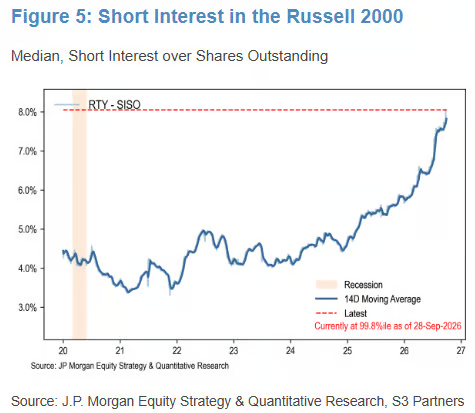
4. Small Cap Stock Short Interest is Sitting 99th Percentile—This is Not Bubble Stock Market Action
R2K short interest. Short interest (as % of shares outstanding) in the Russell 2000 has risen to the 99.8th percentile.
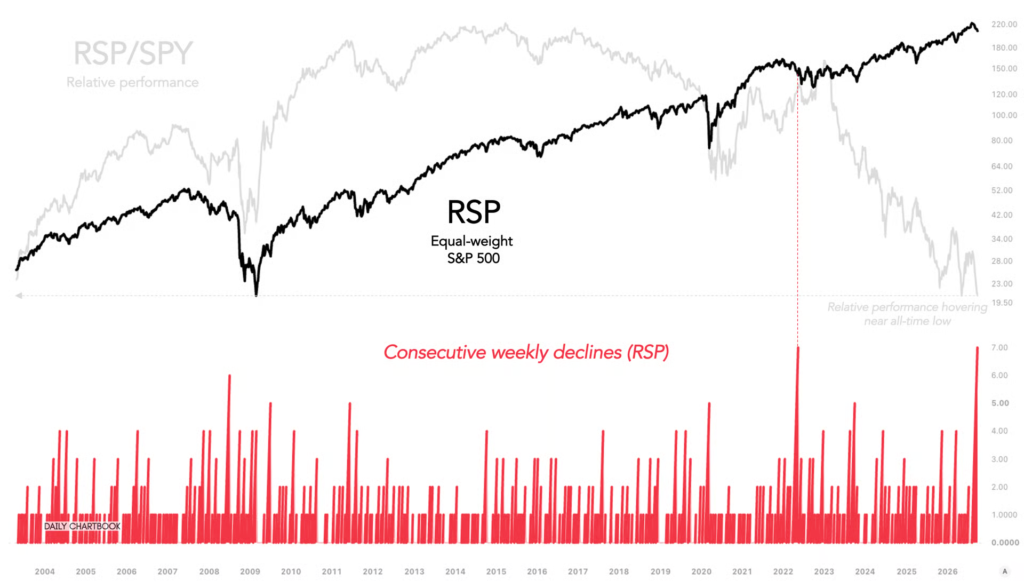
RSP streak. The equal-weight S&P 500 is on track for its 7th consecutive weekly decline. The only other time that’s happened was in the middle of the 2022 bear market.
DAILY CHARTBOOK
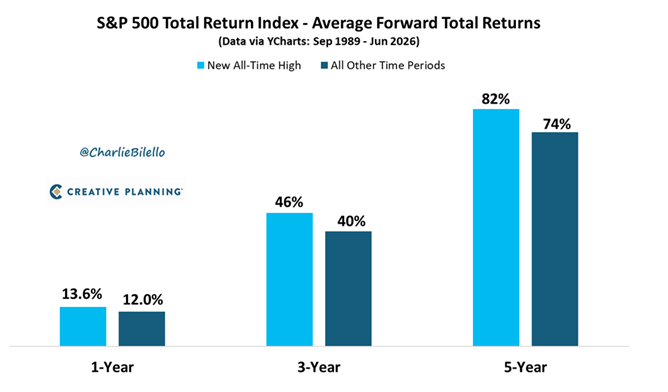
3. Forward Returns S&P Better After New Highs
@Charlie Bilello
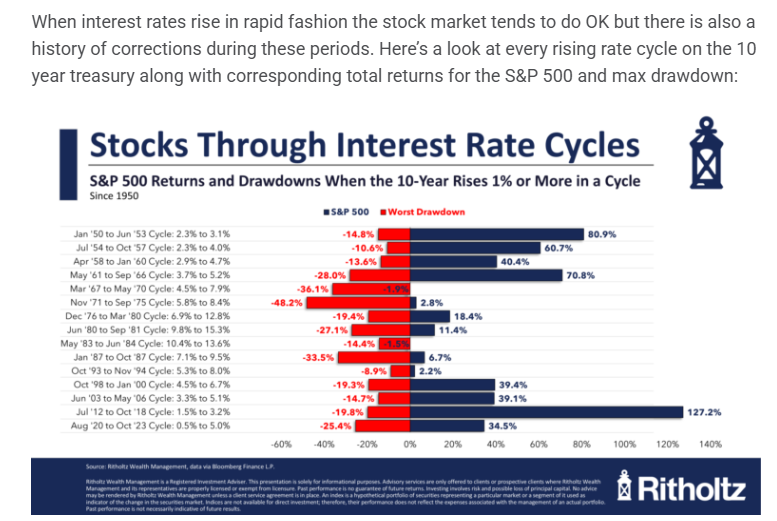
4. 10 Drivers of Higher Interest Rates-Barry Ritholtz
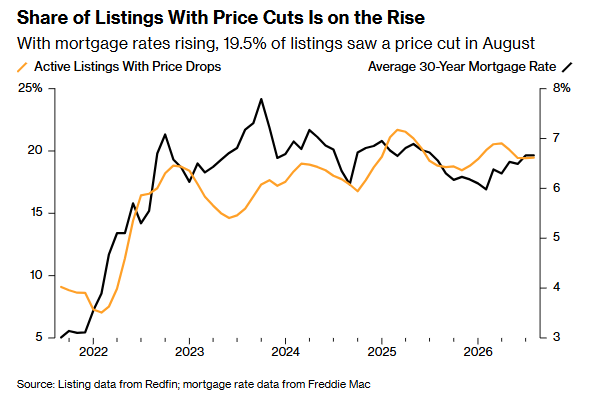
9. 20% of Home Listings in U.S. Cut Prices in August
Bloomberg
10. A doctor shares his 5-step routine for preventing cancer
Business Insider Dr. Kumar works with patients who have many types of cancer, and said he’s built a well-rounded health routine to lower his risk. Courtesy of Dr. Avishek Kumar
An oncologist said simple habits help him reduce the risk of developing cancer long-term.
He focuses on diet, exercise, and health screenings while reducing stress and exposure to toxins.
His best advice is to start small with consistent habits and build your healthy routine over time.
How does fiber lower cancer risk?
What household items emit microplastics?
How does fiber reduce cancer risk?
Every day, you’re making hundreds of small decisions that might be exposing you to a higher risk of cancer.
A few simple tweaks to your routine can help give you the best chance of preventing cancer, according to Dr. Avishek Kumar, a board-certified community oncologist in Edison, New Jersey.
“You can’t fully eliminate the risk of having any sort of cancer,” he told Business Insider. “But the key is reducing the odds, partaking in certain habits over the course of a lifetime, which can cut down the odds.”
Small day-to-day decisions can add up to significant protection against deadly cancers like colon cancer and lung cancer.
He shared his own routine as an example, with five key components to reduce major cancer risks.
“Simple substitutions done over weeks and months and years can really pay off vast dividends in cancer prevention as time goes on,” Kumar said. “Every given moment, we have the opportunity to take the stairs or substitute something healthy.”
He eats more fiber and fewer processed foods
When it comes to nutrition, Kumar said his approach is to imagine a farmer from a century ago, prioritizing foods they would have eaten that can be harvested, foraged, or prepared at home.
“They probably wouldn’t be eating Cheetos,” he said.
Think berries, whole grains, lean meats, eggs, and dairy. The most nutrient-dense picks are often fresh foods you’d find on the periphery of the grocery store, rather than the shelf-stable, ultra-processed food in the center aisles.
That said, it’s not realistic to completely cut out processed food, and Kumar loves a convenient trip to McDonald’s (for a Filet O’ Fish) as much as the rest of us.
For a balanced diet, he makes sure that at least one meal a day is as little-processed as possible, so he doesn’t have to stress about enjoying a brownie at work or a fast-food lunch.
Want to discuss this story with someone?
Share as a gift
“Really, it’s a long-term effect that matters. It’s those cumulative habits substituting a healthy, unprocessed plate of berries or vegetables for one meal a day,” Kumar said.
He gets steps in early
Exercise is one of the most effective ways to prevent cancer, and it doesn’t have to take much time or cost much money. Everyday movement, like walking, running, or taking the stairs, is enough to provide a protective benefit.
Kumar said he jogs nearly every morning to get his steps in early and start the day with more energy and less stress
If you’re not a jogger or gym rat, he recommends adding a 20-minute walk to your day. Make it a habit, and build on it over time.
He protects his home from toxins
Kumar said environmental factors can play a big role in cancer risk, including items in your own kitchen or living space.
For instance, microplastics may be linked to an increased risk of cancer. The tiny particles can enter the human body through household items such as plastic food packaging or the nonstick coating on your cookware or utensils. To prevent exposure, throw out and replace old or degrading items.
“Sometimes you’ve got a pot that you really like, or a pan you’ve been using for years, and it’s kind of peeling off, but you don’t want to throw it out,” Kumar said. “Really, all those different exposures can potentially increase the risk of cancer down the line.”
Another potential carcinogen in your home is invisible, odorless, and tasteless: radon gas. Radon exposure is the second largest cause of lung cancer mortality after smoking, and it can seep into your home from the surrounding environment, Kumar said.
He recommends getting a low-cost testing kit or a device to check the radon levels in your home. If it’s high, you can install vents or other airflow systems to lower your risk.
He stays on track with screening — even if he’s super busy
With a full schedule of patients, Kumar said it’s sometimes a challenge to fit in time for his own medical appointments. Routine screenings are often the first thing to get postponed when life gets busy.
But staying up to date is crucial, since most cancers are highly treatable when caught early.
Screening recommendations from the American Cancer Society include:
From age 45: A colonoscopy to check for colorectal cancer, and repeated every 10 years
From age 40: Annual mammograms for women to screen for breast cancer. (Start younger if you have a family history of cancer.)
From age 50: Prostate cancer screening for men. (Start younger if you have a family history.)
“If you’re due for a mammogram, if you’re due for a colonoscopy, if it’s age-appropriate, it is a really good idea to do that because to help others, you have first to help yourself,” he said.
He unplugs to manage stress
As a doctor, Kumar said he makes a conscious effort not to spend all his time thinking about cancer. Too much stress can be a health risk in itself.
“Especially with social media, the tendency is just to scroll and, oh, that’s an interesting article, scroll some more,” he said.
His solution is “unplugging completely and sitting down in a quiet place, ideally outside, and reading a book.”
Kumar also makes a point of spending time with his wife and son on fun outings, such as a recent trip to a train museum.
Regardless of how you choose to unwind, deliberately managing stress makes it easier to stick to a healthy routine in the long term.
“Cancer prevention isn’t about perfection, it’s just about doing simple things consistently,” Kumar said.
This article is not a substitute for professional medical advice, diagnosis, or treatment. Always consult your qualified physician or healthcare provider.
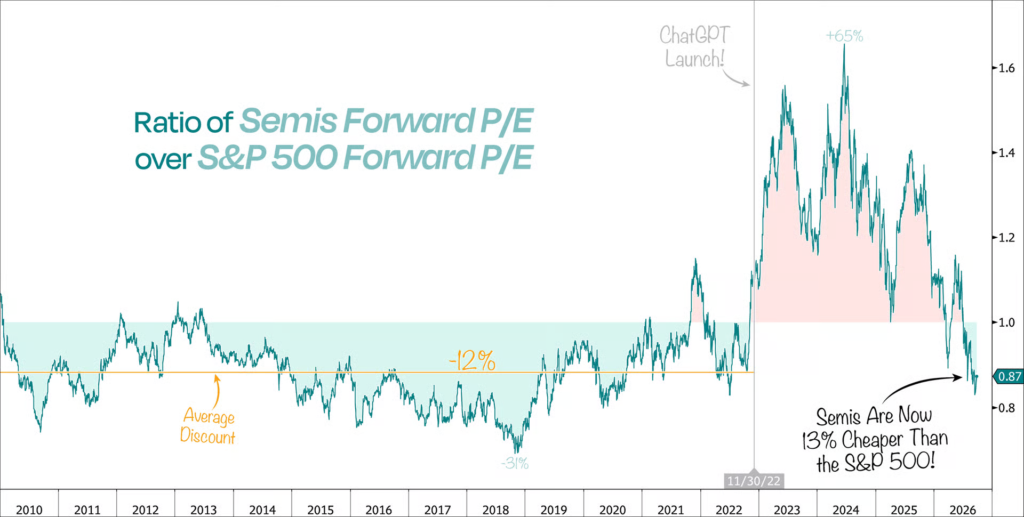
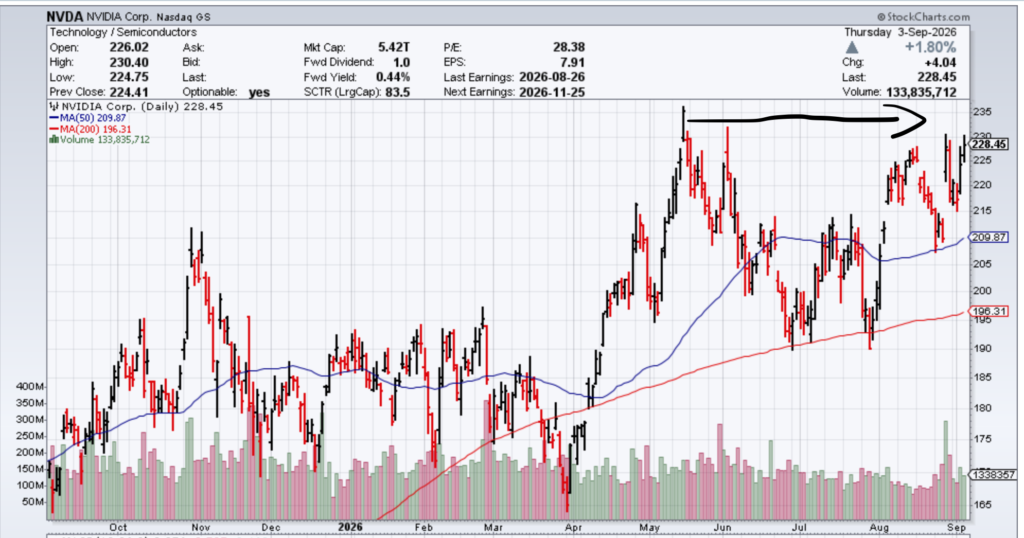
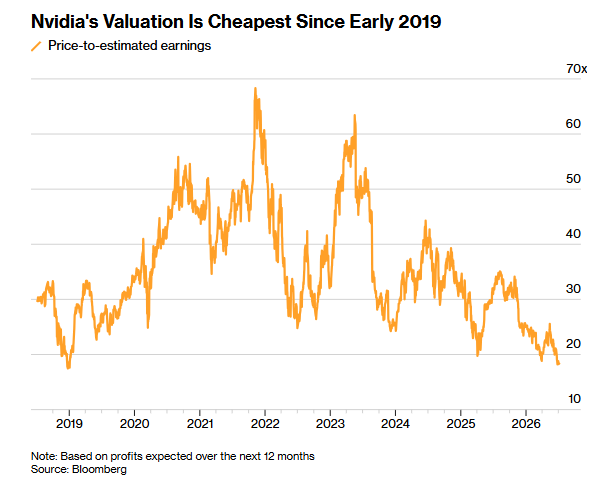
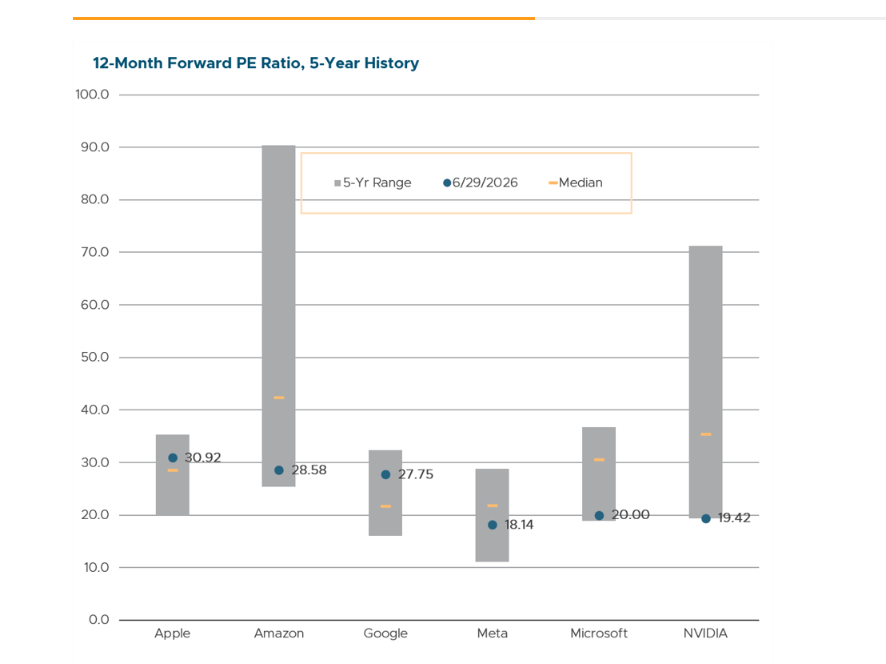
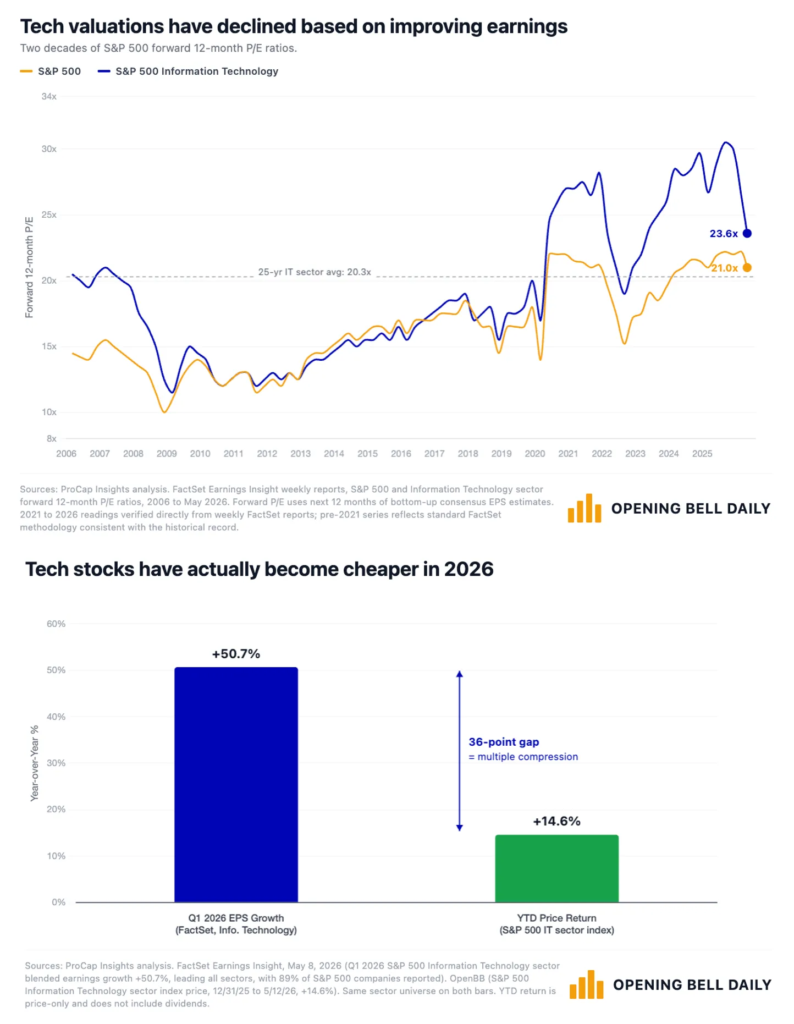
2. Yesterday We Showed NVDA Less Expensive than Half the S&P 500……..Semiconductor Sector Cheapest in 4 Years vs. S&P
Semis valuation. “Semis are back to trading at a 13% discount to the S&P 500. That’s below the longer-run pre-AI average and marks the cheapest relative valuation in more than four years.”
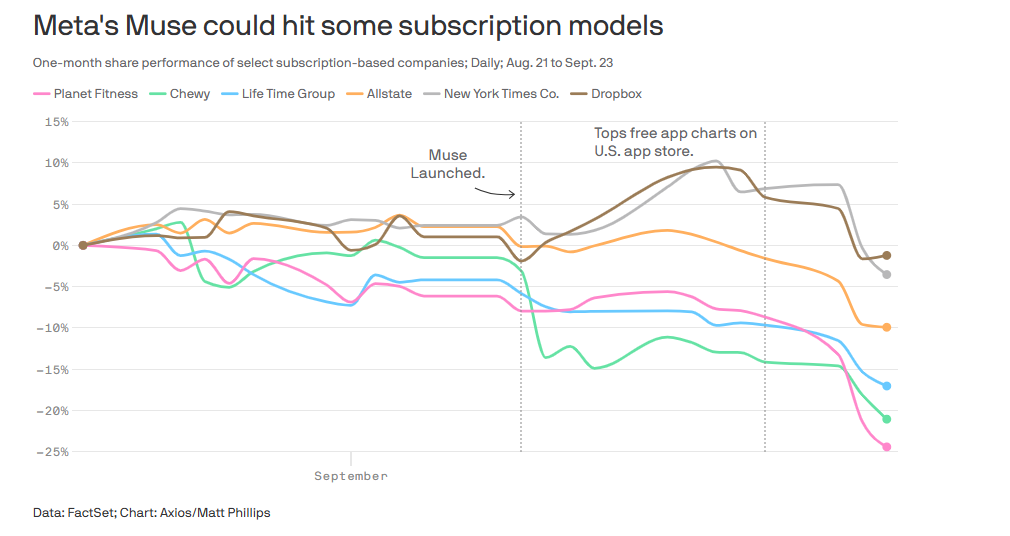
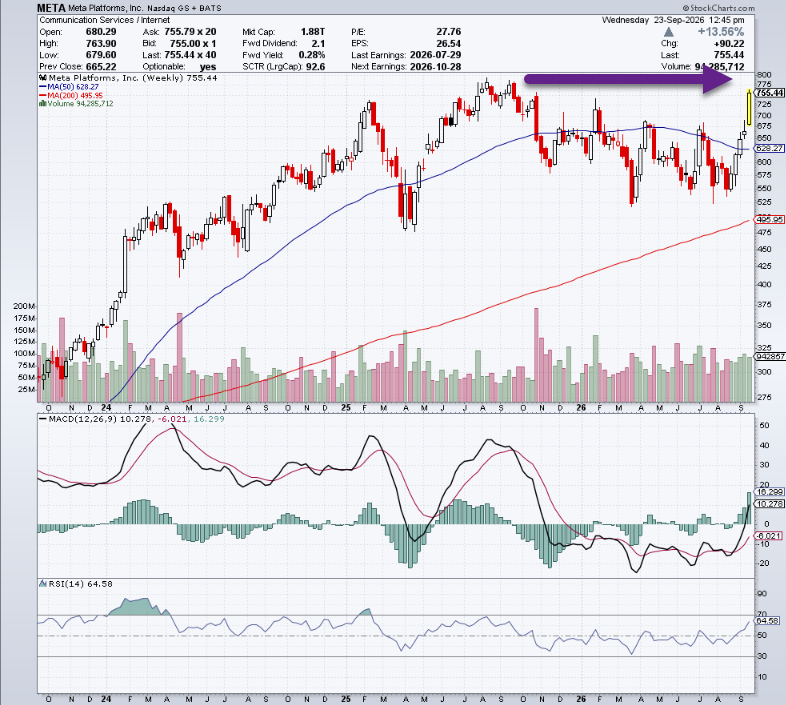
3. MUSE Roll Out by META…..One More Good Day from New Highs
StockCharts
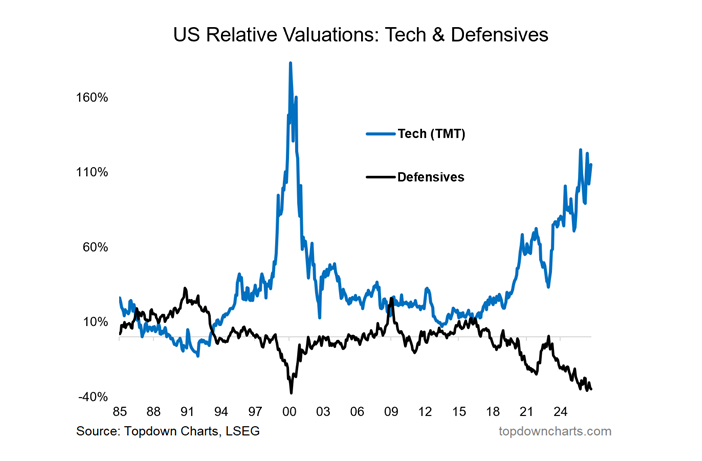
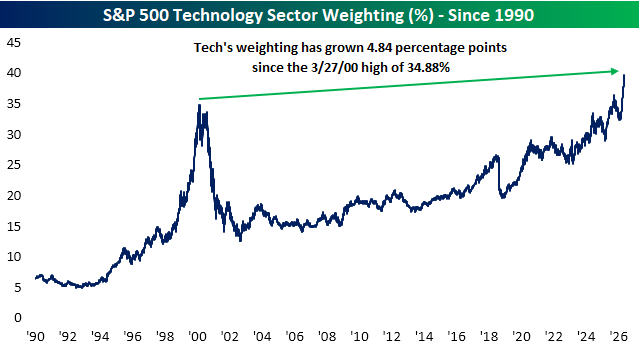
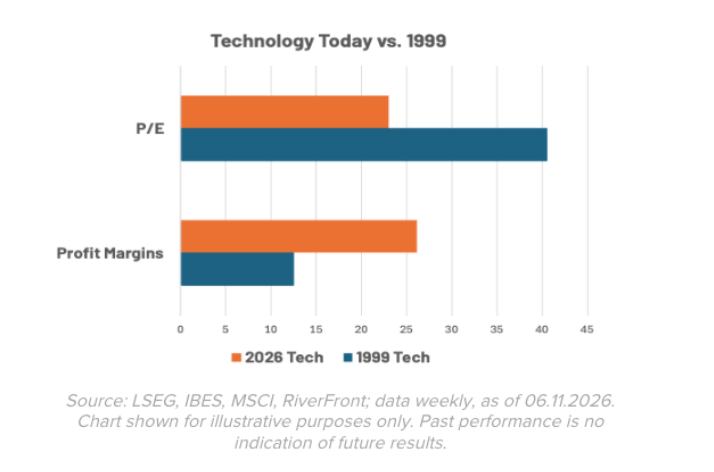
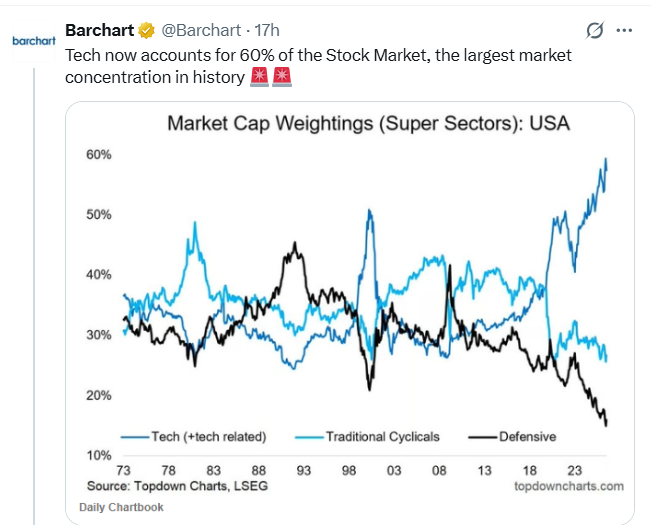
4. Tech Sector vs. Defensive Sector Update….Highest in 20 Years But Not Near 1999
Topdown Charts
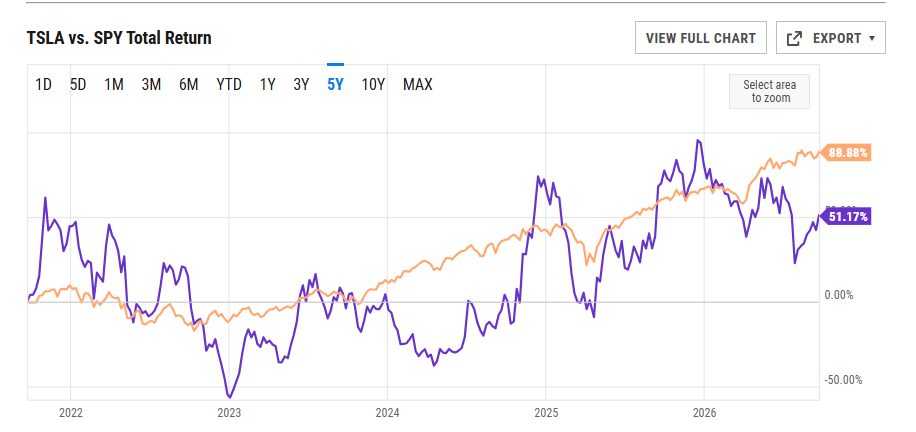
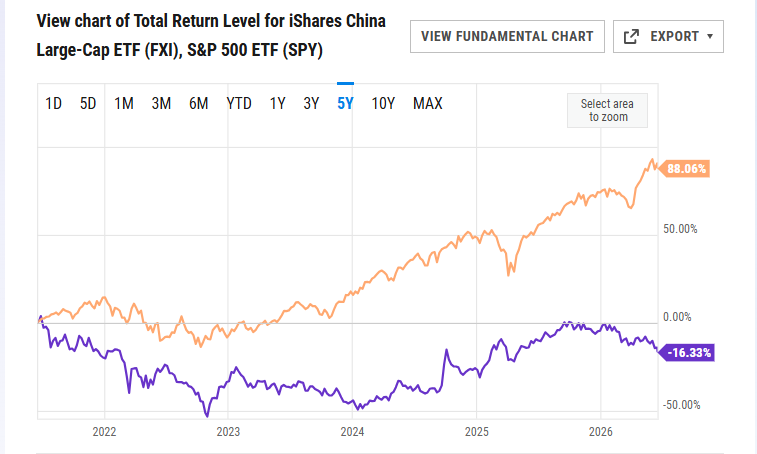
5. S&P +88% vs. TSLA +51% 5 Year Returns
Ycharts
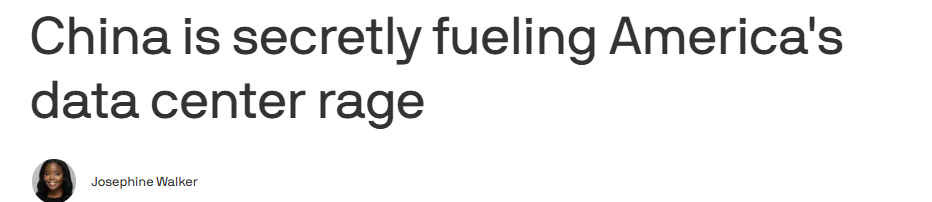
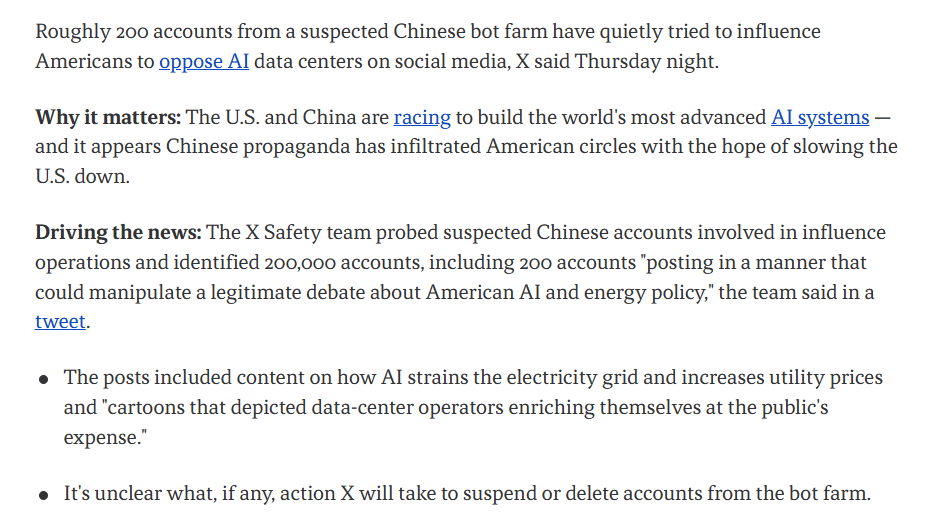
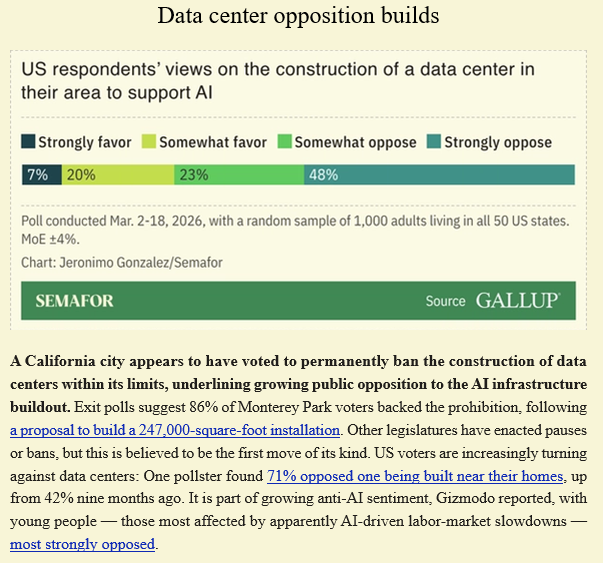
6. China Bots Fueling American Data Center Rage?
Axios
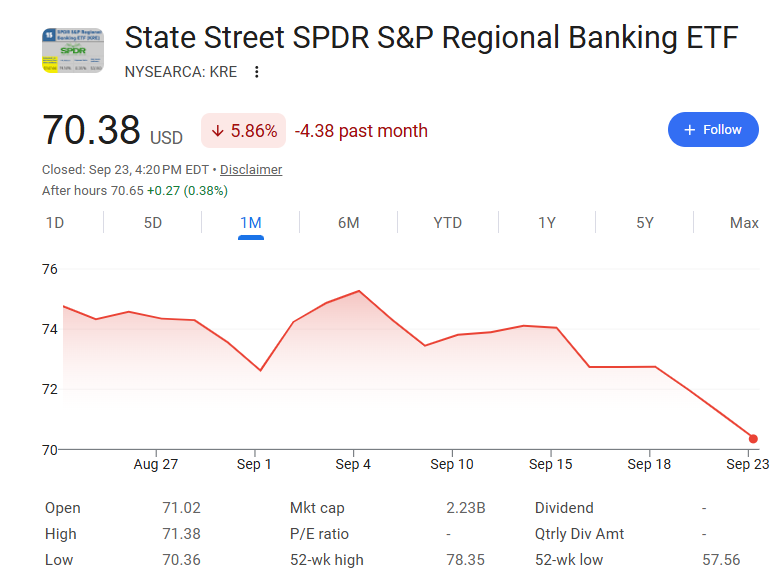
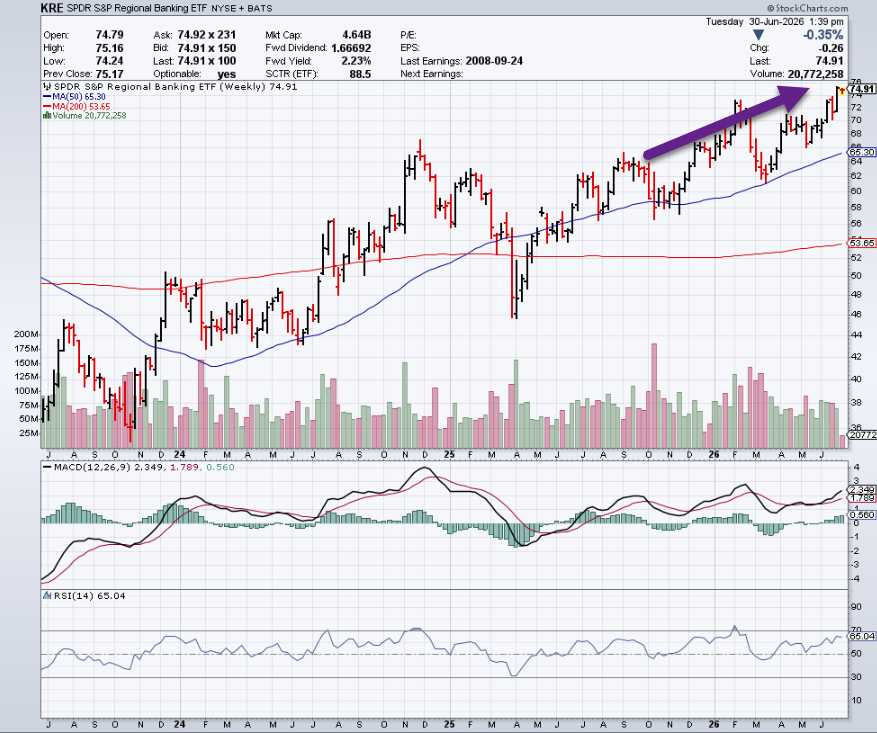
7. Regional Bank Index -6% this Month
CNBC
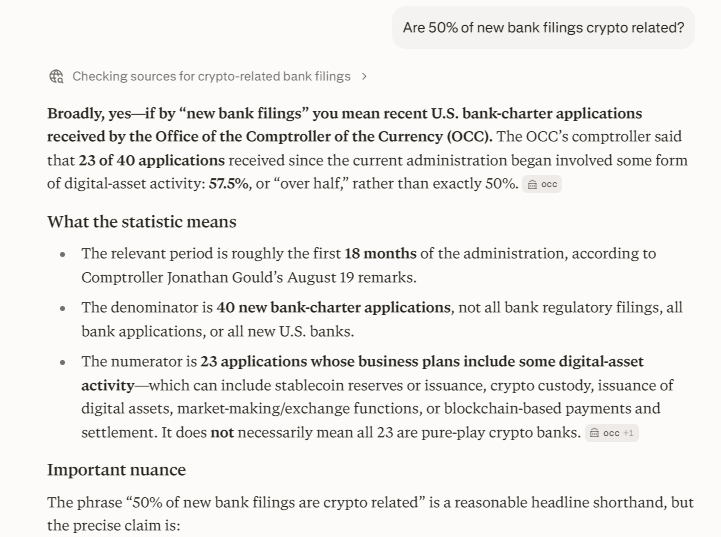
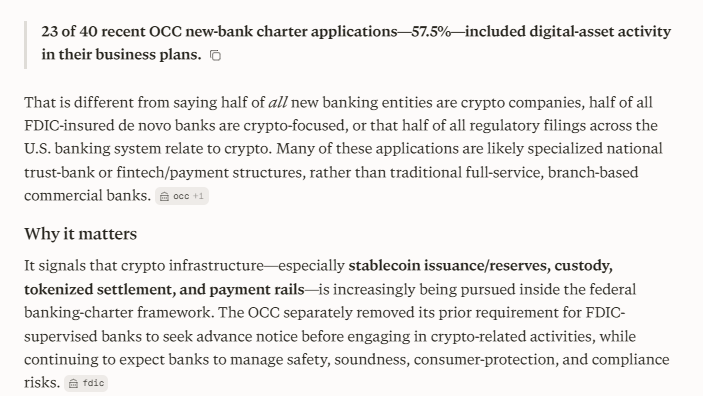
8. Crypto Infrastructure Increasingly Being Pursued Inside Traditional Banking Framework
Perplexity
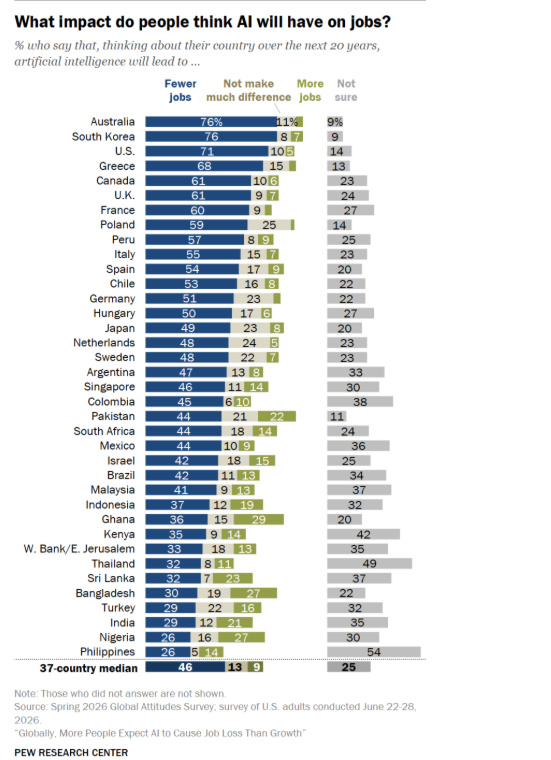
9. Global View on AI Job Impact
Pew Research Center
10. Stats on Celebrity Endorsed Crypto
Cryptocurrency is almost five times as likely to be a scam
Marketwatch The ‘attention economy’ is really the sucker economy By Brett Arends
About 10% of all crypto coins launched turned out to be outright scams, but for those endorsed by so-called celebrities, that figure was 45% to 48%.Photo: MarketWatch photo illustration/iStockphoto
New cryptocurrencies publicly endorsed by celebrities — often on social-media platforms such as Twitter — were almost five times as likely as those that weren’t endorsed to turn out to be scams and to see their value collapse to zero.
Yet those cryptocurrencies also raised about five times as much money, on average, as the ones without a celebrity endorsement, meaning that the famous face was worth an extra $80 million or more to the promoters.
How Net Leases Are a ‘Hybrid Between Credit and Real Estate’See All Videos
White and Wilkoff trawled through about 1,500 new cryptocurrencies launched during the mania of 2017-18. They identified the ones that had been “endorsed” during the initial coin offering — the fundraising, or launch — by a famous person, typically a cultural celebrity. Then they tracked what happened next.
‘Celebrity endorsements sell investments for the same reason they sell shoes: People confuse familiarity with trust.’
— Financial planner Aaron Gaines
Even to a cynic like me, the results were worse than expected.
While about 10% of all the coins launched turned out to be outright scams, the figure for those endorsed by so-called celebrities was a staggering 45% to 48%.
“Celebrity-endorsed [initial coin offerings] are 35 to 38 percentage points more likely to be classified as scams,” Wilkoff confirmed to me by email. “The sample average for scams is [around] 10%.” That, he noted, means the estimated rate for endorsed initial coin offerings is 45% to 48%, or roughly 4.5 to 5 times more likely to be a scam. “This is an increase of about 350% to 380%,” he added.
But for all that, the celebrity endorsements worked … at least for the currency promoters, and in many cases for the celebrities.
“Celebrity endorsements are associated with raising about five times as much capital as non-endorsed offerings,” White and Wilkoff report in their paper. “Relative to the sample mean of $17.5 million, this corresponds to an incremental increase of approximately $83 million to $104 million in funds raised.”
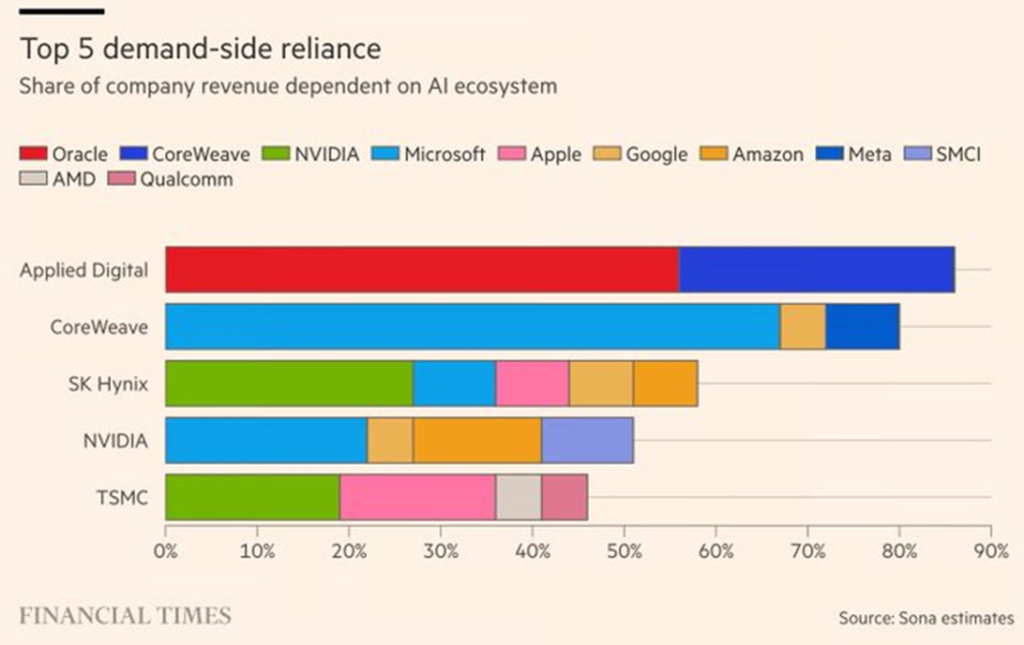
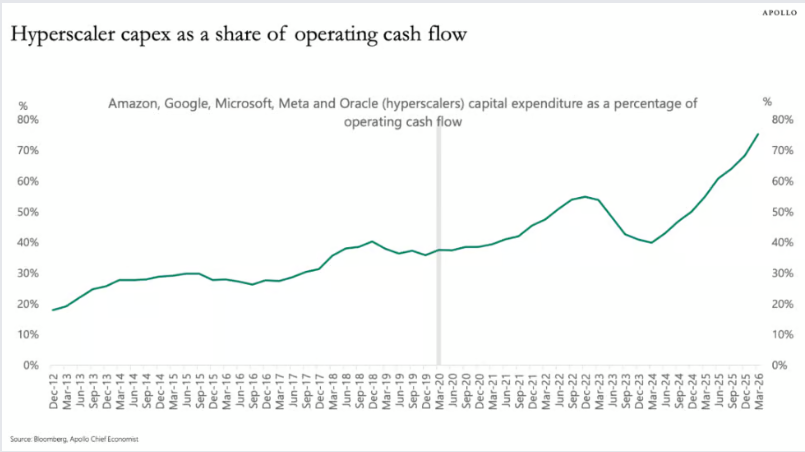
Dave Lutz Jones Trading…”Some firms’ revenue is almost existentially tied to the capex decisions of one or two players. Here’s a chart showing the top five companies’ revenue dependence on the ecoverse” FT reports
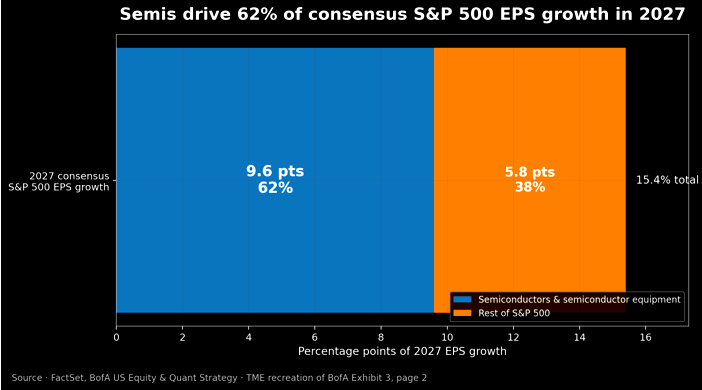
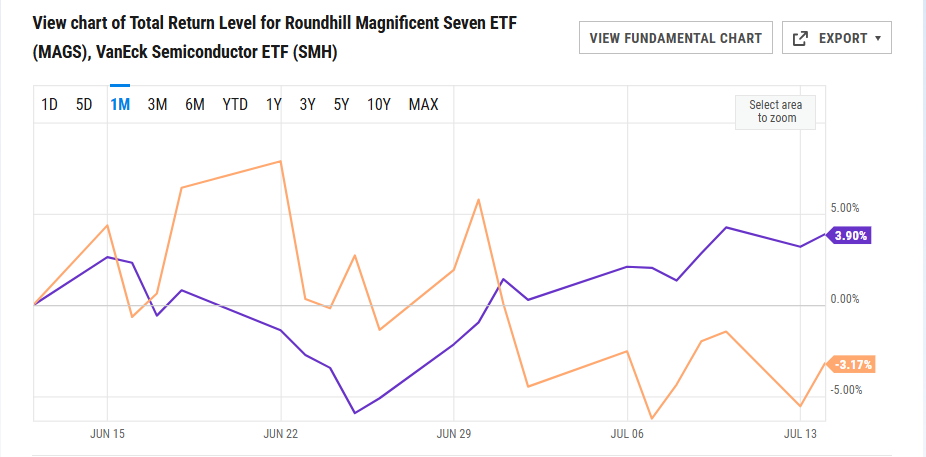
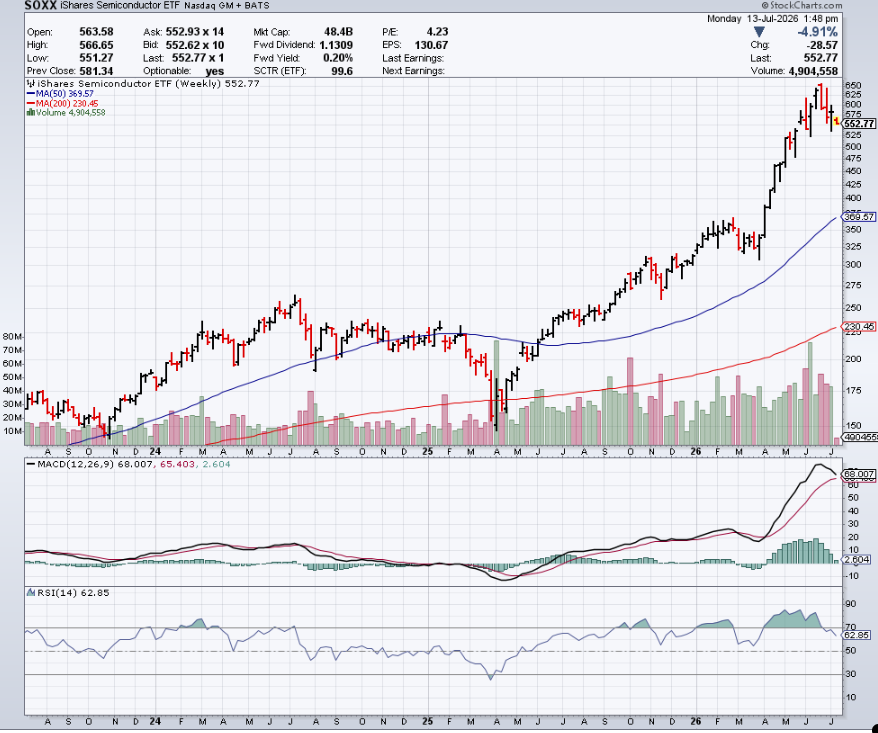
2. Semi Driving 62% of S&P Earnings Growth
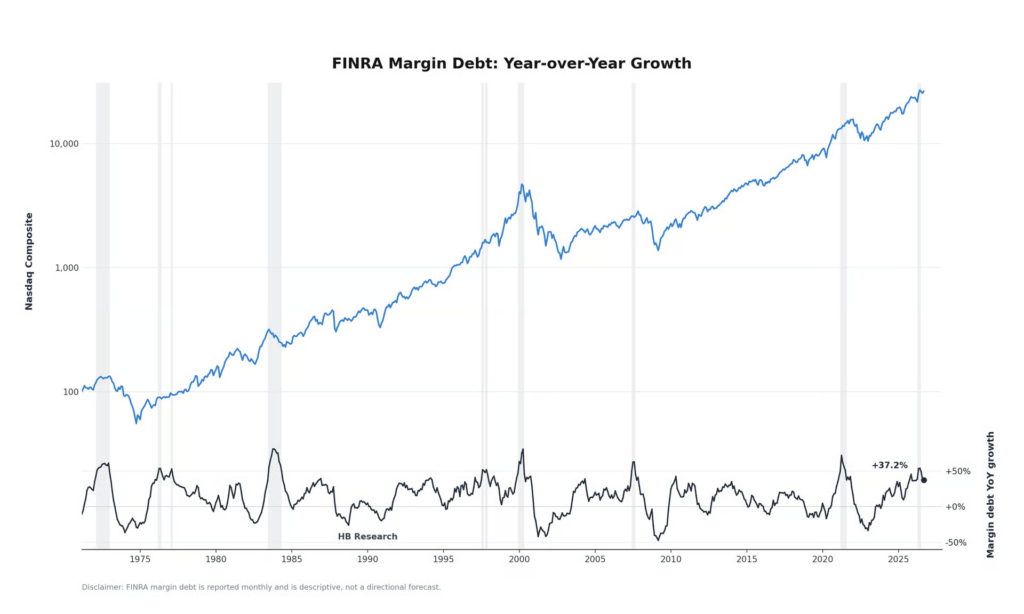
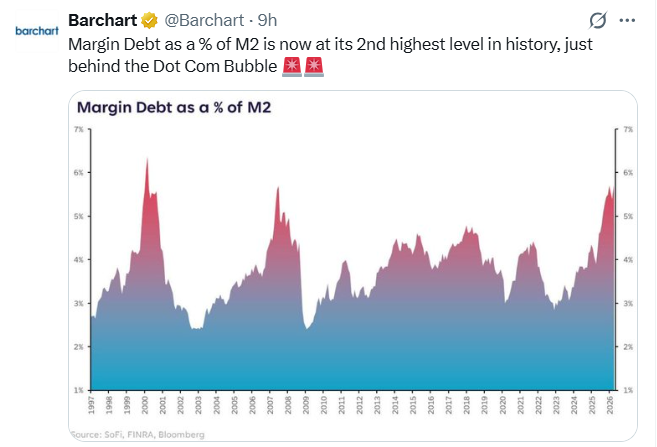
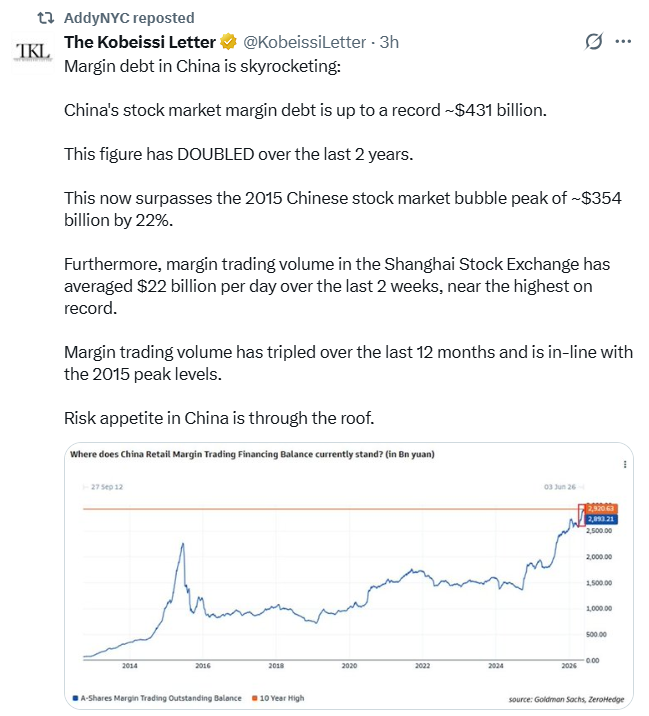
3. Margin Debt Still High But Cooling Off
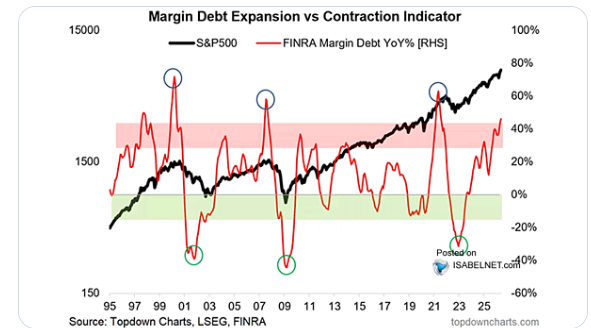
Margin debt. “After reaching +50%, margin-debt YoY growth has steadily cooled to +37.2%. (Periods above +50% YoY are shaded in grey).”
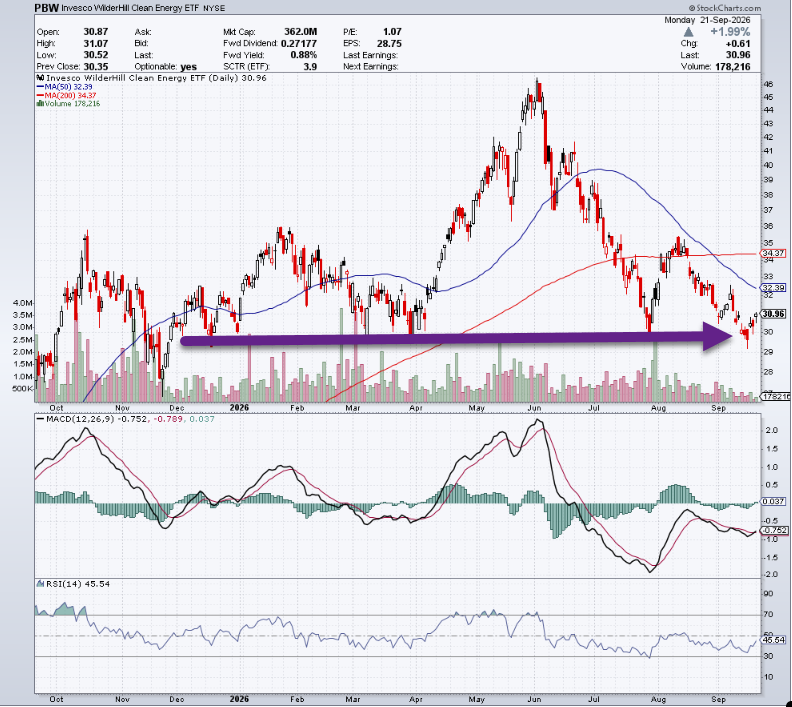
5. Non-Oil Energy Going Down While Energy Going Up……Clean Energy ETF -35% from Highs
StockCharts
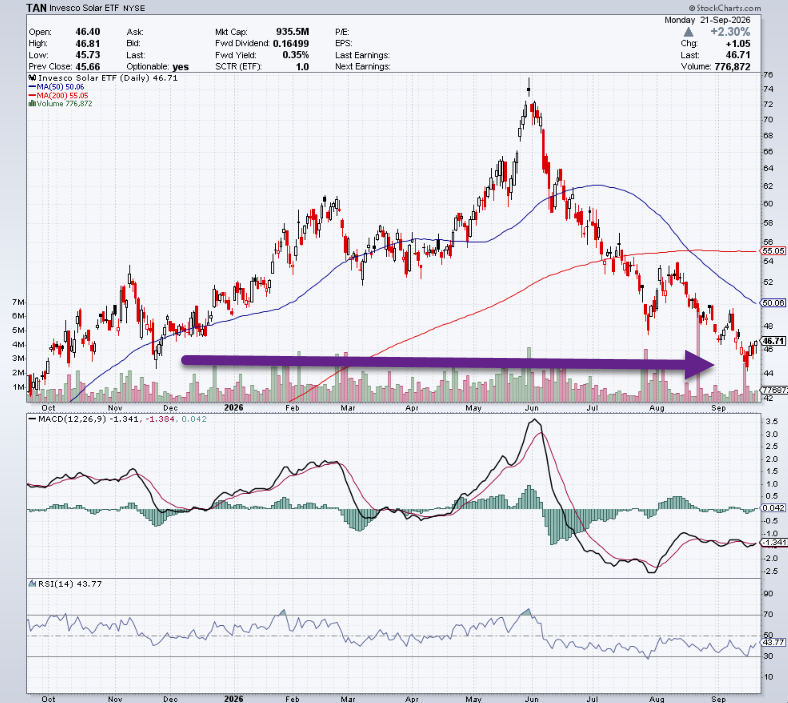
6. TAN Solar -40% from Highs
StockCharts
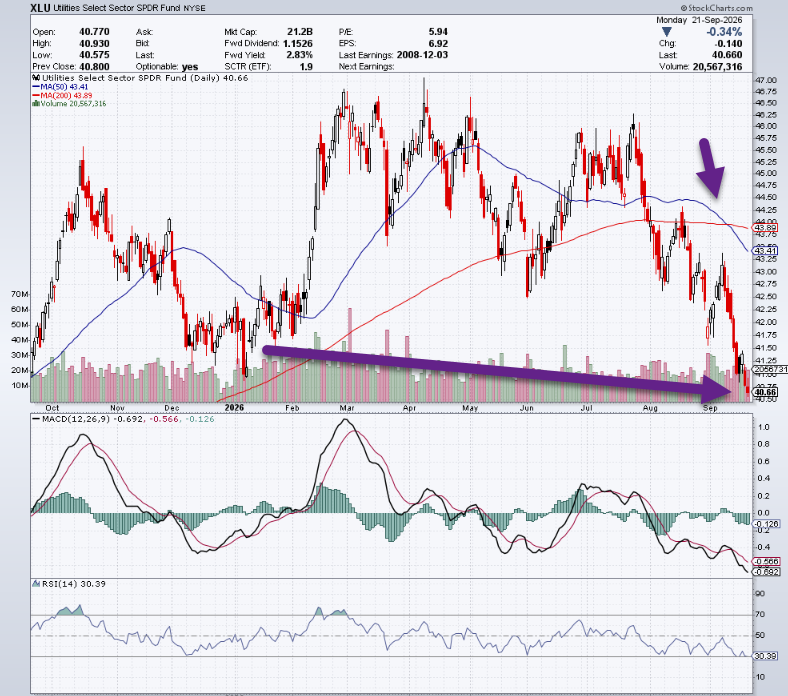
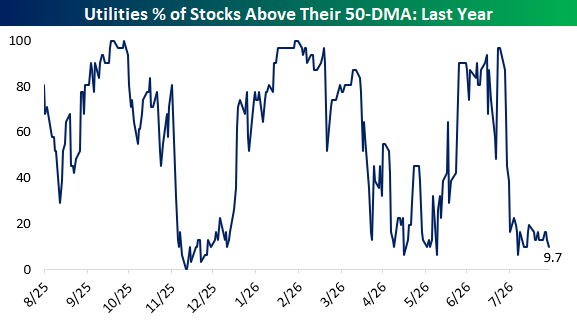
7. XLU Utility ETF Negative for 2026…50day thru 200day to Downside
StockCharts
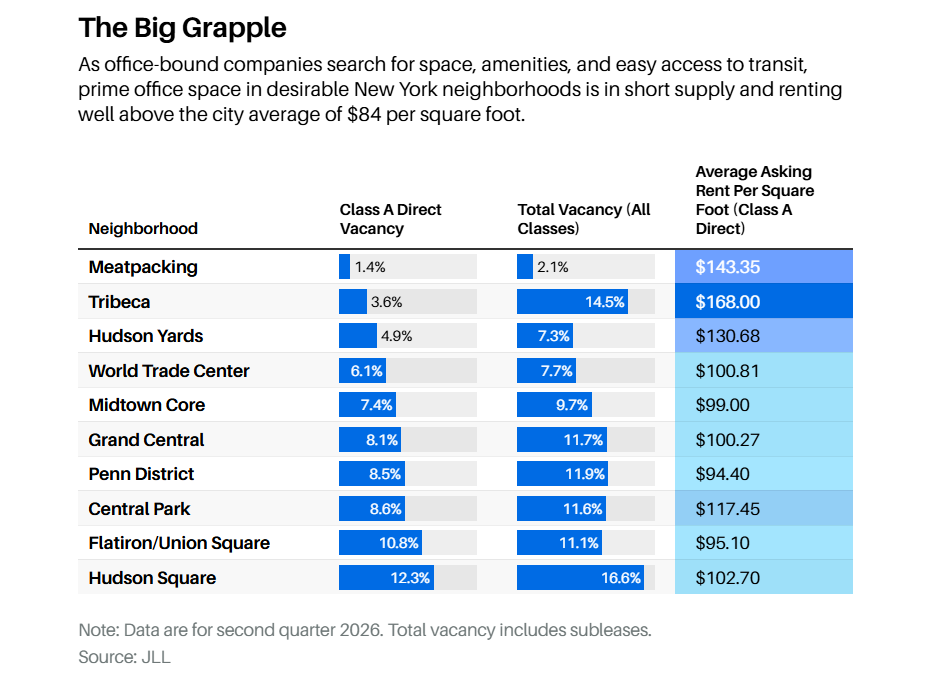
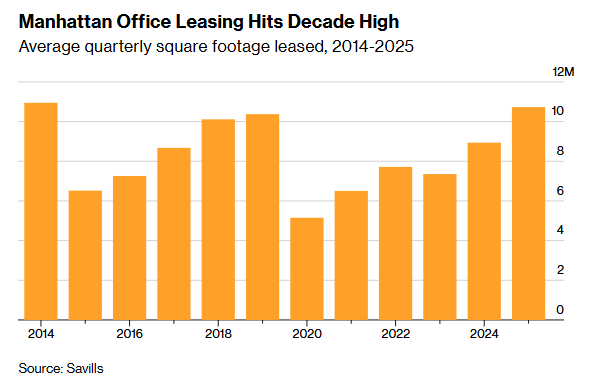
8. NYC Office Back on Top-Barrons
Barron’s
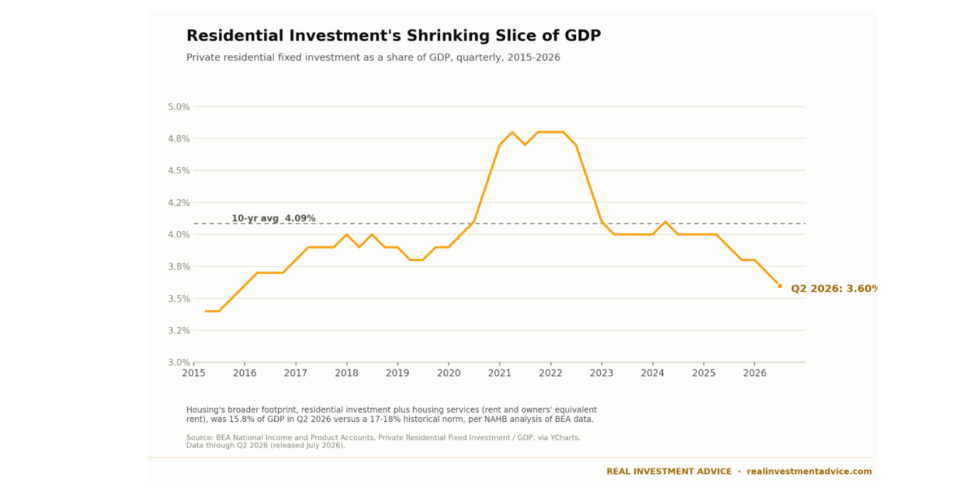
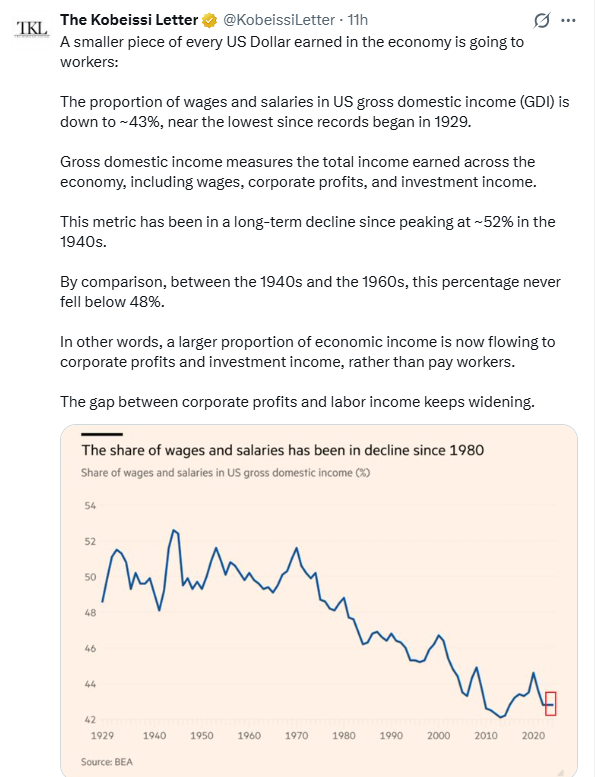
9. Residentail Investments Shrinking Slice of GDP
Advisor Perspectives
10. Why A 10-Second Balance Test Helps Predict Longevity-Arnold
Adults who couldn’t hold a 10-second one-leg stance had a higher death risk over 7 years.
Welcome to the positive corner of the internet. We’re here to make your life healthier, happier, and less stressful. At the bottom of each email, we explain our editorial process, stance on AI, and partnership standards.
Many tests — from strength to VO2 max — are designed to assess longevity. But one test in particular requires no equipment whatsoever, and could highlight areas needed for improvement.
Researchers found that a simple 10-second balance test could be one signal of your long-term health and is linked to a higher risk of early death
Scientists studied more than 1,700 adults and found that poor balance was strongly associated with all-cause mortality over the next 7 years. The test was pass/fail: you either held it for the full 10 seconds or you didn’t.
To do it, fold your arms across your chest. Lift one leg until your thigh is parallel to the floor. Then hold the position. If you lose balance, sway, or step down, that’s when the test ends.
Even after adjusting for age, sex, weight, and health conditions, those who couldn’t balance on one leg had about an 84% higher risk of dying.
If you can’t stand on one leg for at least 10 seconds, that doesn’t mean you should prepare for the end. Instead, balance reflects many of the attributes that truly matter for longevity.
Researchers believe a one-leg balance test is an effective test because it reflects a mix of strength, coordination, and nervous-system function that tend to decline together as we age, making it a useful snapshot of overall physical resilience.
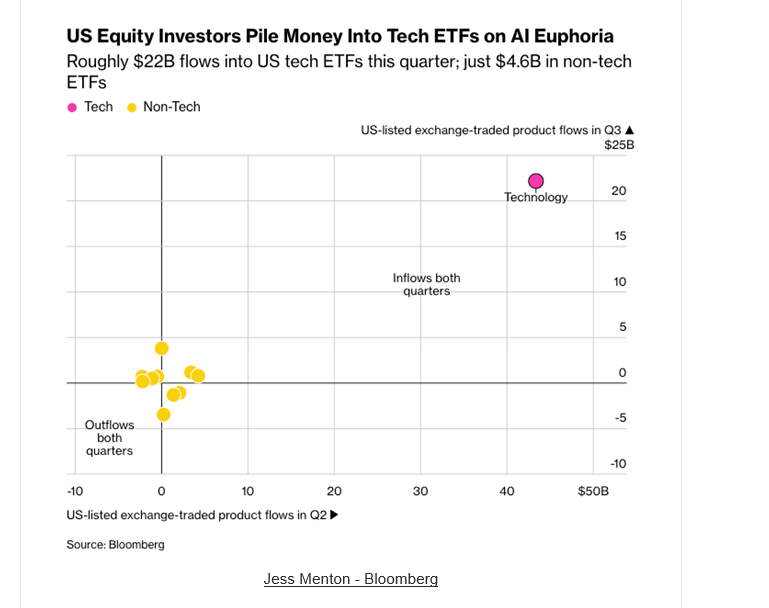
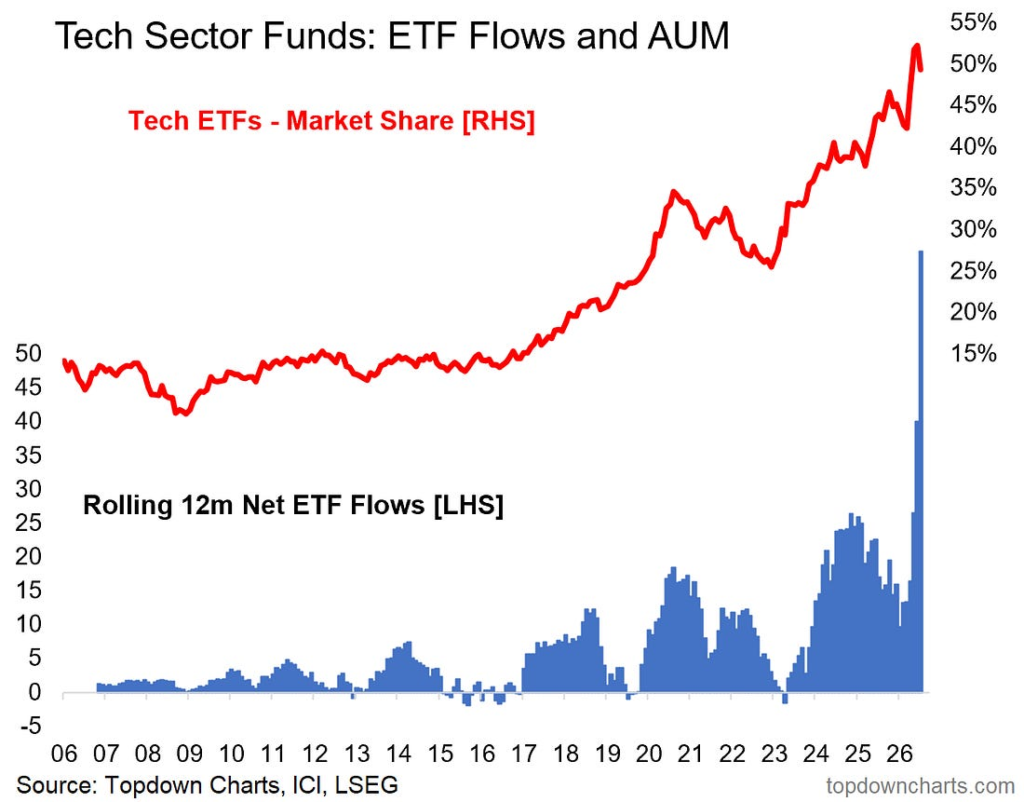
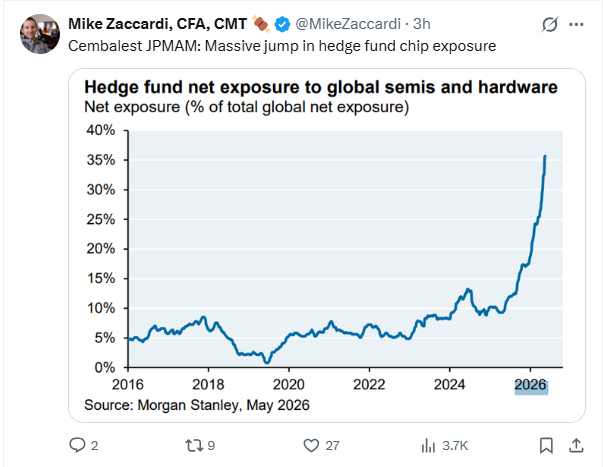
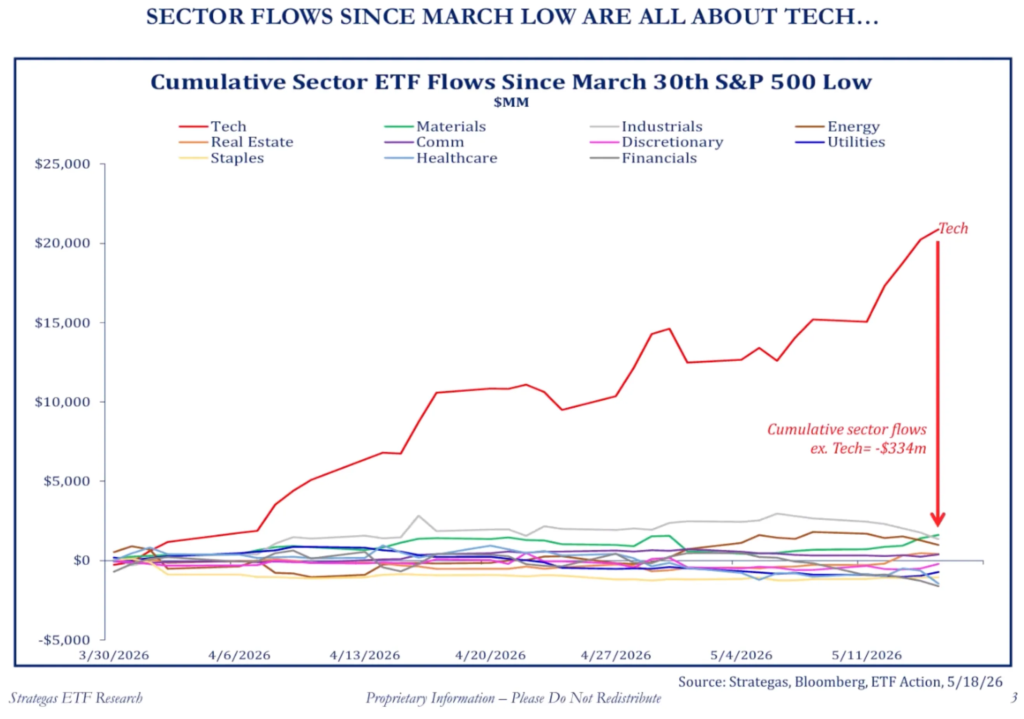
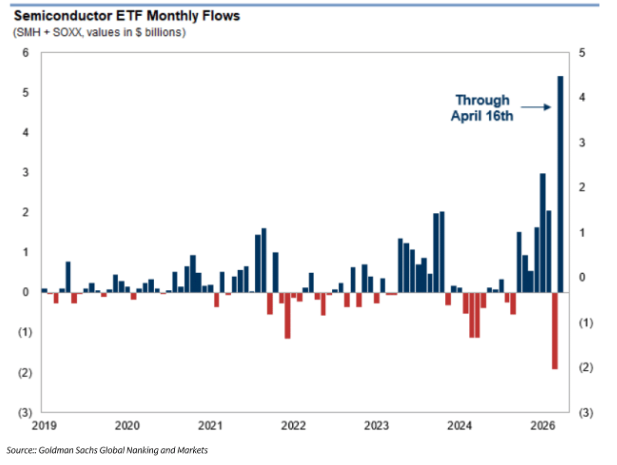
Fund Flows — Tech Stocks: tech sector ETFs just recently witnessed their largest inflows ever, and now comprise around 50% of sector ETF assets under management. Investors the world over have a huge amount of confidence in the outlook for US stocks, to put it lightly.
Topdown Charts
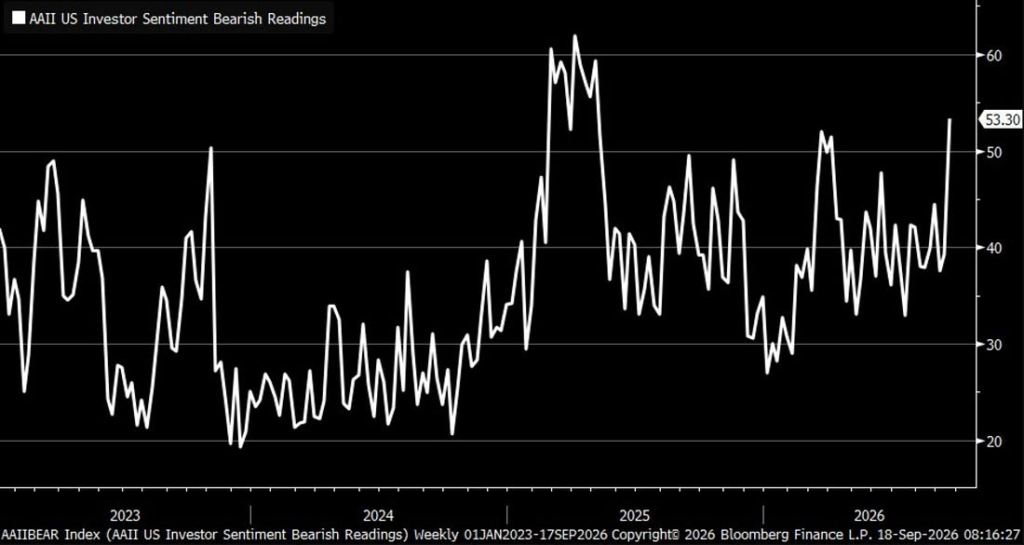
2. These Flows Do Not Match AAII Investor Sentiment ….Highest Bears in 12 Months
Bears are at their highest level since May 2025.
Kevin Gordon
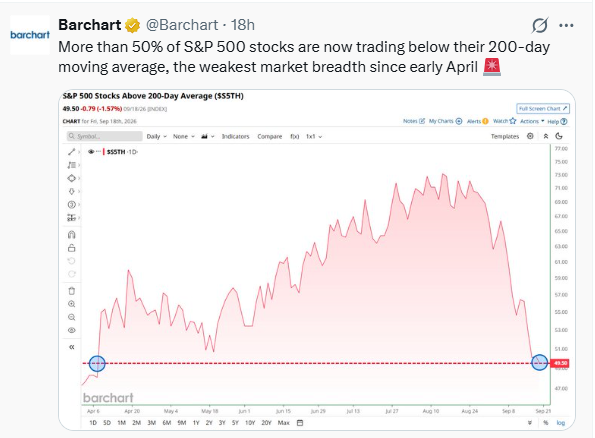
3. More than 50% of S&P Stocks Trading Below 200 Day
Barchart
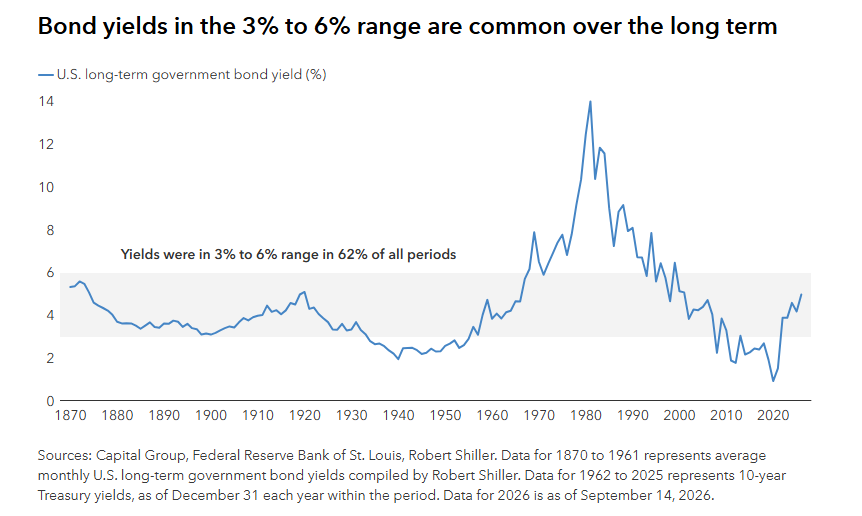
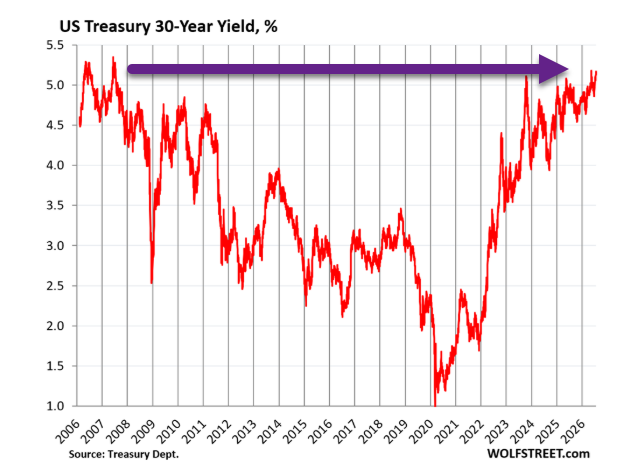
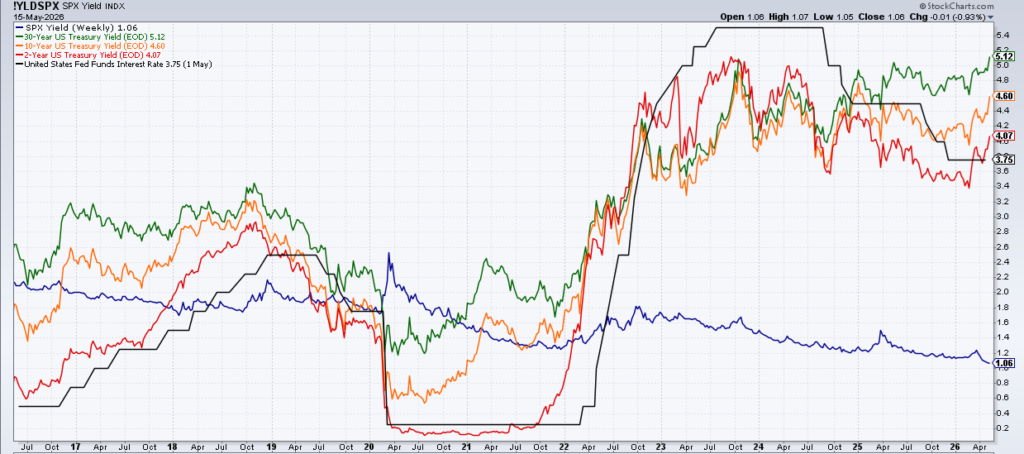
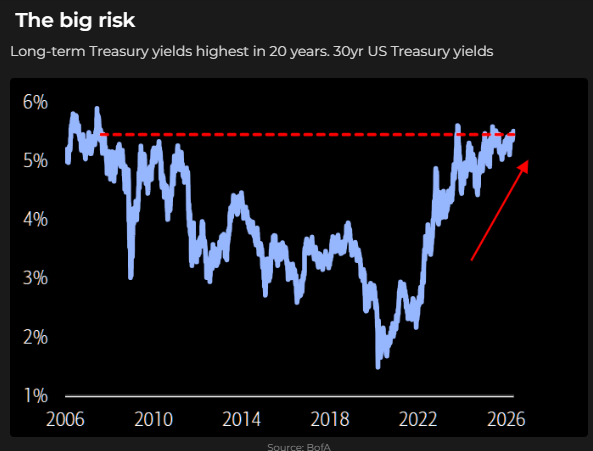
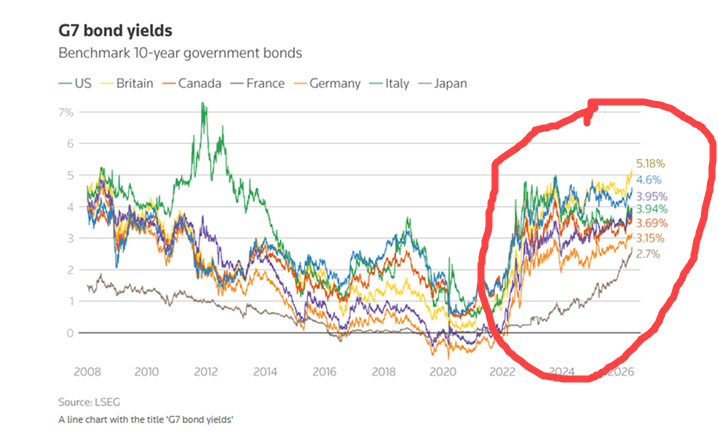
4. Bond Yields in Historical Range
Capital Group
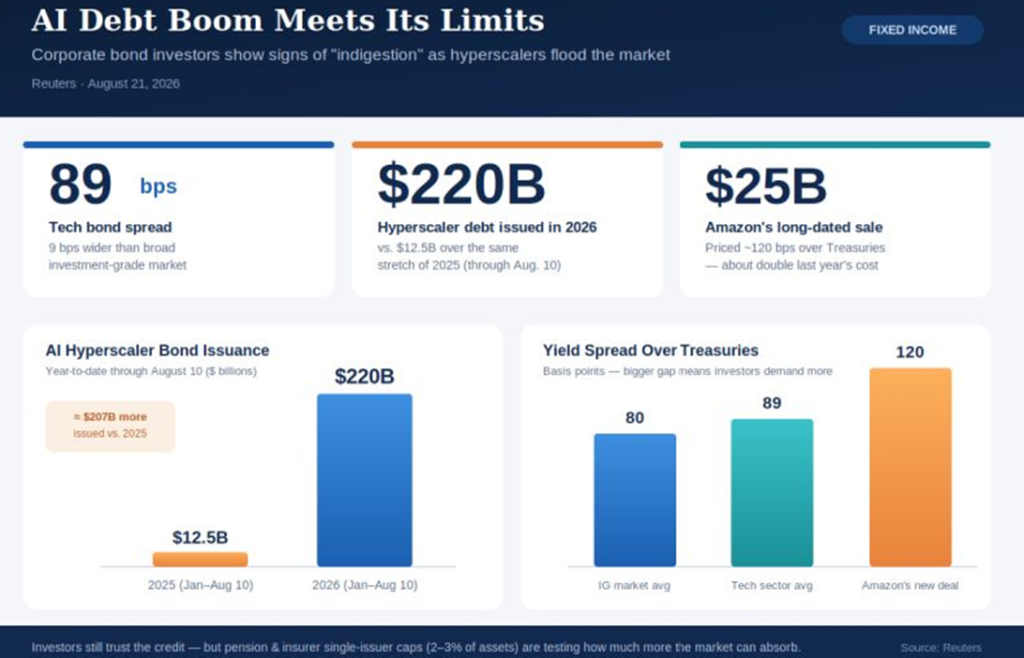
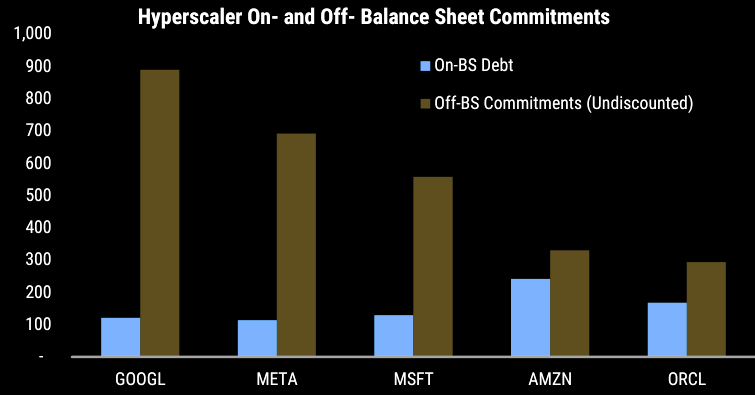
5. Hyper Scaler Debt was Addressed by Fed Chair Warsh
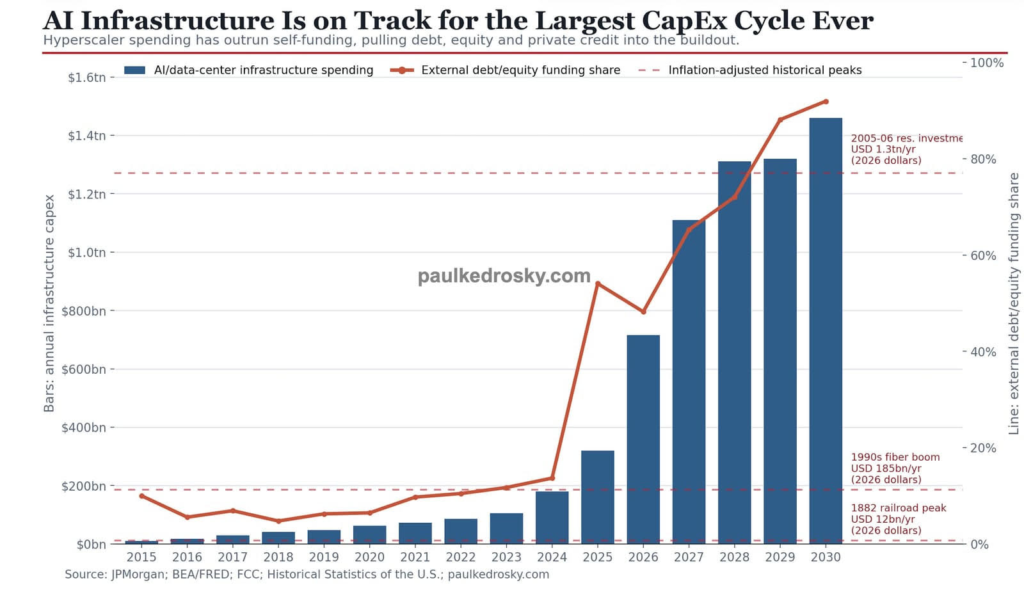
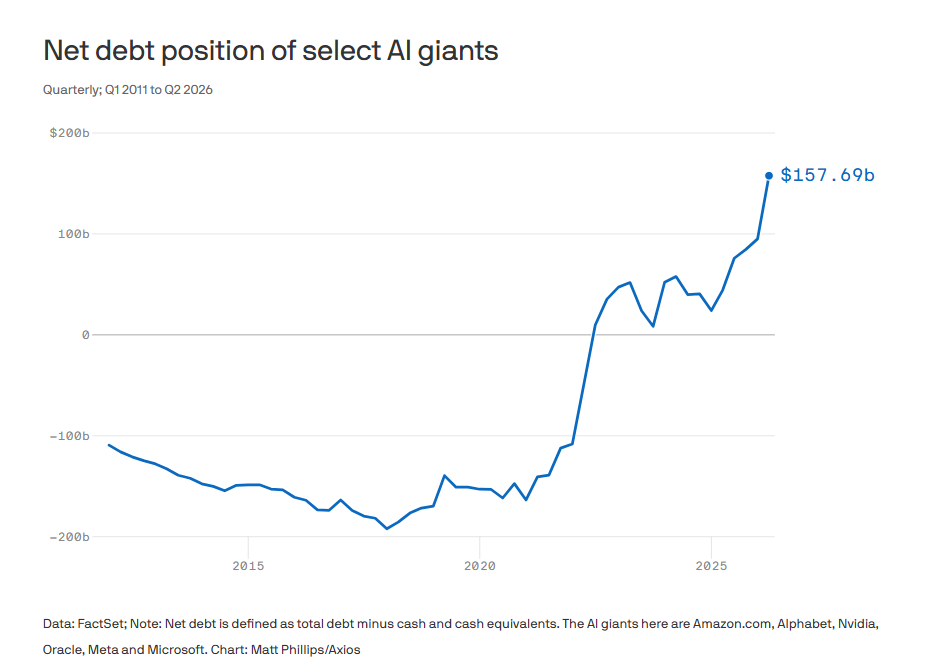
Dave Lutz Jones Trading One interesting point in the presser came in Warsh’s response to the rise in Treasury yields, according to Jonestrading chief strategist Mike O’Rourke. The Fed chair highlighted surging AI-related capex causing intense competition for capital. “Up until now the hyperscalers had asset-light business models generating free cash flow with almost no debt.” Those days are over, and “the rest of the AI trade is highly dependent on debt and equity capital markets to fund expansion.”
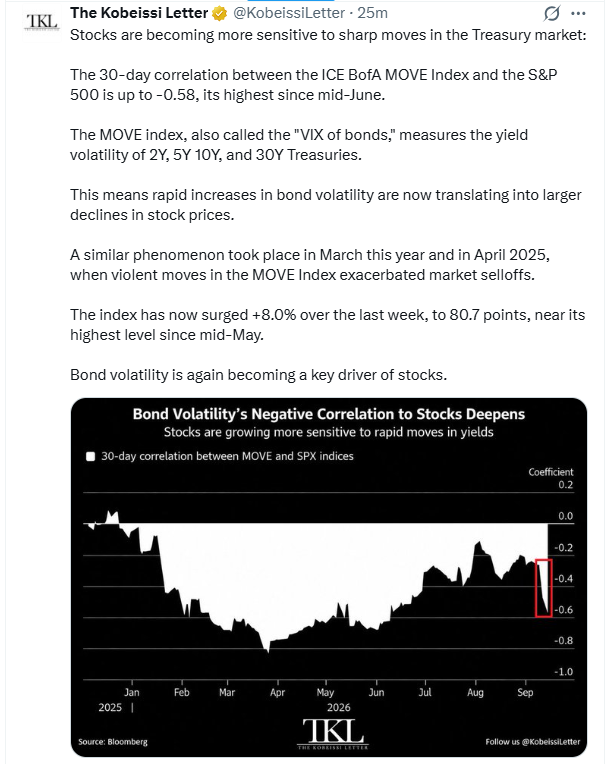
6. Bond Volatility Driving Stocks?
The Kobeissi Letter
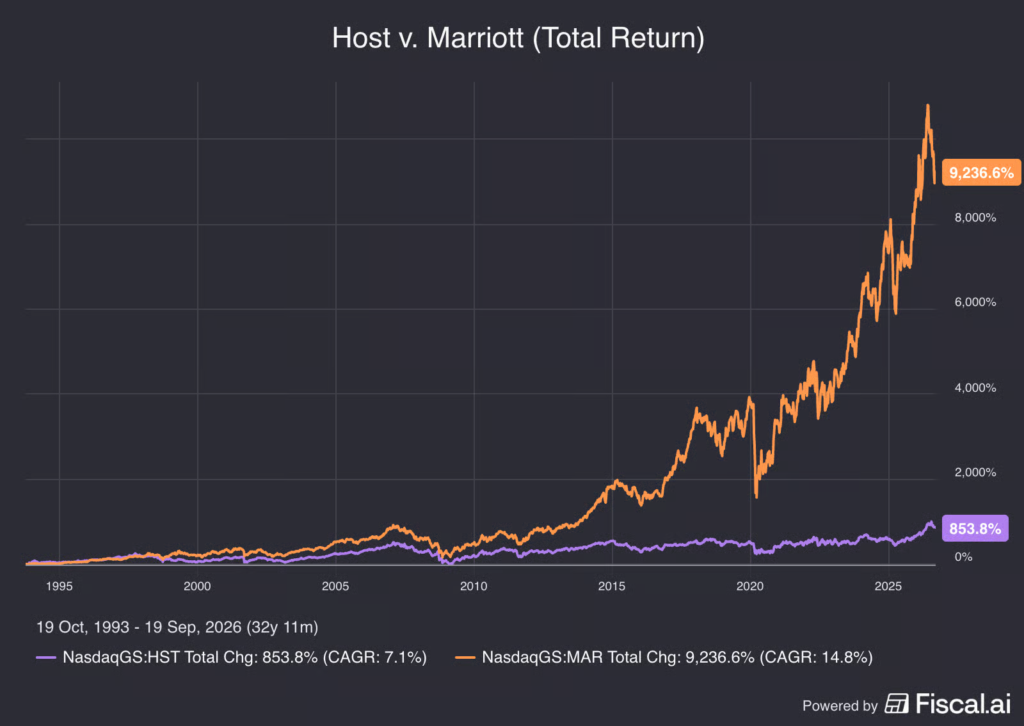
7. The Result of Marriott Splitting into Two Companies….Marriott International Service Business Skyrocketed
The existing company would become Host Marriott. Host Marriott would receive virtually all of the physical assets such as real estate holdings, undeveloped land, and project partnerships. Importantly, they would also retain the vast majority of Marriott’s long-term debt.
The newly created company, Marriott International, would retain the service operations and intangible assets. This included the existing management contracts, franchise agreements, trademarks, etc. This business was a cash-generating machine and was left virtually debt-free.
Here’s how those two companies have performed since the separation in October of 1993:
Fiscal.ai
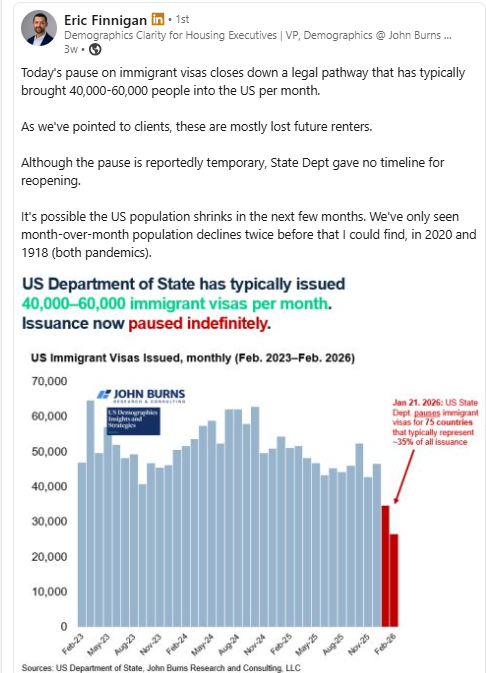
8. Demographics is Destiny…American Population has Shrunk Only During the Two Global Pandemics
Three simple phrases for dealing with defensiveness
Another effective method for dealing with defensiveness is to use self-talk. Some expressions that I’ve found helpful:
They don’t know. They don’t know what it’s like to be me or to walk in my shoes, so their comment is likely coming out of ignorance, and my dwelling on it isn’t going to do anyone any good.
I don’t know. In the same vein, I don’t know what it’s like to be them or to walk in their shoes. Maybe they’re dealing with their own insecurity, baggage, or difficult problem in their personal life, and that’s coming out in this situation.
This is not an attack. Perceived attacks aren’t always attacks. Can I see below the surface as to why the person is saying what they’re saying? Is it actually a plea for help, even if not communicated in the best way? Can I shift my focus to see how I can help the other person, to somehow create a win-win scenario, so we go from adversaries to teammates? (This one is most helpful after a pause, if the feelings of defensiveness continue to linger.)
And here’s a bonus tool you can use:
The golden question. How am I going to feel about this in five days? Five weeks? Five months? Five years? This helps me keep things in perspective.
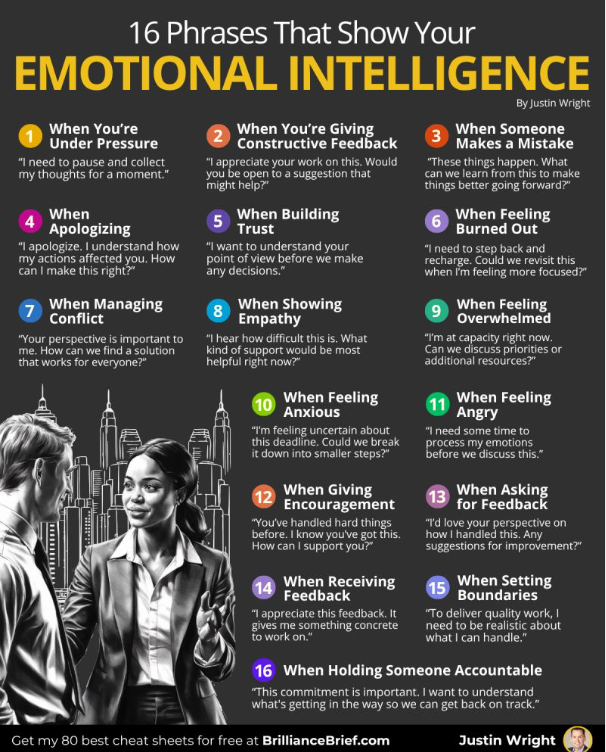
(These are all examples of my “rules” and “words” of emotional intelligence, tools I use to help clients—and myself—manage emotions in the moment.)
All of us are human. Part of that means dealing with feelings of defensiveness from time to time. The key to effectively managing those feelings is to first understand the “why,” the root cause behind them. Then, you can use tools like the ones we’ve discussed to develop a strategy for dealing with those feelings.
The goal isn’t to end the feeling of defensiveness once and for all. But by applying these methods, you can reduce the frequency you experience it, and handle those feelings more effectively when they arise, leading to stronger relationships at work and home. That’s making emotions work for you, instead of against you—and it’s turning emotional into emotionally intelligent.
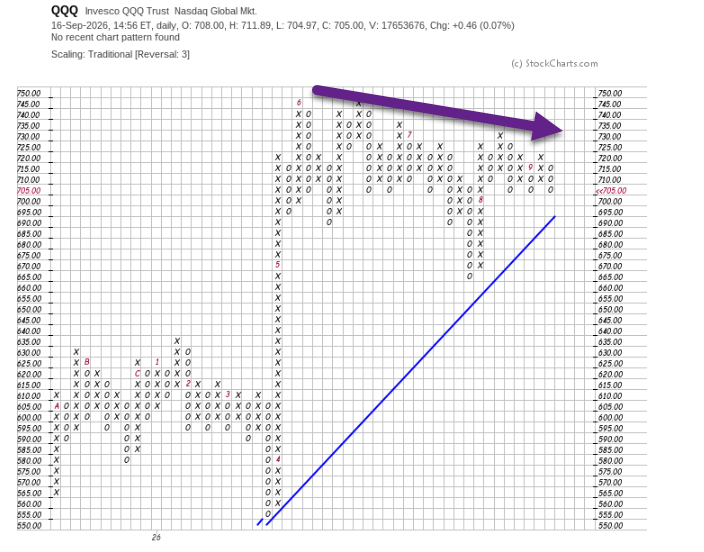
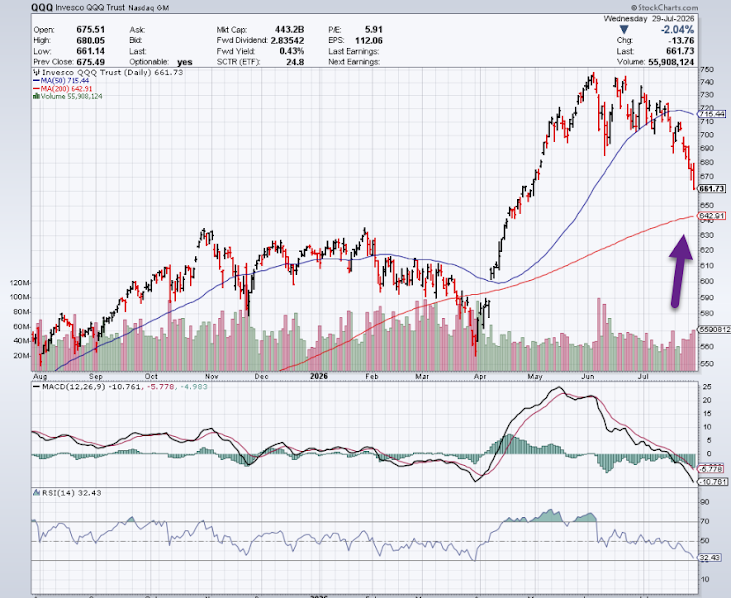
1. QQQ Never Made New Highs on Chart after Summer Sell Off
StockCharts
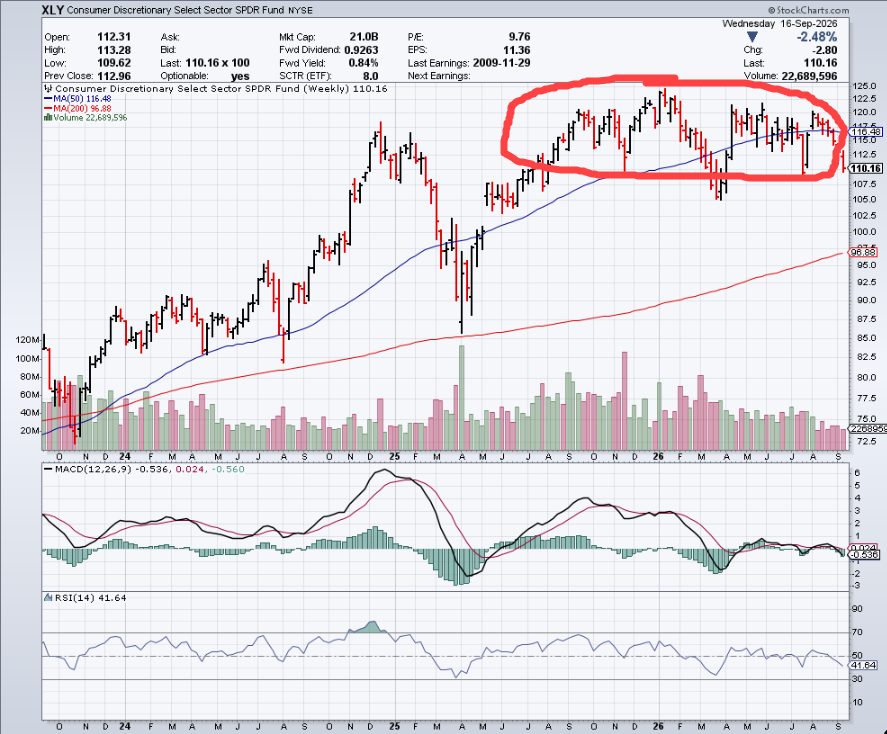
2. Consumer Discretionary Stocks Sideways Chart for 12 Months
StockCharts
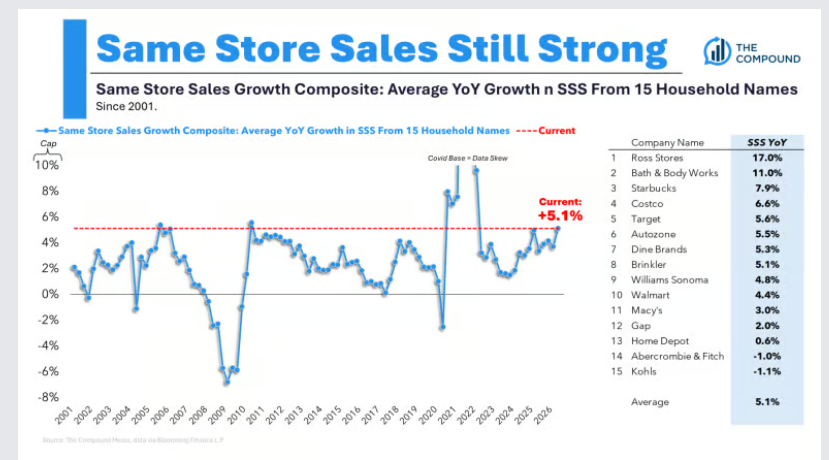
3. Same Store Sales Still Growing 5%
The Irrelevant Investor
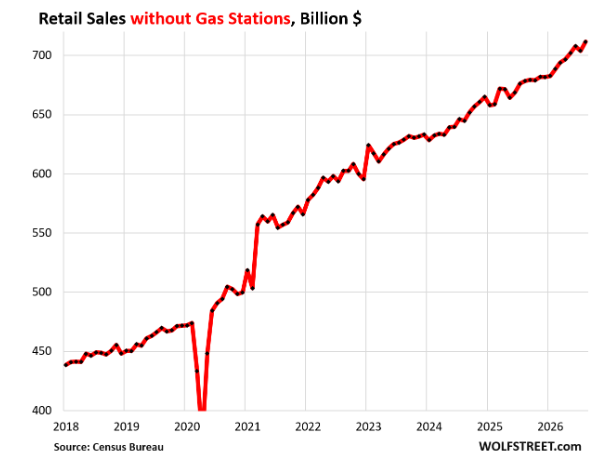
4. Retail Sales Ex-Gas Stations Still Trending Up
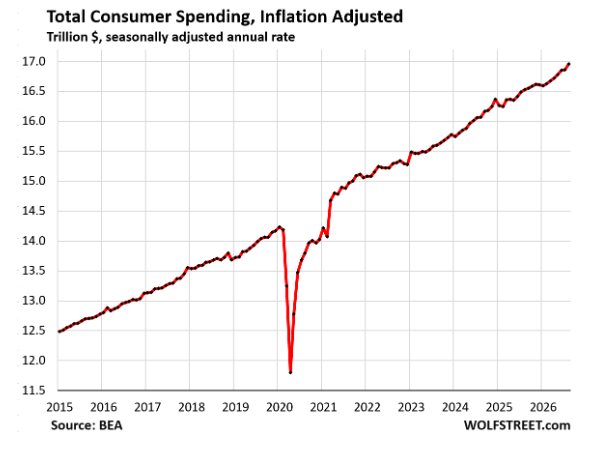
Not even sky-high gasoline prices could dent their spending on bars & restaurants, ecommerce, cannabis stores, etc. By Wolf Richter for WOLF STREET.
Gasoline prices soared in August, and consumers continued to buy gasoline, but paid much higher prices, and so sales at gas stations in dollars (not gallons) also soared and pushed up overall retail sales, which spiked by 1.2% in August from July, to $773 billion, seasonally adjusted, and were up by 6.0% year-over-year, according to data from the Census Bureau today.
But even without gas station sales, retail sales spiked by 1.1% seasonally adjusted in August from July, and rose by 4.9% year-over-year.
It’s not all based on Americans suddenly throwing their entire inheritance at retailers. Part of the month-to-month increase in August was due to the effect of recapturing the drop in July that in turn was due to Amazon Prime Day having shifted into June this year, from July last year, made worse by quirky seasonal adjustments, which we discussed at the time, and today’s jump wasn’t a surprise here. But it shows that spending at retailers continues growing at a solid rate, even without gasoline sales, and despite the gasoline price spike.
Wolf Street
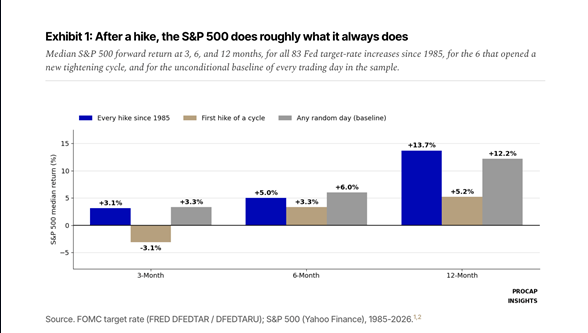
5. S&P Performance After Rate Hikes
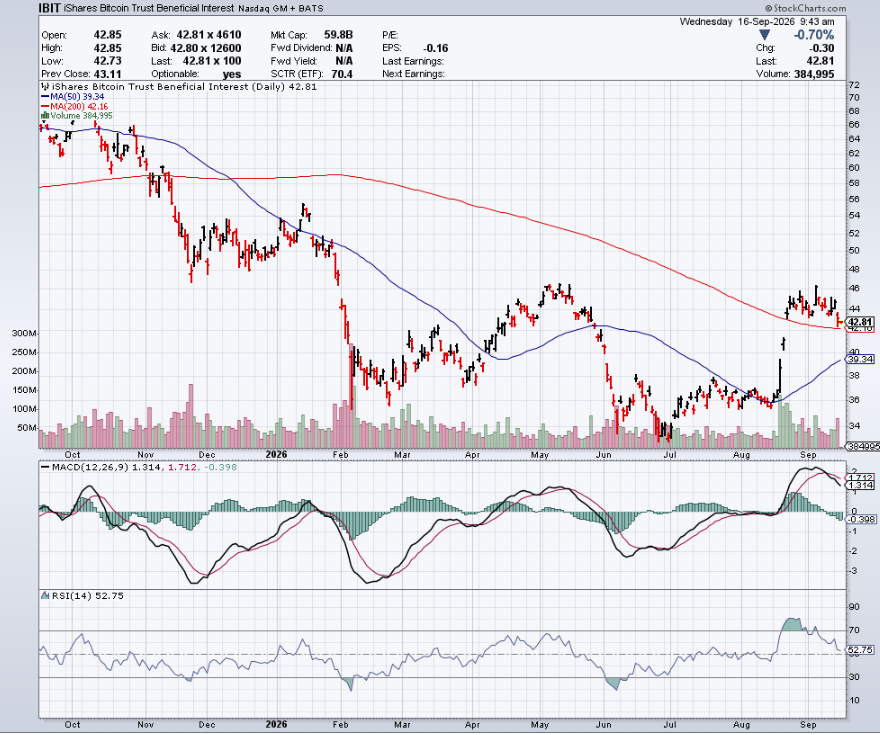
6. Bitcoin New Correlations to Dollar, S&P and Nasdaq
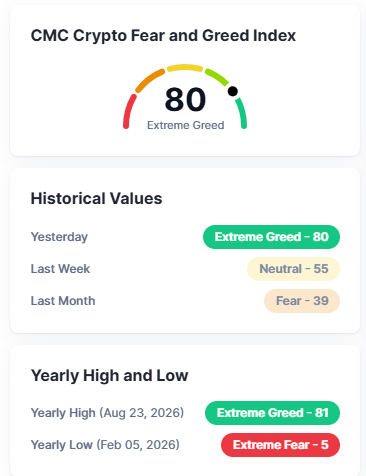
Marketwatch That’s according to analysis from CoinMarketCap Research, who say in commentary sent Wednesday “the usual macro playbook for how bitcoin reacts to a rate decision is unreliable this afternoon.” Bitcoin selling on Tuesday reflected a market that had positioned for a yes vote on the crypto regulating Clairity Act and was forced to unwind when it didn’t come, according to CMC.
For the first time in its history, Japan has more than 100,000 people over the age of 100—and nearly 90% of them are women. The surge of centenarians is straining the country’s resources and making the male/female ratio at senior home mixers impossibly unbalanced.
To put the official total of 107,677 into context, that’s enough 100-year-olds to nearly fill AT&T Stadium in Dallas. When paired with Japan’s record-low fertility rates, the number of centenarians—which has risen for 56 straight years—is creating a host of fiscal problems:
Around one-third of the country’s ~120 million residents are drawing from public pensions. The health ministry asked for $218 billion for pensions and medical care for next year’s fiscal budget, representing about a quarter of the overall requests. The government estimates that it will need 2.4 million elder care workers in 2026, up from 2.1 million in 2024. To supplement its withering workforce, Japan is recruiting care workers from abroad. After reaching 66,000 last year under a skilled-worker visa program, the government will now allow nearly three times that many under a new foreign-aid worker plan despite its usually strict immigration policies.—DL
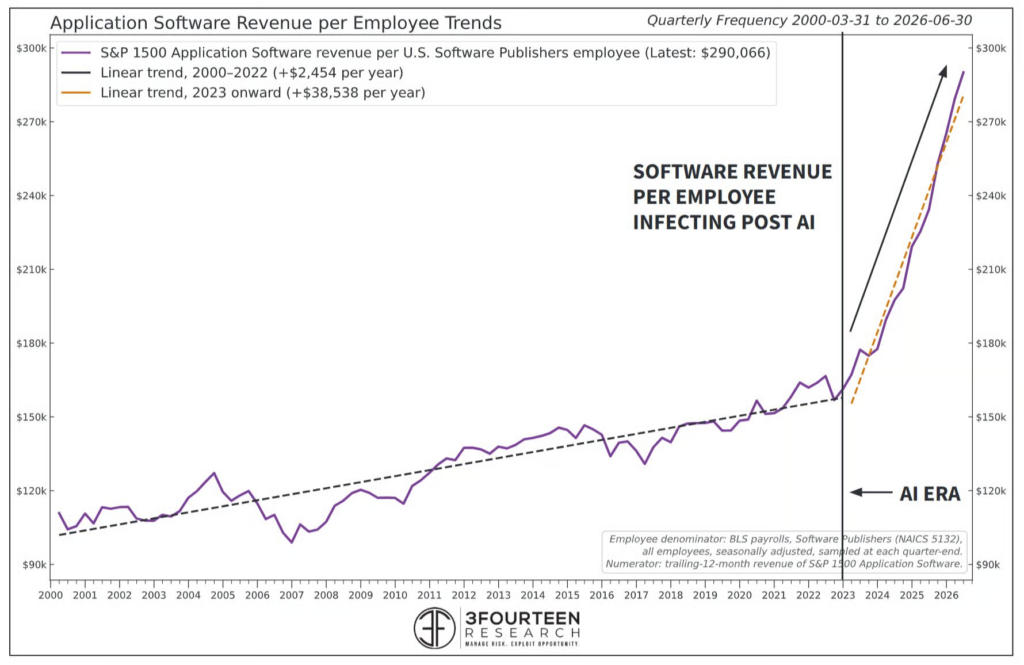
Software revenue per employee. “S&P 1500 Software revenue per employee has gone parabolic. If you are looking for evidence that AI is starting to impact the real economy, this is exhibit A.”
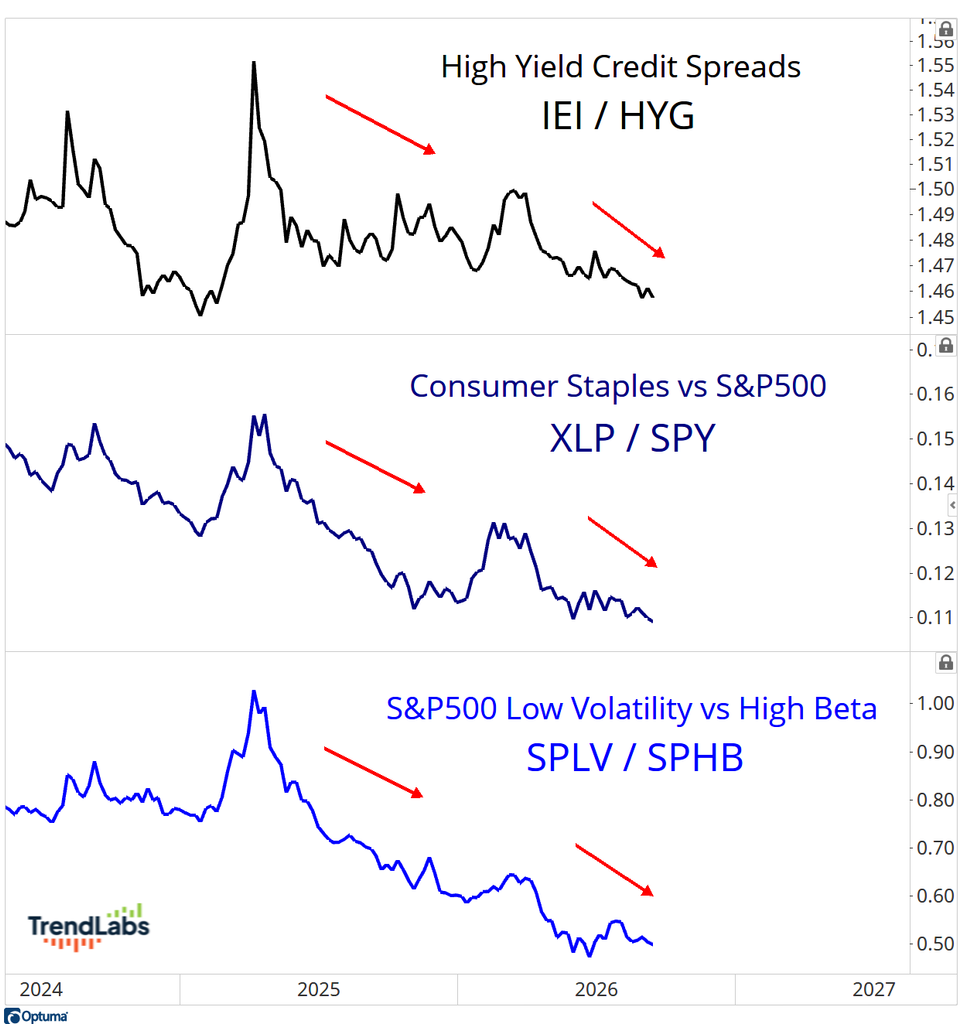
But there’s a big difference between saying you’re worried and actually positioning your money like you’re worried.
I’d rather watch the money.
Especially when we’re talking about the biggest financial institutions in the world.
Because when markets really start to deteriorate, money moves.
Investors start protecting themselves. They move away from riskier parts of the market and toward safer ones.
And we can see it happening in real time.
That’s what this chart is about:
TrendLabs
These are three completely different relationships.
But they’re all telling us something similar about the health of the market.
And right now, I don’t see much evidence of deterioration.
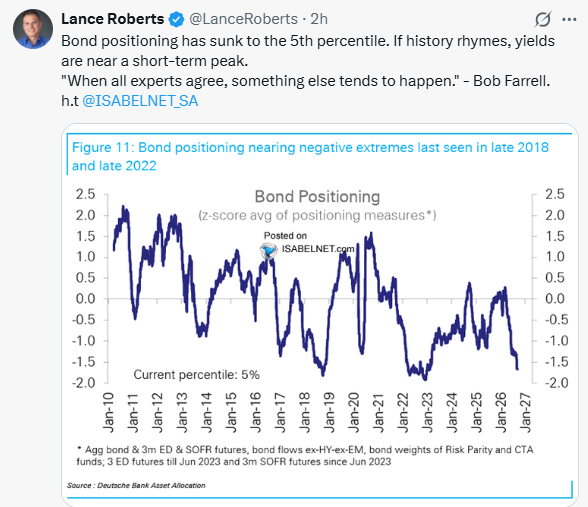
5. Universal Bond Hatred
Lance Roberts
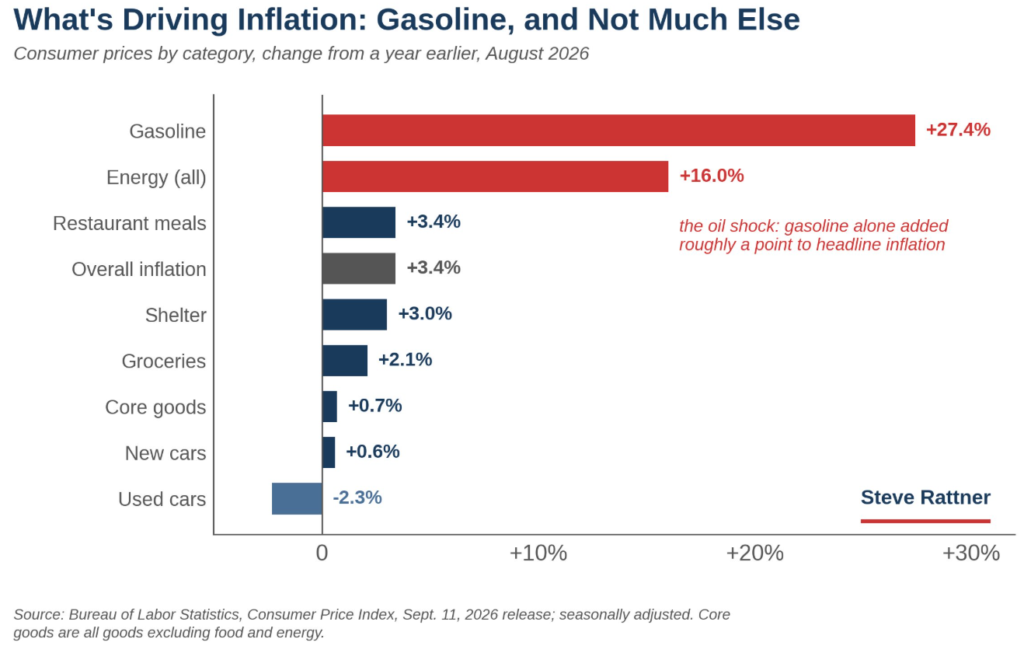
6. Gasoline in Driving Most of Inflation
Steve Rattner
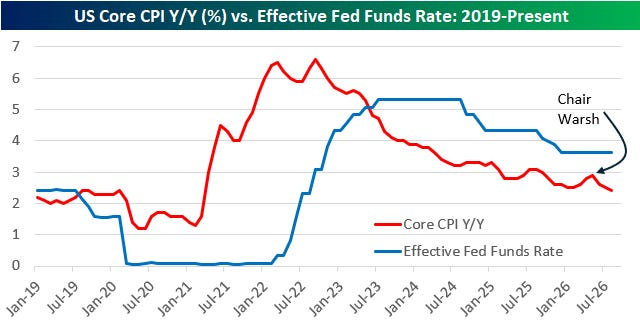
7. Core CPI Continues Trend Downward
Bespoke
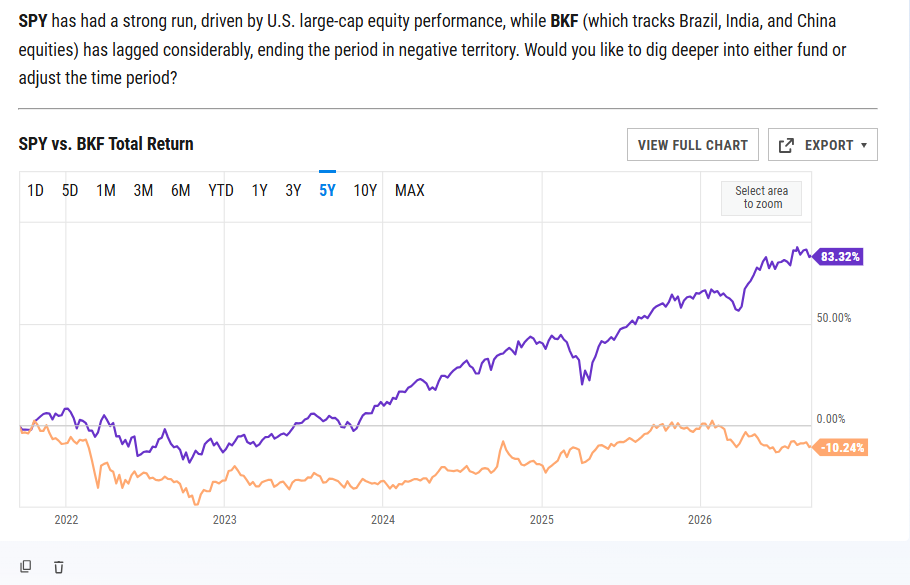
8. BRICS Countries Met this Week….5 Year Chart S&P 500 +83% vs. BKF (BRICS ETF) -10%
Ycharts
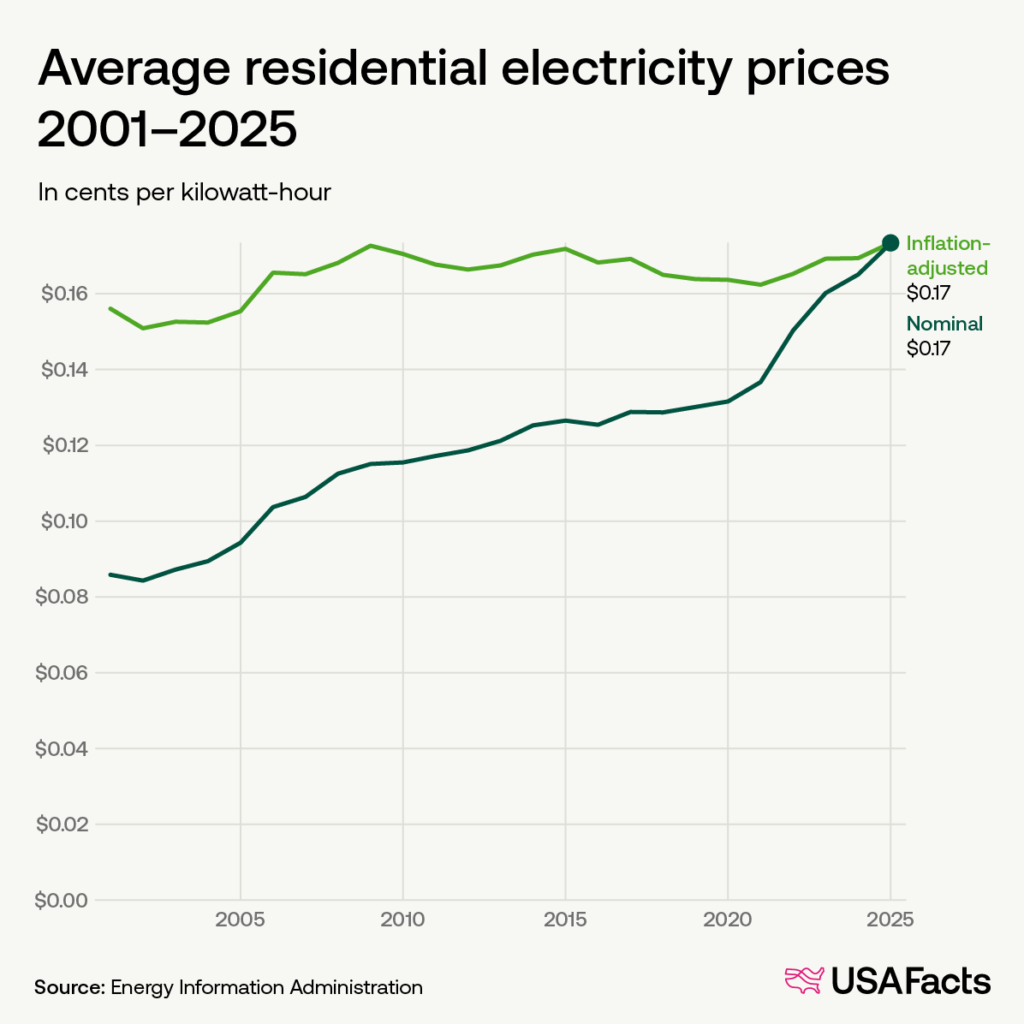
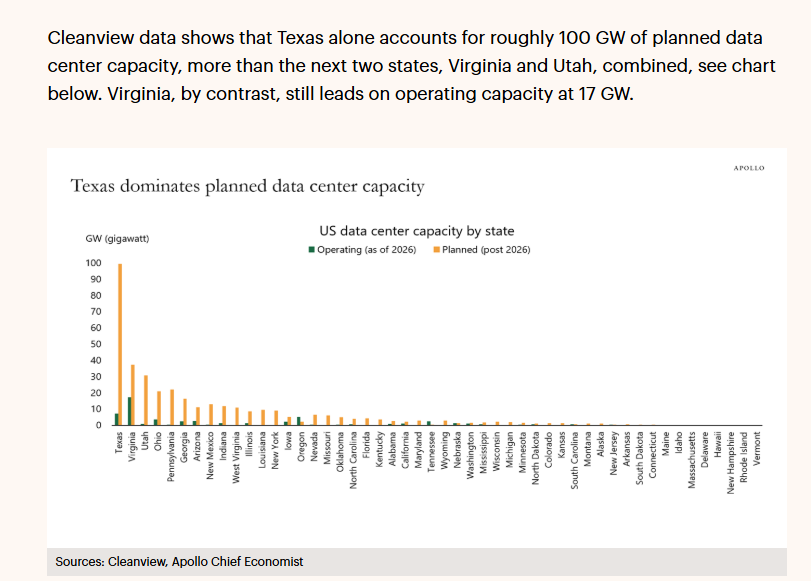
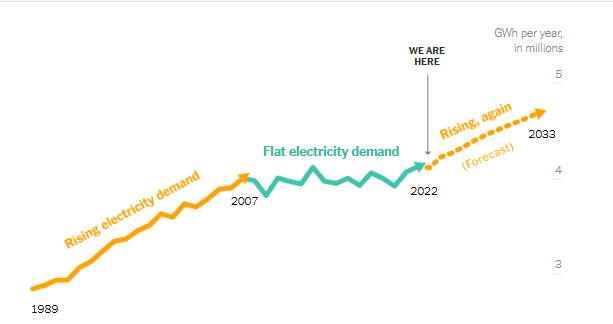
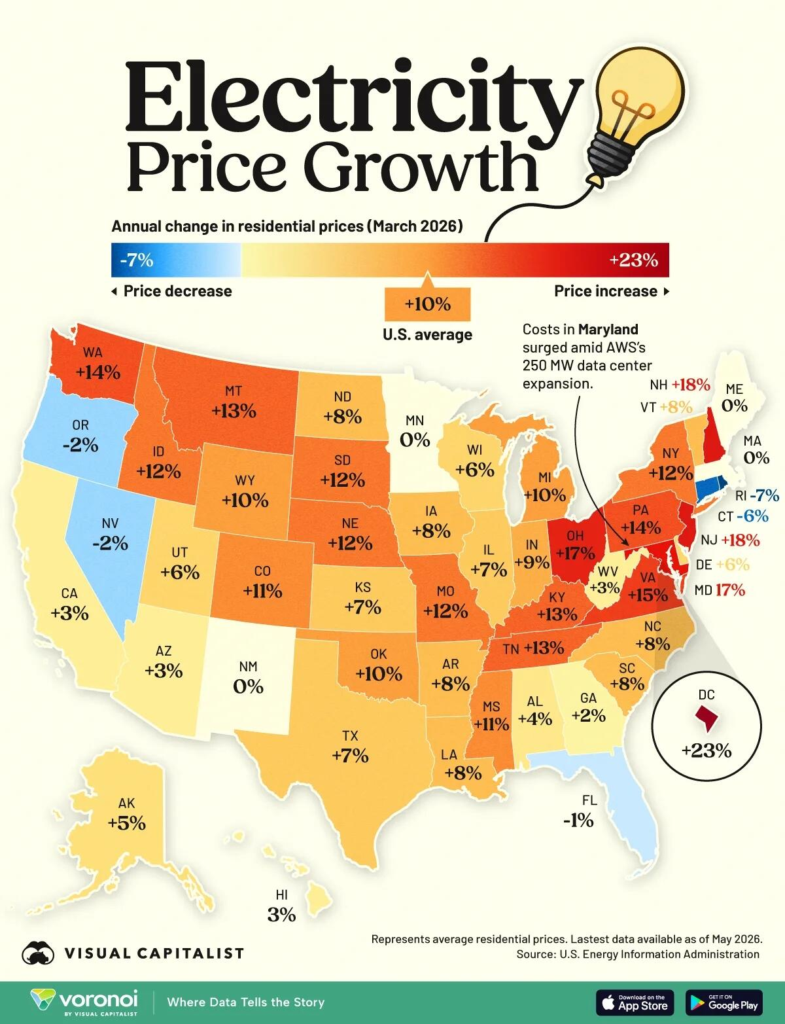
9. Are AI Data Centers Raising Your Electric Bill?
AI data centers use a lot of power, and it’s easy to assume that demand drives up electricity bills. A new data center can use as much power in a year as hundreds of thousands of homes. However, electricity markets don’t work like most markets, and the data tells a complicated story. USAFacts gathered data on electricity prices, data center locations, and much, much more for our deepest data dive yet.
USAFacts
A new data center built with capacity for 100 to 1,000 megawatts of power could consume as much electricity in a year as 80,000 to 800,000 homes. Virginia’s existing data centers currently draw enough for 7.5 million homes — more than double the state’s 3.4 million households.
It’s understandable to think that more demand would mean higher prices in general. And new grid infrastructure costs money. But the electricity market works in unique ways: power plants and other infrastructure are expensive to build, yet extra electricity is cheap to produce once those things exist.
National electricity prices (adjusted for inflation) have increased somewhat modestly nationally since ChatGPT kicked off the AI boom in 2022. Last year, the average residential electricity price was $0.17 per kilowatt-hour. In 2001, the inflation-adjusted average was $0.16.
Of course, rates have swung quite a bit for some people when you move past national averages. Washington, DC’s rose 45% from $0.16 in December 2022 to $0.24 in December 2025. Yet rates fell in states ranging from Hawaii to New Hampshire and Massachusetts.
And price swings aren’t new. We looked at other three-year stretches since 2000 and found nine other instances in which a state’s prices grew by more than 50%. All of these instances were before the AI boom.
States are working to keep data centers, not households, covering these costs. Some regulators are pushing utilities to charge data centers directly, and more utilities now bill them separately from other customers. Some AI developers have pledged to cover the costs themselves.
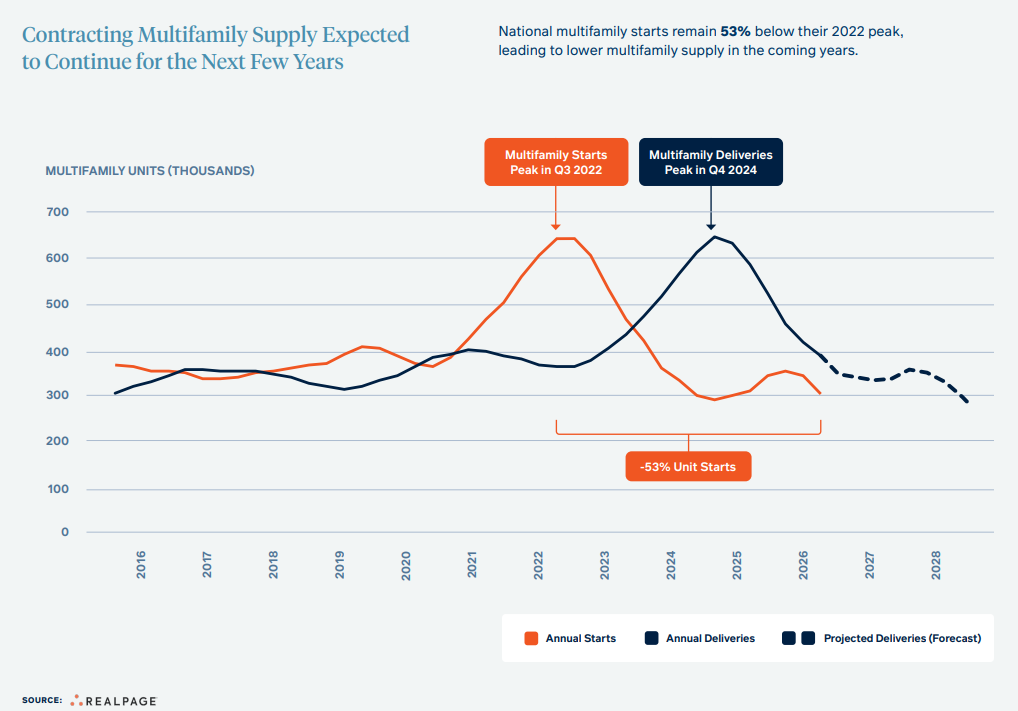
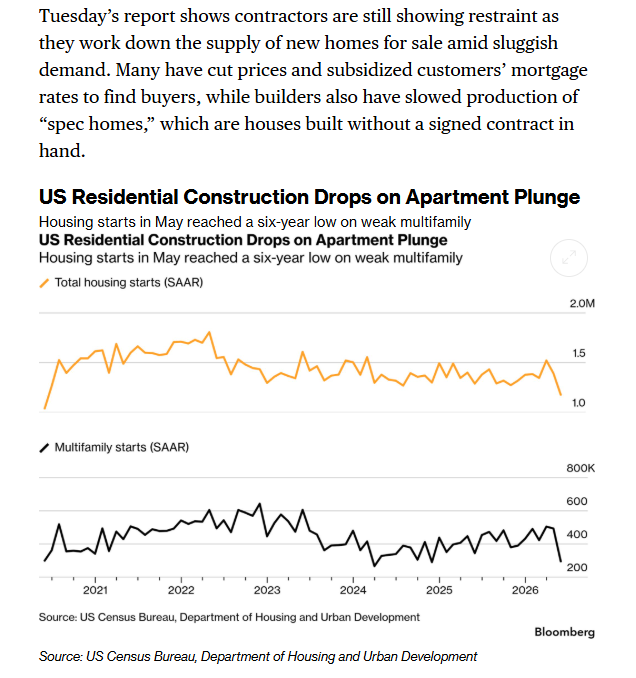
10. U.S. National Multifamily Apartment Starts -53% from 2022 Peak
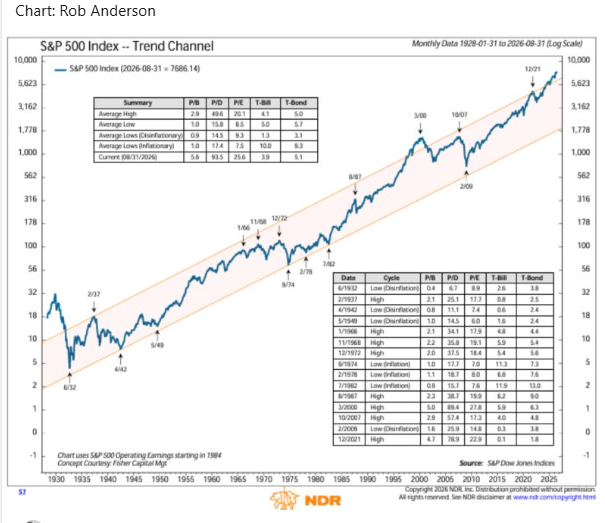
2. 100-Year Trend Chart from Ned Davis…We Are Out of the Box Above Trend
NDR
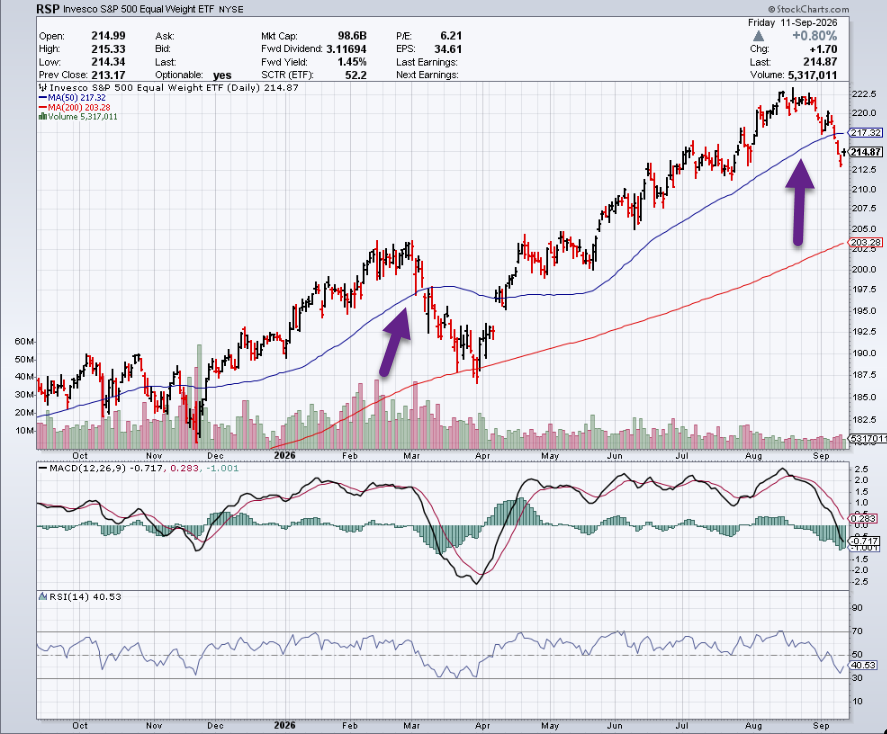
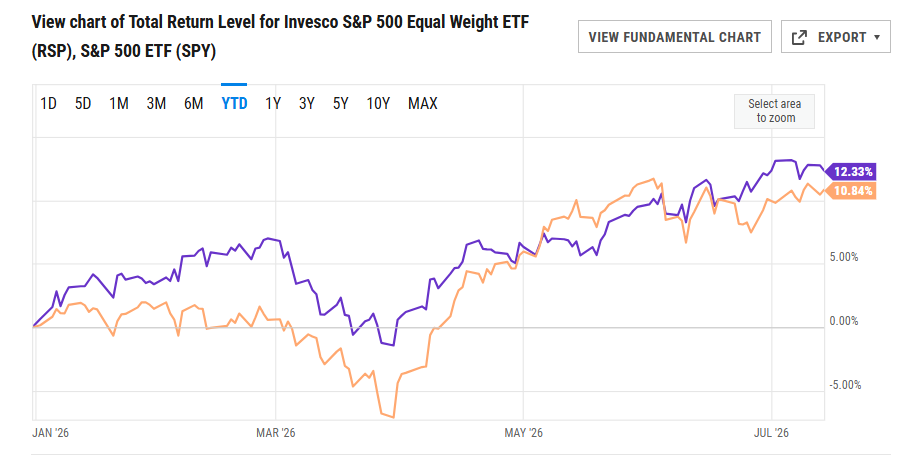
3. Equal Weight S&P Has Outperformed in 2026….Closes Below 50day
Stockcharts
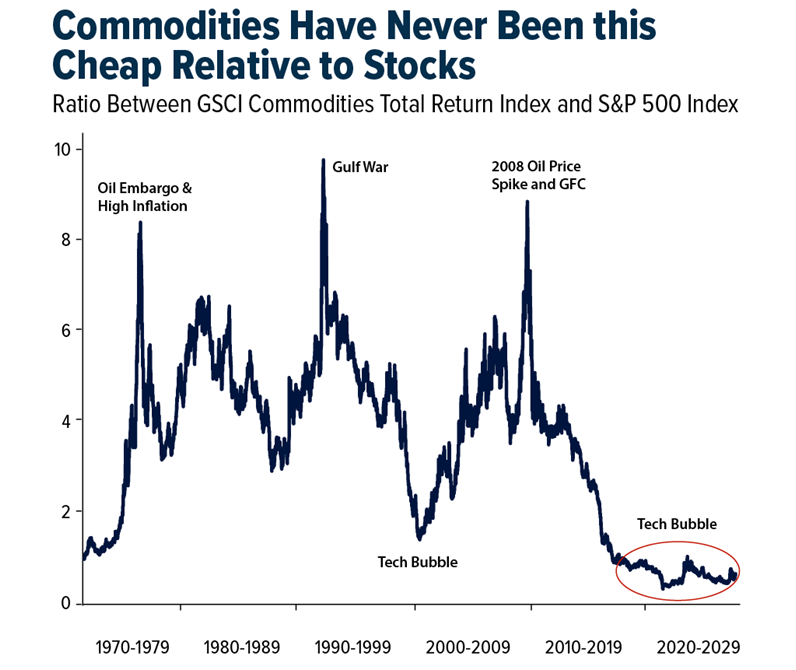
4. Commodities Ratio to S&P 500
US Funds
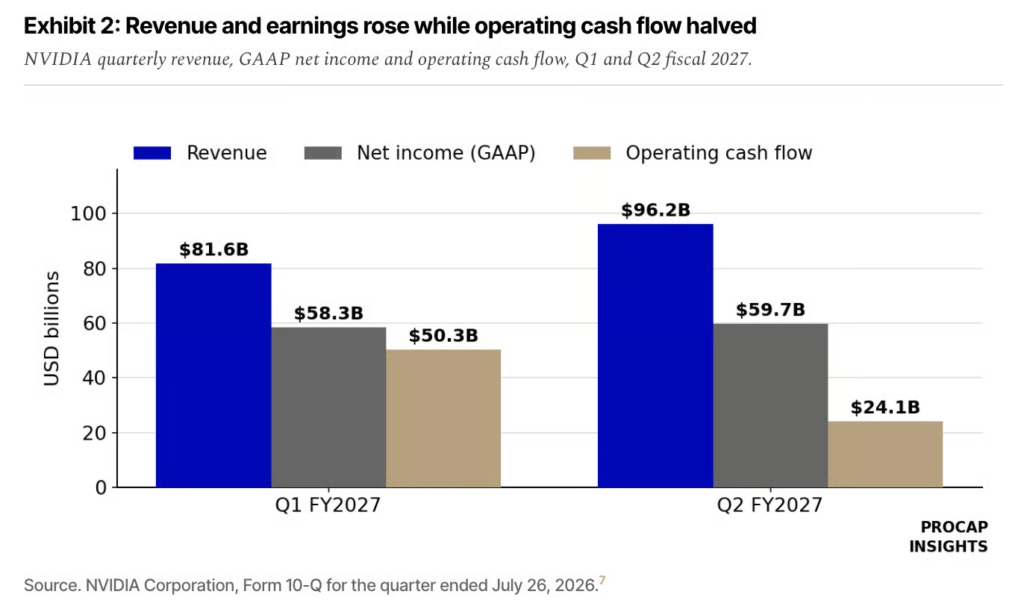
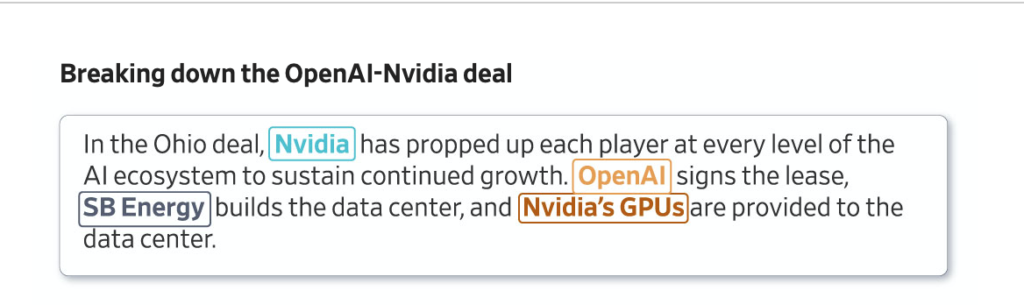
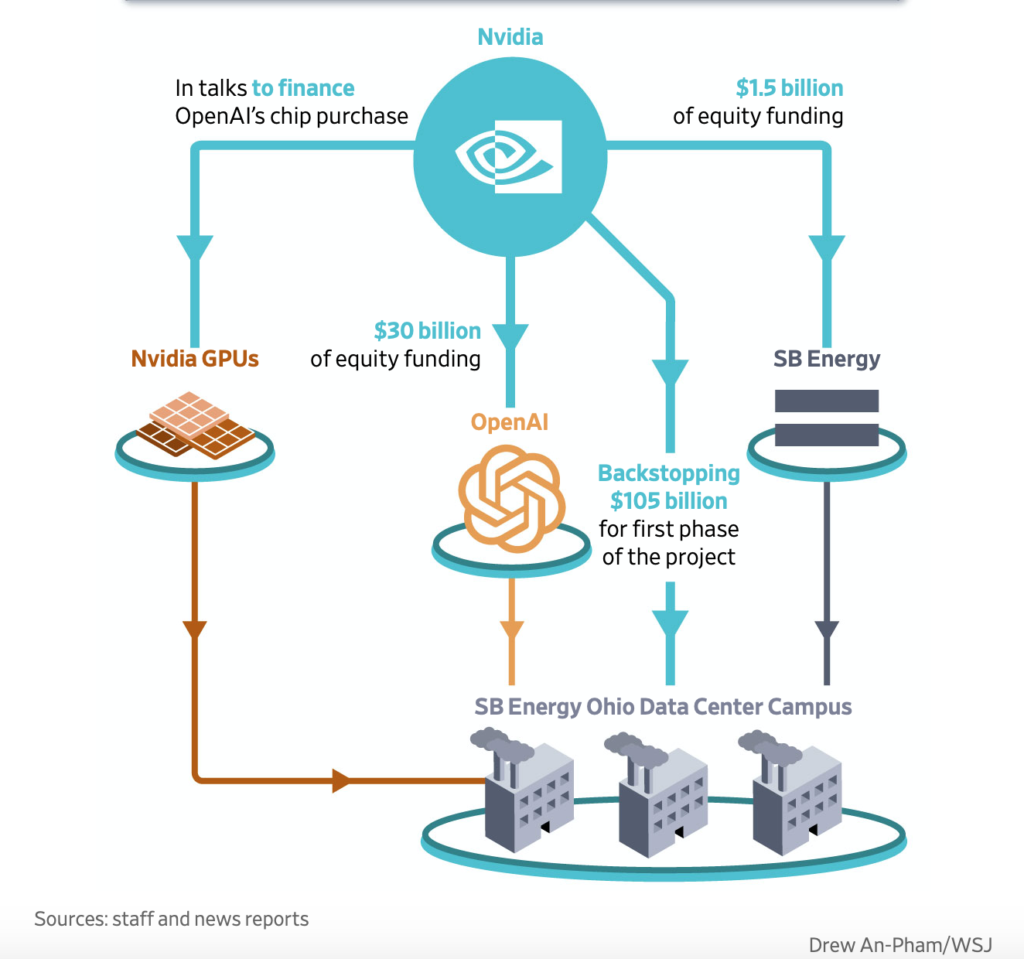
5. NVDA is Financing the Buildout It Supplies
Critics are correct to call out that Nvidia is financing the buildout it supplies.
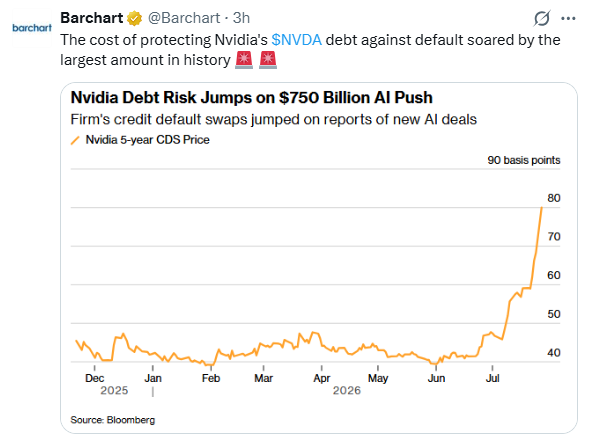
It issued $25 billion of bonds in June and returned $25.8 billion to shareholders, against $21.4 billion of free cash flow.
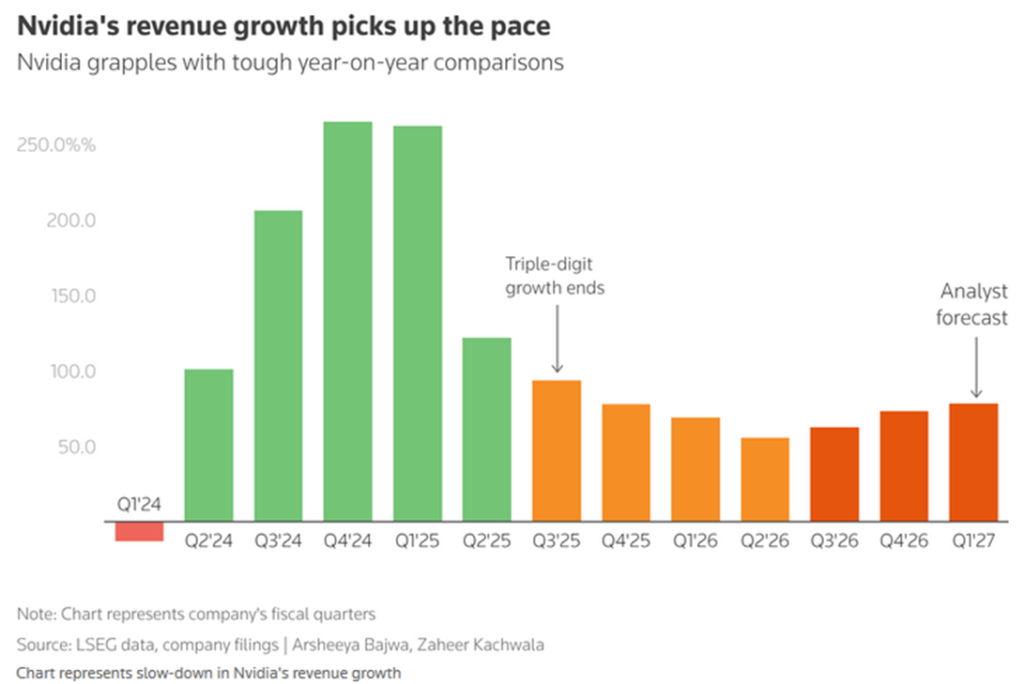
Demand is not the question. Nvidia has moved its customers’ financing risk onto its own balance sheet, and receivables now tell you more about the AI trade than revenue does.
ProCap Insights
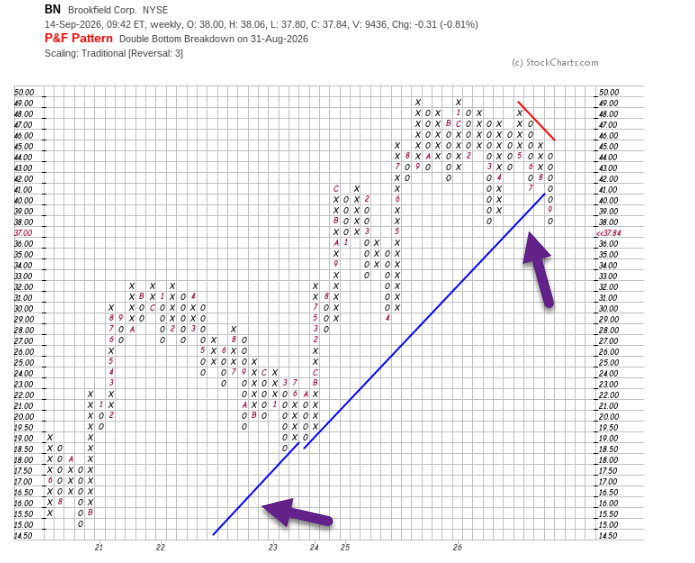
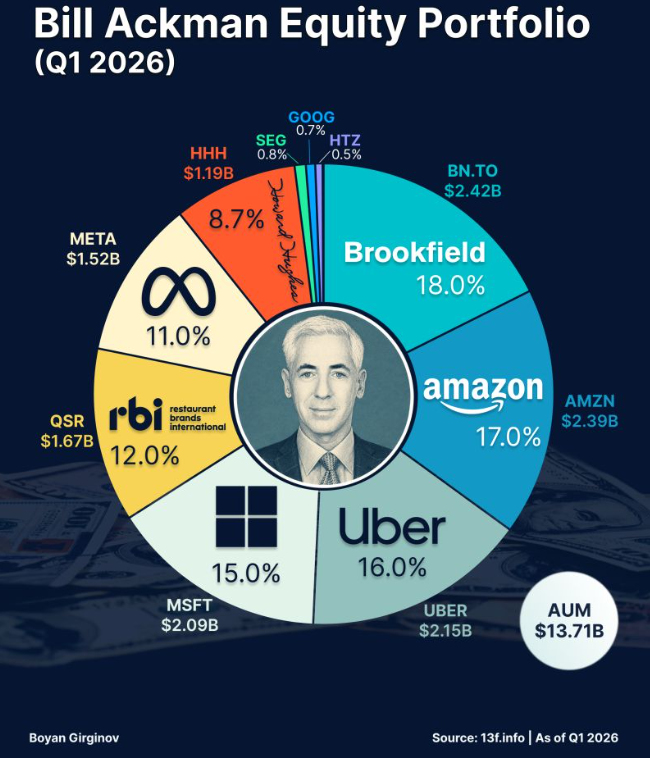
6. Brookfield Private/Alts Manager that was Holding Up Well…Broke Trendline Going Back to Mid-2022
Stockcharts
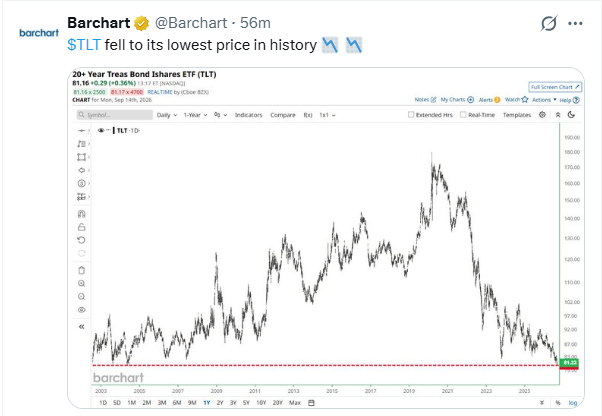
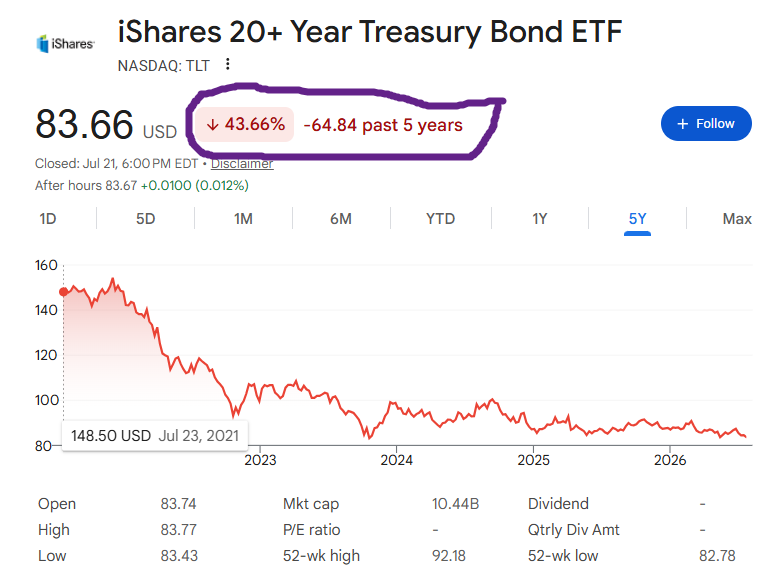
7. TLT is ETF for 20-Year Treasury Bond
Barchart
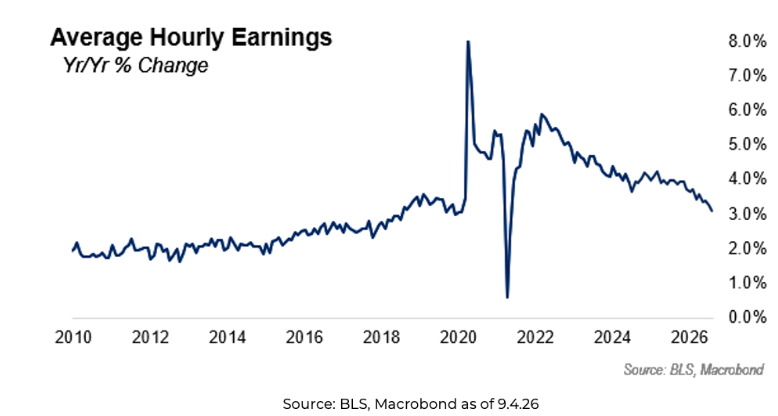
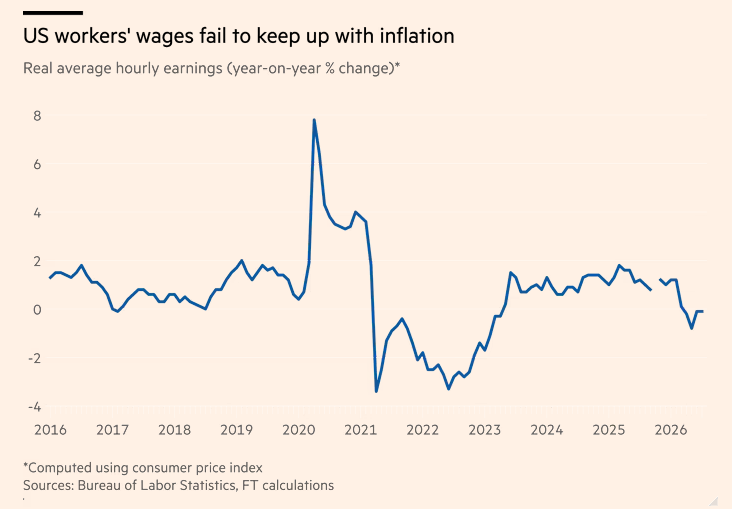
8. Average Hourly Earnings Fall Back to 15-Year Trendline
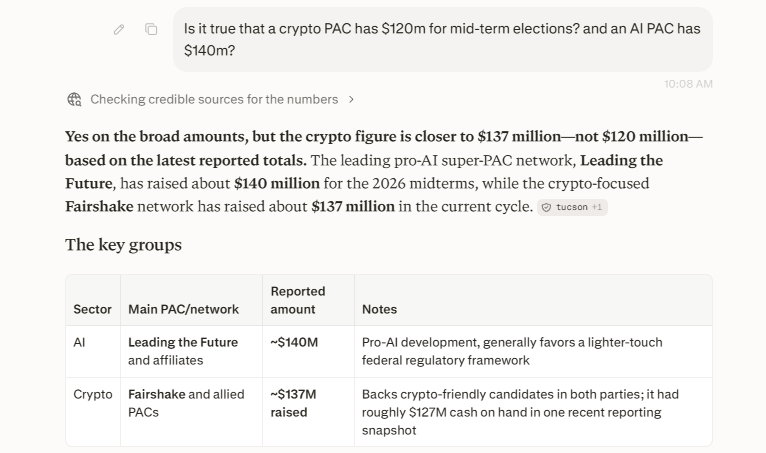
9. Mid-Term Election Money…..Crypto PAC $137m and AI PAC $140m
Perplexity
10. Patterns of Unhappy People-Shane Parish
Patterns of unhappy people:
– Need social approval – Are reliably unreliable – Feel sorry for themselves – Choose comfort over truth – Refuse to learn from others – Spend more than they make – Use chemicals to alter mood – Make everything about them – Resent the success of others – Confuse motion with progress – Confuse cynicism with intelligence – Promiscuous with their attention – Always in love with their first idea – Are always too smart to look stupid – Need to learn everything from mistakes – Build a life that looks better than it feels – Protect their potential by never testing it – Stay loyal to decisions that no longer make sense – Win arguments at the expense of the relationships – Standards for others and explanations for themselves
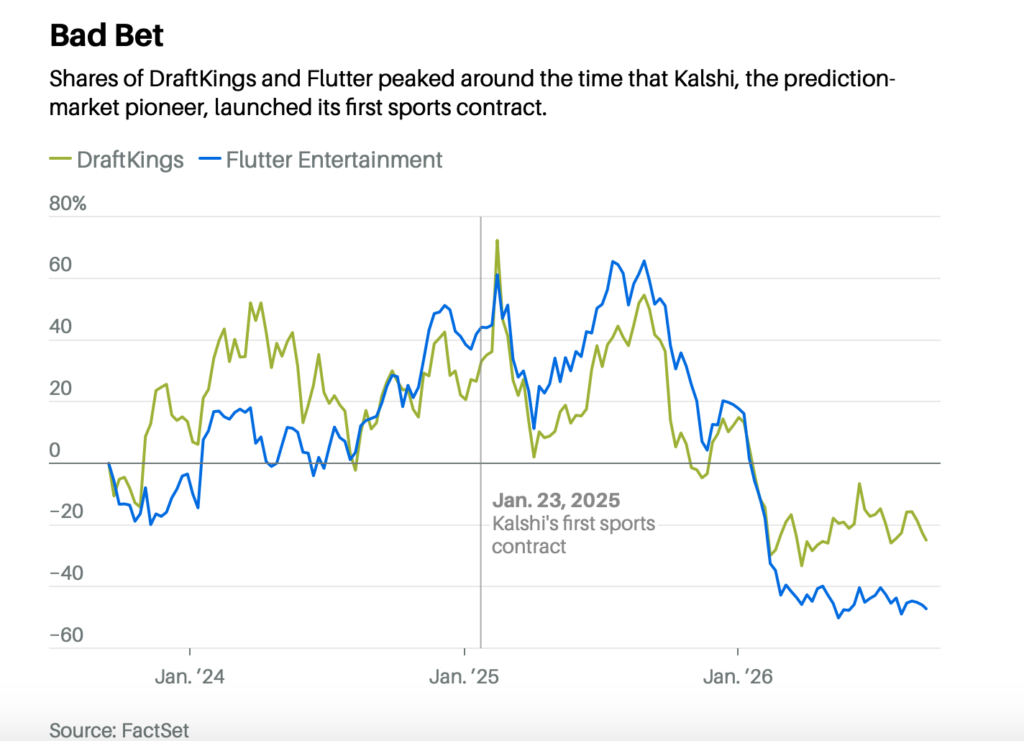
7. Draftkings and Flutter Sell Off Right When Kalshi Writes First Sports Contract
Barron’s
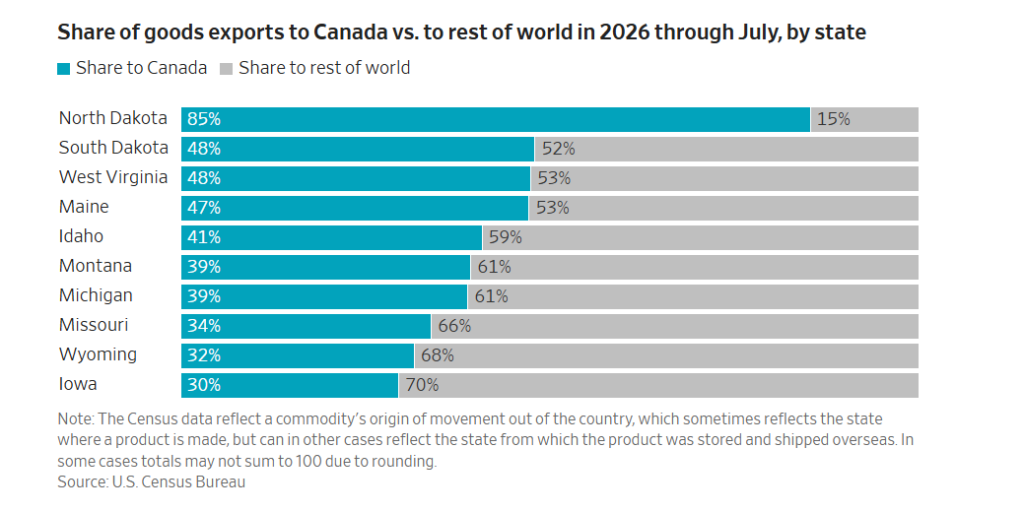
8. What States Most Exposed to Canada? WSJ
WSJ
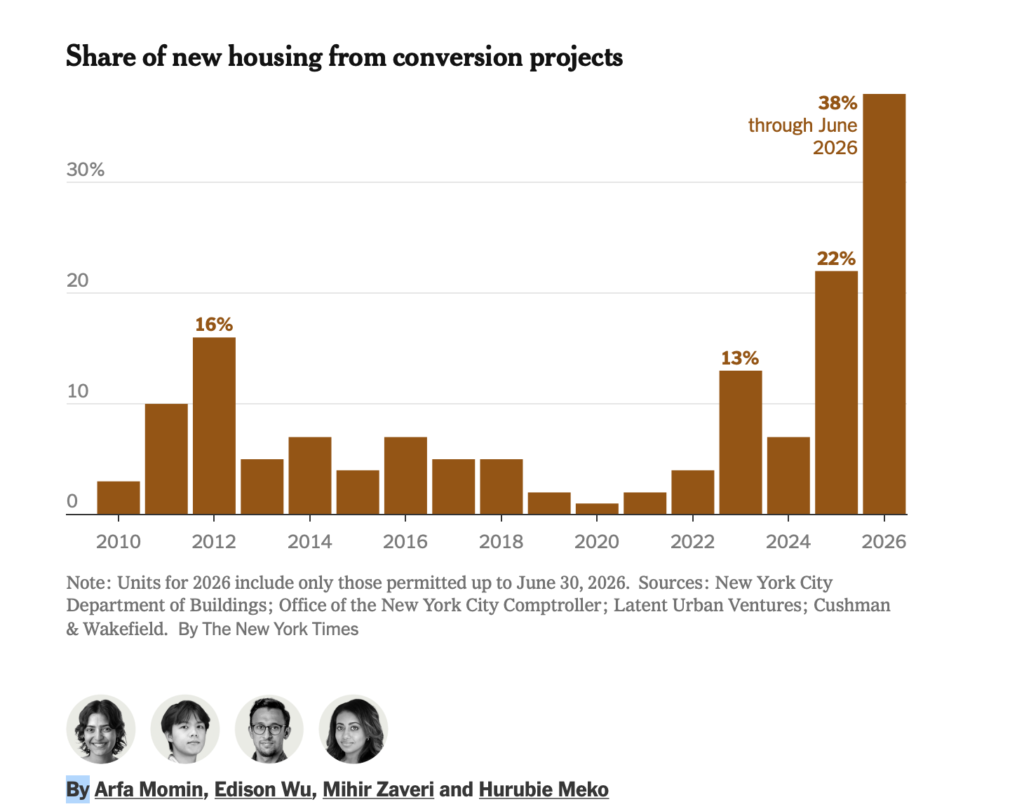
9. New York City New Housing Coming From Office Conversions
NYT-So far this year, the city has issued permits for 74 such projects that will create roughly 10,100 new homes, according to an analysis of city data by The New York Times. That amounts to a third of all of the new housing permitted in the city during that period, showing how quickly New York is embracing residential conversions.
NY Times
10. Your Brain Has a Craving Control Center—Here’s How to Use It
By SUCCESS Staff Published August 25, 20264 min read
Willpower has always felt like a personality trait, something you either have or you don’t. New neuroscience is rewriting that story. Scientists studying GLP-1 drugs like Ozempic have stumbled onto something bigger than a weight-loss mechanism: a specific brain region that may function as your craving’s control panel.
That discovery matters even if you never touch one of these medications. Understanding where craving actually lives in your brain changes how you think about discipline, habits and the moments when your best intentions lose to your impulses.
Meet the Lateral Septum, Your Brain’s Craving Control Point
Researchers have long focused on dopamine-producing regions like the ventral tegmental area when studying reward and craving. But those regions turn out to have relatively few receptors for GLP-1, the hormone these weight-loss drugs mimic.
One region does have that density: the lateral septum. Neuroscientists are building evidence tracing of GLP-1 drugs to this structure, which sits one step upstream from the classic dopamine machinery and appears to help combine memory, place and reward into a single signal.
Think of it as the region that answers the question “What’s rewarding here, right now, based on where I am and what I remember?” That’s a fundamentally different function than simple willpower. It’s closer to a filter that decides which urges get amplified before you’re even consciously aware of them.
What the Newest Research Is Revealing
A Nature study led by researchers at the University of Virginia, funded by the NIH, found that newer oral GLP-1 drugs suppress “hedonic feeding,” essentially eating for pleasure rather than hunger, in mice, by acting on the central amygdala, a region deep in the brain that regulates dopamine release into the brain’s reward circuitry. This pathway appears separate from the appetite-control systems scientists already understood.
That distinction matters. Hunger and craving are not the same experience, and treating them as identical has made discipline feel harder than it needs to be. When you’re fighting a craving that has nothing to do with actual need, you’re not lacking willpower. You’re up against a specific neural circuit doing exactly what it evolved to do.
Willpower vs. ‘Pull’—The Distinction That Changes Everything
Here’s where the science gets genuinely useful for your daily life. Addiction researchers describe what GLP-1 patients report as a decreased pull toward substances, not an increase in willpower. The craving itself gets quieter, rather than requiring more effort to resist.
That reframes the whole conversation around self-control. If craving intensity is something your brain generates based on memory and place, then some of your “willpower failures” were never about weakness. They were about being in an environment engineered to spike your craving circuit.
So what does this mean for you? It means the smartest move isn’t always gritting your teeth harder. Sometimes it’s changing the cue before the craving even fires.
How to Work With Your Craving Center, Not Against It
You don’t need a prescription to use this insight. The lateral septum responds heavily to place and memory, which means your environment may be doing more work on your behavior than your discipline ever could.
Change the room, not just the resolve. If a specific location triggers a craving, whether it’s a snack drawer, a certain bar or even a particular chair where you scroll your phone, altering that physical cue interrupts the memory-reward link before it starts.
Notice the “vivid image” moment. Cravings often begin with a mental picture—a food, a purchase, a distraction—appearing vividly in your mind. Naming that image out loud (“I’m picturing the vending machine”) creates a half-second of awareness that weakens its automatic pull.
Build friction into the pattern, not the decision. Instead of relying on resisting an urge in the moment, make the triggering cue harder to encounter in the first place. Removing an app, changing a route or restocking a kitchen shelf does more than any pep talk.
The High-Achievers Takeaway
For leaders and entrepreneurs, this research offers something more valuable than a weight-loss headline. It offers permission to stop treating every lapse in discipline as a character failure.
Your brain has a genuine mechanism for turning memory and place into desire. Once you understand it operates below conscious awareness, you can start redesigning your surroundings instead of white-knuckling your way through willpower alone. That’s not a lesser strategy. It’s simply a smarter one, backed by where the science is actually pointing.
Token prices. “The price of AI is coming down … Our latest index tracking the effective price per million tokens shows that prices have declined 41% to $0.68 as of this week, down from the 2026 peak of $1.15 in March.”
Ara Kharazian – Ramp
3. AAPL Keeps 27% of Every Revenue Dollar
Opening Bell Daily
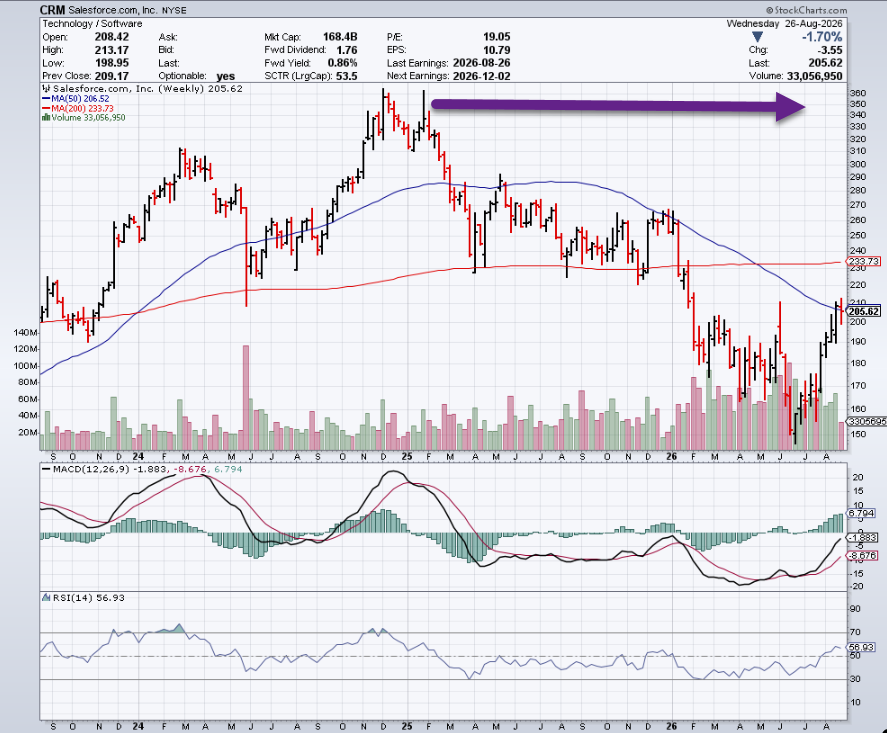
4. Salesforce CRM Forward Price to Earnings Ratio History�..42X to 15X
YCharts
5. XLE Energy ETF +48% vs. S&P +12% 2026
YCharts
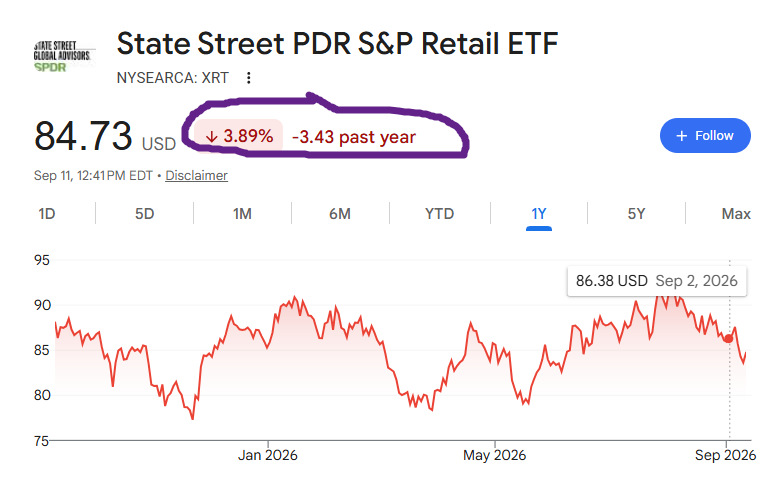
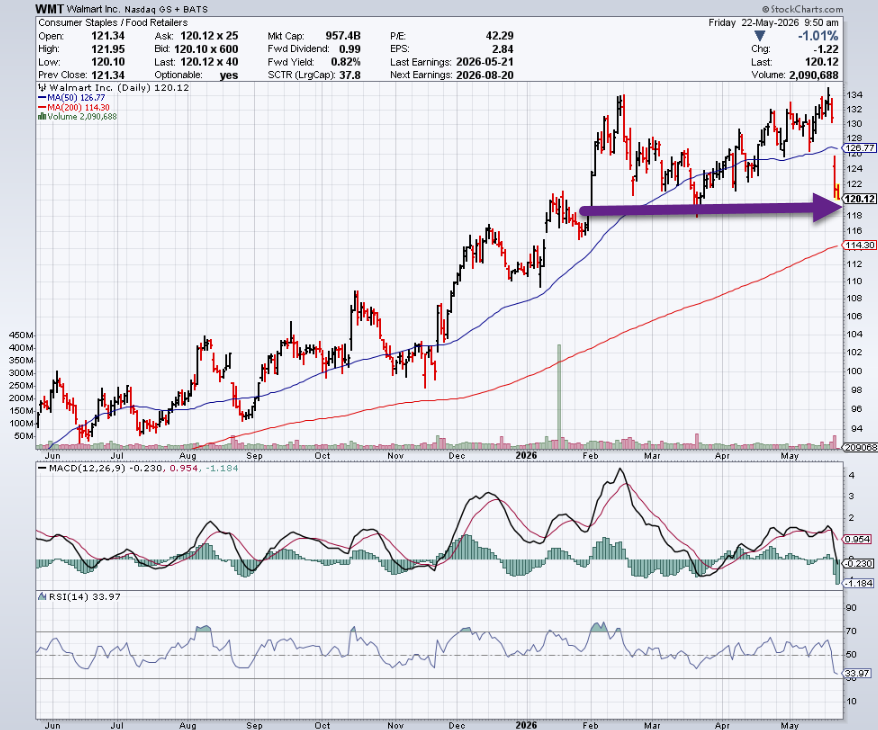
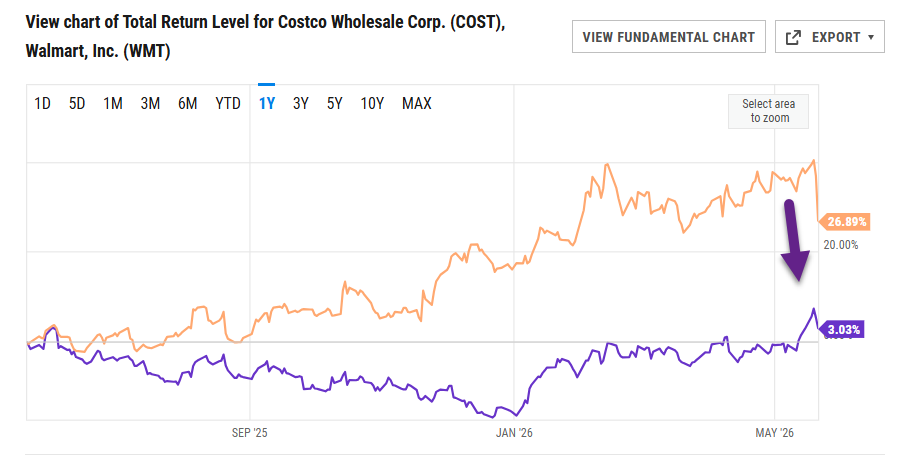
6. We Showed WMT and COST Underperforming 2026�.The Consumer Discretionary Sector Broad Weakness-Bespoke
Bespoke
7. LVMH Owns Louis Vuitton #2 Luxury Brand and Dior #7�..Breaks to New Lows -50% from 2024�-37% in 2026
StockCharts
8. San Francisco Centre Hotel $1.2 Billion Valuation 2016�.$133m Sale Just Fell Thru
One kind of school is about culture, compliance and community. We indoctrinate kids, for better or worse, in what it means to be in this world we�ve built, and how to do it together. We teach them how to be kids, how to be citizens and hopefully, how to be adults.
And the other kind of school is about the cent. All the �R�s. The software that goes with the operating system we taught in the other school.
For obvious reasons, these have always been integrated.
Now that Socratic and infinitely patient and customizable AI tutors are everywhere, perhaps it makes sense to consider each separately. Let�s not compromise either on the behalf of the other.
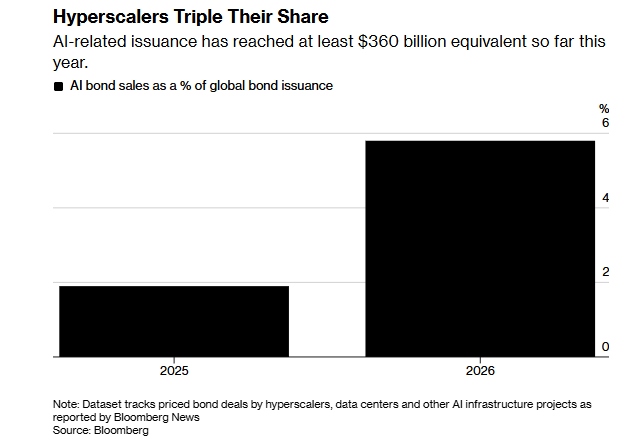
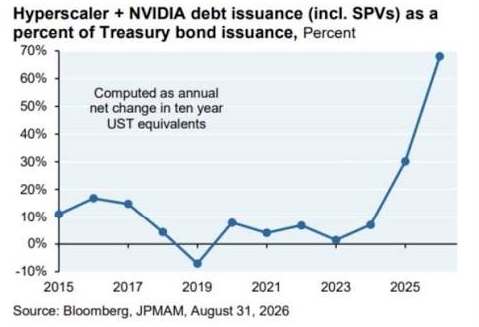
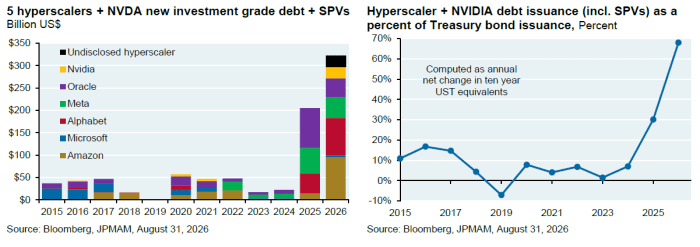
1. Hyperscalers Plus NVDA Debt Equal to 2/3 of U.S. Government Bond Issuance
Dave Lutz Jones Trading AMZN started selling sterling bonds for the first time on Wednesday as hyperscalers rush to diversify their funding sources to finance the AI boom. The deal is the latest example of how hyperscalers are increasingly selling bonds across markets outside of the U.S. this year, from euros to Swiss francs and the yen, as they make sure they can raise capital wherever they can, given their huge funding needs.
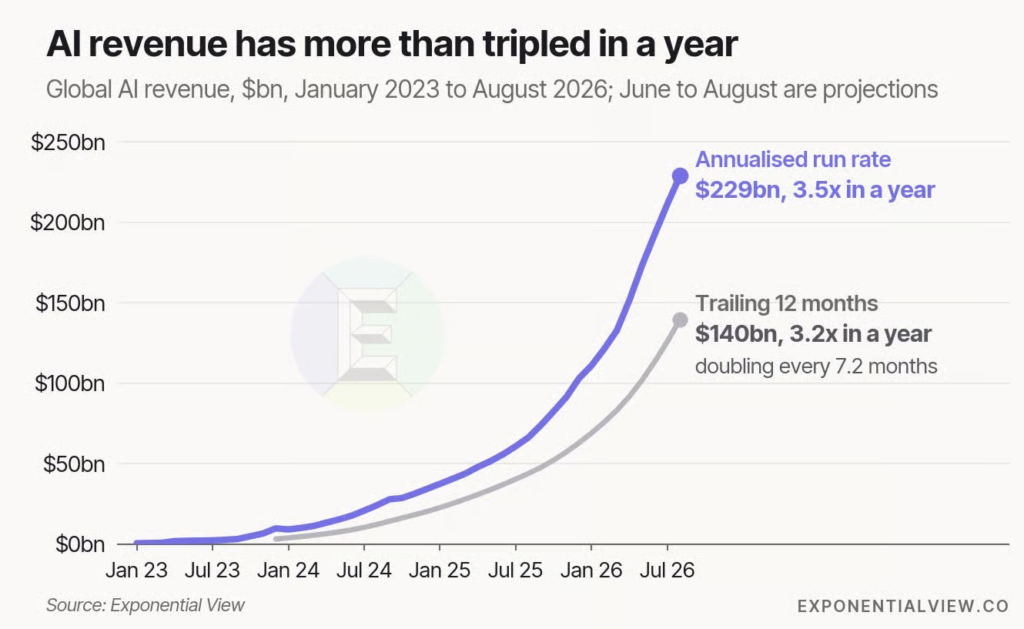
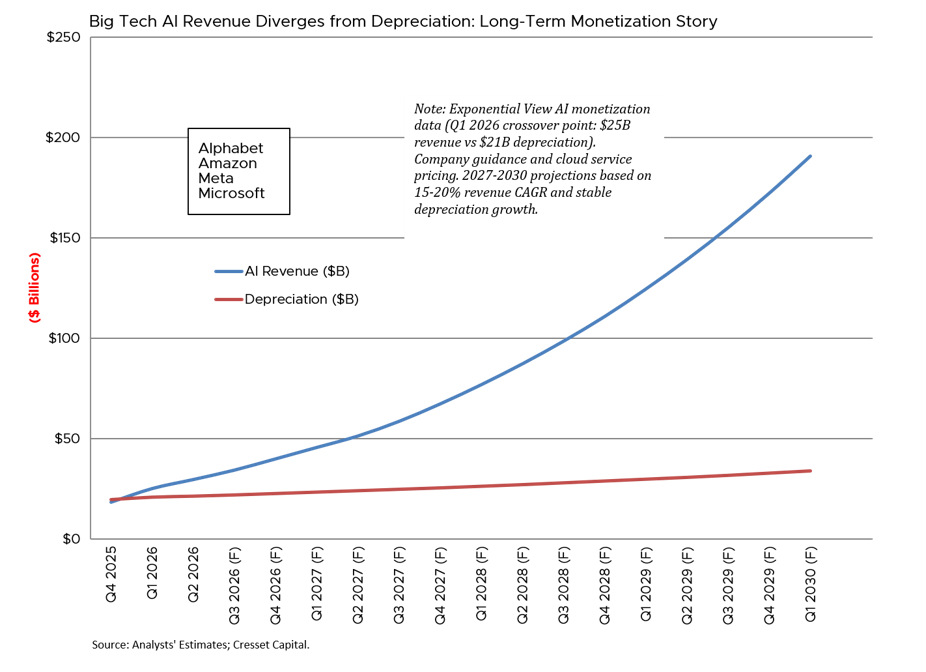
2. Global Revenue Estimates for AI $229 Billion Annualized
Global AI revenue. “Our revenue estimate for the AI economy reached $229 billion annualized by the end of August – up 3.5x in one year. Growth is going strong. Trailing twelve-month revenue reached $140 billion last month, 3.2x the August 2025 value of $44 billion.”
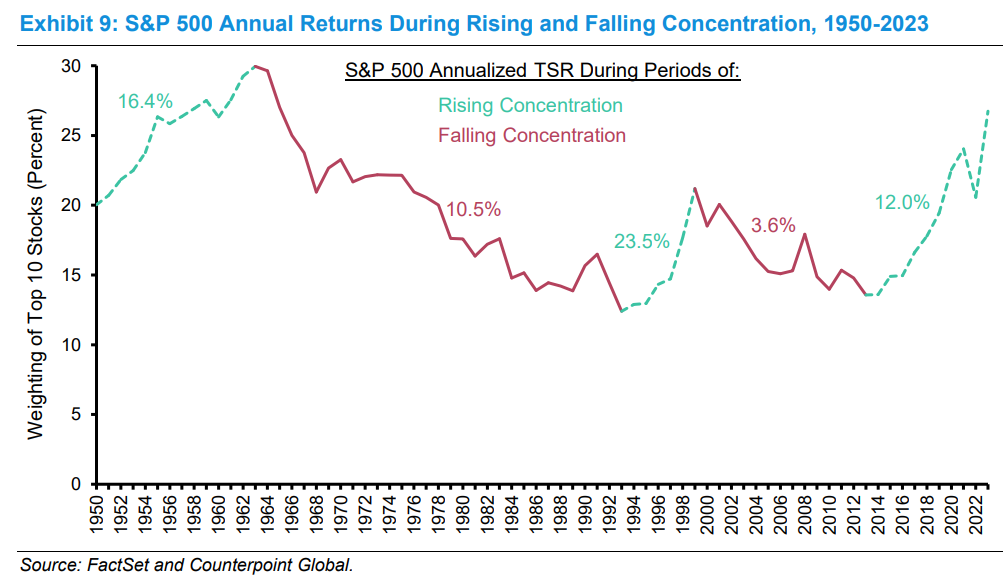
3. Market Returns are Above Average When S&P Is Concentrated
Ben Carlson-Stock market concentration is a bull market phenomenon. Michael Mauboussin and Dan Callahan found that S&P 500 returns were above average when concentration in the index was rising and below average when it was falling: I first wrote about concentration worries all the way back in 2018. The market has only become more concentrated since then. And we’ve been in a raging bull market.
Coincidence? I think not.
A Wealth of Common Sense
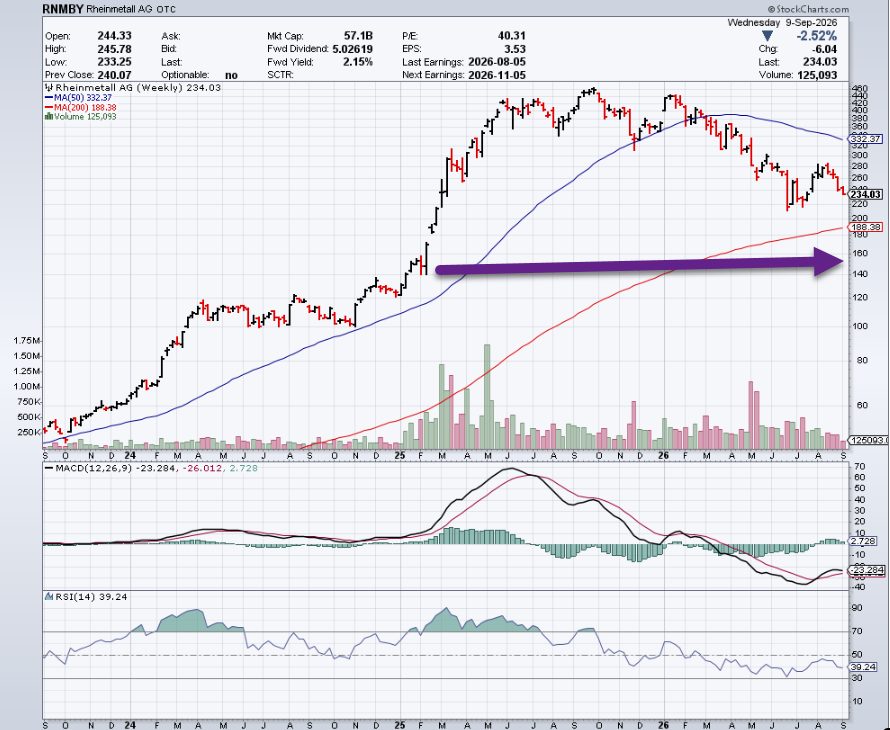
4. Rheinmetall German Defense Stock -50% from Highs after Post Ukraine Invasion Run Up
StockCharts
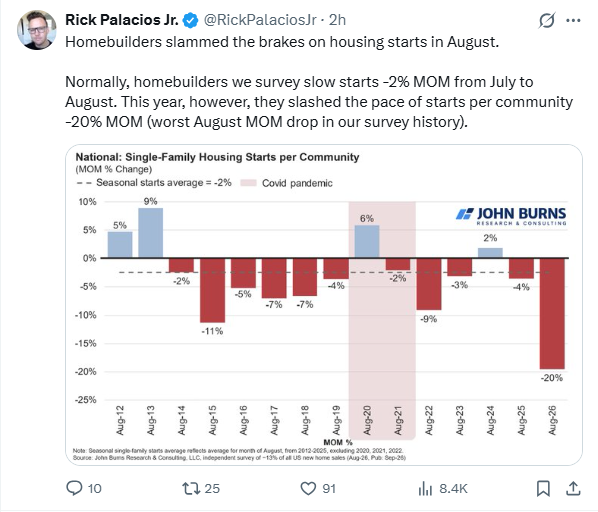
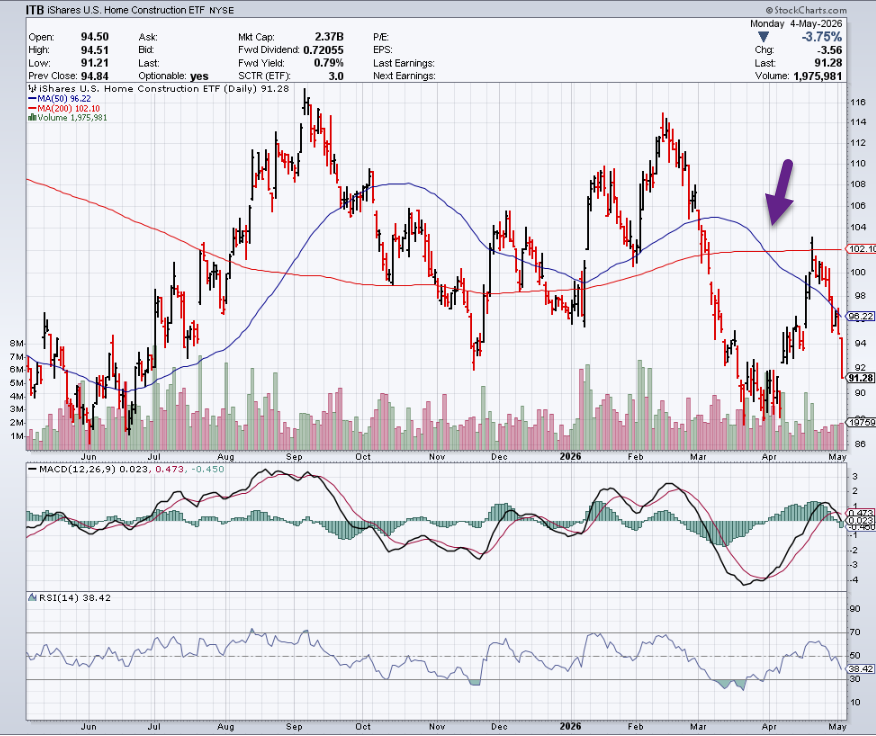
5. Homebuilders Slow Summer
Rick Palacios Jr.
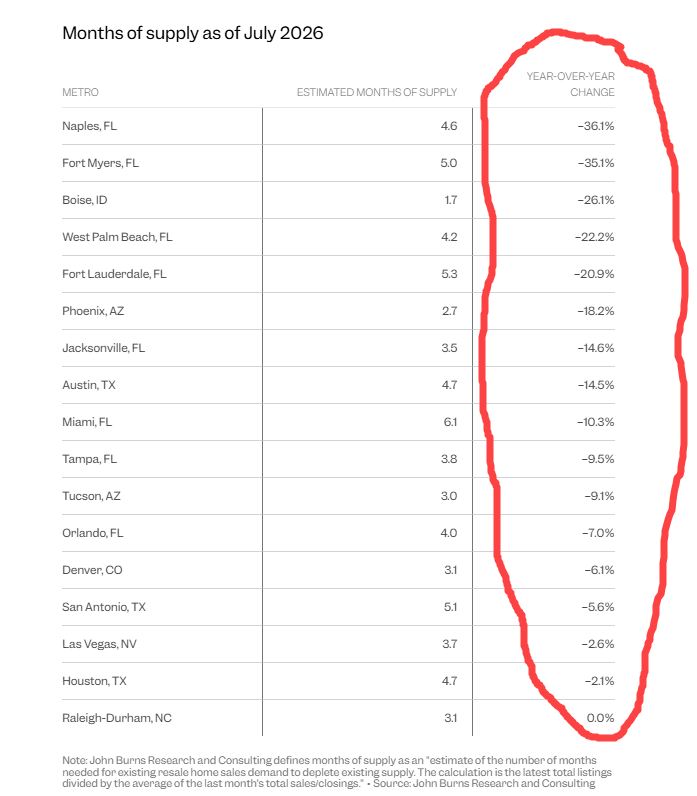
6. Less New Homes =Supply Coming Down in Overbuilt Sun Belt Region
Business Insider-The Sun Belt’s housing headspin-Struggling real estate markets in the South, like Texas and Florida, just hit rock bottom — and could be set up for a comeback. By James Rodriguez
Business Insider
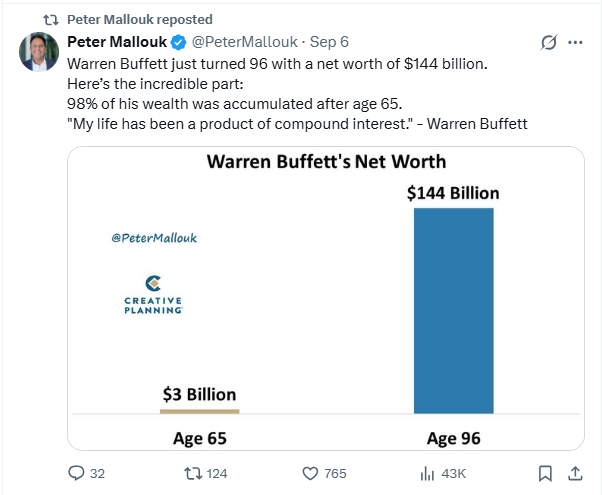
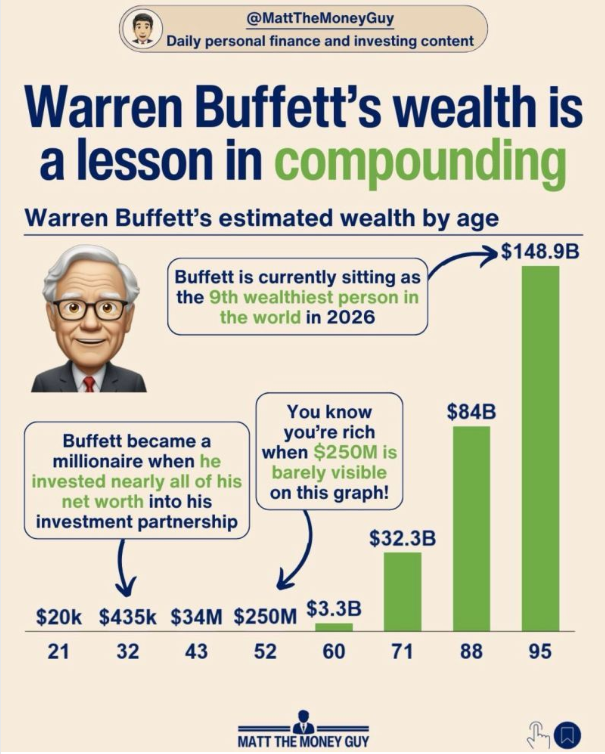
7. The Magic of Compounding Warren Buffett
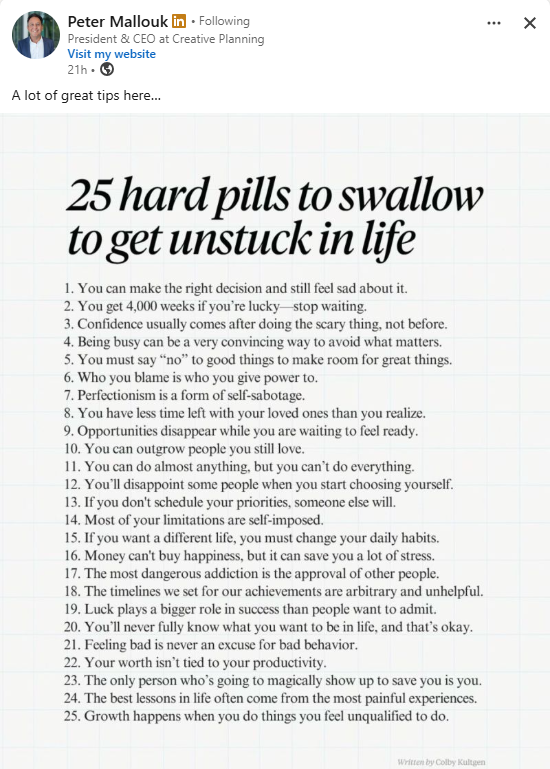
Peter Mallouk
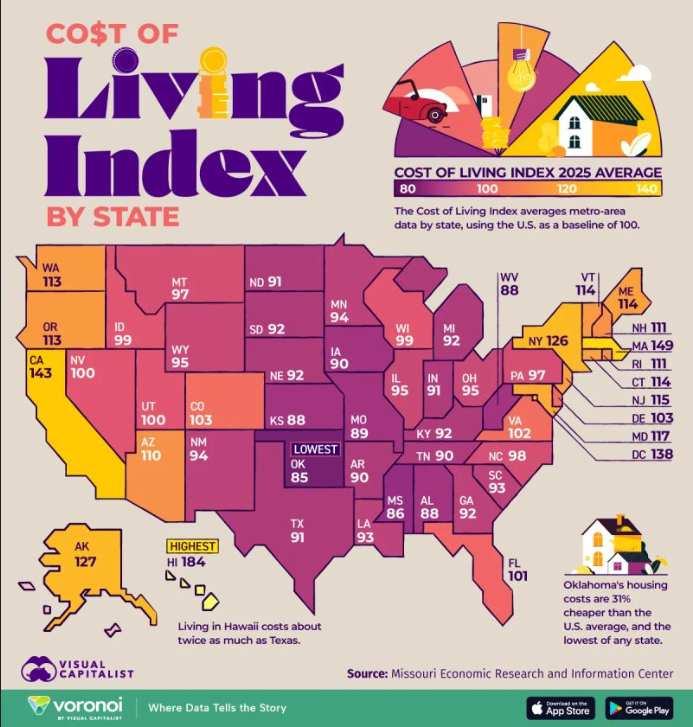
8. Cost of Living Index by State
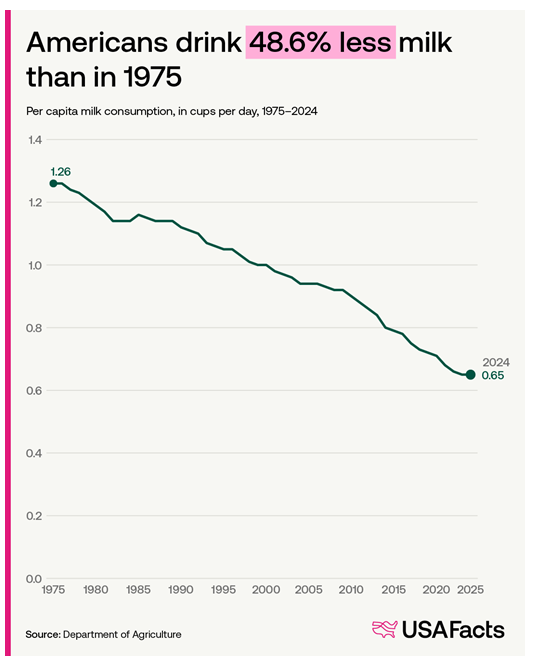
9. Americans Drink Half as Much Milk as 1975
USAFacts
10. Leaders are Readers
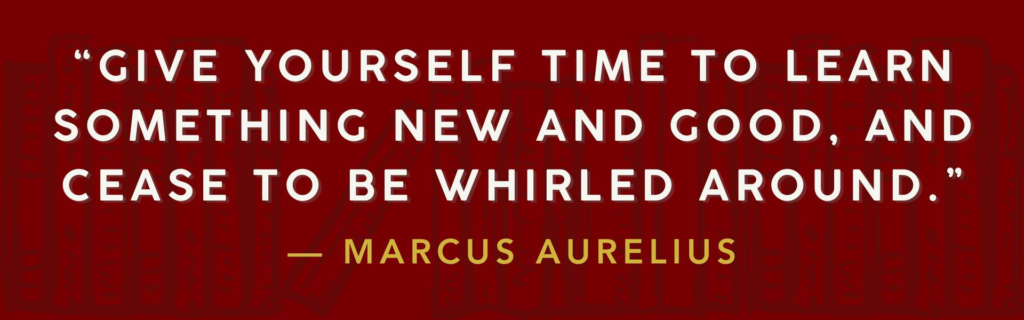
The Daily Stoic Not all the Stoics were leaders, but all of them were readers.
And the ones who were leaders? Well, they were the biggest readers of them all.
Marcus Aurelius opens Meditations by thanking the teacher who taught him to read attentively—and who loaned him the copy of Epictetus that shaped the rest of his life. Scipio Aemilianus, one of Rome’s great generals and patron of Stoicism, was said to be constantly “engaged in the pursuit of arms or his studies, he was either training his body by exposing it to dangers or his mind by learning.” Literally in the final moments of his life, Cato took another pass at reading Phaedo. As president, Theodore Roosevelt was always squeezing in time to read, and later, out of office, he took a copy of Epictetus with him on his perilous journey down the River of Doubt. Stockdale talked about how, deployed in the South China Sea, when he was not flying, he was in his bunk, reading Epictetus and Marcus Aurelius and the other ancients.
These were men of action…and lifelong learners. Reading deeply and thoughtfully gave all of them what they needed to succeed. The knowledge to be great leaders. The virtue to be good people. The will to survive.
In English and history classes, reading often meant memorizing names, dates, and places. Who, what, when, and where—less so the how or why or what it means for us. Our whole approach to books got Jeopardy-ized. You learned to extract what the teacher needed you to remember, not what the author wanted you to know, not the moral and philosophical lessons the books (and the events) were meant to teach.
If you want to be a better leader, you’re going to have to become a better reader.
How?
That’s what our Read to Lead: A Daily Stoic Reading Challenge is for. Over five weeks, Ryan Holiday walks you through not only the system he’s used for writing his bestselling books, but also the reading practice he uses in his life every day—to help him become a better professional, a better parent, and a better person. You’ll learn how to find the books that are worth your time, how to work through ones above your level, how to keep what matters, and how to turn what you read into action. You’ll build the beginnings of a real library, a foundation for lifelong learning—and you’ll do it alongside a community of other readers.
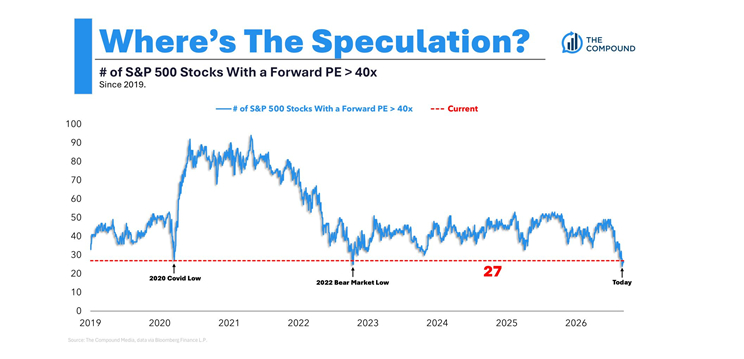
1. S&P Stocks Trading Over 40x Forward P/E at Covid Lows-Chart Kid Matt
Chart Kid Matt
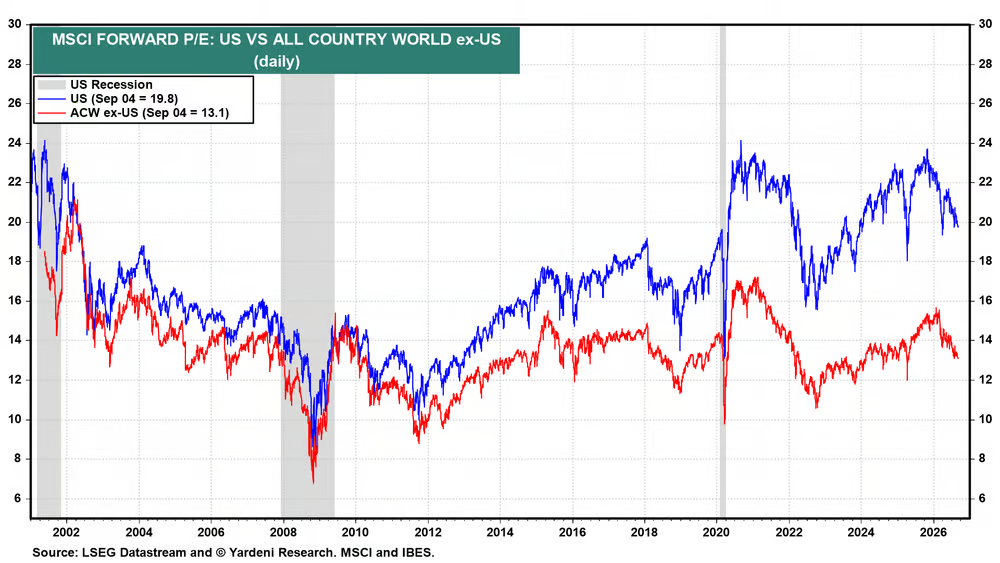
2. MSCI All World Index Getting Cheaper�Not Just S&P Forward P/E
The MSCI All Country World ex-US index trades at a 13.1x forward P/E, below the 19.8x for the US MSCI. Both those figures have declined sharply since January, as data from Yardeni Research shows.
Phil Rosen
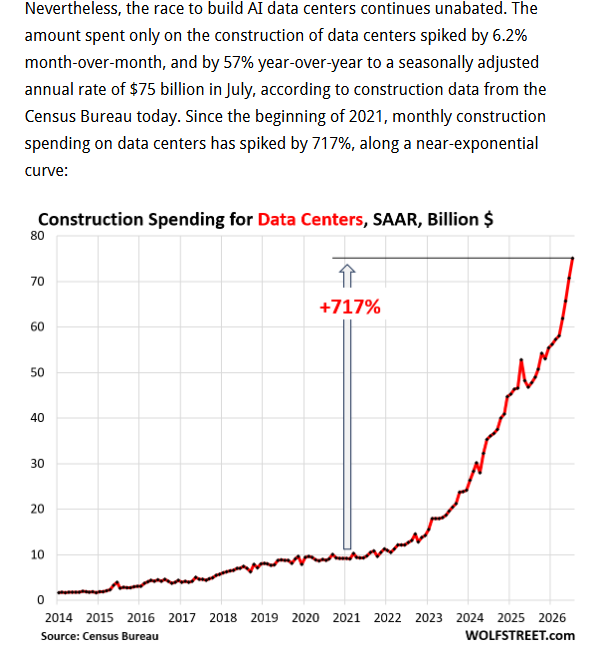
3. AI Buildout is Accelerating�Construction Money Spent +57% Year Over Year
Wolf Street
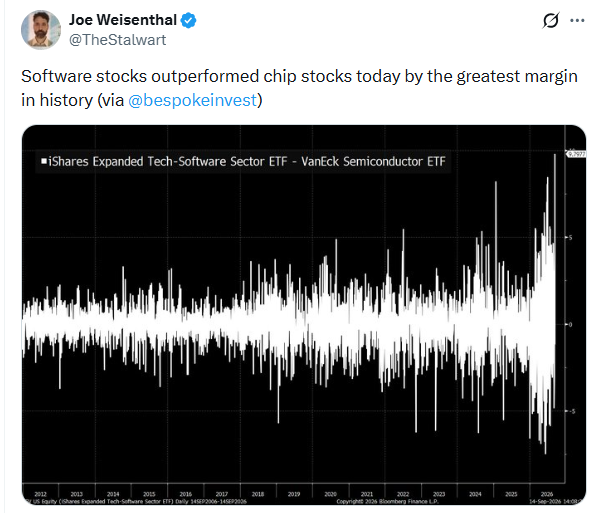
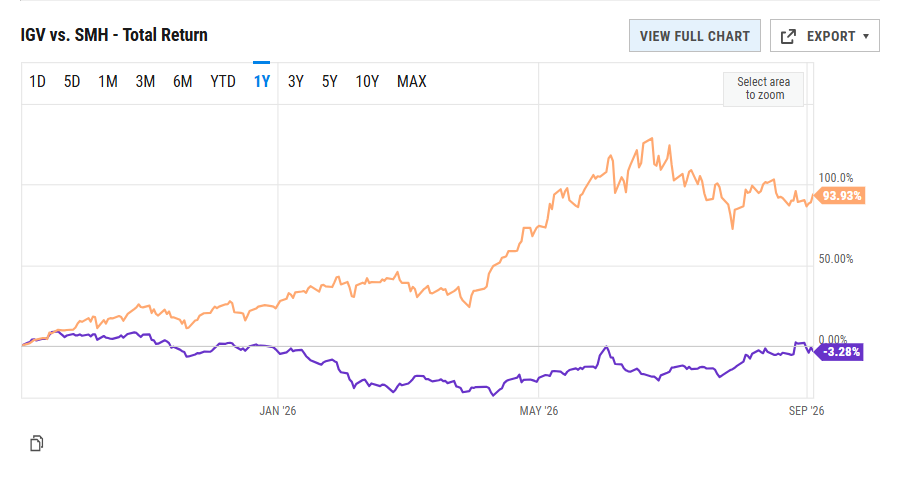
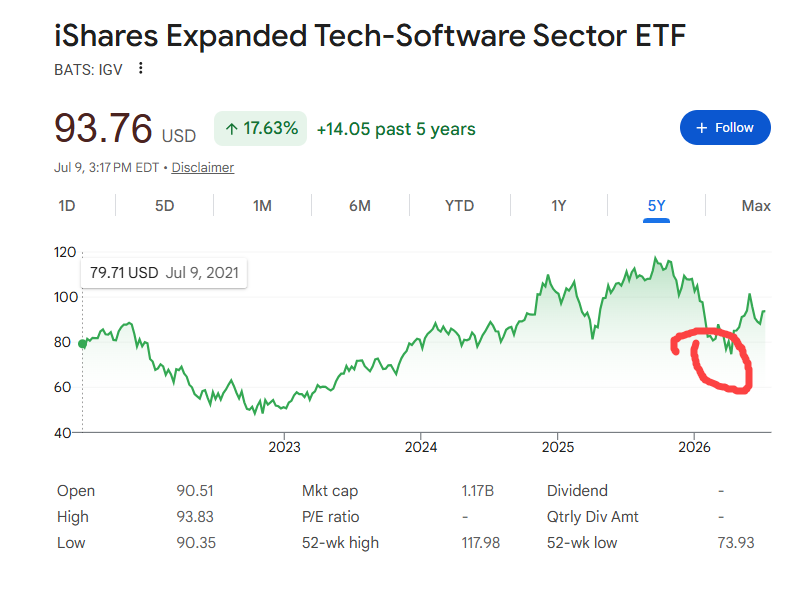
4. Software SMH Having Run But�On 1-Year Basis Semiconductors Outperforming Software by 100%
YCharts
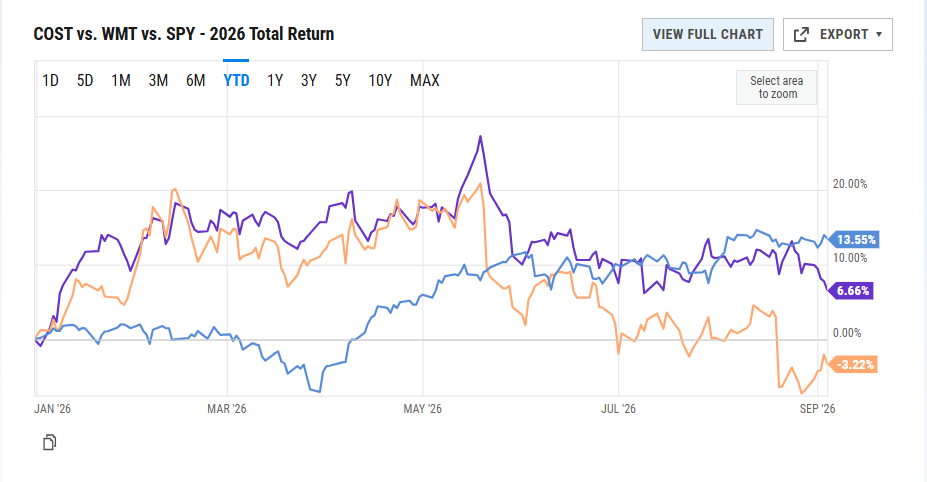
5. Consumer? WMT -3% and COST +6% Trailing S&P 2026
YCharts
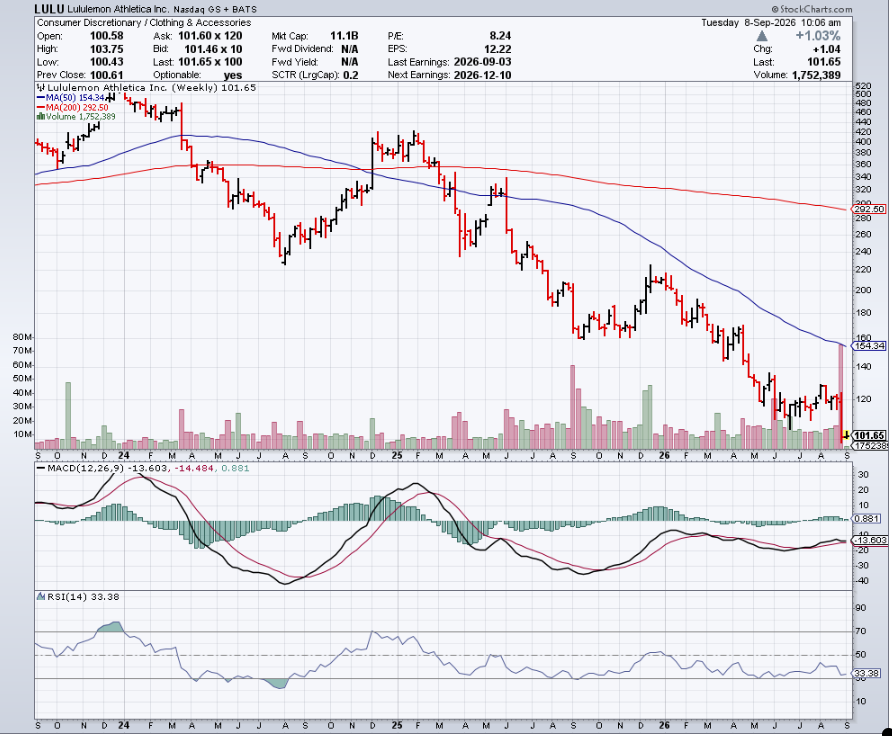
6. LULU Hit $516 in 2023 About to Break $100 on Chart �..-81% from Highs
StockCharts
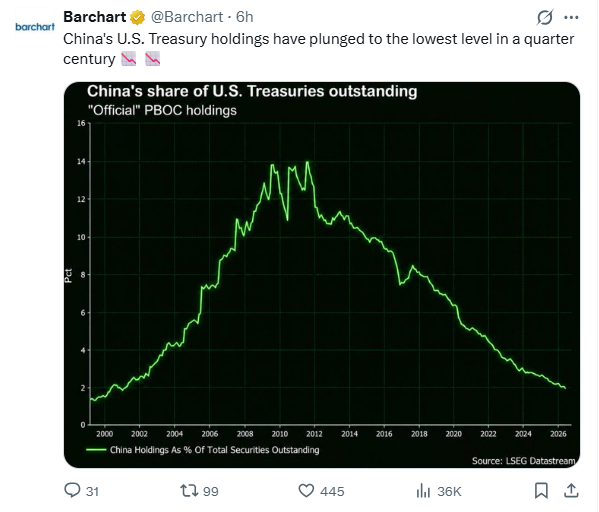
7. China Selling U.S. Paper for 15 Years
Barchart
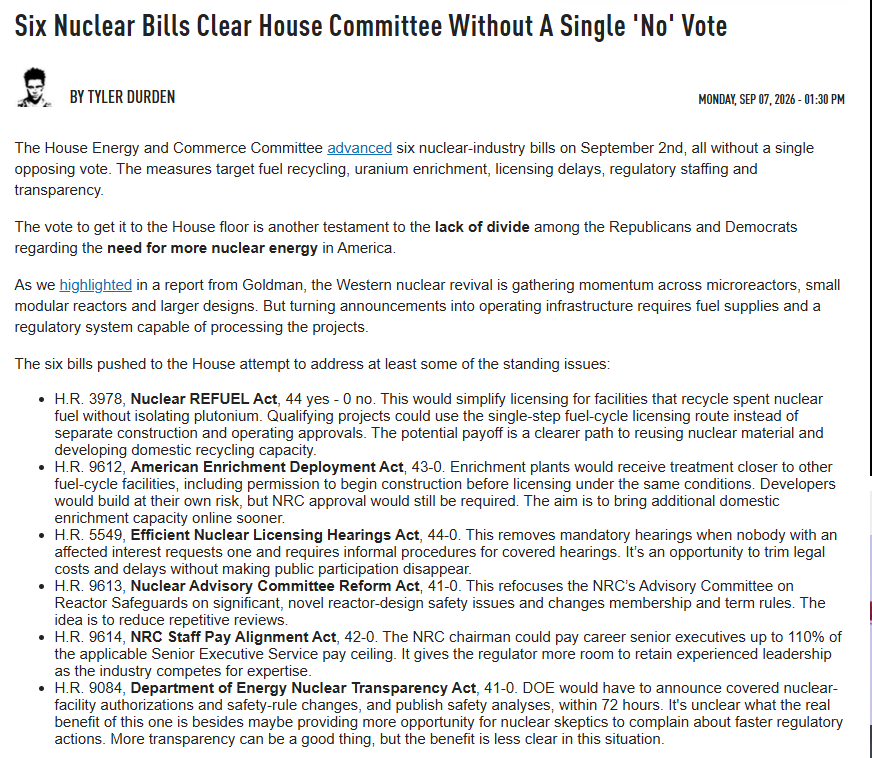
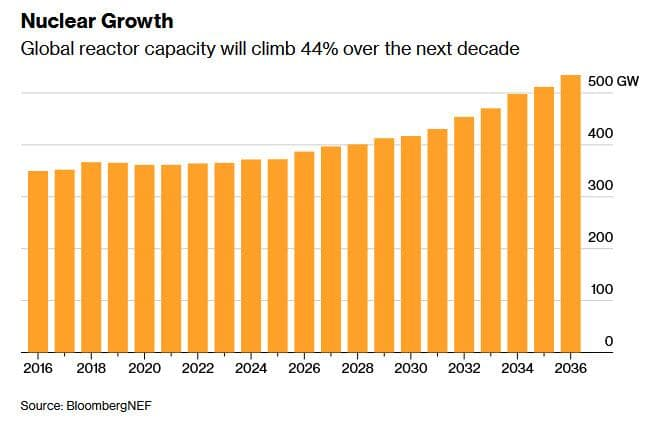
8. Six Nuclear Bills Pass House without a Single No Vote
ZeroHedge
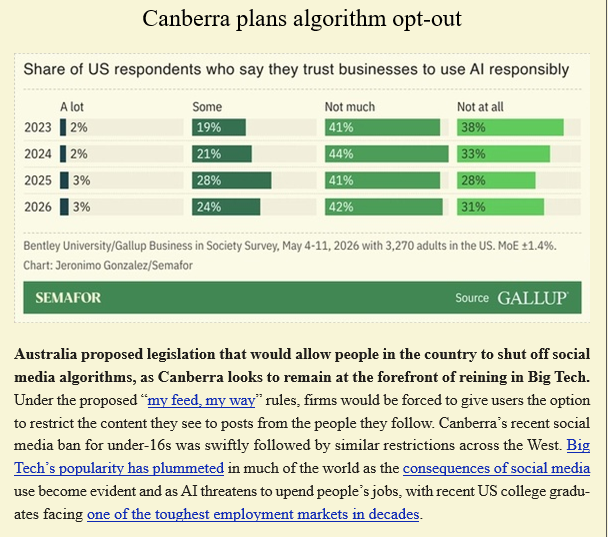
9. Australia Legislation to Ban Social Media Algos
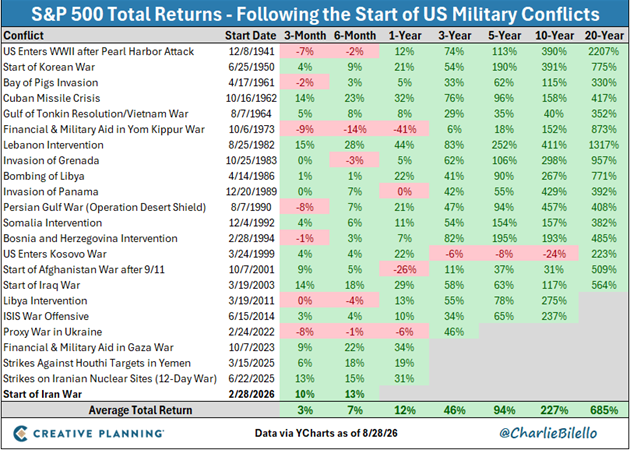
1. S&P Total Return History Following Start of Military Conflict
@Charlie Bilello
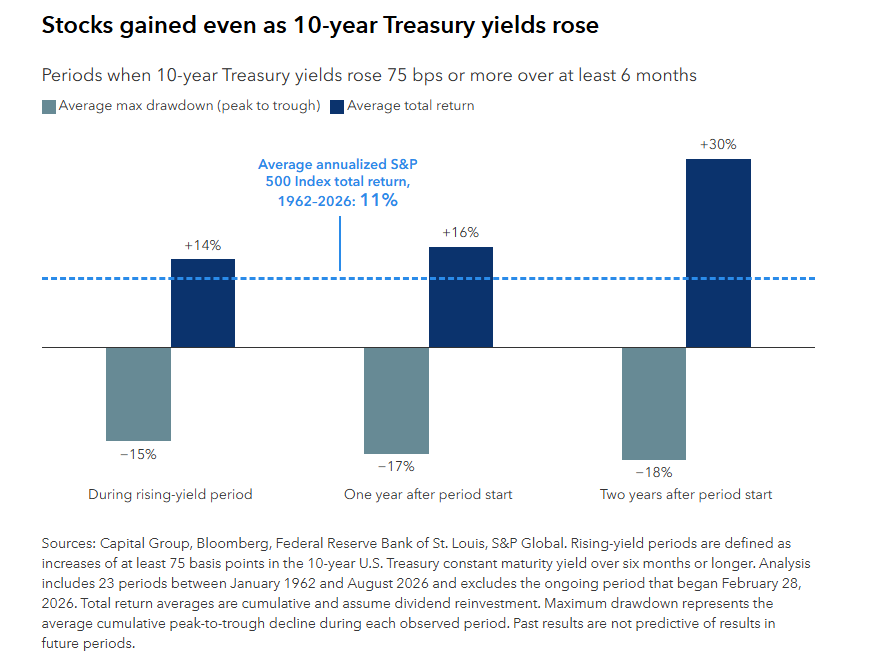
2. History of S&P Returns After 10 Year Rises .75 Basis Points
Capital Group
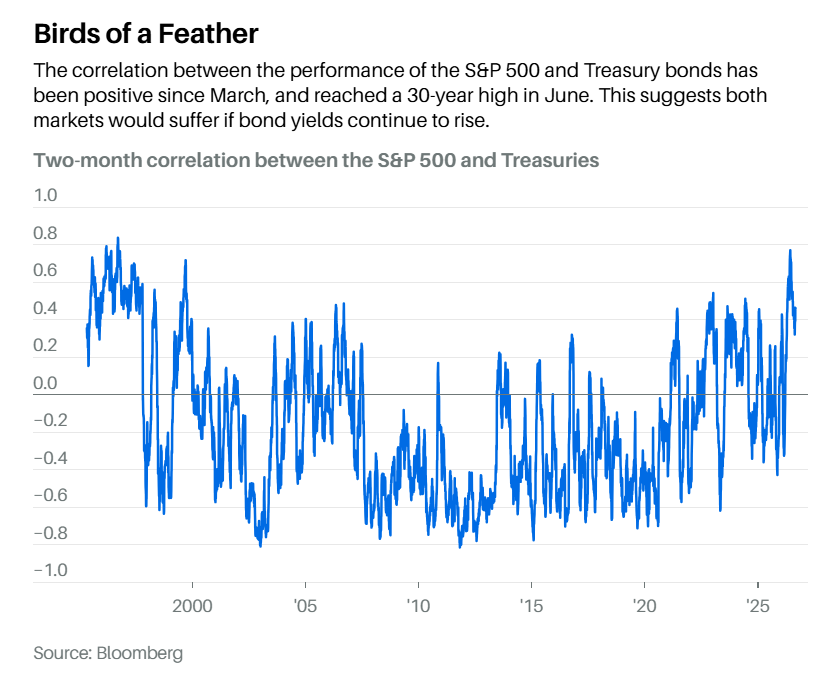
3. Stocks and Bonds Correlation Hit 30-Year High in June
Barron’s
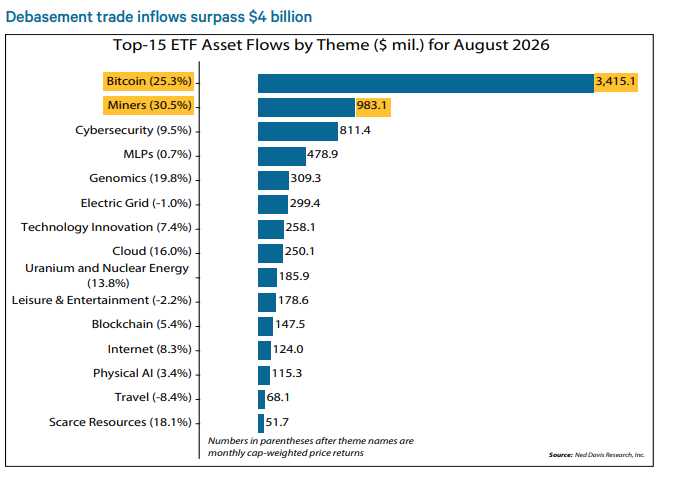
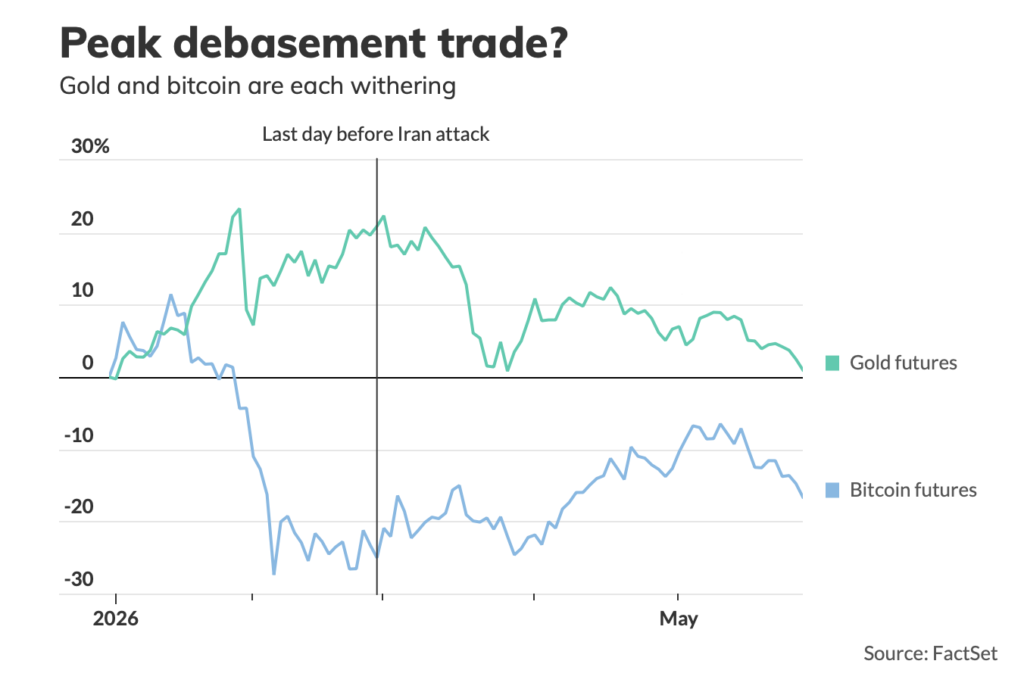
4. Huge Debasement Trade Inflows $4B
NDR
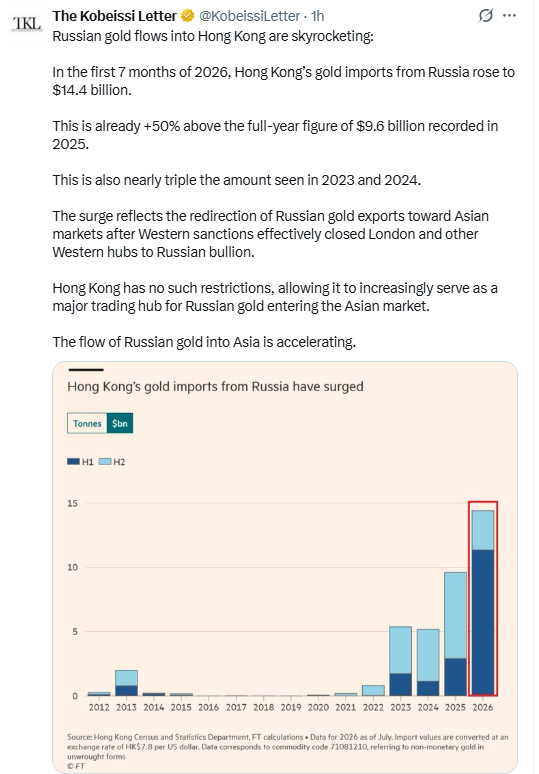
5. Russia Moves Gold to Hong Kong
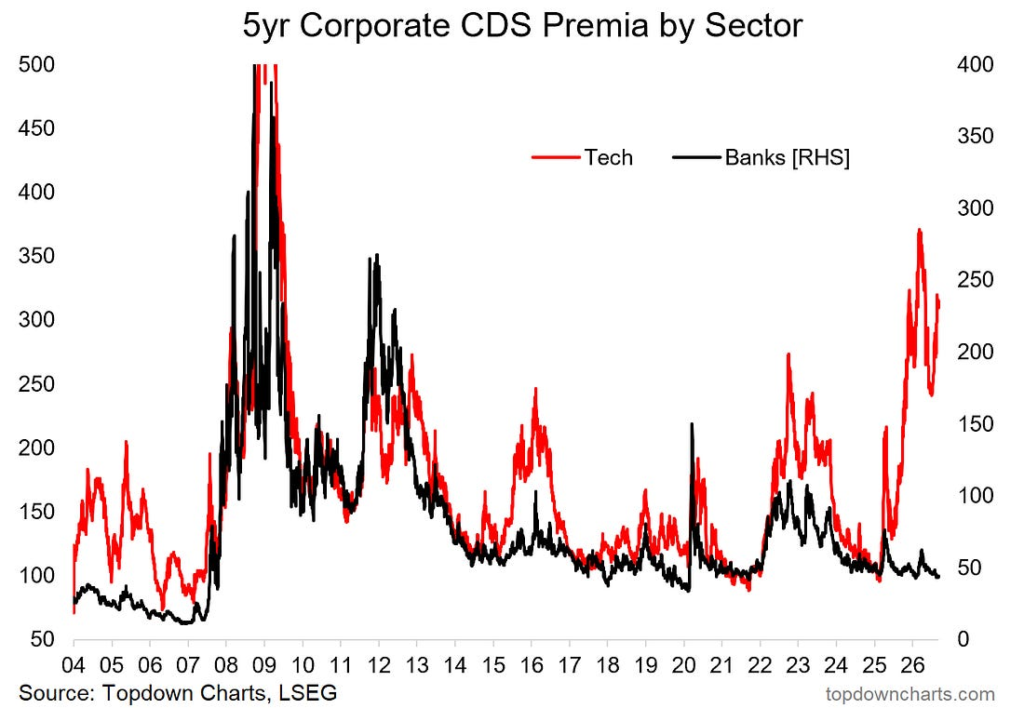
6. 5 Year CDS—Banks Narrowing While Tech Widening
Topdown Charts Blog Credit Check — Tech vs Banks: a similar divergence is playing out in Tech vs Bank sector CDS. Credit investors are treating tech borrowers with greater scrutiny, while banks are seen as lower risk than usual. This tells us that there are no systemic issues right now (calm on banks), but again, there are pockets of concern. If tech borrowers did start to default you can bet that will ripple across markets.
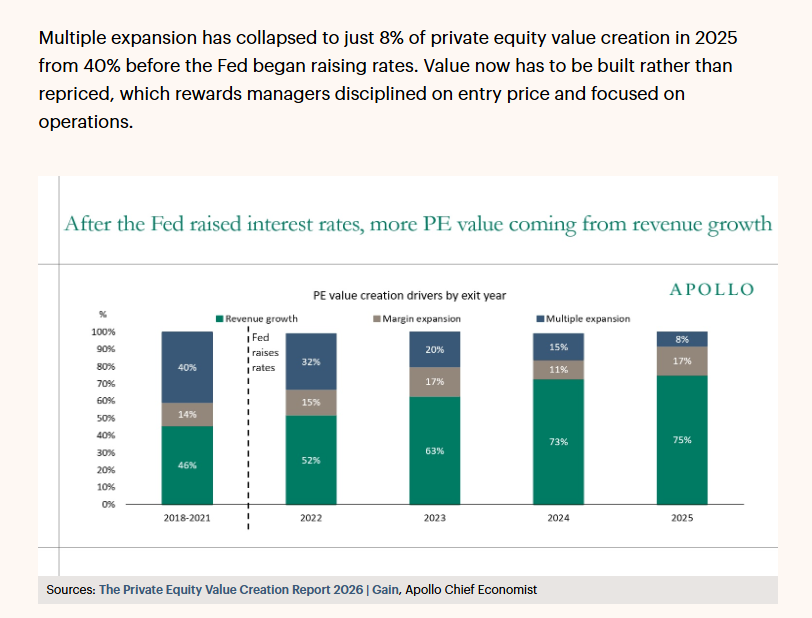
7. Since the Fed Started Hiking, Multiple Expansion Has Nearly Vanished as a Source of PE Value-Torsten Slok
The Liquid Network said Sunday that purported white-hat hackers withdrew about 4,000 bitcoin, worth about $320 million, from the federation wallet that backs L-BTC.
Bridge nodes were disabled, and the sidechain was paused. Other issued assets, including USDT, DePix and RWAs, were unaffected, the official account said on X.
The Liquid Network is a federated sidechain of Bitcoin, founded by Adam Back’s Blockstream. The Liquid chain issues a variety of assets such as LBTC, which it backs with BTC on the Bitcoin main chain, held in a large multisig of 15 corporate and known members. 11 of the 15 members need to sign a valid multi-signature transaction to move coins from the treasury. Before the hack, the treasury held over 4200 BTC; after the hack, Blockstream’s proof of reserves page reports a little over 207 BTC left.
The hackers withdrew 4,019.4 BTC from the reserve address in a peg-out transaction using the SideSwap Peg-out Authorization Key. SideWap is a bridge exchange and a member of the Liquid Federation. While details on the mechanism of the hack are not confirmed yet, it appears an inflation bug on the LBTC side chain was exploited by the hackers to create over 4,000 LBTC that did not exist before, and cash them out for on-chain bitcoin from the federation. Because the transaction appeared as valid, given the consensus bug, the federation members’ HSM security servers signed the BTC withdrawal transaction, worth roughly 320 million at the time.
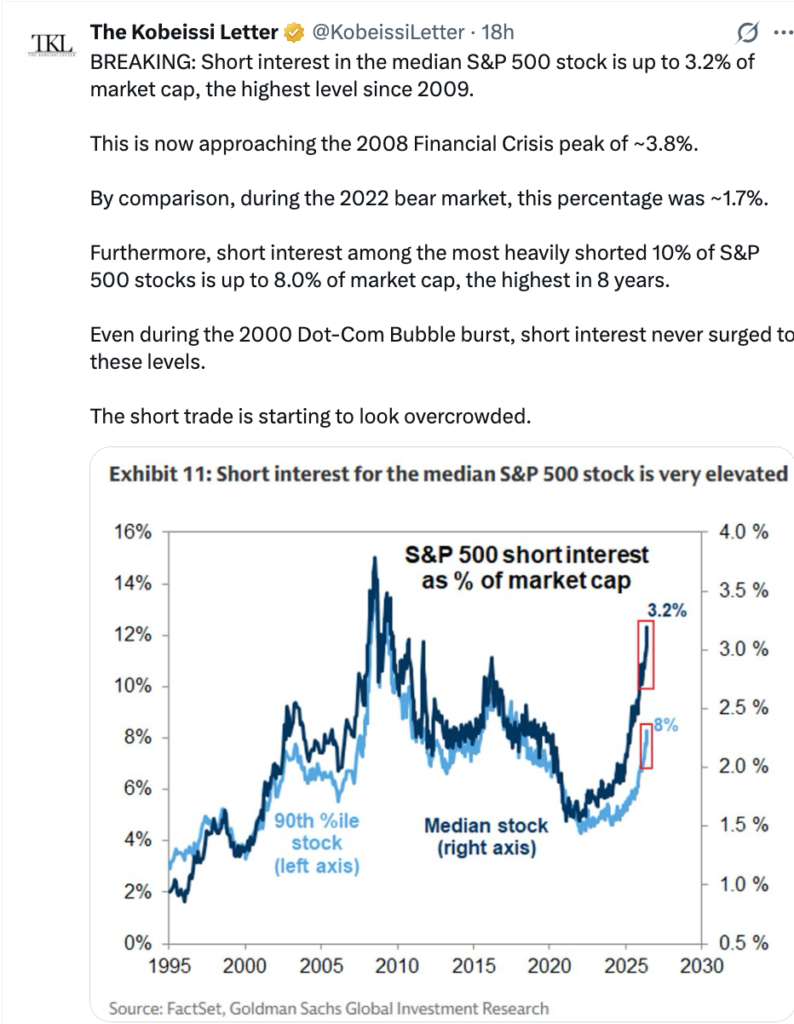
3. Short Interest at Record Levels—Not Behavior Near Tops in Market.
X – @KobeissiLetter
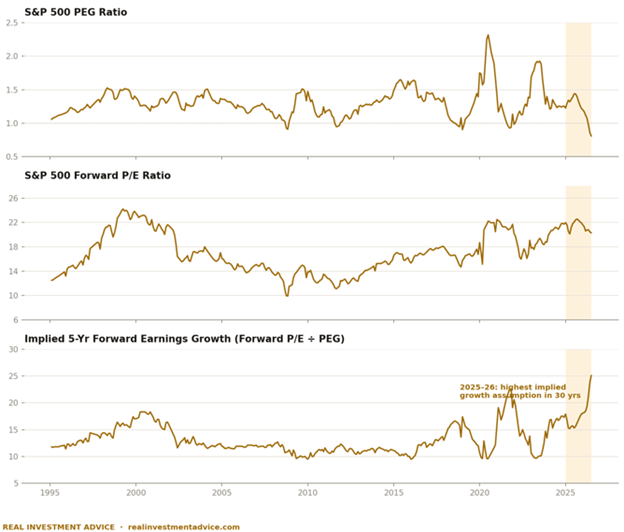
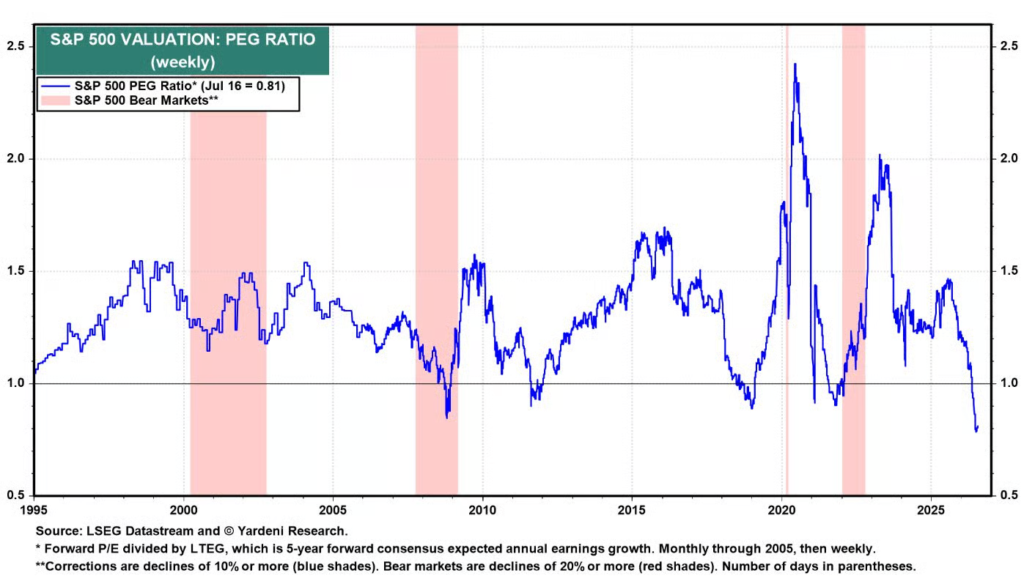
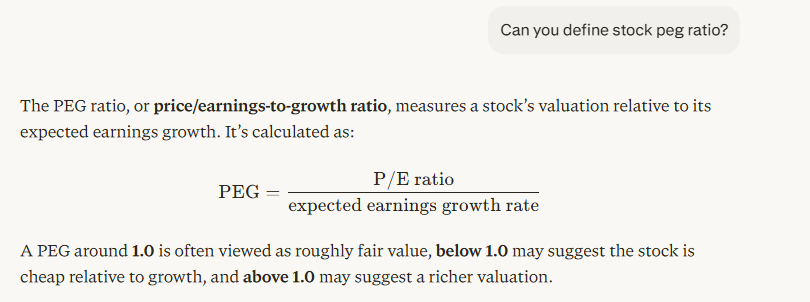
4. Top 10 Has Shown Low PEG Levels in Past….Why? Longer-Term Earnings Growth Estimates are at Highest Level Since 1995
P/E vs. PEG. “Despite the forward P/E, the PEG ratio in the top graph is cheap because the longer-term earnings growth estimate shown in the bottom graph is at its highest level since at least 1995.”
Daily Chartbook
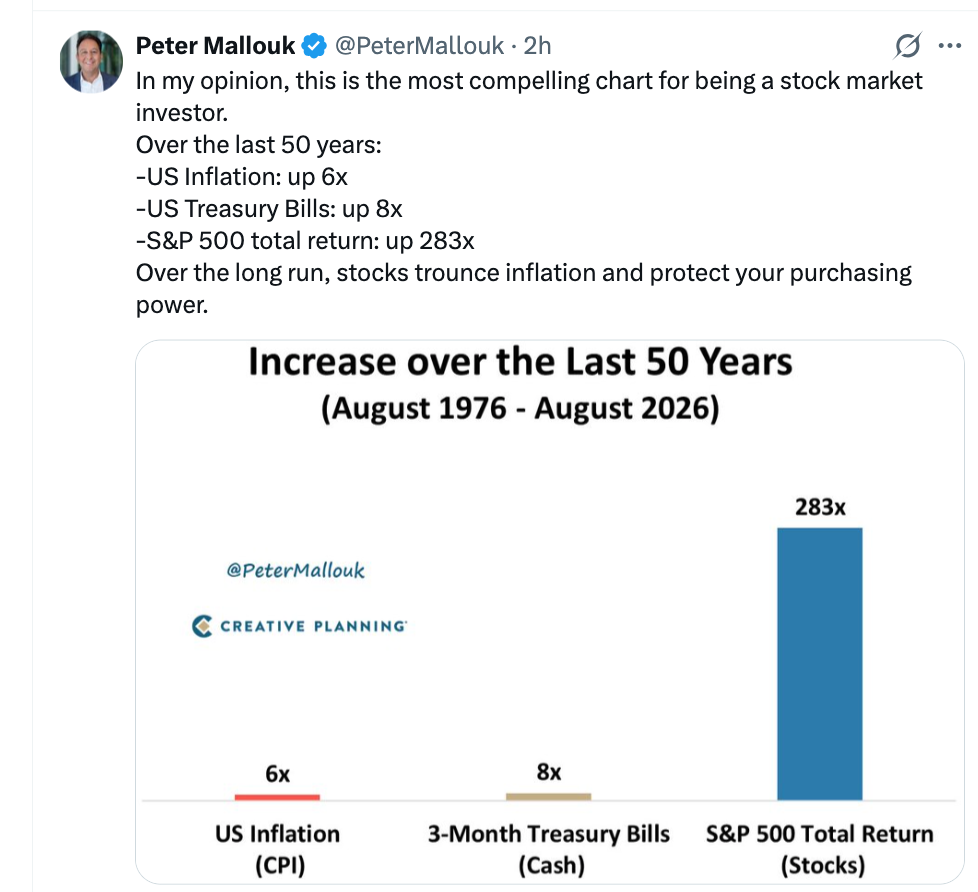
5. Stocks vs. Inflation 50 Year Chart.
X – @PeterMallouk
6. Why Nvidia wants Hugging Face — and a bigger say in the future of AI-Business Insider
What does $12.9 billion buy Nvidia these days? A bigger say in what AI gets built and what it runs on.
Nvidia has acquired Hugging Face for $12.9 billion, giving the chip giant control of a platform that hosts open-source AI models. That lines up with Nvidia’s strategy, as it has been beating the drum about open-source AI models that anyone can use and build on.
Open models could stave off a future dominated by giants like OpenAI and Anthropic, both of which create closed, proprietary models. If top AI labs dominate the models being used and build their own chips to run them — as OpenAI is doing with Jalapeño — they could eventually cut Nvidia out.
“Open source is an important counterweight to closed platforms like OpenAI and Anthropic,” said Brad Gastwirth, global head of research and market intelligence at Circular Technology. “The more AI development stays open and fragmented across many models and developers, the more opportunity Nvidia has to remain the underlying infrastructure provider.”
There’s a more immediate payoff, too: selling more chips. Developers using models from Hugging Face have to decide which hardware and software to run them on, and owning the hub could give Nvidia more sway over their choices.
Spice Capital founder Maya Bakhai, who invested in Hugging Face while working on venture investments at NBA star Kevin Durant’s Thirty Five Ventures, said embedding Nvidia more deeply into developers’ workflows could also give it greater visibility into emerging use cases such as robotics.
It joined a $235 million funding round in 2023, and it distributes its own family of open models, Nemotron, on Hugging Face. Last year, Nvidia proposed a $500 million investment in Hugging Face at a $7 billion valuation, which the startup rejected, the Financial Times reported.
Hugging Face said at the time it didn’t want a single investor wielding too much influence. That’s because one of its hallmarks is its openness, with models that run on competing chips and cloud companies, including AMD and Google.
That makes Nvidia’s acquisition a striking reversal, and it creates a tricky balance.
“The biggest risk is neutrality,” Gastwirth said. “Hugging Face has a lot of value because developers see it as an open platform. Nvidia would have to be careful not to undermine that.”
While Nvidia now has greater control over Hugging Face, it may have to use it sparingly to preserve the openness that makes the startup so valuable.
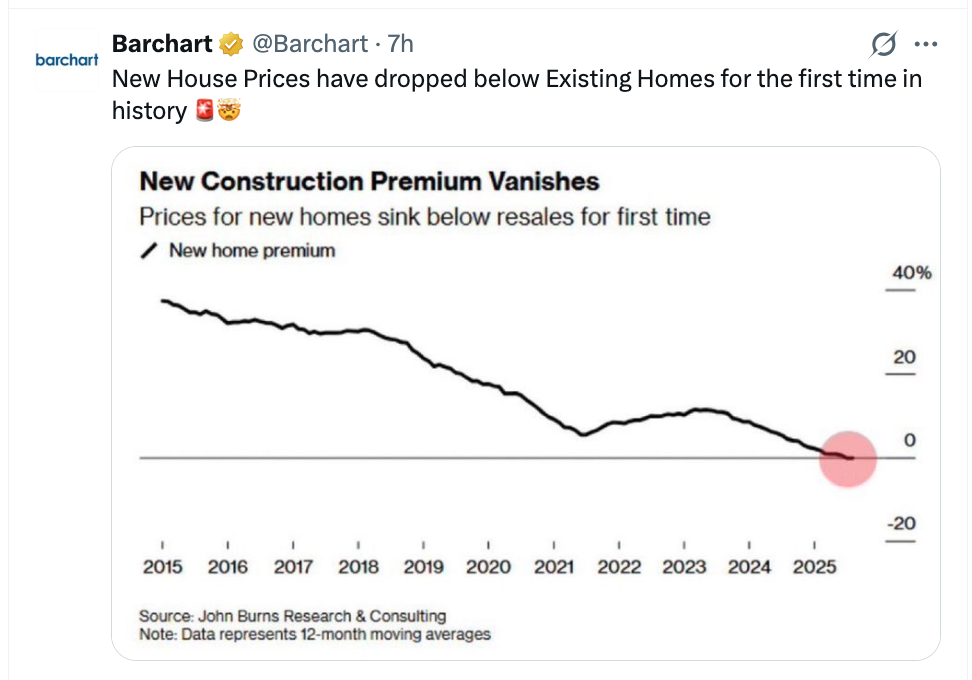
8. New House Prices Drop Below Existing Prices First Time Ever
X – @Barchart
9. Russia Helping Iran Develop Supersonic Missiles
THE FINANCIAL TIMES
10. Why Your Brain Needs Nature
Psychology Today The emerging science of how our surroundings shape attention, stress, and cognition. Michiko Kimura Bruno
KEY POINTS
Being in nature may benefit our physiology, including autonomic and stress responses.
Nature may support brain functions, including attention, mood, and cognition.
Nature’s “soft fascination” may give our constantly directed attention a chance to recover.
Environmental neuroscience studies how our surroundings influence the brain.
We have all experienced it: stress at work. You are staring at your computer, deadlines mounting, stuck on a project. Taking a walk seems like a waste of time, but you decide to go outside anyway. Maybe there is a small park near your office or home. You breathe in the air, look at the sky and clouds, and notice some greenery; trees, grass, perhaps a few flowers. You hear a bird in the distance and feel the wind against your face.
And suddenly, you feel lighter. Your mood lifts. A random idea connects. You remember a coworker from a previous project whom you can ask for help.
Or, even better, you go for a hike on the weekend. The crisp air, the smell of trees, the chirping of birds, the sound of a stream all feel refreshing. Your worries begin to recede.
And the restorative effect lasts even after you come home and turn the computer back on. Sure, your legs are sore and your muscles a little tired, but mentally, you feel refreshed, ready to face the task that seemed so daunting before.
The Emerging Field of Environmental Neuroscience
Marc G. Berman, author of Nature and the Mind, studied this exact effect of nature on our brain in a scientific fashion.
In a now-classic experiment, participants first completed a cognitive task called the backward digit span, which requires them to listen to a series of numbers and repeat them in reverse order. Then, they took a walk outside for about an hour. One group walked in the Arboretum, in a trail following a river through the evergreeens, and the other, in the busy part of the town, navigating intersections along the commercial storefronts. When they returned, they repeated the same test. The participants who walked in nature significantly improved their scores, but those who did the urban walk did not.
Later, the researchers switched the routes, so the same people served as their own controls and the result was the same: nature walk improved attention and memory, but urban walk did not. The walking was similar. The people were the same. What changed wasthe environment.
The researchers suggested that nature captures our attention gently, without demanding it. Urban environments, in contrast, are filled with stimulation that demands our attention, such as traffic, signs, people, and potential hazards. Nature, they suggested, gives our directed attention a chance to recover.
Berman is now considered to be one of the leaders of an emerging field, environmentalneuroscience, which studies how features of our environment influence the brain, including our attention, cognition, mood and stress. In retrospect, this seems obvious. Our brain is the interface between our inner world and the world outside us. Why wouldn’t the environment in which it operates matter?
Environmental Neuroscience Taps Traditions Like Shinrin-Yoku (Forest Medicine)
The idea that nature can help our health is not new. Research from another tradition suggests that nature’s effects may extend beyond cognition into the body itself.
In Japan, interest in the health effects of shinrin-yoku, or “forest bathing,” has grown, alongside an emerging discipline known as “forest medicine.” Shinrin means “forest” in Japanese, and yoku means “bath.” It is specifically noted that Shinrin-yoku is not exercise, or hiking. Rather, it is the act of being in nature, bathing in the forest atmosphere and connecting with it through our multisensory system of sight, hearing, taste, smell and touch.
Studies have associated forest exposure with lower cortisol levels, changes in autonomic measures, improvements in mood, and changes in measures of immune function.
One intriguing hypothesis involves phytoncides, volatile organic compounds released by trees. Laboratory and small human studies suggest that these compounds may contribute to some of the physiological effects associated with forest exposure, including changes in natural killer cell activity. But they are unlikely to explain the whole story.
Why Nature Helps our Brain
Recent studies using tools such as functional MRI and EEG are beginning to show that natural and urban environments engage the brain differently, including networks involved in attention, stress, emotion, and self-referential thought.
According to Attention restoration theory (ART), “attention” is a finite resource, that can be depleted by constant stimulation.
Modern life constantly demands directed attention: ignore the notification, answer the email, switch between windows, remember the deadline at work—while also scheduling the dentist appointment, arranging the car safety check, and figuring out the family vacation.
Our attention rarely gets to be off duty.Nature captures attention differently. A cloud moving, leaves rustling, water flowing, birds calling—these attract us without demanding that we concentrate on them.
1. Hyperscalers Plus NVDA Debt Issuance Equals 70% of New Treasury Long Duration Borrowing
Marketwatch Hyperscalers are issuing so much debt that they may be causing an imbalance at the long end of the yield curve. JPMorgan Asset Management’s Michael Cembalest calculates that the debt issuance by the five hyperscalers, plus Nvidia, equates to 70% of new Treasury long-duration borrowing. He adds that the Treasury twist program of buying back long-dated securities while borrowing more from the short end of the curve pales in comparison to the Fed’s program from 2011 and 2012 — at some 25% of that size — while the outstanding stock of Treasurys with maturities longer than 10 years has risen from $1 trillion to $5.8 trillion.
MarketWatch
2. Chevron Breaking Out to New 5 Year Highs Investing $7B in Venezuela
StockCharts
3. Dell Shares Sideways All Summer After Big Run Up…Needs to Get Above $510 for New Highs.
StockCharts
4. Returns for August
Capital Spectator
5. Leveraged ETFs Have Been a Losing Trade for Retail Investors.
7. Shein IPO Value ¼ of Highest Venture Valuation in 2022
Google
8. 41,000 More Satellites Coming to Low Orbit-WSJ
WSJ
9. Hanwha Shipyard Korea Produces One Ship a Week vs. Philadelphia Hanwha One Ship Per Year
Google
10. The Upper Middle Income Group in Now America’s Largest 31%
Andy Kessler WSJ –
Rahm Emanuel smartly told Politico, “If you’re trying to be a party that recruits people, working class people that go paycheck to paycheck, socialists have been repulsing them.”
Plus, we’re barraged with false analysis that the middle class is hollowing out. The largest income group is now the upper middle class. The upper middle was 10% of families in 1979. It’s now 31%. Really? Is that from exploitation? Heredity? Heck no. More like hard work. And dual incomes. The middle class is getting richer. Why is that bad?
Moreover, the income ranges of the upper middle class are wide enough to drive a truck through, from $109,000 to $326,000 for a family of two and $154,000 to $462,000 for a family of four. Whether any of these folks feel upper middle class is a different matter—it depends on geography. Worse, they have a target on their backs from the politics of envy.
1. NVDA The Cheapest Mega Cap on Forward P/E Basis
Santoli Marketwatch The analyst corps that covers Nvidia is mostly adoring. The consensus price target for the stock implies 50% upside from here and a $7.5 trillion market value. They are merely chasing the remarkable revenue and profit growth, unprecedented at Nvidia’s scale, while staring incredulously at its compressed valuation.
The stock is below 20-times next-12-months forecast earnings and below 15 on next fiscal year’s projection. On free cash flow, it’s easily the cheapest mega-cap on offer.
CNBC
My read here is that the market will simply refuse to pay a premium for what could soon be peak profit growth until the company proves through a longer cycle that it’s not a hit-driven hardware maker.
There is precedent from recent history that might be relevant. Apple in the years following its initial iPhone-release profit bonanza saw its valuation slide down a similar slope (in an early-2010s market that itself was less expensive than today’s).
CNBC
The knock on Apple for years was that tech-device margins always evaporate, smartphones would commodify, etc.
Demonstrating smooth, reliable upgrade cycles, fostering a services-based revenue stream and returning enormous sums of capital through buybacks and dividends slowly got Apple clear of the nagging valuation discount.
To the point where, now, Apple fetches an arguably rich premium, near a 30 P/E, for its defensive properties against the swings of AI sentiment and spending.
2. Why? See Below..Breaking Down the Open AI-NVDA Deal.
WSJ
3. XLV Healthcare ETF Hitting New Highs…But Reversing Off Longest Period of Underperformance Since Internet Bubble.
Trendlabs Let’s review what this chart means. When the line is going up, healthcare is outperforming the rest of the market. When it’s going down, healthcare is underperforming. Earlier this year, healthcare vs the S&P 500 fell to levels we hadn’t seen in roughly 25 years.
You have to go all the way back to around the turn of the century to find healthcare this beaten up compared with everybody else. Then something interesting happened: It stopped going down. Not just anywhere, either. Healthcare stopped falling relative to the market right around the same area where it stopped falling 25 years ago. Either way, after one of the longest periods of relative underperformance we’ve seen from this sector, buyers are showing up again.
TrendLabs
4. AI is Showing Up in Bottom Line Not Just Top Line.
Interestingly, as Goldman’s Chris Hussey points out, while it has been tempting to think that this structural AI-driven EPS growth cycle is peaking for several quarters now, 2Q26 S&P 500 results illustrated how this particular technological development is driving bottom-line results, not just topline.
ZeroHedge
Utilities’ drop-off in the percentage of stocks above their 50-DMAs has been dramatic, but not unprecedented. At 9.7% on Friday, the reading is down 87.1 percentage points from 7/24, and one of several dips below 10% in the last year.
5. Utility Sector Less than 10% Of Stocks Trading Above 50 Day Moving Average.
Bespoke Investment Group
6. The U.S. Never Had a Recession with Profit Growth Positive Year Over Year.
Baird Strategas, BEA, Macrobond as of Q2 2026
7. Mortgage Rates Sit at Historical Average.
X – nickgerli1
8. German Most Common American Ancestry
Visual Capitalist
9. How many students eat free or reduced-price school lunch?
USA FACTS Data from the Agriculture Department shows that, in 2025, about 73.0% of the lunches served at public and nonprofit private schools participating in the National School Lunch Program were free or discounted. Those lunches fed 22.1 million students. Who’s eligible, and how does participation vary by state?
Students from households at or below 130% of the poverty line qualify for free lunches from the National School Lunch Program. Students from households making between 130% and 185% of the poverty line qualify for reduced-price lunches.
The number of students receiving subsidized lunches grew 4.8% from fiscal year 2023 to fiscal year 2025. Program participation grew the most in Colorado (up 29.1%), Michigan (up 16.4%), and Minnesota (up 12.9%).
Data from the National Center for Education Statistics shows the rates at which state student bodies qualify for the program. In the 2022–2023 school year (the latest NCES data available), Mississippi had the largest percentage of eligible students (99.7%), followed by Nevada (81.5%) and New Mexico (75.2%). Montana (18.7%), New Hampshire (23.4%), and Delaware (25.2%) had the lowest percentages.
USAFacts
10. Flow, In Depth
Psychology Today One way to channel a flow state is to stop trying and just be. Margaret Smith Ph.D.
Key points
A flow state entails alignment of goals, energy, attention, feedback, and so on.
When we learn what we can control in our sport and direct our attention there, we make flow possible.
Flow is a pleasant experience. Athletes crave it. But there’s plenty in sport that’s unpleasant.
Opening what’s unpleasant and beyond our control can offer energy that’s deeper than flow.
Have you ever participated in something awesome? Awesome in the root sense of the word—full of awe—in which you gave of yourself as a participant or as a witness (or both), and in doing so, you allowed the boundaries of your conscious mind to dissolve as you connected with something greater: humanity, history, nature, or the divine?
In sport, this sort of experience is often discussed as flow, but the kind of flow I’m talking about transcends the field of play and/or the performance space, be it athletic, artistic, or otherwise.
Carl Jung called such experiences numinous, from the Latin numen, divine will. In a numinous experience, which might be delightful, terrifying, or both simultaneously, we surrender any efforts at control to something larger than ourselves. We let the divine, however you choose to conceive it, flow in.
Flow in sport performance literature (Csizkszentmihalyi, 1975/1990) has to do with performance and engagement. Flow is conceived of, in the literature, as a psychological state with measurable structural conditions: the balance between challenge and skill (sometimes depicted as an inverted U), clarity of goals and purpose, and action and awareness. Things are maximally ordered, and all is aligned: task, skill, focus, feedback, and so on.
The literature presents flow as something secular and comprehensible. And there’s good reason for this: those of us who support athletes—whether as researchers and scientists, as coaches, counselors, or service-providers—want to help athletes control what they can control, and we want to help athletes highlight what they do have control over so that they can put their focus there. This is what makes flow possible in the first place.
But when you witness an athlete truly in the current of a flow state—when you are an athlete allowing yourself to ride the current of a flow state—you’re a part of something sacred. There is soul. That soul is immeasurable. And it may not always be pretty or pleasant: it might be vast and fearsome.
In his later work, Csikszentmihalyi explored this vastness, writing about autotelic experiences—things done for their own reward rather than for money or status—and autotelic traits—qualities of people who worry less about what others think, allowing themselves instead to be driven by curiosity and awe.
Where flow is a well-operationalized performance concept with indices that seek to describe its contours and complexities, the numinous is more about meaning than performance, and about dissolution that may be unsightly.
There’s a lot of talk in sport and in the sport performance literature about resilience and grit. There’s less talk, at least in the sport performance literature, about terror, dread, and dissolution. And let’s be clear: terror, dread, and dissolution are not an efficient path to a podium (or an efficient path to any place).
But we do athletes a disservice when we point them, relentlessly, toward efficiency and alignment. (We do ourselves, as humans, a disservice when we point relentlessly toward efficiency and alignment!) Social media, mass media, and funding entities overwhelm athletes with massive demands for “narratives” that are readily digestible for a large audience.
Even if such narratives are linked to intrinsic values (“I love my sport, I love my teammates, I want to share this love”), when the demands are externally driven (e.g., express a need for “content” or a “statement”), there is a neurobiological cost that is distinct from that of an action a person chooses for themselves. The demand for narrative coherence on schedule and for external consumption spikes cortisol and can contribute to burnout.
Burnout is a kind of coming apart quite different from Jung’s numinous. Burnout is about depletion, and often depletion over time, whereas Jung’s numinous experience is more like a moment of awe. When we’re burnt out, those moments of awe may be harder to access: we’re looking down at our phones, or we’re accomplishing tasks, and in so doing, we miss the shooting star (or some other unsayable thing that transcends the language of the everyday).
So, if you’re headed back into your fall sport season with your training plan and your to-do lists, wonderful. But also—and write it into the plan, or don’t! — make space to play and space to be afraid. Find people (or other living creatures) who welcome your playfulness and who can witness your fear. You can have your goals and work to align attention and energy toward them, and you can feel the air on your skin, the breath in your body, and the vibration in the atmosphere that might be divine will.
Frontier lab growth. Anthropic and OpenAI’s “growth rates have been both extremely rapid and remarkably robust since 2023: together, they tripled in 2024, and then grew more than fourfold in 2025. And this year they’ve already grown by 3.5x … these labs are growing faster from a higher baseline.”
DAILY CHARTBOOK
2. Since ChapGPT Launch NVDA Hasn’t Missed
In fact, since ChatGPT launched in November of 2022, Nvidia hasn’t missed estimates once.
fiscal
3. AI Data Center Build Out–Private Equity Deal Making in Building Trades
Private equity is following the AI data center boom into the trades that build and equip facilities.
PE activity in construction and engineering hit a record 529 deals in the second quarter, up 56.5% from a year earlier, according to estimates in PitchBook’s Q2 Construction and Engineering report. Deal value slipped slightly from the prior quarter as investors prioritized smaller deals over marquee platforms.
Dealmaking has concentrated in specialty trades needed for site work, electrification and cooling.
PitchBook
4. Earnings Growth vs. Off Balance Sheet Debt
As a result, Morgan Stanley projects free cash flow to turn negative for Amazon and Google in 2026 and for Meta as soon as next quarter, even as reported earnings remain strong. In sum, the massive AI buildout is increasingly being funded through leases, contractual commitments, and debt rather than internally generated cash flow, highlighting the growing financial
Zach Goldberg Jefferies
5. September Seasonality
Dave Lutz Jones Trading Tomorrow brings a new month – Here’s what the average September looks like since 1950 for the S&P 500. Things are ok early, but by Talk Like a Pirate Day (September 19th) is when the trouble starts.
USA Facts In 2024, Hawaii had the lowest rate of gun-related deaths nationwide: 3.7 deaths per 100,000 people. Mississippi had the highest rate: 28 per 100,000.
The Centers for Disease Control and Prevention notes that complex factors, including poverty, racial or ethnic inequities, and other socioeconomic conditions, influence differences in gun-related death rates between states.
9. Biggest American Family Office Investors
Linkedin
10. Top 10 Primary Industries for Ultra High Net Worth
1. Chart: Stocks vs Bonds Long-Term Cycles—Everyone Hates Bonds
Stocks beating Bonds should be no surprise for those paying attention. Stocks are in a raging bull market.Bonds are in brutal a bear market. But you might be surprised by the extent of it (see chart below). The rolling 10-year annualized total return spread (i.e. including interest for bonds, dividends for stocks) of stocks vs bonds just cracked 15% —the highest since 1960 (and eclipsing the 1929 high).
@Callum Thomas (Weekly S&P500 #ChartStorm)
2. China Gold vs. U.S. Treasury Holdings
Otavio (Tavi) Costa
3. Gold Miners Pulled Back to 12 Month Levels…Now Making Run at New Highs
StockCharts
4. Target Comeback…TGT +77% vs. WMT -6% 2026
Ycharts
5. Buy Now Pay Later Klarna Group -50% 2026
Google
6. Unicorns $1B+ Value Private Companies Growing in Europe
Europe’s unicorn herd is worth over €600 billion ($701 billion)—almost €100 billion more than their value at the end of last year—as dealmaking among the region’s €1 billion-plus VC-backed companies rebounds, according to our latest European VC Valuations Report.
The addition of 18 new startups to the herd last quarter boosted the total, bringing the number of VC-backed companies worth over €1 billion to 175, the highest count to date.
PitchBook
7. Iraninan Oil Flows to China Plunge
Bloomberg Much of this scarcity is down to the success of a US blockade, which has left loaded Iranian vessels trapped inside the Persian Gulf and a fleet of empty ones stuck outside. The result is that just 40 million barrels of oil are now in waters east of peninsular Malaysia, a popular holding and transhipment area for Chinese and other Asian buyers — and only an estimated 4 million of those remain unsold, according to data intelligence firm Kpler. That’s the equivalent of two supertankers.
Bloomberg
8. American Public AI Opposition Growing…Updated Chart Almost a Double of “Strongly Oppose”
Semafor
9. U.S. Household Leverage is the Lowest in 50 Years
4. Ethereum +27% in 5 Trading Days… Closes Above 200 Day
StockCharts
5. Mid-Term Election Year Seasonality
Here’s the seasonal wrinkle though. In midterm years going back to 1990, the S&P 500 equal weight has historically peaked around August 18th. That’s followed by a roughly 8% average pullback into October.
Global oil inventories. “With global oil demand recovering, inventories are again falling quickly and will reach all-time lows (in a series available back to 2018) if the Strait of Hormuz doesn’t reopen soon.”
10. 7 Things You Should Keep in Your Car-Marketwatch
Because almost anything can happen on the road. By Sam Staudt
A basic tool kit (wrenches, ratchets, sockets, and more)
A handheld multitool
A change of clothes, blankets, or a jacket
Tire inflator and repair kit
First-aid kit
Fire extinguisher
Jumper cables or battery jump pack
Bottom line
While there are hundreds, if not thousands, of other items you could keep on hand, these seven are what I would consider most important for a variety of scenarios you may encounter. As always, staying educated and prepared for the road ahead can pay dividends the next time you come across an emergency.
After doing an autopsy at the morgue, it’s a good idea for doctors to wash their hands before delivering babies.
A few hundred years ago, Ignaz Semmelweis proved this now-obvious insight about hygiene. Doctors don’t scrub because it’s fun or convenient, they do it because it’s a powerful way to create better outcomes.
When I was growing up, my family would sometimes go to Fantasy Island, a low-rent amusement park not far from my home. I soon figured out that while the spinning rides seemed appealing and daring, they would always make me sick and ruin the whole day. The good idea? Don’t go on the spinny rides.
Our culture creates traps and opportunities. There’s social and commercial pressure to engage in activities and jobs that don’t serve us very well. If horror movies give you unsettling nightmares, don’t go. No matter how many times your friends invite you, no is a complete sentence.
If being in debt is going to cause a long, stressful spiral for you and your fiancé, then don’t have an expensive wedding.
If doomscrolling your social feeds puts you in a bad mood, put down the phone and go for a walk instead.
And if the sight of blood makes you queasy, perhaps you should consider a form of medicine other than trauma surgeon.
Persistent emotional turmoil can undermine our peace of mind, and it might be caused by an ongoing spiral that’s fueled by the short-term choices we make. Cultural and economic pressure can make those choices feel non-optional, but if we can protect ourselves early, we may be able to create enough value for others that our hygienic choices easily pay for themselves.
There are countless opportunities to thrive. But we might have to make hard choices to find them. Don’t go on the spinny rides. We need you at your best.
The first is exit rate, the share of a firm’s investments that reached an acquisition, buyout or public listing.
The second is follow-on rate, the share of portfolio companies that raised another round of funding after the firm led a round.
The third is valuation growth, the average annual increase in a company’s valuation between the round the firm led and the following round.
The global ranking shows the 50 top-performing firms out of the more than 37,000 venture capital firms we analyzed.
Accel, Index Ventures and Sequoia are the top three firms in The Syndicate, a global ranking of venture capitalists based on the measurable outcomes of their investments from PitchBook data on each firm’s deal and exit history.
PitchBook
6. CPA Private Equity Deals Explode
CPA Trendlines
7. How Many Lawsuits is META Facing Right Now?
Perplexity
8. EY announces on-site quantum computing to help shape the next frontier of enterprise technology
Michael Curtis EY Global Industry Markets Media Relations & Social Media Leader
Over US$3b investment in AI and next frontier technologies includes expansion of in-house quantum capability, with EY Canada as key innovation hub
Convergence of quantum and AI to unlock new sources of competitive advantage, economic value and societal impact
Quantum readiness represents next chapter of ey.ai The Reimagination Engine, a dynamic AI-led technology system
The EY organization (EY) announces the expansion of its global quantum computing capabilities with the addition of an on-site quantum computer led by EY Canada and part of a global investment of more than US$3b in AI and other next frontier technologies. The new capabilities will support the processing of highly sensitive workloads in areas such as optimization, fraud detection, data protection and large-scale risk management.
Underpinning this investment is dedicated access and greater control over the development of new applications, including where data resides and how it is managed. Quantum readiness is pivotal in this next frontier and investing in the technical foundation is a critical step for organizations. Combining AI with exponentially greater computing power is now essential to unlock new value and develop innovative approaches to forecasting, optimization and decision intelligence.
The new capabilities also improve the testing, refinement and validation of quantum-enabled solutions, helping clients move beyond experimentation to gain first-hand experience with quantum solutions.
Raj Sharma, EY Global Managing Partner – Growth & Innovation, says:“AI may be the defining technology platform of this decade, and quantum will ultimately expand its horizons, creating entirely new opportunities for business and society. EY has already taken great strides in applying the power of quantum to cybersecurity and specific industry use cases. As the technology reaches its full potential over the next five years, it’s critical for global business leaders seeking competitive advantage to hone their data readiness and build strong foundations of data, trust, and governance in preparedness for the quantum age.”
Biren Agnihotri, EY Canada Chief Technology Officer, says:“This announcement shifts the conversation on quantum computing from concept to practical use for clients across markets. Quantum computing has the ability to solve complex challenges that classical computing alone cannot address. By combining local and global talent, ecosystem collaboration and leading-edge in-house quantum infrastructure, EY teams are improving how organizations translate quantum innovation into real-world solutions.”
Client Zero innovation As part of this, EY is bolstering its Client Zero approach, developing and testing quantum-enabled solutions within its own environment to help move visionary ideas toward practical use for clients. Owning the system in-house can help organizations address stringent regulatory, security, privacy and industry requirements that cloud-based alternatives cannot always meet.The investment builds on the EY organization’s recent quantum patent and strengthens the ability of EY teams to help clients identify where quantum can deliver measurable results. It further demonstrates how innovation led by EY Canada and other key markets can be scaled through the EY global network to support organizations around the world.
Too many people spend years building the perfect résumé for a future they may not even want. Warren Buffett’s advice is to stop postponing the work that matters.
There are times when delayed gratification is smart. Save money. Invest for the future. Develop your skills. Play the long game.
But there’s another kind of delay that can consume years of your life: putting off work you actually want to do because you’re busy constructing the career you think you’re supposed to have.
Warren Buffett once described the absurdity of that approach in a way only Warren Buffett could.
The young man had attended the right schools, worked for the right companies, and was considering joining a prestigious management consulting firm—not because that was what he wanted to do, but because it would make his résumé look even better.
Buffett essentially asked him, “When are you going to start doing what you actually like?”
“Someday,” the student replied.
Buffett’s response was unforgettable:
“Your plan sounds to me a lot like saving up sex for your old age. It just doesn’t make a lot of sense.”
Funny? Absolutely. But underneath the punchline is a serious warning about how people can waste enormous chunks of their careers.
Career procrastination disguised as strategy
We like to believe careers unfold logically. We’re told by professional recruiters and mentors to take a job for three years and get promoted. Then, use that track record to move to the more prestigious company. Add another credential, get the executive title, build the network. You know the routine…
Then, eventually, do something meaningful.
The danger is that “eventually” can become a career strategy that holds you back.
You can spend years in a job that drains you because you convinced yourself it was merely the next stepping stone toward the position, company, income, or status you really wanted.
There’s nothing wrong with paying your dues or accepting a role because it will teach you something valuable. The problem comes when you repeatedly trade away the present for an imagined or ideal future. Five years becomes 10. Personal priorities and family obligations come into the picture. The destination keeps moving further into the future.
And sometimes you finally arrive only to discover that you spent years—maybe decades—climbing a ladder leaning against the wrong wall. That’s the deeper wisdom behind Buffett’s provocative analogy: You cannot indefinitely postpone the parts of life that make life worth living. That includes your work.
Stop saving your career for someday
This doesn’t mean quitting your job tomorrow to “follow your passion.” It means becoming much more intentional about what you’re trading your time for.
If you’re considering your next career move, I recommend that you ask yourself a few questions:
Would I want this job if no one were impressed by the title or the company name?
Will this role make me better at something that matters to me?
Am I moving toward work I genuinely want—or merely building a résumé that looks successful to other people?
What exactly am I waiting for before I give myself permission to do more meaningful work?
Those questions become increasingly important the further you advance in your career.
Buffett saw the flaw in the young Harvard student’s plan immediately. The student was treating the career he actually wanted as something he could store away for later. Always waiting for the good things means you might run out of time.
And that may be the real lesson behind one of Warren Buffett’s funniest pieces of career advice: Build for the future, certainly. Just don’t postpone living—and working—in the present to get there.
10. How to Enjoy the Action Without Wrecking Your Wealth
None of this means prediction markets need to be off-limits. It means treating them the way you’d treat a trip to Vegas or a fantasy football buy-in: entertainment funded with money you can genuinely afford to lose.
Keep that money in a separate account from your investing dollars, and set a hard cap before you start, the same way you’d budget for any discretionary spending. Your long-term wealth building, the boring index funds, retirement accounts and diversified holdings, should never share space with a contract that pays out once and disappears.
The key is naming what you’re doing honestly. A prediction market bet on next quarter’s jobs report can be genuinely fun, and even informative, as long as you’re calling it what it is before you fund the account, not after you’ve lost more than you meant to risk.
1. Small Cap Underperformed Large Cap 4 Years in a Row Prior to 2026
The Irrelevant Investor
2. SPCX Unlock-Barrons
Barron’s
3. Leverage ETFs -Understand What You are Buying
Advisor Perspectives
4. Softbank Gives Up Half Its 2026 Gains
Bloomberg-In June, SoftBank briefly became the most valuable company on the Tokyo Stock Exchange, buoyed by enthusiasm around Arm, OpenAI and AI infrastructure investment plans. It’s since given up more than half of its gains this year.
Bloomberg
5. Five Year Inflation Swaps Not Predicting Inflation
Perplexity
6. The U.S. Added $450Billion to National Debt Since July 1
7. ”AI is Going to Cause Mass Unemployment”??? Jobless Claims Lowest Since 1969
Layoffs fall to the lowest level since the U.S. put men on the moon. Here’s what that says about the economy.
Rising sales and a labor shortage are deterring job cuts. Jobless claims haven’t been this low since 1969. Marketwatch By Jeffry Bartash
Businesses aren’t hiring lots of people, but they are extremely reluctant to shrink their workforces with sales rising and the economy still expanding.
The last time layoffs in the U.S. were as low as they are now, NASA was landing astronauts on the moon, young Americans were rocking out at Woodstock and President Richard Nixon was moving into the White House.
“Layoffs remain historically low and have, if anything, declined further this year,” said chief U.S. economist Stephen Stanley of Santander Capital Markets.
Ethan Allen’s CEO on Effective Leadership StrategiesSee All Videos
The ultralow level of jobless claims is another sign of a gradually strengthening labor market and possibly even a growing shortage of labor.
Businesses aren’t hiring lots of people, but they are extremely reluctant to shrink their workforces with sales rising and the economy still expanding.
New jobless claims in the last three weeks totaled 199,000, 198,000 and 189,000 after adjusting for seasonal swings in employment. By contrast, new claims averaged 223,000 in the same three-week period a year earlier.
“These are levels indicative of a sturdy labor market,” economists Robert Kavcic and Shelly Kaushik of BMO Capital Markets wrote.
8. 34% of American Homes are Affordable for Typical Household
Home affordability. “Americans need to earn $109,796 to afford the typical U.S. home for sale, down 0.5% from an all-time high of $110,382 a year ago … Just over one-third (34.2%) of U.S. home listings were affordable to someone earning the median income in June, up from 30.5% a year earlier.”
1. July Returns…Semiconductors and DRAM Stocks Correction
@Charlie Bilello
2. Profit Margins Better in 10 of 11 Sectors
Profit margins. Higher margins are not just a Tech story: 10 out of 11 sectors are experiencing margin expansion.
Manish Kabra – SocGen
3. History of Micron MU Drawdowns
Jared Dillian Money It’s important to remember that semiconductors are the canonical cyclical sector in the market—and that memory is the most cyclical corner of semiconductors. Take Micron, for example. It earned $8.7 billion in fiscal-year 2022. It lost $5.8 billion in fiscal-year 2023. Just looking at the last decade, it has been like riding the Zipper:
How has that affected the stock? Peak-to-trough drawdowns of 50–90% are routine, not exceptional:
Dot-com bust (-90%+)
2008 (-90%)
2015 (-60%)
2018–19 (-60%)
2022 (-50%)
Jared Dillian Money
4. I Have Mentioned Rolling Mini-Bubbles….Summary by WSJ James Mackintosh
WSJ
5. Massive Short Interest in SPCX….But Window Opening for Insider and Early Investor Selling
zerohedge
6. MAG 7 Closing in on New Highs….$72 Print Needed
StockCharts
7. Fed Rate Hike In September Chances Fall Below 50%
Polymarket
8. Who Controls the World’s Money?
@stockregion
9. 300 Legislators Have Served More Than 30 Years in Congress
Barrons By Brian Hamilton To date, more than 300 legislators have served for more than 30 years in Congress. Some 70% of the current members were career politicians before they made it to Washington. No Founder would have even thought to consider laws around term limits because they couldn’t have fathomed hanging out well beyond their welcome, all the while depending on the government dole for their salary.
The natural question is, why would legislators want to stick around for so long?
It turns out that, since 2004, the top 100 wealth gainers in Congress have averaged a 114% increase in net worth while in office, according to a recent Ballotpedia study. During the same period, the median U.S. household saw its inflation-adjusted net worth decline by nearly 1%. That means that for every $1 of wealth the average American lost, Congress’s top 100 gained $121. Wow. Today, at least 30% of senators are estimated to be worth more than $10 million, despite their taxpayer-funded base salary being just $174,000.
How is this possible?
One obvious explanation is that these politicians are privy to information that average Americans aren’t, yet they are still permitted to own and trade individual stocks. The 2012 Stock Act, which requires members of Congress to report stock trades worth more than $1,000 within a 45-day window, does nothing to curb legislators’ trading.
You would hope that they would want to act in the interest of the country without the appearance of personal gain. However, an investigation conducted by a consortium of news organizations that analyzed nearly 9,000 financial-disclosure reports identified 78 members of Congress who violated the Stock Act.
A preventive neurologist said hearing loss is associated with a higher risk of dementia.
A preventive neurologist said vision and hearing loss are risk factors for cognitive decline.
Some researchers theorize that sensory loss reduces brain activity and stimulation.
Wearing sunglasses or earplugs at concerts can go a long way in curbing vision and hearing loss.
How do hearing aids impact dementia risk?
What tests catch early vision loss?
How does isolation affect cognition?
Provide feedback
What feels off in this AI-generated summary?
If you’re trying to reduce your personal risk of developing dementia or Alzheimer’s, the answer might be right in front of your eyes — or within earshot.
Dr. Kellyann Niotis, a preventive neurologist and assistant professor of neurology at Weill Cornell Medicine, said vision and hearing loss are two risk factors for cognitive decline.
“They’re two big ones that people don’t often think about as related to their brain,” Niotis said at a June salon dinner with Julianne Moore to promote Brain Health Matters, a public health campaign from Lilly to encourage brain health awareness. “So if you are not up to date on your annual screenings, please, please, please do that.”
Niotis, who focuses on diseases like Alzheimer’s, told Business Insider that she hopes more people will take risk factors like sensory loss more seriously as they age. A 2024 Lancet study found that nearly half of all dementia cases worldwide could potentially be prevented by mitigating risk factors, including vision and hearing loss.
Niotis shared why our eyes and ears are so linked to brain health — and what to watch out for.
Why sensory loss may be connected to cognitive decline
Niotis said researchers are still trying to figure out exactly why hearing and vision loss are tied to neurodegenerative diseases like dementia. As of now, there are some hypotheses.
One is related to brain stimulation. A big part of brain health preservation is challenging your brain, be it through puzzles, learning a new language, or playing an instrument, Niotis said.
Sensory loss can make it harder to activate certain parts of the brain. “There’s a thought that as someone loses their sight, they aren’t being provided with that sensory stimulation that that region of the brain needs,” Niotis said.Another theory is more straightforward: losing your sight or hearing has downstream effects on other brain-healthy habits. “If you can’t see well, are you less socially engaged? Are you more socially isolated? Are you less willing to engage in activities, like exercise, that otherwise are keeping your brain active?” Niotis said.
Watch out for halos or other people complaining about your hearing
When it comes to sensory loss, there are a few red flags to watch out for.
For vision loss, conditions like cataracts are common in older adults and reduce visual sharpness. Even so, “if that’s significantly impacting your ability to see, it could be putting your brain at risk,” Niotis said, whether the loss of vision weakens signals in the brain or changes how you socialize.
You should consider getting an eye examination if you experience signs of glaucoma (a group of eye diseases that damage the optic nerve), changes in how you perceive colors, seeing a lot of halos (such as when you’re driving), and words “jumping” around the page, she said. These are not, on their own, direct symptoms of dementia or cognitive decline, and do not necessarily influence dementia risk. However, untreated, they could become risk factors down the line, Niotis said.
Hearing loss is a little more subtle: “It’s often recognized by people around you,” Niotis said, so if you’re suddenly fielding complaints from friends and family, it might be a sign to get your hearing checked — and not delay it. “Most people I find are not able to appreciate that loss the same way they are able to appreciate vision loss,” she said, making it easier to dismiss.
Thankfully, there are some ways to preserve your hearing and vision.
One of the biggest preventablecauses of hearing loss “is completely in our control,” Niotis said. “It’s exposure to loud noises.” She said taking precautions such as wearing earplugs at concerts or proper hearing protection when working loud machinery is very important.
When it comes to vision loss, Niotis said wearing sunglasses and reducing direct sun exposure to the eyes can protect the eyes from ultraviolet radiation, which contributes to cataracts and some other UV-related eye damage.
And while there’s no research that links permanent vision loss to screen time, Niotis said it can still be a good idea to take screen breaks. “If you’re someone who’s staring at a phone or screen all of the time, you’re training your eyes to do one particular task, which is to converge and look in front of you,” she said, potentially leading to temporary eye strain or eventual nearsightedness.
For that, she recommends taking a break and going for a walk — an already brain-healthy habit.
This article is not a substitute for professional medical advice, diagnosis, or treatment. Always consult your qualified physician or healthcare provider.
1. S&P Premium to International Equities at 6-Year Low
SPX relative valuation. “US stock valuations have dropped drastically against the rest of the world, with their premium dwindling to only about 22%. That’s the lowest in more than six years and well-below the 10-year average of 31%.”
Michael Msika – Bloomberg
2. Leveraged ETF Assets Declined by $60B from Peak..Momentum Unwind
Citadel Scotty notesLeveraged ETF assets have declined more than $60 billion from their June peak – The largest reductions have occurred across the market’s most crowded themes, with Technology leveraged ETF assets down approximately 40% and Semiconductor assets down nearly 55% over the past month.
3. Cloud Revenue Growth and Hyperscaler Revenue Growth
Dan Stratemeier Jefferies
4. XLG is Mega Cap Stock ETF …2026 Small Cap IWM +21% vs. XLG +5%
YCharts
5. ChatGPT Hits 1B Users
Sherwood News
6. Crypto Volume Not Rebounding
The Kobeissi Letter
7. BMY Bristol Myers New Highs…Long-Term Chart 50 month thru 200 month to Upside. BMY Still Negative 5-Year Return
StockCharts
8. Violence as a Service
Semafor
9. Free Trade Popular Across Income Groups
The Argument
10. 5 Habit-Building Hacks From Top Coaches That Actually Work
There are few things in life that hold us back more than wanting desperately to make positive changes in our lives but simply, frustratingly, not making those changes, day after day, week after week, month after month. In my heart of hearts, for example, I know that practicing breathwork regularly brings me clarity, a fresh flow of creative ideas for my work and lower stress levels. So, developing a daily or even weekly practice would surely bring untold benefits. But despite putting it in my planner—in caps with three exclamation points—it’s just. Not. Happening.
If you’re in a similar boat—whether it’s drinking eight glasses of water a day, prospecting one new client a week, finishing that course on public speaking or getting to bed on time for a solid night’s sleep—there’s good news. The psychology of human habits is becoming less of a mystery, and coaches, who regularly deal in the currency of cultivating consistent behaviors, are using these insights with clients daily to learn how to hack our stubborn brains.
Here, we’ve compiled some fresh tips from career, creativity and life coaches to bring you some of the latest thinking on how to hack your habit-building efforts—so you can crack the code and drive the growth you know is waiting for you on the other side.
1. Start Small…Tiny…Tinier
Many habits fail to take hold because they are simply too big or too daunting, which is bound to overwhelm your resolve. James Clear, the author of Atomic Habits: An Easy & Proven Way to Build Good Habits & Break Bad Ones and a former performance coach, suggests picking a habit that’s so easy that you can do it with hardly any willpower.
If your goal is to write in a gratitude journal every day for 20 minutes, for example, start off with just two minutes, then try to increase that amount by a small percentage every day. If your habit is more complex, say crafting one new course each month, then break it down into smaller pieces, tackling just one small section a day. This approach, Clear says, takes patience. But it should feel easy, especially in the beginning, which is key to getting started and maintaining momentum.
2. Do the Thing that Can’t be Undone
If the challenge is primarily getting started, try a simple, brave act of commitment. If you’ve been wanting to learn how to tap dance, for instance, sign up for the class and pay the registration in full.
Our brains are well equipped to avoid things it deems as uncomfortable or challenging, so removing the negotiation from the table flips a “psychological switch from ‘maybe’ to ‘I’m doing this,’” she adds.
3. Create a Double-Reward Loop
Neuroscientists understand that habitual behaviors are typically formed when they are rewarded immediately. One way to activate this is by “temptation bundling,” or pairing a “should do” task with a “want to do” task.
Grace Adele Boyle, a coach to executives and creatives, has found that when you double up on rewards, you also double your chances of sticking with it.
“Reserve something deeply enjoyable—an addictive audiobook, favorite show or a specific podcast—that you only engage with while doing your habit,” she says. “I take it one step further and include a second reward immediately after habit completion. I call this a ‘double-reward loop,’ and it keeps your brain engaged during the habit and creates anticipation for next time through immediate reinforcement.”
For her, this looks like saving certain media only for workouts, then enjoying a crave-worthy chocolate protein shake immediately afterward.
4. Use the ‘Most Days’ Theory
You’ve been pushing hard with a habit or an intention, and you just aren’t seeing results. Instead, you are stuck in a shame spiral. If this scenario sounds familiar, try the “most days” theory, coined by Bree Groff, a workplace culture coach, speaker and author, in a viral Substack post. She writes: “It’s the theory that we derive enormous benefit from the habits we practice most days.”
Groff advocates for a gentler approach to change: practice the desired behavior most days—if not every day—because consistent, flexible effort is more sustainable than perfection.
If you’re trying to adopt a daily yoga practice, for example, and you find yourself rolling out your mat five days out of seven, well, that’s a win.
5. Make the New Habit Your Entire Personality
A growing body of research suggests that seeing a habit as something that aligns with your identity (“I am someone who…”) is far more powerful than seeing a habit as something you do.
He suggests a 60-second “identity rehearsal” each morning to choose a word that aligns with the person you’re striving to become, thus setting the tone for the habits you want to cultivate.
Boyle agrees, adding that while willpower can fade, personal values don’t. She suggests asking yourself questions like, “Why does this habit matter to me? What does it make possible? What value does it honor? Who does it help me become?” To set yourself up for maximum success, make your answers to these questions “personal, emotional and visible,” she says.
Image courtesy of Roman Samborsky/Shutterstock
This article was first published in the March 2026 issue of SUCCESS® digital edition. Get your FREE copy here.
2. JP Morgan S&P 500 Valuation Updated Chart…Stocks Not Cheap But Grew Cheaper in 2026 with Growing Earnings
JPMorgan
3. Technology Reset on Sell Off
Macro Charts
4. Amazon Breaks Out to New Highs
StockCharts
5. META Legal Bills are 5-6% of Expenses
In the most recent quarter (Q2 2026), Meta’s legal charges were about $2.4 billion, which was roughly 5–6% of total costs and expenses, not 13%.abcnews+2
What the numbers show
Q2 2026 total costs and expenses: $42.03 billion.abcnews+2
Q2 2026 legal charges: $2.40 billion (recorded in general and administrative expenses).abcnews+2
So legal expenses were about 5–6% of Meta’s total costs in that quarter.
This Chart Shows U.S. Dollar Drop vs. Yen in Last Few Weeks
StockCharts
7. USA Unemployment by State…Some States 2-3%
USAFacts
8. The Air Conditioning Divide
Apollo
9. Top 10 Cities with Growing Home Values
Nick Gerli
10. Perseverance in Life
Psychology Today Personal Perspective: Moving forward in the face of crushing obstacles Greg O’Brien
Key points
Perseverance often means steady faithfulness, not dramatic acts of courage.
Forward motion—no matter how slow—is vital when facing crushing obstacles.
Studies show perseverance and optimism can help reduce anxiety, depression, and panic.
“If you can’t fly then run, if you can’t run then walk, if you can’t walk then crawl, but whatever you do, you have to keep moving forward.” — Martin Luther King, 1960
I’ve been crawling a lot of late.
I’m not alone in this. Life, at times, offers all of us a haversack of trials—crushing burdens in the moment and beyond.
And we think of giving up.
I’m not saying my challenges are any tougher than others, but just sayin’: in my case, fighting off advancing and bruising Alzheimer’s, cancer, black hole depression, and the death of a son in 2022. No parent should ever have to bury a child.
Some days, the urge just to give up is overwhelming, as the body feels frozen in the moment and the demons are snapping. But I’m trying not to take the bait, and think often of others struggling.
I’m encouraged by Albert Einstein, who said: “You never fail until you stop trying.”
As an aging jock, 76 now, I don’t want to stop trying. So, I’m fighting forward, but can’t say it’s easy in any way.
We all find discernment in many ways. I was raised Irish Catholic, both mother and father with deep Irish roots (47 of 48 branches of our family tree from Erie). I’m now a bit more evangelical, though I haven’t forgotten my roots.
I’m not preaching, just trying to connect; we all come from different places.
I so respect that…
I recently saw the blockbuster summer movie The Odyssey—Director Chris Nolan’s account of the ancient epic about the hero Odysseus trying to return home to his wife and son after serving in the Trojan War and the interminable string of hurdles in his path. Bloodied but unbowed, as William Henley writes in his epic poem “Invictus,” Odysseus never gave up, and through remarkable perseverance, he finally makes it home.
Doug Scalise, my pastor on Outer Cape Cod, emphasized the drive of Odysseus in his Sunday sermon to underscore the faith needed to persevere in life. “There’s something deeply admirable about refusing to quit,” Scalise said. “Sometimes we imagine perseverance as dramatic acts of courage. Occasionally it is. More often it looks like quiet faithfulness over a lifetime.”
Added Scalise, “Have you ever had a week where every day brings another problem, another disappointment, another phone call telling you something you didn’t want to hear?” In a reference to the New Testament Book of Hebrews, he says: “Faith in everything requires perseverance.”
As a wholly imperfect person, I’m trying to find my way out of a valley of depression without wavering. Scalise once reinforced to me that one can’t helicopter out of such a serpentine valley; you have to walk it out.
We often find perseverance in different ways, though forward motion is forward motion.
Experts say perseverance is the confluence of passion and lasting stamina and is more critical in life than talent or intelligence.
The American Psychological Association notes: “People who don’t give up on their goals (or who get better over time at not giving up on their goals) and who have a positive outlook appear to have less anxiety and depression and fewer panic attacks, according to a study of thousands of Americans over the course of 18 years.”
The study, published by the American Psychological Association in the Journal of Abnormal Psychology, says: “Perseverance cultivates a sense of purposefulness that can create resilience against, or decrease, current levels of major depressive disorder, generalized anxiety disorder and panic disorder.”
Lead author of the study, Nur Hani Zainal, M.S., from Pennsylvania State University, notes: “Looking on the bright side of unfortunate events has the same effect because people feel that life is meaningful, understandable and manageable…Our findings suggest that people can improve their mental health by raising or maintaining high levels of tenacity, resilience and optimism.”
No one said it would be easy…Something to be said for baby steps.
As Rev. King once observed, “You don’t have to see the whole staircase, just take the first step.”
Had Odysseus not persevered, had he given up, symbolically he’d still be in the Trojan Horse.
With all the ongoing global conflicts (and the munition replenishment required for those conflicts), the “Big Five” prime defense contractors all reported record orders in the 2nd quarter.
Combined, the five companies (including only Boeing’s defense division) now have a backlog of $846 billion. That’s up $176 billion, or 26%, compared to the 2nd quarter of last year.
Thinking about tackling a long list of renovation projects before putting your home on the market? It’s a common instinct, but bigger isn’t always better when it comes to preparing your home to sell. While some updates can make your home more appealing, others can cost thousands of dollars without adding enough value to justify the expense.
Whether you’re selling a home in Chicago, IL, or preparing to list a house in West Palm Beach, FL, knowing which improvements to skip can help you focus your time and budget on updates that leave the best impression on buyers.
1. Skip major remodels before listing
A full kitchen or bathroom remodel might seem like a smart investment, but these projects are often expensive and time consuming. Unless the space has significant damage or functional issues, there’s a good chance buyers would rather personalize these rooms themselves.
Instead of gutting an entire room, consider making smaller improvements that freshen the space. Small updates like replacing outdated cabinet hardware, updating light fixtures, or repairing worn caulking can help a room feel well maintained without the price tag of a full renovation.
2. Luxury upgrades aren’t always worth the investment
Installing high-end appliances, custom built-ins, or premium finishes may sound like a great way to attract buyers, but luxury features don’t always deliver the return sellers expect.
Every buyer has different tastes, and features that feel like must haves to one person may not appeal to another. Rather than investing heavily in upgrades that could go unnoticed, focus on presenting a clean, functional home that allows buyers to imagine making it their own.
3. Think twice before replacing flooring
Worn or damaged flooring can certainly affect a buyer’s first impression, but replacing perfectly functional floors simply because they’re not your style may not be necessary.
Professional carpet cleaning, refinishing hardwood floors, or making minor repairs can often refresh a room at a fraction of the cost of installing brand new flooring. If the existing flooring is in good condition, many buyers will appreciate having the opportunity to choose their own finishes after moving in.
4. Avoid overdoing the landscaping
Curb appeal plays an important role in attracting buyers, but that doesn’t mean you need to completely redesign your yard before listing.
Large landscaping projects, mature tree installations, or elaborate outdoor features can quickly become expensive and may not increase your home’s value enough to offset the cost. Instead, focus on simple maintenance like mowing the lawn, trimming shrubs, pulling weeds, adding fresh mulch, and planting a few seasonal flowers to create a welcoming first impression.
5. Be careful with DIY projects
Taking on home improvement projects yourself can save money, but only if they’re done well. Uneven tile, sloppy paint lines, poorly installed fixtures, or unfinished projects can leave buyers wondering what other maintenance may have been overlooked.
If you’re not confident completing a project correctly, it may be better to leave it to a professional or skip it altogether. Buyers generally respond better to a home that feels properly maintained than one filled with noticeable DIY mistakes.
6. Focus your budget on simple improvements that make an impact
When preparing to sell, the goal isn’t to create a brand new home. It’s to help buyers see a property that has been cared for and is ready for its next owner.
“Cleaning, decluttering, and applying a fresh coat of paint are appealing to buyers and make the home look more spacious,” says Tommy Decebal Adamescu, Board Certified Master Home Inspector at HomeSpector, Inc. “Servicing the mechanical systems and maintaining the landscape can also have a good impact without overspending.”
Simple improvements like deep cleaning, decluttering, touching up paint where needed, and making sure heating, cooling, and plumbing systems are functioning properly can go a long way toward creating buyer confidence without stretching your budget.
7. Preparing your home without overspending
It’s easy to assume that selling a home requires expensive renovations, but that’s rarely the case. Instead of investing in projects with uncertain returns, focus on improvements that help your home look clean, well maintained, and move in ready. By prioritizing practical updates over costly remodels, you can make a strong first impression while keeping more money in your pocket.
If you are represented by an agent, this is not a solicitation of your business. This article is for informational purposes only, and is not a substitute for professional advice from a medical provider, licensed attorney, financial advisor, or tax professional. Consumers should independently verify any agency or service mentioned will meet their needs. Learn more about our Editorial Guidelines here.
Kierra Todd is a content marketing strategist at Redfin, where she crafts engaging stories about shopping for homes and open houses. Originally from Alexandria, VA, she enjoys returning home for special occasions and holidays to spend time with family. Her dream home blends warm, traditional charm with modern design and plenty of space to host friends and loved ones.
Get curious: Perspective grows every time we are exposed to different ideas, people, and experiences. Read books written by people whose lives look different from yours. Listen to podcasts that challenge you. Ask someone, “Tell me more,” and listen to understand rather than just waiting to respond. Curiosity stretches perspective.
Zoom in, zoom out: When something feels overwhelming, zoom in first. Name what’s happening and feel what you’re feeling. Then zoom out. Ask yourself, “Will this matter in a week?” “In a year?” “How does this fit into the bigger story of my life?” Distress narrows our focus until everything feels urgent. Perspective helps us respond to what is important versus simply reacting to what feels loud.
Notice the stories you are telling yourself: The way we narrate our own lives becomes the perspective we live inside of. “I’m a bad sleeper” is a very different sentence than “I’m someone who can sleep well under the right conditions.” The facts of the night might be identical. The story you carry forward is not.
Collect evidence: Our brains naturally collect evidence that confirms what we already believe. If we believe we’re failing, we’ll notice every mistake. If we believe we’re making progress, we’ll start noticing growth. When you catch yourself telling a difficult story, try asking yourself, “What evidence supports this?” and “What evidence challenges it?” Perspective grows when we consider the whole picture, not just the pieces our brain highlights first.
Change your physical view: Sometimes changing your physical perspective helps to change your mental one. Get outside, stand under the big sky, walk beside water, look out over a landscape. There is something about being reminded of how vast the world is that helps us right-size many of our worries.
Borrow someone else’s perspective: Sometimes we’re standing too close to the problem. Ask a trusted friend, “What am I missing?” or “Help me think this through.” The people who love us can often see possibilities that we’ve temporarily lost sight of ourselves.
Practice the power of “yet”: The attitude we bring to our learning and challenges is extremely important. For example, “I don’t know how to do this” and “I don’t know how to do this yet” send our brain two very different messages. “Yet” leaves room for growth, learning, and hope.
Recognize dual truths: Our brains are hardwired to focus on the negative, and in the midst of life’s storms, that makes perspective genuinely hard to hold o. Perspective expands when we stop believing we have to choose between two competing truths. For example, you can be disappointed and proud of how hard you tried. You can be grieving and grateful. You can feel uncertain and hopeful.
Try “Unfortunately… Fortunately…”: This has become a family favourite of ours. It allows us to hold two truths at the same time, without pretending the hard part is not hard. Unfortunately, I’m stuck in traffic. Fortunately, I get more time to listen to my favourite podcast. Unfortunately, the presentation didn’t go the way I’d hoped. Fortunately, I know exactly what I’ll do differently next time.
Build a gratitude practice: Our first thoughts of the day are the most powerful thoughts for the day. As soon as you are conscious or awake, say “Thank you.” Waking up to a new day is something to be grateful for. Then take a moment to hold space for what you have and what you get to do today.
Final Thoughts
Every day we have opportunities to zoom in with honesty and zoom out with wisdom. We can get a little more curious, gently challenge the stories our brains automatically tell us, and remember that one bad hour is exactly that: an hour. Perspective widens what we can see and what feels possible. It helps us make what matters most matter most.
1. South Korea Stocks Semis/Memory and Leverage…. -40% from Highs ..Still Above 200day
StockCharts
2. Top South Korean policymakers apologise for single-stock leveraged ETFs
The introduction of single-stock leveraged exchange-traded funds has been blamed for intensifying a rout in the country’s stock market.
SEOUL – Top South Korean policymakers apologised on July 29 over the introduction of single-stock leveraged exchange-traded funds (ETFs), which have been blamed for intensifying a rout in the country’s stock market.
Finance Minister Koo Yun-cheol said he was sorry for introducing the product without careful consideration, responding to a lawmaker’s demand for an apology during a parliamentary session.
At another parliamentary session, the country’s top financial regulator made similar comments, after several lawmakers criticised the release of the funds for exacerbating a sell-off in South Korean equities in July.
“As the ultimate authority responsible for the financial markets, we feel sorry that we have fallen short in properly meeting the public’s expectations” over regulating the product, Lee Eog-weon, chairman of the Financial Services Commission, told the hearing.
The apologies came as the benchmark Kospi plummeted as much as 12.6 per cent on July 29, led by losses in South Korean chip stocks Samsung Electronics and SK Hynix, which together account for nearly half of the index’s market capitalisation.
The regulator’s approval of single-stock leveraged ETFs has come under fire as South Korean retail investors pumped money into the product, mostly tied to Samsung or SK Hynix, betting on no let-up in robust demand for artificial intelligence.
Shares of Samsung Electronics fell as much as 14 per cent on July 29 in Seoul trading. SK Hynix plunged as much as nearly 20 per cent, despite reporting record earnings. REUTERS
6. Vanguard Value ETF VTV +18% vs. Vanguard Growth VUG +3% 2026
YCharts
7. International Dividend Payers DTH +12.5% vs. VUG Vanguard Growth +3% 2026
YCharts
8. Tech Sector Beats Earnings and Trades Down
Tech EPS beats. “Weird times for the Tech sector. On average (so far) this earnings season, a Tech stock that beats EPS estimates is underperforming the S&P 500 by 3.3% the day of/after reporting”.
Venture capital just had its best half-year on record, with more than $400 billion raised industry-wide. None of that money was going to you if you were a regular business, however. Only a quarter of one percent of American employers benefited, leaving the other 99 percent to take a different funding approach altogether.
If you’re among that 99 percent, this doesn’t mean your business is uninvestable. It just means you’re playing a different game with its own pros and cons. Every funding approach has its purpose. The key is to find the approach that’s best for what you need.
Here are some of the smart approaches businesses use to get funding.
Start with the money your customers already owe you
The cheapest capital is cash you can collect even sooner—not a loan. Most of it rests in the customer’s purse with a desire to pay early if there’s an incentive. However, before you seek such funding, find out what getting paid early actually costs.
Featured Video
EE How to Win Over Investors With a Strong Proof of Concept
If you offer a 5 percent discount for annual prepayment on a monthly contract, that works out to roughly a 10 percent discount over a full year. That’s close to what a bank would charge for the same money, minus the wait, the collateral, and the paperwork. You keep your collateral, you’re not personally on the hook if it goes wrong, and there’s no paperwork to fill out.
It’s also quicker to use than it appears on the surface. Sixty percent of small employers sought external finance in the last year, and over half of them used it merely to meet running costs, in effect a timing issue disguised as capital financing.
One founder who runs on this principle is Seyi Ebenezer, founder and CEO of Payaza Africa, a fintech company processing over $4.16 billion in transactions across 26 countries. Ebenezer, who hasn’t raised venture capital, says operational expenses should be funded by operational cash flow, not by borrowing first and asking later.
Bank and SBA credit are cheaper than the alternatives, and slower than you want
Banks are next, and they’re still the best deal if you can wait. The SBA caps how much a lender can add on top of the prime rate, and that allowed markup shrinks as the loan size grows, per the SBA’s 7(a) terms. A $300,000 loan can’t legally exceed 11.25 percent; push past $350,000, and the ceiling drops to under 10 percent.
The catch is speed, or the lack of it. Underwriting takes weeks, and sometimes longer, just at the time when you need it the most, which is last month. According to Ebenezer, bank credit review can run “five to eight weeks”, he says, “and by then, market opportunities may already have passed.” Knowing where to apply is also important; small banks had the highest approval rate of any kind of lender last year, with 57 percent of the people who applied being approved.
Grants are real money, and they just came back online
If your business conducts research, then you should look into grants. Congress last year authorized federal SBIR and STTR funding for six months before it ran out, after which it was reauthorized through 2031. The lesson to learn from that gap is this – this money goes to a mission, not your growth plan, and a source that Congress can remove at the drop of a hat isn’t one to build a hiring plan around.
Revenue-based financing, and the number in the term sheet does not show you
These deals make cash loans against future sales, which are returned as a portion of monthly earnings until you reach a ceiling: Borrow $50,000 at a cap of 1.3, repay $65,000. In theory, that appears to be a simple, flat-rate charge.
It’s not, however, because you don’t repay it in one lump sum at the end—you repay a little every day from day one. That means the amount you actually still owe keeps shrinking the whole time, so on average you’re only carrying about half the original balance, not the full amount. This is exactly what makes the real cost so much higher than the flat cap suggests.
I run my own company on this kind of financing, and the highest-return hour I’ve spent on any of it was rebuilding a term sheet into a monthly repayment schedule before signing, because that’s exactly where the real number shows up.
None of this makes revenue-based financing a trap to avoid outright, though. It means this option only makes sense for spending that pays back on the same fast timeline the financing assumes. Inventory that turns over in 90 days can carry that cost and still work; a hire you’re planning to keep for years cannot.
Choosing the right fit
These approaches are really the whole funding ladder for the 99 percent, once you see it laid out end to end. From my experience, the only rule that’s held every time is this: cheap, slow money belongs on things with a long payback, and expensive, fast money belongs on things that pay back just as fast. Before signing anything this quarter, ask for the total dollars repaid, not the rate, and run it against your worst month, not your average one.
2. One Month Semiconductors Underperform S&P by -10%….S&P +1.26% vs. SMH -8%
YCharts
3. One-Year Chart AAPL +56% vs. NVDA +19%
YCharts
4. Drawdowns on Some Favorite Retail Investor Names-Irrelevant Investor
The Irrelevant Investor
5. Defense Contractors Spend on Venture Back Military Start Ups
WSJ
6. Airline Margins Around 3-6%….Airline Margins on CC Points 50-60
Statistics
7. Big Banks Are Wading Back Into Commercial Real-Estate Lending-WSJ
Lenders were shunning the category just a few years ago, with investors and analysts warning of a wave of defaults By Ben Glickman
Big banks are on the hunt to grow their loan books and are turning back to an area they had shunned not that long ago.
Just a few years ago, banks couldn’t get away from commercial real-estate loans fast enough, fearing potential losses as office vacancy rates remained elevated after the pandemic.
Now, they are wading back in with a focus on big growth areas like multifamily housing and industrial real estate, which is being fueled by a boom in big data-center projects. They are doing so with tighter lending standards, they say, while still working through some troubled loans stemming from continued distress in some office markets.
Overall, commercial real-estate mortgage loan originations in the first quarter were up more than 50% from a year earlier, according to a survey by the Mortgage Bankers Association, driven in part by an 80% increase in loans from deposit-taking institutions.
“There’s kind of an awakening that it’s probably safe to go back into the water,” said Citizens Financial Group Chief Executive Bruce Van Saun. “We need earning assets, and we can find some attractive earning assets.”
3. Concentration of Returns is Global Stock Market Issue…Emerging Market Concentration Now Higher than U.S.
Capital Group
4. 50% of U.S. GDP is Now Coming From AI
Nick Gerli
5. China Now Dependent on AI Demand
The Kobeissi Letter
6. Retail Traders Picks Having Bad Month
7. Investor Sentiment Falls to Low Bull Reading
Spilled Coffee
8. CNN Fear and Greed Index
CNN
9. Professional Investors in B of A Poll….83% Say No Hikes Before Mid-Terms
10. Perseverance in Life
Personal Perspective: Moving forward in the face of crushing obstacles-Psychology Today Greg O’Brien
Key points
Perseverance often means steady faithfulness, not dramatic acts of courage.
Forward motion—no matter how slow—is vital when facing crushing obstacles.
Studies show perseverance and optimism can help reduce anxiety, depression, and panic.
“If you can’t fly then run, if you can’t run then walk, if you can’t walk then crawl, but whatever you do, you have to keep moving forward.” — Martin Luther King, 1960
I’ve been crawling a lot of late.
I’m not alone in this. Life, at times, offers all of us a haversack of trials—crushing burdens in the moment and beyond.
And we think of giving up.
I’m not saying my challenges are any tougher than others, but just sayin’: in my case, fighting off advancing and bruising Alzheimer’s, cancer, black hole depression, and the death of a son in 2022. No parent should ever have to bury a child.
Some days, the urge just to give up is overwhelming, as the body feels frozen in the moment and the demons are snapping. But I’m trying not to take the bait, and think often of others struggling.
I’m encouraged by Albert Einstein, who said: “You never fail until you stop trying.”
As an aging jock, 76 now, I don’t want to stop trying. So, I’m fighting forward, but can’t say it’s easy in any way.
We all find discernment in many ways. I was raised Irish Catholic, both mother and father with deep Irish roots (47 of 48 branches of our family tree from Erie). I’m now a bit more evangelical, though I haven’t forgotten my roots.
I’m not preaching, just trying to connect; we all come from different places.
I so respect that…
I recently saw the blockbuster summer movie The Odyssey—Director Chris Nolan’s account of the ancient epic about the hero Odysseus trying to return home to his wife and son after serving in the Trojan War and the interminable string of hurdles in his path. Bloodied but unbowed, as William Henley writes in his epic poem “Invictus,” Odysseus never gave up, and through remarkable perseverance, he finally makes it home.
Doug Scalise, my pastor on Outer Cape Cod, emphasized the drive of Odysseus in his Sunday sermon to underscore the faith needed to persevere in life. “There’s something deeply admirable about refusing to quit,” Scalise said. “Sometimes we imagine perseverance as dramatic acts of courage. Occasionally it is. More often it looks like quiet faithfulness over a lifetime.”
Added Scalise, “Have you ever had a week where every day brings another problem, another disappointment, another phone call telling you something you didn’t want to hear?” In a reference to the New Testament Book of Hebrews, he says: “Faith in everything requires perseverance.”
As a wholly imperfect person, I’m trying to find my way out of a valley of depression without wavering. Scalise once reinforced to me that one can’t helicopter out of such a serpentine valley; you have to walk it out.
We often find perseverance in different ways, though forward motion is forward motion.
Experts say perseverance is the confluence of passion and lasting stamina and is more critical in life than talent or intelligence.
The American Psychological Association notes: “People who don’t give up on their goals (or who get better over time at not giving up on their goals) and who have a positive outlook appear to have less anxiety and depression and fewer panic attacks, according to a study of thousands of Americans over the course of 18 years.”
The study, published by the American Psychological Association in the Journal of Abnormal Psychology, says: “Perseverance cultivates a sense of purposefulness that can create resilience against, or decrease, current levels of major depressive disorder, generalized anxiety disorder and panic disorder.”
Lead author of the study, Nur Hani Zainal, M.S., from Pennsylvania State University, notes: “Looking on the bright side of unfortunate events has the same effect because people feel that life is meaningful, understandable and manageable…Our findings suggest that people can improve their mental health by raising or maintaining high levels of tenacity, resilience and optimism.”
No one said it would be easy…Something to be said for baby steps.
As Rev. King once observed, “You don’t have to see the whole staircase, just take the first step.”
Had Odysseus not persevered, had he given up, symbolically he’d still be in the Trojan Horse.
Jack Ablin Cresset-There are, however, early signs that the economics may be turning in the industry’s favor. Data from research firms tracking AI adoption found that global AI sales from hyperscalers and neo-cloud providers reached approximately $25 billion in the first quarter of 2026, surpassing the $21 billion in estimated depreciation tied to their data center investments. That crossover point, where new AI revenue exceeds the depreciation burden of the assets built to generate it, represents a meaningful inflection. It does not mean the return on the entire invested capital base is positive, nor does it resolve questions about competitive saturation or technology obsolescence. But it does suggest that the spending cycle may be approaching economic sustainability.
Cresset
2. A veteran investor says this is the most important AI capex number that markets should watch-BI
Big Tech earnings are here, and the AI capex discussion is set to be the main event for investors. Rather than focusing on what the current quarter—or even the rest of 2026—may hold, tech veteran Gene Munster says investors should be looking further out.
With the AI trade looking “tired,” the investor says that Q2 earnings are the only thing that can generate fresh momentum. Munster, a longtime tech analyst and now managing partner at Deepwater Asset Management, says he’ll be focused most on what hyperscalers are planning for 2027.
“Within the hyperscaler capex conversation, the key metric is next year’s growth,” Munster wrote. “As it stands, the Street is looking for 23% growth in CY27. That said, whisper expectations have moved higher following Google’s $85B and Amazon’s $25B capital raises, which will be spent predominantly late this year and into next year.”
Munster charted the four major hyperscalers’ projected capex estimates for the coming year, and predicts that spending likely won’t cool as much as Wall Street anticipates, leaving a large part of the bull thesis intact.
An earnings chart provided by Munster in his analysis on his web page. GeneMunster.com
Munster noted that much of his analysis centers on the themes of AI capex spending and cloud computing in Q2 tech earnings, which he described as equally important for investors. But while he made it clear that he sees Microsoft as the weakest link in the hyperscaler chain, even its 20% year-to-date decline isn’t enough to derail the AI infrastructure boom.
“The biggest narrative risk in the capex conversation is Microsoft, where I believe management will guide investors to an unchanged 26% growth rate for next year,” Munster noted. “If three of the four hyperscalers raise their outlook, I believe the AI infrastructure narrative will remain intact.”
US Corporate Insiders Are Selling Stocks at a Near Record Pace By Michael Msika US executives are selling shares at the second-fastest pace in more than 20 years, a classic red flag to some investors because it suggests people with the most corporate knowledge are wary about markets.
Most of what people believe about aging was formed decades ago, when the science was thinner and the assumptions were darker. The working model—that physical and cognitive decline are inevitable, that the goal is simply to slow the slide—is being replaced by something more accurate and more demanding.
This year’s research is specific in a way that earlier longevity science wasn’t. Not “exercise more” but exactly how many minutes. Not “stay social” but a precise mortality comparison that changes how seriously you should take it. Not “eat enough protein” but the number that’s almost certainly higher than what you’re currently targeting. Five findings from 2026 that are worth updating your operating assumptions around.
1. Decline Is Not the Default—But Your Mindset Makes It One
The starting premise most people bring to aging is wrong. A Yale School of Public Health studypublished in 2026 tracked nearly 4,000 adults ages 19 to 94 over three years and found that 45% of adults 65 and older improved in at least one area—roughly 32% improved cognitively and 28% improved physically. Led by researcher Becca R. Levy and published in the peer-reviewed journal Geriatrics, the study found something more actionable: People who held more positive attitudes about their own aging were significantly more likely to show these gains.
That’s not a motivational footnote. It’s a mechanism. The way you think about what’s coming shapes the biological and behavioral choices that determine whether it arrives. If you’ve already written off your 70s as a period of managed decline, you are actively contributing to that outcome. The practical move here is to audit the assumptions you’re carrying about your own future health because the data increasingly suggests they are the most important variable you can control.
2. The Exact Amount of Strength Training That Pays Off
For years, the advice has been vague: lift weights, build muscle, do resistance training. A June 2026 study in the British Journal of Sports Medicine finally puts a number on it. Researchers tracked 147,374 people over 30 years and found that 90 to 120 minutes of strength training per week was the longevity sweet spot, linked to a 13% lower risk of death from any cause, a 19% lower risk of death from cardiovascular disease and a 27% lower risk of death from neurological disease. Critically, they found no additional mortality benefit above 120 minutes per week.
That’s three sets of data points that change the conversation. First, the specific window (90-120 minutes) gives you an actual target instead of a vague directive. Second, the neurological protection finding—27% lower risk—is striking and underreported; most discussions of strength training focus on cardiovascular and metabolic benefits. Third, the ceiling matters: Doing more doesn’t help. Two focused sessions of 45 to 60 minutes weekly is not a beginner’s approach. It’s the evidence-backed optimum. If you’re already doing more, you may be spending time that could go elsewhere.
3. Cardio & Strength Together Are a Different Category
The same 30-year study found that combining strength training with aerobic exercise produces benefits that neither generates alone. Participants who accumulated high levels of both—30 to 44 MET hours of aerobic activity weekly alongside 60 to 119 minutes of strength training—saw a45% lower risk of death compared with those doing minimal amounts of either. At the highest aerobic volumes, mortality risk dropped 53% to 58% regardless of the amount of strength training.
The practical interpretation isn’t “do more.” It’s that aerobic and strength training operate on different biological pathways and stacking them produces compounding protection rather than redundant protection. If you’ve been treating your weekly workout as a choice between cardio and strength, the data argues for both—not as a performance goal, but as a longevity strategy. A structured week that includes three cardio sessions and two strength sessions, each around 45 minutes, clears both thresholds.
4. Social Isolation Has a Mortality Number, & It’s Alarming
Stanford Medicine’s longevity research for people in their 40s and 50s cites a finding that deserves more attention than it typically gets. A study analyzing data from 2.3 million adults,published in Nature, found that social isolation increases the risk of premature death by about 30%, a mortality risk comparable to smoking 15 cigarettes per day.
Most high-achievers in their 40s and 50s treat social connection as a discretionary item that gets trimmed when schedules are full. The data says this is a serious miscalculation. Stanford’s Abby King, Ph.D., who has spent decades researching health behaviors across the lifespan, frames this explicitly: “Social connection is really important for healthy aging—for your brain and for your emotional health. Finding ways to stay engaged with others, whether through community groups, volunteer work or simply maintaining close friendships, is one of the most protective things you can do for your long-term health.”
The midlife years—when careers and family demands peak—are precisely when social connection tends to contract. Building structural habits around it now (a standing dinner, a recurring commitment, a consistent community) isn’t a lifestyle choice. Based on the mortality data, it’s closer to a health intervention.
5. Your Protein Target Is Probably Too Low
The standard dietary recommendation for protein is 0.8 grams per kilogram of body weight per day. Stanford Medicine’s experts say that number is wrong for adults over 40, and the gap matters. Starting around age 40, you lose approximately 1% of muscle mass per year; the rate accelerates through your 50s. To counter that loss, Stanford’s research puts the effective target for adults over 40 at 1.0 to 1.2 grams of protein per kilogram of body weight daily, 25% to 50% higher than the standard recommendation.
For a 165-pound person, that means roughly 75 to 90 grams of protein per day, distributed across three meals of 20 to 30 grams each plus a 15- to 20-gram snack. Most people eating a standard Western diet fall significantly short of this, particularly at breakfast. The practical adjustment isn’t complicated—it’s adding a structured protein source to every meal rather than treating protein as incidental—but it requires knowing the actual target, which most people don’t.
Here’s the part the narrative skips. The Boomer who bought in 1980 financed at a 30-year fixed rate of 13.74%, watched it climb past 18% by October 1981, and had no way to know rates would ever come back down, which made every payment feel like a life sentence.5 Think about that. For a median home price of $64,600 with 20% down, that household sent roughly 39% of its income to the mortgage before property taxes.6 Add the taxes, and the typical 1980 family spent close to 47% of their income on housing.
Today’s buyer, financing about $417,000 near 6.5%, spends closer to 32% on the mortgage and about 43% all in.6,14 Two independent analyses ran this exact math and landed in the same place. On the payment that matters, 1980 was as hard as, or harder than, 2026. So home affordability today is mostly a payment story, and the payment math favors the present. Notice what the work did. It isn’t the price of the home, it’s the rate.
According to FactSet estimates, the S&P 493 is expected to grow earnings at 22.8% compared to a year ago.
That in itself would mark the strongest rate since the end of 2021, but even that won’t be enough to keep up with the household mega-cap technology names.
Opening Bell Daily
2. But Off Balance Sheet AI Debt Hits $1.65 Trillion
Semafor
3. Updated Household Spending on AI
Household AI spending. “Both the share of households paying for AI, and their average monthly spend, continue to climb-monthly spend has increased even more steeply, rising ~25% since the beginning of the year.”
8. Russians Increasing Cash Usage that Drains Tax Money Going to War
BBC
9. 40% of Russian Trade Now with China
Perplexity
10. This Is How To Live A Good Life: 5 Secrets From Ancient Wisdom
Here’s how to live a good life…
You Are What You Repeatedly Do: Character is a practice, not a personality trait. Every action is a rep.
If You’re Still Fighting Temptation, You Haven’t Arrived: You can’t build a good life out of stop signs. Instead of resisting temptation, learn to love better things.
Happiness Is an Activity, Not a Mood: Ask, “Am I making proper use of myself?”
Study Manipulation Even If You Hate Manipulators: Nobody thinks oncologists are evil because they study cancer. And they wouldn’t be able to fight cancer if they didn’t understand it.
Humans Cannot Flourish Alone: Modern culture asks, “What can this relationship do for me?” An Aristotelian asks, “What kind of person does this relationship help me become?”
Jim Reid Deutsche Bank Today’s CoTD shows a selection of drawdowns from 52-week highs across global tech sectors and tech-sensitive indices. The Hang Seng Tech Index peaked in October alongside the S&P Software Index, but the others all reached their highs at various points within the last seven weeks.
Jim Reid
2. Momentum Factor Has Dominated 2026….Big Drop in this Sell-Off
High Beta Mo. Goldman’s High Beta Momentum basket is on track for its worth monthly performance in ~17 years.
1. History of Consecutive Trading Days Within 5% of All Time Highs
SPX vs. ATHs. “Feels like the market ‘s gone nowhere lately? You’re not wrong. Only the 4th time this bull market $SPX has sat within 5% of its ATH without a new high. Excluding 2024, every prior case saw a real pullback.”
@bluekurtic
2. Market Breadth Comments
The Kobeissi Letter
3. The First Half of 2026 was a Record for Energy IPOs-FT
Financial Times
4. Blue Owl is Poster Child of Private Lending Worries But Holding Lows Right Now
StockCharts
5. ORCL $330 to $126….Right Back to March 2025 Blowout Earnings that Skyrocketed Stock
StockCharts
6. URA -35% from Highs…50day thru 200day to Downside
StockCharts
7. Kalshi Coming for Wall Street?
Kalshi bets on Wall Street
Jul 16, 2026, 12:38pm EDT
Courtesy of Kalshi
Kalshi continues its push onto Wall Street. The prediction market platform on Thursday launched 13 contracts that let users bet on the outcome of clinical drug trials, distilling the biggest milestones for biotech stocks into a simple yes or no. In recent days, it has also expanded its contracts that track the cost of AI compute — a useful tool for hyperscalers, neoclouds, and companies whose token budgets are exploding — and it launched its own version of the Bloomberg terminal.
I’ve long argued that prediction markets can evolve past their casino roots to become key players in financial markets and useful economic hedges. Home Depot could hedge its lumber costs; Vail Resorts could hedge its snow risk (though it isn’t, yet, CEO Rob Katz told us recently); a mediocre soccer team could protect itself against relegation. They can replace some market activity — biotech IPOs will be a tougher sell if investors can get the same binary exposure on Kalshi — but also grow the pie: Insurers will offer more policies on better terms if they can offload some of that risk to prediction markets. CFTC Chairman Michael Selig has made a similar argument to justify elbowing the states out of regulatory oversight of these platforms.
Kalshi’s recent moves, which also include a crackdown on insider trading (the latest nab is President Donald Trump’s teleprompter operator), show it wants to bolt on institutional financial markets to its legally questionable sports trading. These companies are “worth far more as the platform where companies like Meta hedge their future AI compute-pricing risk than as an OTB window for US black-op nighttime raids,” I wrote last month. Self-interest will rule the day.
People who regularly read books may live longer than those who don’t, research suggests.
Frequent reading may lower the risk of cognitive decline, depression, and loneliness as people age.
Reading can reduce stress, encourage mindfulness, and provide a screen-free way to support emotional well-being.
Reading isn’t just fun—research suggests books can actually extend your life. “Reading is more than a pastime, it’s a powerful tool for cognitive health,” says Kathleen Jordan, MD and Chief Medical Officer of Midi Health, a longevity program designed specifically for women. “Mentally stimulating activities like reading, learning new skills, or doing puzzles help keep the brain active, reduce stress, and build resilience over time.”
What Does the Science Say?
In a widely cited 2016 study, researchers from Yale followed 3,635 adults over the age of 50 for 12 years. They found that participants who read books for 30 minutes or more daily lived an average of 23 months longer than non-readers—even after adjusting for variables like age, gender, education, and health.1
Interestingly, this life-extending benefit wasn’t as strong among those who read only newspapers or magazines. Books seemed to offer something uniquely protective, Jordan says.
“When you sit down with a book, it often requires deeper concentration, more sustained focus, and more active engagement than flipping through shorter articles,” she explains.
While it’s not completely clear why reading might improve your lifespan, there is plenty of other research connecting reading to overall health benefits—particularly for your brain and mental health.
How Does Reading Support Brain Function?
“Activities that challenge the mind, like regular reading, are a valuable part of a brain-healthy routine,” says Dr. Jonathan Graff-Radford, a behavioral neurologist. “Large studies have found that people who read more often may have a lower risk of memory loss or cognitive decline as they age.”2
This is because reading can help you develop cognitive reserve, a mental “buffer” that allows the brain to better compensate for aging or injury. Cognitive reserve helps your brain function at a higher level, even if you experience age-related changes in brain health.
Your Brain on Books
Plenty of research suggests that reading supports long-term brain health:
A 14-year longitudinal study of older adults found that those who read at least once weekly had a significantly lower risk of cognitive decline over time. This was true across 6-, 10-, and 14-year follow-ups.3
A 2021 study observed that elderly individuals who remained mentally active—through reading, writing letters, or playing games—developed Alzheimer’s disease about five years later than less cognitively active peers.4
A 2023 review found that older people with mild cognitive impairment benefit from cognitive stimulation programs (which can include reading, among other activities).5
While interesting, these studies don’t tell us whether specific types of reading are better at promoting cognitive health.
What Are the Emotional Benefits?
Stress can wreak havoc on your mental and physical health. Yet many of us struggle to find stress-reducing practices that are affordable, accessible, and effective. Reading books can be all three.
“There is some evidence that reading can reduce stress, and lower stress translates into less inflammation, which we know helps our health globally too,” Jordan says. Here’s how reading supports emotional well-being:
Encourages mindfulness: Reading slows you down and draws you into the present moment.
May foster empathy: Immersing yourself in a character’s life broadens emotional awareness, research suggests.6
Could facilitate connection: Reading is often a solitary activity, but it can be a point of connection—for example, through book clubs, forums, libraries, and book launch events. A 2023 study that analyzed data from 19,821 middle-aged and older adults across 15 countries found that reading and other mind-stimulating activities are associated with a lower risk of depression and loneliness.7
Provides a healthy escape: Fiction, in particular, offers a low-stakes way to mentally “get away” without engaging in avoidance behaviors.
Is a screen-free activity: If you’re struggling to cut down on doomscrolling or need to avoid screens before bed, a book is the perfect replacement.
Offers a sense of purpose and accomplishment: It can feel satisfying to finish a book or learn something new.
Tips To Make Reading a Daily Habit
In a world where our screens are always screaming for attention, it can be difficult to put down your phone and pick up a book. To make matters worse, many of us are overwhelmed by responsibilities, making it tricky to get into the habit of reading.
However, just a few intentional minutes each day can support long-term brain and body health. Here are some ways to start:
Set a simple goal: “A few minutes a day is enough to build the habit,” says Jordan; 10–20 minutes a day is a great starting point. Use a timer or app if needed.
Try habit-stacking: Read while you drink your morning coffee, during your commute, or at bedtime to wind down.
Always keep a book with you: This can help you sneak in a few pages while you wait in lines, eat your lunch, or take a break during your workday.
Make it social: Join a book club (virtual or in-person) for accountability and connection. Apps like Goodreads or Storygraph can also inspire you to read more.
Take advantage of your local library: It’s the cheapest and most convenient way to read widely.
Be consistent: As with all habits, consistency is key. “Small, regular doses of engagement add up over time to support brain health,” Jordan says.
Don’t stress about finding the “right” book: “There is no clear evidence on which types of reading best support brain health, so people should simply read what they enjoy,” Graff-Radford says. The best book is the one you’ll actually read. So if you’re struggling to get through “Middlemarch”or the latest romantasy novel TikTok is obsessing over, that’s fine! Just head to the library and pick up something you think you’ll actually like.
3. Even With The Big Q2 Rally in Semis and DRAM….Equal Weight S&P (RSP=less tech) +12.33% Outperforming Capweight (SPY)…Mag 7 Drag on Capweight
YCharts
4. 80% of Hyperscaler Free Cash Flow Going to AI Buildout
The Daily Spark
5. Micron -30% from Highs…Hits 50 Day
StockCharts
6. Goldman New Highs
StockCharts
7. Big Banks $100B in Profits
Bloomberg
8. U.S. IPO Proceeds 2026
Dave Lutz Jones Trading Brookfield-backed data center operator Csquare expects to raise up to $1.35 billion in its IPO July 15, per Renaissance Capital, which would put this year over the top.
The anxiety gripping senior executives right now is not a technology problem.
It is an automatic behavioral pattern. A conditioned response your nervous system wrote long before ChatGPT existed. And until you name it precisely, studying more AI tools will not quiet it.
The Dataiku Global AI Confessions Report: CEO Edition, based on a Dataiku/Harris Poll survey of 900 CEOs worldwide, found that 80% of CEOs say their role is at risk if they fail to deliver results by the end of 2026. The pressure isn’t hypothetical: 65% say they worry more about over-investing in the wrong AI vendors than under-investing, and 70% identify themselves as the person with the greatest influence over their company’s AI strategy, meaning the decisions, and the consequences, land on the same desk.
I’ve worked with more than 1,000 high performers over 30 years. Founders, private equity partners, real estate executives, C-suite leaders. I’ve watched this same fear get blamed on a different thing every decade. The name on it changes. The program underneath doesn’t.
The Dip Is Real. The Panic Is Something Else.
If the fear of AI were about business performance, the numbers would tell you what to feel. They don’t.
Research from MIT Sloan Management Review on the productivity paradox of AI adoption shows that AI introduction frequently leads to a measurable but temporary decline in performance before stronger growth appears—a J-curve, with the dip most pronounced at older, more established firms. Which means a lot of companies adopting now are sitting in the trough. The technology is everywhere. The payoff is real, but it’s landed for some and not yet for others. And the executives are being judged on a timeline that doesn’t match the curve.
The executives aren’t panicking about the numbers though. The numbers say wait. They’re panicking because the thing they’ve built their worth on is what’s being automated.
Here is what the headline misses: most of these leaders aren’t losing sleep because they don’t understand AI. They’re losing sleep because their entire sense of self is wired to being the one with the answers. The person the board defers to. The irreplaceable node in the network. Now a piece of software can generate in seconds what took them decades to build. And their nervous system is treating that as a survival threat.
The Conditioned Response Running the Show
Here is the automatic behavioral pattern driving nearly every executive conversation I have about the fear of AI: performance validation seeking. It’s the compulsion to earn your worth through demonstrated expertise, as if you are not enough without it.
Underneath it is a deeper survival driver. Not arrogance. Something more fundamental. It is the fear that you will not be the priority, that you are not enough, so you compensate by making yourself right, superior or indispensable. This driver built your career. It drove you to out-prepare, out-think, out-execute. It made you the person in the room everyone deferred to. For decades, it looked like excellence. It was, and it was also a survival program.
Now that loop is running on full power, pointed at AI.
You hear “AI does what you do, faster” and the fear fires: I’m not enough. I’m falling behind. My board is watching every AI decision I make. Which activates the performance validation pattern: work harder, announce a strategy, perform fluency, be seen as AI-forward. Or the opposite: hold back, call it strategic caution, position yourself as the wise skeptic in a market moving too fast.
Both responses, the frantic over-adoption and the freeze dressed up as prudence, are the same survival driver wearing different coats. One performs urgency. The other performs wisdom. Neither comes from actual clarity.
What you accept will transform. What you resist will persist. The resistance isn’t to AI. It’s to the news AI is delivering, that being the smartest one in the room was always a rented position. Accept that, and the tool becomes a tool again.
The Leaders Navigating This Well Are Not AI Experts
The executives handling this era with the most composure are not the ones studying AI the hardest. They’re the ones who’ve stopped tying their identity to being indispensable.
Think of it like this: a master carpenter picks up a nail gun and asks one question: where does this fit in the job? They don’t ask what the nail gun says about their worth. There is no survival threat in the tool, because their worth was never stored in the hammer.
When your self-worth isn’t on the line, your thinking clears. You can evaluate AI with the same calm rigor you’d bring to any strategic decision. The executive terrified of AI isn’t seeing AI clearly. They’re seeing a mirror showing them how much of their self-worth was borrowed from being the bottleneck.
That is not a technology crisis. It’s a consciousness one.
The Four-Beat Practice
Here’s what I walk clients through when this loop is running:
1. Catch it.
Notice when AI conversations trigger urgency, anxiety or excessive caution. That activation is data. Something is being threatened that matters to your sense of self.
2. Name it.
Say it plainly: “I’m running a performance validation pattern right now. Underneath it is a survival fear of not being enough.” Naming both the conditioned response and the driver starts to release the pattern’s grip.
3. Reframe it.
AI is not a verdict on your value. It is a shift in the environment. The same kind every exceptional leader you’ve admired navigated in their era. Your worth was never stored in the answers you gave.
4. One rep.
In your next AI-adjacent conversation, be a learner. Walk in without needing to be the expert. Ask questions. Let it be unfamiliar. One rep rewires more than a hundred resolutions.
The executives who make this shift report something consistent: the anxiety drops, the strategic thinking improves and the AI adoption decisions become cleaner. Not because they became AI experts. Because they stopped needing AI to confirm their worth.
Here’s the truth: The leaders who thrive in the AI era won’t be the most technically fluent. They’ll be the ones clear enough to use the tool without being threatened by it.
1. Year Over Year S&P Earnings Growth Skewed by “Other Income”
@Charlie Bilello In the first quarter, just 3 companies (Google, Nvidia, and Amazon) saw massive gains in the “other income” category from their private investments in companies like SpaceX and Anthropic. The total of $69 billion in “other income” was roughly 10% of the S&P 500’s overall net income for the quarter. Absent this boost, S&P 500 YoY earnings growth would have been 15% in Q1, well below the reported figure (+28%).
2. Leverage Play in S.Korea Blowing Up…350k Accounts Liquidated by Brokers Due to Margin Calls
Global Markets Investor
3. Tech Sector Volatility at Records While VIX Sitting at 16
The Kobeissi Letter
4. Semis and DRAM Record Volatility….Overall VIX Trending Down
StockCharts
5. S&P Sector Changes in P/E Ratio….5 Sectors P/E Ratios Lower in 2026
NASDAQ DORSEY WRIGHT
6. USA Oil– Out Producing Russia and Saudis
Wolf Street.
Wolf Street
7. Retail Gas Prices—Now We Need the Next Drop to 2025 Levels
8. CPI Breakdown-CNBC
CNBC
9. 10-Year Small Down Tick Post CPI
CNBC
10. 3 Top Tier Emotionally Intelligent Tendencies
Psychology Today EI is the “it” factor and doing 3 things means you have it. Erin Leonard Ph.D.
Key points
Emotional intelligence is the “it” factor.
There are three high level EI tendencies that signify you have it.
Although you may not enact these tendencies every time, you try very hard to make them your norm.
Respond instead of react, set boundaries in place of being passive aggressive, and embrace accountability.
Emotional intelligence is the “it” factor. EI people are secure enough to handle their own flaws and continually evolve as a result. They look in the mirror instead of outsourcing all blame, and they are not fixated on the ego-win in the moment, but rather on the deeper, meaningful, and long-term priorities. Although this description portrays them as saint-like, they are certainly not. They make mistakes like everyone else and occasionally lose their temper, but overall, they routinely do 3 things that set them apart from everyone else.
1) They respond… not react.
When confronted, they quickly reflect on what the person is saying instead of immediately lashing out defensively. Their ability to think about the other person’s perspective, while looking at themselves to evaluate the merit of the confrontation, allows them to respond rather than react. They are equipped with a greater understanding of the issue; they can decide fairly whether they are at fault or not and reply with a grounded, balanced, and wise rebuttal that is not disrespectful or destructive to the relationship.
Alternatively, someone who reacts refuses to think about their part in the issue and immediately lashes out and redirects the blame onto the person who is confronting them. They deflect any accountability and use their fervor to shut down the person who is bringing up a problem. Following the confrontation, typically a person with low emotional intelligence plays the victim and acts as though they have been bullied, or they become passive-aggressive towards the person who “dares” to bring up an issue with them. Either way, the problem is not remedied, and now there is a chasm in the relationship.
2) They are not passive-aggressive… they set a boundary.
It is not fun to have your kindness taken advantage of or exploited. It is understandable to be angry in these situations, yet an emotionally intelligent person uses this as critical data. If a person repeatedly manipulates you for their own gain and does not care how it impacts you, they may be the type to react, not respond, when you tell them how you feel, which means it may be painful and useless. Instead, the emotionally intelligent person now sees this person realistically and, despite their disappointment, recognizes the importance of setting a boundary so they are not exploited again in the future. They know that this does not require them to be cold or rude. It simply means that they will be busy the next time this person needs help with something, or instead of going out to dinner with the friend who always forgets her debit card, they will propose going on a walk instead. Basically, they think creatively about how to casually implement a boundary that protects them from being used in the future.
A person who is angry because they perceive a friend took advantage of them or the friend doesn’t give them their way, may seek to covertly make this friend pay, passive-aggressively. Unfortunately, this person typically attempts to sabotage the friend’s success by doing something sneaky or they talk nasty about them to key mutual acquaintances. This is the, “you hurt me, and I’ll hurt you worse” mentality. Yet, they are nice to your face. This passive aggressive approach signals a sizable deficit in emotional intelligence.
3) They apologize when they are wrong… not when they get caught.
Typically, an emotionally intelligent individual is self-aware. They care about how their actions and words impact others, especially the people with whom they are close. So, they are cognizant of how they interact. They wish to understand the people that they care about, so they are careful to listen attentively and honor the person’s feelings rather than making it about them and what they want and feel.
This self-awareness and motivation to be a good person in their friendships and relationships also allows them to catch their mistakes. Maybe they had a selfish moment or were too tired and stressed to authentically listen and offer empathy. Whatever it may be, they search their soul because, although the moment is over, it nags at them. They do not feel quite right about how they handled it. Because they are secure enough to handle their own flaws, they apologize to the person that they impacted. Their accountability fosters trust and closeness with the people in their lives and sustains strong attachments with people who share these relational qualities.
A person with deficits in emotional intelligence usually defends against truly knowing their own character flaws. They may not be strong enough to handle them. So, they resist looking at themselves and instead feel more secure critiquing others. The last thing they want to do is show any “weakness” in a relationship, so they refuse to look at the possibility that they did something hurtful or selfish…. Until they get caught. When their back is against the wall, and they have no choice but to apologize because they risk losing the person, they will. However, it may come with excuses, justifications, and minimizations, which may signify insincerity. Often, insincere apologies are a sign that the person will repeat the same mistake.
Emotional intelligence is a gift when you use it wisely. Responding instead of reacting, setting healthy boundaries in place of being passive-aggressive, and embracing accountability in a relationship rather than evading it are top-tier emotional intelligence tendencies. You can find more on this important topic in my book, How to Outsmart a Narcissist: Use Emotional Intelligence to Regain Control at Home, at Work, and in Life.
The market got off to a bad start this week with the major indices in the red as oil and interest rates spiked sharply on renewed tensions with Iran. The semis fell nearly 5% as the SOX saw its ninth straight Monday with a gain or loss of at least 1%. The SOX has seen an average daily move of +/-3.36% over the last 50 trading days. As shown below, the only other times we’ve seen this much daily vol were in the lead-up to the Dot Com peak and then down the other side of the mountain, the Financial Crisis in late 2008, and in early 2020 during the COVID Crash.
Bespoke
3. Momentum (MTUM) Outperformance of Low Volatility Stocks (SPLV) is at Record Levels….10-Year Chart =the Big Outperformance is 2024-Now
YCharts
4. FLOWS-Active Managers Extremely Bullish
Dave Lutz Jones Trading Global investors buying stocks aggressively should consider reducing exposure, according to Bank of America Corp.’s fund manager survey. Asset allocators have become extremely bullish, a typical warning sign for markets, with cash levels falling to an “uber-low” level of 3.6% of assets from 4.1% last month, strategists from the bank said. Positioning on US equities is now at its highest level since December 2024 at a net 24% overweight, the survey showed.
5. FLOWS-Individual Retail Investors Single Stock Buying Plummets
Retail activity. “Retail investors’ net single-stock buying has fallen to a new post-COVID low”.
6. FLOWS-ETFs Dominate…State Street Projects $2.3 Trillion in Flows to ETFs 2026
State Street Investment Management Chart Pack
7. DRAM ETF -30% from High of $80…-20% One Month
Google Finance
8. Russian and Chinese Bots Now Turning Americans Against Each Other on Data Centers
NYT-China, Russia and Others Seek to Inflame Debate Over A.I. Data Centers State actors in China, Russia and Iran have sought to exploit the U.S. public debate over the effects of the technology.
NY Times
OpenAI released this cartoon as an example of one generated with ChatGPT by people in China who the company believed were affiliated with a regional government. It is not clear what word in the title was blurred out.By Steven Lee Myers and Dustin Volz
A state-owned newspaper in China recently published a satellite image of a data center in Gainesville, Va., writing in English that the development of artificial intelligence posed a threat to Americans’ physical and financial well-being.
A comic strip made to look as if it had been published by a Maryland news outlet — created with OpenAI’s ChatGPT by people in China, the tech company said — circulated on X this year, blaming data centers for soaring electricity bills. It showed a tycoon smoking a cigar and clutching bags of cash.
A video shared on X by a known covert Russian influence operation questioned the viability of a data center that an American company, Firebird, is constructing in Armenia, the small Caucasus nation that has been a focus of Kremlin pressure. “The country’s electrical grid instability may render it useless,” the video’s narrator says.
All are examples of a push by foreign adversaries to seize on what polls have shown is deep ambivalence — verging at times on hostility — about the spread of the data centers needed to power A.I. in the United States and elsewhere.
9. 2.6% of Americans Live in Subsidized Housing
The state of Section 8
The federal government has provided rental assistance to low-income Americans since the 1937 US Housing Act, and the Department of Housing and Urban Development (HUD) now oversees eight different nationwide housing assistance programs. The latest data shows how many units the country has, who lives in them, and how long they must wait for one.
About 8.86 million people, or 2.6% of the US population, lived in subsidized housing in 2025. On average, residents had lived in their units for 10 years and three months.
1. South Korea EWY ETF -25% Correction After Today’s Sell Off
StockCharts
2. Earnings Growth Highs…So Korean Stocks Very Cheap on Forward P/E
3. Chinese Models Huge Summer Rally in Usage
Financial Times
4. It’s All About Earnings Season
Earnings are the most important driver of any bull market and they are now shifting into their highest gear in nearly five years.
S&P 500 earnings are tracking above 23% year-over-year growth for the second quarter, but historical patterns have led FactSet to project the final figure will come in above 29%.
That would mark the highest growth rate since the end of 2021, when the index reported a 32% jump in earnings.
The early signals suggest that even 29% could be a conservative guess:
Of the 18 companies that have reported so far, 89% have beat estimates
Those 18 names together exceeded forecasts by 14.5%, nearly double the 10-year average of 7.4%
The S&P 500 has surpassed end-of-quarter estimates in 37 of the last 40 quarters
Opening Bell Daily
5. Earnings Growth So High…Tech Stock Forward P/E Getting Cheaper
Ryan Detrick
6. Retail Investors Not as Active
7. AAPL Makes New Highs Just Before Lawsuit vs. Open AI
StockCharts
Interesting take from Semafor on AAPL vs. Open AI Lawsuit
Semafor
8. 54% of New ETFs Using Derivatives
Howie Lindzon Another topic related to the ‘degenerate economy’ is all the ‘leveraged’ ETF’s being issued – now 33 percent of all ETF’s and 54 percent of all theses ETF’s use derivatives. I don’t think most investors fully understand what they own.
When we upgrade something in our lives, the thing we used to be satisfied with is no longer satisfying.
That’s the nature of an upgrade.
After a certain point, the only thing we’re buying is the way the upgrade makes us feel in the moment, not our satisfaction going forward.
Stereos, salt, art on the wall. It’s easy to get hooked on the climb, not the altitude.
Luxury goods are a special set of upgrades. These are purchases that aren’t actually an upgrade, they simply feel that way because of their cost (and the status that goes with it).
At some point, the best upgrade is the realization that we have enough.
2. IGV Software ETF Hit Negative Return for 5-Year Period Before Recent Bounce
Google Finance
3. Leverage ETF Craze Changing Structure of Stock Market
Joshua Brown
4. 2 Clients-Customer A and Customer B Make Up Almost 40% of NVDA Revenue
Perplexity
5. AI Contribution to GDP Growth-Morningstar
Preston Caldwell MYTH AI Isn’t a Major Contributor to the US GDP Growth
The third myth is that AI isn’t a major contributor to recent US GDP growth. This may sound odd, because the naive view is “of course it is—look at the hundreds of billions being spent on data centers.” But Goldman Sachs economists argued that AI-related investment in 2025 was offset entirely by imports, leading to zero contribution to GDP on net. This view is now perhaps the consensus among more sophisticated observers. But we think it’s missing the full picture.
Where does the view that AI’s contribution to GDP was zero in 2025 get things wrong? First, it assumes the official figures are correct. But even granting the official figures, there are two other mistakes. The zero-contribution view neglects the components of data center investment that correspond to non-IT equipment and structures. And it neglects the fact that AI services spending is capitalized as intangibles investment in the national accounts.
So, AI is providing a massive boost on the demand side of the economy, considering this direct contribution, as well as indirect effects, such as the boost to consumption from higher stock prices.
There’s one more nuance to unravel, though: AI’s contribution to GDP growth may be offset by tighter monetary policy. If this is the case, AI’s main impact on the economy isn’t higher GDP growth, but rather higher interest rates. Then, AI won’t start having a major uplift to GDP growth until it shifts from being merely a demand shock to also being a supply-side shock. The latter will happen once AI starts boosting productivity growth, which, as we discussed, is probably yet to ramp up.
6. Nuclear Power Capacity To Jump 44% By 2036 As China Surpasses US
by Tyler Durden Global nuclear capacity is set to surge by 44% over the next decade as China topples the United States as the biggest nuclear power capacity holder and India will hike its capacity to boost energy security. These are the estimates in a new report by BloombergNEF, which sees total global nuclear capacity at 535 gigawatts (GW) by 2036, up from the 372 GW of installed capacity as of the end of 2025.
The world is projected to have as much as 535 gigawatts of installed nuclear power by 2036, up from 372 last year, according to the report released Wednesday.
ZeroHedge
7. You Know Its Howard Lindzon’s “Degenerate Economy” When Goldman Has to Throw on Ban
Goldman Bans Staff Prediction Markets Bets on Finance, Politics
Bloomberg
8. U.S. Condo Market Supply for Sale Back to 2013 Levels
Wolf Street Sales of condos and co-ops fell by 2.7% seasonally adjusted in June from May, and by 2.7% year-over-year, to annual rate of 360,000, a record low, shared also by May 2020 and May 2025, all of them the same record low in the data that go back only to late 2011.
The seasonally adjusted annual rate compared to June in prior years:
2025: -2.7% (year-over-year)
2021: -50.7%
2019: -36.8%
2012: -25.0% (first June in the data series)
Supply of condos rose to 6.4 months, along with May, June, and September last year the highest since 2012.
Wolf Street
9. White Lines on American Roads in 1950s Life Saver
WSJ By Ben Cohen In the 1950s, around the time Jonas Salk cracked the polio vaccine, a metallurgist named John V. N. Dorr became the champion of a different lifesaver: a white line on the right side of the road. The study found that Dorr’s line nudged cars away from the center line, into the middle of their lanes, and narrowed the speed gap between day and night. In other words, the study found scientific evidence that a single line could dramatically alter human behavior.
WSJ
10. My Question—Brown U has 20% of Kids Getting “extra time” for Exams Due to Issues. Do They Still Get Extra Time While Cheating with AI
This chart should be a ‘wake-up call’ about AI cheating, Brown University professor says By Henry Chandonnet
Brown University professor Roberto Serrano told Business Insider that the “cost of cheating has basically gone down to zero.” Roberto Serrano
Brown University professor Roberto Serrano saw scores drop between a take-home midterm and an in-person final.
He suspects the students cheated with AI. “It’s certainly a wake-up call to the professors,” he told Business Insider.
Serrano shared the exam scores. Some dropped from perfect scores on the midterm to below 20% on the final.
What feels off in this AI-generated summary?
Roberto Serrano’s class scored curiously well on the take-home midterm exam. When he suspected widespread AI cheating and made their final exam in-person, their grades tanked.
The Brown University professor teaches welfare economics and social choice theory. The midterm was administered from home after a shooter killed two students in December.
“The problem with this technology is that the cost of cheating has basically gone down to zero,” he told Business Insider. “It’s very easy for students to succumb to the temptation.”
When he told students that the final exam would be in person, many previously high-scoring students dropped out. Others who scored in the high 90s on the midterm scored in the 50s on the final.
Brian E. Clark, Brown’s VP for news and strategic campus communications, wrote to Business Insider that Serrano shared details with the university’s standing committee on the academic code on July 8. The committee “move forward according to its procedures.”
“Brown treats every allegation of academic integrity with the utmost seriousness,” Clark wrote.
The scandal has drawn interest across the internet, and particularly among those who work in tech. Y Combinator cofounder Paul Graham posted on X about it; two GoogleDeepMind staffers also shared their thoughts.
A chart of the data, which was first publicized by Inside Higher Ed, shows each student’s grades:
1. Technology Stocks Insiders Buying Shares at Highest Rate Ever
Tech insiders. “At least one group of Tech investors appears to be viewing this as a buying opportunity (HINT: Its the people who know these companies best). Make of it what you will.”
3. Crypto Sentiment at Bearish Records …Strongly Bullish 1%
Bespoke’s
4. Crude Oil Sector =Broadcom Stock
Jeff Weniger
5. NVDA Falls to 2019 P/E Levels
Bloomberg
6. MU Micron -28% from Highs…Only Gets Stock to 50-Day
StockCharts
7. Big Tech Borrowing in Bond Markets…Final Order Book Coming in Below Peak Order Book
Bloomberg
8. Global LNG Trading Post Wars
Semafor
9. More Chinese real estate stats
Michael A. Arouet
10. 1 Habit Most Intelligent People Have In Common
Intelligent individuals don’t know how to be right—they know how to be wrong.-Psychology Today
Key points
Openness to new ideas can reliably predict high cognitive ability.
Intelligent people habitually seek evidence that challenges, rather than confirms, their beliefs.
True intelligence sometimes looks like indecision—frequent mind-changing can signal deeper thinking.
Across decades of research into how people think, one behavioral pattern keeps emerging in the data as a reliable marker of high cognitive ability, and that habit has nothing to do with how quickly someone reaches a conclusion.
In a landmark 1997 study published in the Journal of Educational Psychology, psychologists Keith Stanovich and Richard West found that the single strongest thinking disposition associated with higher intelligence was what they called actively open-minded thinking: the habitual tendency to seek out evidence that challenges one’s existing beliefs, to sit with uncertainty, and to revise one’s conclusions when the data demands it.
Over the last three decades, that finding has been replicated so consistently across different populations and methodologies that a 2023 comprehensive review in the Journal of Intelligence, one of the field’s most authoritative journals, confirmed it still stands as one of the most robust links between a cognitive disposition and measured intellectual ability.
How This Habit Compounds Your Intelligence
Actively open-minded thinking reflects the extent to which someone habitually weighs new evidence against a favored belief, considers others’ views before closing on a position, and remains genuinely open to being wrong. It sounds straightforward. In practice, it cuts against almost every social instinct we have.
What makes the actively open-minded thinking-intelligence link particularly striking isn’t simply that the two correlate. It’s the direction of the relationship across multiple studies: actively open-minded thinking consistently predicts better real-world reasoning performance on heuristics and biased tasks, on calibration measures, on tests of scientific reasoning — even when controlling for raw cognitive ability.
In other words, this isn’t just intelligence expressing itself through behavior. It’s a thinking habit that compounds whatever cognitive ability a person already has. That distinction matters because it means actively open-minded thinking can be intentionally observed and built.
How This Habit Is Connected to Intelligence
To understand why actively open-minded thinking clusters so reliably with high cognitive ability, it helps to look at the broader personality science.
A 2024 meta-analysis published in the Proceedings of the National Academy of Sciences, drawing on decades of research across hundreds of studies, found that within the openness-to-experience domain, intellectual curiosity showed the strongest and most consistent positive correlations with measured intelligence—stronger than any other personality facet examined.
Not openness to aesthetics, not sensation-seeking, not openness to feelings. The facets that pointed most reliably toward high cognitive ability were the ones oriented toward ideas and toward an honest reckoning with one’s own thinking. Actively open-minded thinking is what that profile looks like as a daily behavior. It’s openness to experience translated into practice.
The motivational engine underneath it has its own name in the literature: need for cognition. This refers to the tendency to find effortful, challenging thinking intrinsically rewarding rather than draining. For people high in need for cognition, encountering a persuasive counterargument doesn’t trigger defensiveness. It triggers engagement.
A 2024 longitudinal study published in the Journal of Intelligence, which tracked 341 adolescents across a school year using latent change score models, found a bidirectional relationship: fluid intelligence predicted growth in need for cognition, and need for cognition predicted growth in fluid intelligence. The relationship runs in both directions.
This is why psychologists often find that people who describe themselves as indecisive—who change their minds often, who find it difficult to state positions with complete confidence—are frequently the sharpest thinkers in the room. Their uncertainty is a signal that their cognitive system is working correctly, continuously integrating new information rather than defending a position already staked out.
What This Habit Looks Like in Practice
Actively open-minded thinking manifests in specific, recognizable behaviors, and they don’t always look like intelligence from the outside.
On top of this, they also deliberately seek out asymmetric conversations—people with different professional backgrounds, different priors, different life experiences—not to debate, but to locate the edges of their own blind spots.
From the outside, these behaviors can look like indecision or a lack of conviction, but research suggests otherwise. A 2019 study published in Personality and Individual Differences found that both intelligence and cognitive flexibility independently predicted intellectual humility, particularly the facets concerned with respecting opposing views and remaining open to revising one’s attitudes when faced with new evidence.
Crucially, the researchers found a compensatory effect: either high intelligence or high cognitive flexibility was sufficient to support intellectual humility; neither was strictly necessary alone. Two roads in, but both are reliably traveled by highly capable thinkers.
How You Can Cultivate a Habit of Open-Minded Thinking
The most important implication of this body of research is also its most hopeful one: actively open-minded thinking is not a fixed trait.
This means actively open-minded thinking is, at least in part, a practice. It is built through repeated, deliberate exposure to disconfirming information. It is strengthened every time someone asks, “What am I missing?” rather than “How do I defend this?” And it weakens in environments that reward certainty over accuracy.
The takeaway for anyone who works alongside, leads, or wants to develop highly capable people is this: the visible signals of strong thinking are often the opposite of what we’ve been trained to look for. Confidence reads as competence. Fluency reads as expertise. But the deeper marker that research points to most consistently, across decades and methodologies, is a genuine, practiced willingness to be wrong.
Analysts have also raised their 12-month tech earnings estimates by nearly 40% this year.
Opening Bell Daily
3. META AI Capex-Ed Elson
Prof G Media
4. NVDA Traded Down to 200-Day
StockCharts
5. PE Exits -46% Quarter Over Quarter
PitchBook
6. Private Credit Stress Not Easing Up Yet
The Kobeissi Letter
7. Foreign Holders of Japanese Bonds Selling
8. HOUSEHOLD iNCOME bREAKDOWN IN u.s.
USAFacts
9. Family Income Needed Per State to Live “Comfortably”
Visual Capitalist
10. Rogue Nations Use Crypto to Avoid U.S. Sanctions
Iran, Russia, North Korea and other targets of sanctions have dramatically increased their use of virtual currencies to duck U.S. pressure, handling around $100 billion worth of crypto last year alone, firms that track the flows say.
They are also becoming more sophisticated in how they navigate the market, creating their own digital tokens and crypto exchanges to help process transactions, the firms and Western authorities say.
Iran and Russia have used virtual cash to buy drones and weapon parts, and Russia has used it to pay salaries for seafarers who smuggle their sanctioned crude around the world, according to Western officials and crypto analytics firms. North Korea, which has mastered the art of stealing crypto through hacks and other cybercrimes, has used it to buy fuel and military equipment, officials say.
1. Semiconductors -15% from Highs…Sitting on 50 Day Moving Average
StockCharts
2. Semiconductor History…Stock Prices Peaked in March 2000 but Earnings Kept Rising into 2001
Dotcom Semis: EPS vs. price. “Wait for EPS to miss or downward revisions to confirm a top, and you’ll fly into the side of a mountain like 2000. Price peaked in March, EPS kept rising into 2001.”
@renmacllc
3. Semiconductors Expensive in Absolute and Relative Terms
4. First Half Performance from Global Markets….China and India Negative
MacroMicro
5. S&P 500 Value Breaks Out to New Highs
StockCharts
6. China Real Estate Slump Enters Year 5
Apollo
7. China Real Estate Market Erased 20-Years of Gains
Hedgeye
8. Japan Raised Interest Rates to 1%…The Highest in 31 Years
Gemini
9. Heat Deaths in Modern Day Europe
Google
10. Printers Devils Worked 6 Days a Week 12 Hours Per Day—Benjamin Franklin (indentured servant at 12) and Mark Twain
‘Empire of Ink’ Review: Deadline Dilemmas-WSJ
Finding enough copy was a challenge for early printers. Most weeklies offered a daunting amount of space for small-town editors to fill.-By Harold Holzer
Generations before aspiring communicators began attending journalism schools, and centuries before some of them skipped formal training altogether and simply declared themselves online influencers, most future news professionals launched their careers as indentured apprentices. And they were assigned to learn not writing, but printing.
Bent over type racks 12 hours a day, six days a week, given as little food as possible by cost-conscious, sometimes abusive owner-editors, these youngsters became known as printer’s devils, originally because their hands would be stained with black ink. Yet they developed prized skills in an age when consumers demanded promptly generated information. As early as the Revolutionary War, their value to the young nation was such that the Continental Congress exempted printer’s devils from army service.
Theirs are the stories that Alex Wright, the author of “Cataloging the World” (2014) and formerly a digital designer for Google News, deploys in his captivating “Empire of Ink.” A cache of vividly written episodes that cover 250 years of newspaper publishing, the book glorifies the development of printing, and printers, from the age of the village hand press to the modern global “information ecosystem.”
As Mr. Wright reminds us, both Benjamin Franklin and Mark Twain started as printer’s devils. Franklin fled servitude in Boston and established himself in Philadelphia as an independent printer—and eventually as the philosopher-statesman-Founder we know.
A century later, before he became Mark Twain, young Sam Clemens began writing squibs between typesetting chores, later striking off on his own as a so-called tramp printer—a journeyman itinerant who briefly plies his craft in one small town before moving on to the next. Decades afterward, now the most famous writer in America, Twain remained so convinced that mechanized typesetting could revolutionize the industry that he lost a fortune investing in one fatally flawed invention.
Ukrainian drone attacks have caused widespread fuel shortages across Russia, with 28% of refining capacity offline as of June 20.View more
Fuel shortages across Russia have triggered a new political challenge for President Vladimir Putin, as a relentless Ukrainian drone campaign aimed at the country’s oil refineries has brought the war home for most ordinary Russians.
While Ukraine has targeted Russian energy facilities for years, the quantity and firepower of Ukrainian drones and missiles have risen. This has allowed Kyiv to hit refineries as far as Tyumen, 1,200 miles away in Siberia, and permitted the spectacular raid that broke through thick layers of air defenses and destroyed Moscow’s main refinery on June 18, the turning point of the current crisis.
Some 28% of Russia’s refining capacity was offline as of June 20, estimated Sergey Vakulenko, former head of strategy at Gazprom Neft, a large Russian oil company, and now a senior fellow at the Carnegie Russia Eurasia Center in Berlin.
9. Pie Chart Breakdown of Student Loan Debt in America
Dave Lutz Jones Trading–President Donald Trump’s student-loan changes are here — and for many borrowers, the biggest change will be their monthly bill. On July 1, the Department of Education rolled out new repayment plans, stricter borrowing caps for graduate students and parents borrowing for their kids, and new limits that could reshape who qualifies for a popular loan forgiveness program for public servants. Millions of borrowers “will face massive sticker shock this summer and autumn as they are pushed to transition into other repayment plans“
10. The Four R’s of Nervous System Recovery
Psychology Today Creating the conditions for recovery, clarity, and renewed hope. Robyne Hanley-Dafoe Ed.D.
Key points
Coping manages stress, but true recovery restores what stress depletes in body and mind.
The four R’s—restore, regulate, reflect, and reimagine—build capacity for lasting nervous system recovery.
Recovery isn’t a reward after tasks; it’s necessary groundwork for adaptation, clarity, and hope.
Most of us have been taught how to keep going. Few of us have been taught how to recover. We tend to move from one demand to the next, carrying the weight of our work and our responsibilities, often without enough time to restore what each of those things asks of us.
Part of the challenge is that we’re living in a fast-paced world where many stressors never truly resolve. Many of us are carrying open stress loops that quietly consume our energy in the background.
The reality is that we have become quite skilled at coping. We go for the walk, do the breathing exercise, practice gratitude, or take a short break to manage our state. These practices matter. They can help us feel calmer, more grounded, and more present in difficult moments. Yet many people still find themselves feeling depleted, because regulation and recovery are not the same thing.
Think of your phone battery for a moment. If it drops to 10 percent, switching it to low-power mode is regulation. It conserves what’s left. Plugging it in to recharge is recovery. It restores what has been used. Low-power mode genuinely helps in the moment, but eventually, you need a charge.
Your nervous system is not broken; it may just be weary from carrying more than it has had the opportunity to recover from. Sometimes what we need most isn’t another coping strategy. It’s replenishing what’s been depleted. When was the last time you felt truly restored? For many of us, that feeling has become unfamiliar or something we’ve been postponing for a long time.
This is where the four R’s of nervous system recovery come in: restore, regulate, reflect, and reimagine. Each step helps create the conditions for the next.
Restore (create capacity)
What has been depleted? What part of me needs support right now to feel replenished?
Recovery begins by identifying what needs restoring. While stress impacts all of us differently, depletion often shows up across four connected areas: our body, heart, mind, and community.
Your body may be carrying tension, effects of poor sleep, or deep exhaustion that started long before you noticed it consciously. Your heart may be holding emotional residue, disappointment, grief, or worry you haven’t had space to process. Your mind may be tired from constant decision-making and problem-solving, even when nothing is technically wrong. And your sense of community may feel diminished, because stress often pulls us to withdraw at the exact moment we need connection most.
When you take the time to restore your body, heart, mind, and sense of community, you create the capacity to show up more fully for the people and the goals that matter most to you.
What can help: Try asking, “What part of me needs support right now?” and listen to what you’re truly wishing for. Then get specific. What physical signal is my body trying to get my attention through? What have I been feeling or carrying and not yet acknowledged? What story have I been telling myself about this season or situation? Who makes me feel safe, seen, and supported?
Regulate (create stability)
What helps me feel safe enough to respond?
When our nervous system is dysregulated, even small challenges can feel overwhelming. Once some capacity has been restored, regulation becomes far more effective. Regulation isn’t about eliminating stress or staying calm all the time. It’s about creating enough internal safety and space so you can respond thoughtfully instead of reacting automatically.
What can help: Breathwork, movement, music, nature, prayer, laughter, stepping away for a moment, or anything that genuinely helps you feel safe enough to come back to the present moment.
Reflect (create perspective)
What is this teaching me?
Reflection invites us to slow down long enough to notice patterns, recognize needs, celebrate growth, and learn from challenges. It helps us make meaning of what we have been carrying rather than simply carrying it forward. Reflection isn’t about judgment or overanalyzing. It involves looking back with curiosity and compassion so you can move forward with wisdom.
What can help: Ask yourself what’s helping, what’s hurting, and what you’re ready to do differently. Notice the dual truths and acknowledge your efforts and successes alongside the areas you wish to improve. You may be tired and still showing up with care. Both can be true at once, and naming both is what real self-awareness and honest self-check-ins are all about.
Reimagine (create possibility)
What might be possible from here?
Once we have restored some capacity, regulated our nervous system, and reflected on our experiences, we are better able to lift our eyes toward the future. This is where hope begins, not because every problem is solved, but because you finally have enough capacity and perspective to imagine that tomorrow doesn’t have to look exactly like today.
Reimagining invites us to consider what is possible. It helps us reconnect with our values, priorities, goals, and aspirations. It reminds us that even in difficult seasons, we still have agency, choice, and influence over what comes next.
What can help: Picture yourself on the other side of whatever is weighing on you most right now. Notice how that feels in your body. This isn’t wishful thinking. Imagining a future state genuinely helps your brain begin building a path toward it.
Final thoughts
Many people are feeling weary, overwhelmed, or stuck in a never-ending stress cycle, and when capacity is depleted, the solution isn’t always another coping strategy. Sometimes the next right step is restoring what has been drained so you can rebuild your energy, capacity, and hope.
Recovery has to come before the goal setting, the planning, and deciding what comes next. Recovery also isn’t a reward for finishing everything on your list; it’s part of the work. A nervous system that feels safe and supported is far more capable of learning, growing, adapting, and imagining new possibilities.
My gentle invitation is to ask yourself: “What do I need right now?”
What is one small step you can take today to move closer to feeling truly restored, and why does it matter?
Maybe it starts with your body. Maybe your heart, your mind, or your community. Wherever you begin, remember that small acts of restoration create the conditions for the recovery, clarity, and renewed hope you’re looking for.
3. Hyperscalers Today vs. 5 Year PE History….At or Below Median
Jack Ablin-Cresset.
Cresset
4. Re-Shoring Index is Winning
Van Eck The UBS US Reshoring Index, which includes companies such as Caterpillar, Rockwell Automation, Steel Dynamics, and United Rentals, has outperformed the S&P 500 Index over the past three years. These are not AI companies. They are the companies building the world AI requires
The Builders are Winning
VanEck
5. GLD ETF 50day thru 200day to Downside
StockCharts
6. IPO Returns Historically Bad….Especially Bad 2020-2025
Meb Faber
7. Regional Banks Breaking Out to New Highs….Not a Negative Economic Signal
StockCharts
8. Warren Buffet and the Power of Compounding
9. Here’s What It Means to Be a Democratic Socialist-NY Times
Universal health care, taxing the wealthy and opposition to military aid to Israel are among the movement’s key tenets.
By Emily DaviesHere is a closer look at the pillars of democratic socialism.
End Military Aid to Israel
The defining feature of primary races in New York on Tuesday was a litmus test on American support for Israel. Democratic socialists won that ideological battle handily, since staunch opposition to continued military aid is a key part of their campaigns.
Expand the Social Safety Net
Democratic socialists want the government to lower the cost of living for Americans. Under their platform, child care, pre-K and public higher education amount to a collective good and should be completely free and funded by the government. They also support universal rent control, and want every worker to receive paid family leave.
Guarantee Free Health Care
The D.S.A. wants to create a single, government-run national program providing essential health care for everyone.
Tax the Rich
There is no consensus about how much such a system would cost the federal government, nor exactly how it would be funded.
Defund or Abolish Prisons and the Police
The D.S.A. is widely skeptical of police power and the American penal system. The organization wants to “defund the police by rejecting any expansion to police budgets” and calls for “freedom for all incarcerated people.”
Raise the Minimum Wage, Shorten the Workweek
Democratic socialists believe in raising the minimum wage and instituting a 32-hour workweek with no reduction in pay or benefits.
Murder rates would be up to five times higher than they are but for medical developments over the past 40 years.
According to new research, doctors are saving the lives of thousands of victims of attack who four decades ago would have died and become murder statistics.
Although the study is based on US data, the researchers say the principle applies to other countries too: “There is reason to expect a similar trend overall in Britain,” said Dr Anthony Harris, the lead author of the study.
In the research he and a team from Massachusetts University and Harvard Medical School found that technological developments had helped to significantly depress today’s murder rates, converting homicides into aggravated assaults.
“Without this technology, we estimate there would be no less than 50 000 and as many as 115000 homicides annually instead of an actual 15 000 to 20000,” they say in a report of the study in the journal Homicide Studies (2002;6:128-66).
The team looked at data going back to 1960 on murder, manslaughter, assault, and other crimes. It merged these data with health statistics and information on county level medical resources and facilities, including trauma centres, population, and geographic size. The researchers then worked out a lethality score based on the ratio of murders to murders and aggravated assaults.
They found that while the murder rate had changed little from a 1931 baseline figure, assaults had increased. The aggravated assault rate was, by 1997, almost 750% higher than the baseline figure.
The team also described the dramatic overall decrease in trauma mortality in the second half of the 20th century.
The period of greatest change came between 1972 and 1977, on the heels of the US involvement in the Vietnam war, which triggered big advances in trauma care.
The team found that at county level significant drops in lethality of assault were linked to availability of high levels of care. The impact of a county simply having a hospital also had a significant impact, reducing lethality ratios by as much as 24% a year.
The researchers also highlight an irony in the life saving achievements of medical technology and doctors. Keeping down the murder rate may, perversely, have influenced the debate on gun control.
“Our lethality findings are strongly consistent with the hypothesis that progress in emergency medical care has converted an ever increasing proportion of homicides into non-lethal assaults and thus, by virtue of good intentions, ironically and unintentionally masked a continuing epidemic of violence in America,” says the report.
“Clearly, there is less perceived need to find common cause on gun control if the perception is that severely wounded victims of knives and automatics are routinely ‘repaired’ and back on the streets in no time.”
Dave Lutz Jones Trading Sovereign wealth funds and central banks managing $29 trillion in assets are turning to energy assets, and raising concerns about the dollar, in a portfolio reassessment driven by unprecedented geopolitical shifts, according to an Invesco survey published on Monday. The survey of 90 sovereign wealth funds and 54 central banks showed an increasing focus on diversification, and investment portfolios that can “take a hit and still hold it together” amid trade tariffs, closed shipping channels and wars in Ukraine and the Middle East.
5. Old Content Dominates Viewing on Streaming
Former glories
According to the recent and aptly-named “Retro Revival” report from entertainment industry analysts at Luminate, the “2026 is the new 2016” trend that dominated social media feeds earlier this year was perhaps more prescient than it seemed at the time, with that same sense of nostalgia seeping into everything from the music we listen to and the way we listen to it, to how adverts and branding look now. Unsurprisingly, the world of TV and movie streaming has not been immune to the backward-looking movement, as content from streamers’ back catalogs increasingly comes to dominate the hours that viewers are spending on the platforms.
Across the first quarter of 2026, Luminate data shows that every major streaming platform it studied, with the clear exception of Netflix, keeps viewers hooked with older classics from its catalog, rather than fresh original content; Luminate highlighted the staying power of comfort TV like “Friends” and “Suits” as key retention drivers.
Netflix, often an industry outlier, makes sense as the sole platform where original content even nearly matches up to catalog offerings: the company has spent big on licensing and original content, laying out $135 billion over the last 10 years while other platforms, in Ted Sarandos’ words, “pull back.” Zoom out though, and it becomes clear that even Netflix’s content, alongside its competitors’, has become a little less original compared to previous years.
Changes in technology drive changes in work. Manufacturing jobs have slowed over the decades, while new professions such as Uber drivers and social media managers have emerged.
A recent paper published in the Quarterly Journal of Economics examined the role of technology in creating new jobs and reshaping our economy. The researchers created a database of job titles from 1940 to 2018 and used natural language processing to analyze new professions.
The researchers found that about 60% of jobs in 2018 did not exist 1940. Since 1940, the bulk of new jobs has shifted from middle-class production and clerical jobs to high-paid professional jobs and low-paid service jobs.
They also identified two different impacts of technology. First, augmentation creates new types of jobs (think social media manager) while automation reduces the need for workers of other jobs (grocery store cashiers being replaced by self-checkout). The researchers found that automation eroded twice as many jobs from 1980 to 2018 as it had from 1940 to 1980. While augmentation did add some jobs to the economy, it was not as many as the ones lost by automation.
As of yet, the researchers have no insight into whether or not AI will boost augmentation of jobs or automation. They listed this as a direction for further exploration.
“We’re in an era where we have this new tool and we don’t know what’s good for. New technologies have strengths and weaknesses and it takes a while to figure them out. GPS was invented for military purposes, and it took decades for it to be in smartphones,” lead author David Autor, a professor at MIT, told MIT News. He added: “We’re hoping our research approach gives us the ability to say more about that going forward.”
Join us in New York City this September for the annual Fast Company Innovation Festival. Advanced-rate tickets are available now through Sunday, July 12. Grab your festival passes today.
Anthropic CEO Dario Amodei called for far higher taxation in a recent blog entry, arguing that current wealth concentration is higher than that of the Gilded Age and is about to get worse globally. The chart-topping singer Billie Eilish implored billionaires to give away their money, while New York City mayor Zohran Mamdani has gone further, opining, “I don’t think we should have billionaires” because we live in “a moment of such inequality.” If anything is having a moment, it is the conviction that inequality has grown urgent enough to justify a muscular policy response.
But the facts don’t support this. Not only has global income inequality fallen over the long run — contrary to the popular narrative — but inequality has also declined in education, health, and a host of other areas. The world is now more equal across a range of factors, from lifespan and childhood survival to internet access and schooling. The more broadly one examines inequality, the more encouraging the data appear. It turns out that even the shock of COVID-19 failed to erase decades of progress toward a wealthier and more equal world.
Indeed, the data show a pronounced decline in global inequality over the past few decades, driven largely by rising prosperity in poorer countries. During the pandemic years of 2020 and 2021, progress slowed sharply. Some indicators stalled and a few modestly worsened. But the gains accumulated before the crisis were not undone.
In short, the damage to human well-being was more limited than many feared.
Alarmist narratives shape public opinion and encourage policymakers to pursue sweeping interventions that may do more harm than good.
Another recent analysis published in The Economist finds that global inequality in consumption spending is falling. In 2000, the richest 10% of humanity spent 40 times more than the poorest 50%. In 2025, they spent around 18 times more. Using data from World Data Lab, they find that the poorest 50% now out-consume the richest 1%, breaking from past trends.
Yet many think that only large-scale redistribution can stop runaway worldwide inequality. Figures as diverse as Amodei, Eilish, and Mamdani are far from alone in embracing this view. Over the past few years, calls for a worldwide wealth tax, a vast increase in foreign aid spending, and other unprecedented measures are gaining steam across academia, non-profits, the press, and international organizations like the United Nations.
That conclusion is premature. Getting the facts straight is essential, because misunderstanding global inequality can push policymakers toward harmful solutions.
The record on foreign aid is far less encouraging than its advocates suggest: decades of evidence show that aid frequently fails to deliver sustained development and bears no reliable relationship to long-term economic growth. Worse, the fixation on ever larger aid flows often crowds out the harder work of domestic reform. In some cases, foreign aid has been shown to weaken political institutions, entrench bad governance, and slow the process of democratization.
Wealth taxes have their own problems, from high administrative costs and enforcement challenges to low revenue production and invasion of financial privacy. These problems help explain why so many of the countries that have implemented wealth taxes in the past — such as France, Germany, and Sweden— later abolished the tax. Perhaps the worst of all, by discouraging risk-taking, wealth taxes suppress investment and growth, effects that would be felt in both rich and poor countries and would likely prove especially damaging to development in the world’s poorest economies.
Recent work on multidimensional inequality suggests that the world has not been drifting toward ever greater gaps, but that the rich and the poor have been converging in material comfort. Calls for global wealth taxes or massive new aid programs often rest on the assumption that international trade and economic freedom have failed to deliver broadly shared gains. Yet the long-term evidence suggests the opposite.
The pandemic offers two lessons here: First, it highlights just how sensitive progress is to disruptions in markets. It depends on conditions that allow growth to occur and persist, including functioning markets and stable institutions. Many of the proposed policy solutions risk undermining that progress.
The second lesson is that while the pandemic represented a hurdle in the path of progress, the long-term trend toward lower global inequality is holding strong.
Alarmist narratives shape public opinion and encourage policymakers to pursue sweeping interventions that may do more harm than good. A clearer view of the data counsels caution rather than panic.
1. Goldman Earnings Growth 2026—43% QQQ and 41% Small Cap
2. The Bond Bear Market-2010’s 3.2% Return…2020’s 0.6% Return
The bond bear market. The 2020s (so far) are the worst decade ever for bond investors:
A Wealth of Common Sense
3. The Russell 1000 Growth and Russell 1000 Value Share 246 Names
Savvy Investor
4. Healthcare Services ETF XHS-Breaks Higher After Going Sideways for 3 Years
StockCharts
5. Leveraged Bull and Leveraged Bear Gold Miners Wiped Out—Leveraged ETFs Not Buy and Hold
Morningstar
6. Hormuz Traffic Increasing but Well Below Pre-Collapse Levels
Hormuz traffic. “Tanker traffic through Hormuz is recovering, but remains well below pre-collapse levels … Activity has clearly moved off the lows seen from late-February through early June, but the rebound is still modest versus the 50-80 tanker-crossing range seen earlier in the year.”
7. Record $17 Billion Estimated Stolen in Crypto Scams and Fraud in 2025 as Impersonation Tactics and AI Enablement Surge
January 13, 2026 | Chainalysis Team TL;DR
We estimate $17 billion was stolen in crypto scams and fraud in 2025 — as impersonation scams show massive 1400% year-over-year (YoY) growth. AI-enabled scams were 4.5 times more profitable than traditional scams.
Major scam operations became increasingly industrialized, with sophisticated infrastructure, including phishing-as-a-service tools, AI-generated deepfakes, and professional money laundering networks.
Strong connections to East and Southeast Asian crime networks were identified, particularly through forced labor compounds in Cambodia, Myanmar, and other regions, where trafficking victims are forced to operate scams.
Law enforcement made record-breaking seizures, including a 61,000 bitcoin recovery in the UK and a $15 billion seizure linked to the Prince Group criminal organization, showing improved capability to combat crypto fraud.
4. This Chart Shows SMH Semiconductors vs. Mag 7 Stocks MAGS
StockCharts
5. History of Bitcoin -50% Drawdowns
Bespoke The chart below shows Bitcoin in the year after each of the prior periods when prices first fell 50%+ from an all-time high. One of the things you always hear about Bitcoin after it sees a large decline like the current one is that “prices always come back”. That’s an accurate statement, but after prices experienced a 50% haircut in the three prior periods, the road back to new highs wasn’t necessarily short or smooth.
As shown in the chart, one year after each of the prior three periods, Bitcoin was lower a year later than it was when the drawdown first reached 50%. Not only that, but in two of the three periods, it barely even experienced a bounce. The one exception was after the June 2021 drawdown when prices quickly rebounded to new highs, but almost as quickly returned back to new lows. Perhaps the best thing Bitcoin has working in its favor is that you don’t hear much about $500,000 or even million-dollar price targets anymore.
Bespoke
6. United Kingdom Market Underperformance
Abnormal Returns
7. Hedge Fund Managers Earnings Dwarf Pro Athletes
Meb Faber
8. Households Sitting on $3.2 Trillion in Cash Plus $8 Trillion Money Markets
Household cash. “U.S. households are sitting on $3.2 trillion of cash”.
10. 10 Meaning Questions for Your Midlife and Retirement
Reflections to make a difference in the direction and quality of your life.-Psychology Today Elaine Dundon
Key points
Retirement can often present a crisis of meaning.
It is up to us to determine how we will embrace midlife and beyond.
Our choices are shaped by our inner perception of ourselves.
We are the ship that travels our life’s journey, our odyssey. Along the way, we encounter many adventures; some enjoyable, some challenging, some upsetting.
The phase of retirement and our corresponding older years represent a time where we are faced with new challenges. It is up to us to determine how we will embrace this new phase: growing, evolving, and actualizing our potential; or instead, stagnating, complaining, and even ending up further adrift or shipwrecked.
Socrates, an ancient Greek philosopher, taught us the importance of asking questions to raise our awareness of our thinking patterns, to uncover our biases, assumptions, and blocks, and importantly, to see the direction and consequences of our current thinking.
10 “Meaning Questions”
Here are 10 “Meaning Questions,” derived from my research in MEANINGology, designed to stimulate your deeper understanding of yourself as you prepare for, hopefully, a happy and very fulfilling future:
Our choices are shaped by our inner perception of ourselves. Do you believe you are now too old to change the direction or the circumstances in your life?
In what ways do you feel discontent with your life, question your past decisions, or feel that you failed to manifest the life you thought you would have by now?
Who will you be without the identity you have adopted from your previous jobs, titles, and trophies; social status; or material possessions?
What do you need to do to live more authentically—to stop living by other people’s expectations and instead live a life truly your own?
Do you dread the future or do you see a vibrant future, full of hope and possibility?
Do you prefer the safety of staying the same and within the current borders of your current life or do you want to embrace the challenges of change and growth?
What dreams have you lost along the way? What have you always wanted to learn and experience?
How do you plan to build new social friendships so that you will feel alive and connected and to combat potential loneliness in the future?
How will you contribute to humanity and help to make the world a better place in this next phase of your life?
What is limiting you from moving forward?
Retirement can present a crisis of meaning when we leave the safety of our jobs and find ourselves without the structure of work and without a sense of identity and belonging.
Remember, just because you may have been able to save money for your retirement does not mean you will live a meaningful life during your later years. Life with money but without meaning suggests you are simply surviving, not thriving. As I shared in our book, Prisoners of Our Thoughts1, the world-renowned psychiatrist and existential philosopher Viktor Frankl so wisely concluded, “Even more people today have the means to live but no meaning to live for.”
Now is the time to start reflecting and asking these existential questions that will truly make a difference both in the direction and the quality of your life in midlife and beyond. Outside forces may control the external circumstances but you control your internal world. Importantly, your choices create your own unique journey or odyssey in life. It is up to you. You are the captain of your life voyage! Every day is a new day to be enjoyed, not simply endured.
Marketwatch By Steve Goldstein Microchip stocks tumbled on Tuesday, but a look at similar one-day downturns in the semiconductor sector shows the declines are often fleeting.
Tom Lee, the usually bullish head of research at Fundstrat, found 17 other examples of semiconductor stocks falling at least 6% in a single session since 2011, after the VanEck Semiconductor ETF
fell 7% on Monday. That exchange-traded fund is still up 73% this year, driven by the price hikes that producers of memory chips and other semiconductors have been able to pass along to companies building out artificial-intelligence applications.In the previous 17 episodes, Lee said, the median one-month gain for the stocks was 12%, with wins 88% of the time. The median three-month gain was 23%, also with an 88% win rate, and the median six-month gain was 39%, with a 94% win rate.
Marketwatch
9. Oil Gives Back All of the Iran Rally
StockCharts
10. 10-Year Treasury Yield Following Oil Down….Below 4.5%
2. Record Amount of Retail Investor Buying in SPCX Last Week
Zerohedge-Vanda Track was even more effusive, and in a retrospective published earlier on Monday wrote that “SpaceX’s first week of trading was one for the record books. Retail investors bought a net $405mn of SPCX during its first 5 trading sessions, comfortably the strongest retail IPO debut in recent history. Retail buying was extreme during the first few sessions before moderating later in the week. The flow profile increasingly resembles a retail investor that is building long-term positions rather than chasing a short-term meme stock.”
ZeroHedge
3. AI Corporate Spend Concentrated at Top
The Daily Spark
4. But Number of Adults at Home Using AI Chat Box Increasing
Pew Research Center
5. U.S. Leading in Quantum Computing
Semafor
6. No One Invests in Treasuries Anymore
Callum Thomas
7. IBB Biotech ETF Breaking Out to New Highs
Google Finance
8. How Many 4th Graders in Your State are Proficient in Math
USAFacts
9. WSJ Poll
WSJ
10. Discipline = 3 Core Habits
Discipline essentially comes down to mastering three core habits: setting clear priorities, showing up consistently even when unmotivated, and delaying gratification. Together, these practices shift discipline from a fleeting feeling into a sustainable, everyday system.
1. Hyperscalers Cash Flow vs. Capex-Lead Lag Report
The four largest hyperscalers spent $416 billion on capex in 2025 and have guided to roughly $725 billion in 2026, while Amazon’s trailing-twelve-month free cash flow collapsed 95%, from $38.2 billion to $1.2 billion.
Aggregate capex now runs about 3.9 times annual depreciation across the hyperscalers. Oracle sits at 8x. These ratios mean the eventual depreciation cliff is being engineered into earnings, not yet absorbed.
AI-tied corporate bond issuance hit $121 billion in 2025, a 332% surge versus the 2020-2024 baseline. AI debt is now 14% of the JP Morgan US investment-grade index — a larger weight than US banks.
Microsoft’s annualized AI revenue is roughly $37 billion against $97 billion of LTM capex — about 38% coverage. MIT’s Project NANDA finds 95% of organizations report zero return on generative AI. The demand side is not keeping pace with the supply side
Substack
2. Mag 7 Buybacks Disappear
Bloomberg
3. Average P/E Ratios Plummeting for Some of Mag 7
Luke Kawa
4. Kalshi Traders Betting Against NVDA Chip Prices-CNBC
CNBC
5. Open AI’s Financials $21B Operating Losses-Ed Elson
Prof G Media
6. Semi Shipments from S.Korea Momentum Continues
7. NFLX Closing in on -50% from Highs….Right at 200 Week Moving Average
StockCharts
8. July Positive S&P Returns for 11 Years in a Row
NASDAQ DORSEY WRIGHT
9. Dividend Kings-Companies Raising Dividends 50 Years in a Row
Barrons By Andrew Bary What the Kings lack are technology companies—not surprising since most big tech firms are less than 50 years old.That has contributed to an underperformance for the group since 2014, with the Kings returning 8.7% annually against nearly 14% for the S&P 500 index through the end of 2025. The big gap has opened up in the past few years during the tech-led bull run.
‘These are defensive stocks,” says Brian Bollinger, president of Simply Safe Dividends. ‘They’re 30% less volatile on average than the S&P 500.” The group has produced average annual dividend increases of 5% over the past 10 years.
Barron’s
10. SpaceX turns to bond market to raise capital, reports $100.8 billion cash
SpaceX employees cross the road as they go to work at the SpaceX facility in Hawthorne on the day of their company’s IPO, in Hawthorne, California, U.S. June 12, 2026. REUTERS/Mike Blake Purchase Licensing Rights, opens new tab
June 22 (Reuters) – Elon Musk’s SpaceX (SPCX.O), opens new tab turned to the bond market for the first time, capitalizing on a post-IPO momentum that has vaulted its cash reserves past $100 billion as the rockets-to-AI group ramps up spending.
Monday’s notes offering comes mere days after SpaceX’s IPO, signaling the company’s push to reshape its balance sheet by replacing short-term bridge financing with longer-dated debt, which can help it fund an ambitious and costly expansion into AI and next-generation rockets.
Its shares slid 9% in morning trading, falling for the third consecutive trading session.
SpaceX listed on the Nasdaq on June 12 after raising $85.7 billion from its initial public offering, making it one of the world’s most valuable companies.
Musk holds 82% of SpaceX’s voting power after the IPO.
“With Musk maintaining supermajority voting control through a dual-class structure, issuing bonds keeps economic ownership intact for existing shareholders without new share issuance,” said Adam Sarhan, chief executive of 50 Park Investments.
“This debt choice over additional equity clearly prioritizes avoiding further shareholder dilution.”
SpaceX has increased spending on AI infrastructure and the development of its next-generation Starship rocket, investments that have weighed on profitability despite strong growth at its Starlink satellite internet business.
Revenue rose 33% to $18.67 billion last year, though it reported a net loss after heavy spending and the integration of Musk’s artificial intelligence venture, xAI.
The company did not disclose the size or pricing terms of the proposed notes offering. The proceeds will be used for general corporate purposes as well as to repay borrowings under its bridge loan facility and cover related fees and expenses, it said.
SpaceX held $15.9 billion in cash and cash equivalents at the end of March, according to its IPO filing.
Separately, SpaceX signed a deal with Reflection AI to provide additional computing capacity to the startup at Musk’s Colossus 2 data center, Reflection AI said in a post on LinkedIn.
The agreement is worth up to $6.3 billion, CNBC reported earlier on Monday.
Credit rating agencies assigned the company investment-grade ratings last week, signaling confidence in SpaceX’s financial stability as it moves forward with its costly AI plans.
Moody’s issued a “Baa1” and Fitch a “BBB+” rating, indicating that SpaceX’s debt is considered investment-grade and carries moderate credit risk, with sufficient capacity to meet its financial commitments.
Reporting by Harshita Mary Varghese in Bengaluru; Editing by Pooja Desai
Uncertainty can feel scary, whether you’re a child or an adult.
But in situations where you might not have control over an outcome, you can still help yourself and those around you feel more at ease with an unknown, just by how you describe a situation, according to Dr. Becky Kennedy, clinical psychologist and founder of parenting support platform Good Inside.
Kennedy recommends a simple, three-step formula for parents to use with their kids and for leaders to use at work to help ease anxiety around uncertainty. It’s a strategy every parent and leader “should commit to memory,” she said during a talk at Charter’s New Employer Brand Summit in New York City on June 9.
The format is simple:
Start with what you know
Acknowledge what’s uncertain
Return to conclude with something you know again
“Uncertainty doesn’t make us feel unsafe as much as unnamed uncertainty,” Kennedy said. Candidly admitting what you don’t know, rather than glossing over it or pretending to have all the answers, she explained, can help the people around you feel more comfortable with change.
Kennedy shared an example of a child wanting to make a soccer team. As a parent, she’d use the three-part formula to say:
“Look, here’s what I know: You’ve been practicing soccer, that’s awesome. You want to try out for this team. There’s a lot of other good kids in town.”
“Here’s what I don’t know: I don’t know whether you’re going to make it.”
“One more thing I know: No matter what happens, we’re going to get through it together.”
At work, this could help manage worries around possible changes, Kennedy said, giving an example of a boss addressing their team:
“You’ve gotten whispers, like we might go through some changes at the company. There might be a restructuring. That is totally true.”
“Here’s what I don’t know: I don’t know the exact date. I honestly don’t even know exactly who’s going to be involved in that.”
“What I do know is, if and when that happens, you will know, you will know directly, and no matter what happens, I’m going to figure out how to support you.”
Kennedy drew a comparison to passengers experiencing turbulence on a plane. If a pilot doesn’t communicate through the turbulence, passengers will feel “awful” for being left in the dark, she said. When a pilot addresses the elephant in the room, she added, it could be as simple as saying, “Hey, we’re going through turbulence. I don’t know exactly how long it’s going to be, but as soon as I have more information, I’ll talk to you.”
Even though the pilot doesn’t have all the information passengers might want to hear in that moment, Kennedy said, many would feel relief that the person in charge is transparent, communicative, and cognizant of their feelings and concerns.
As Kennedy put it, “Everything change[s] just because they were willing to speak to it.”
8. Semiconductor Index Nine 5% Moves in 2026 First Half
Nasdaq Dorsey Wright
9. Lennar Builders Average Home Price Deduction
Wolf Street The average price per home delivered in Q2 fell by 4.6% year-over-year to $371,000, “primarily due to continued weakness in the market” and “reflecting approximately 12.9% in incentives, along with base price adjustments necessary to sustain volume in a market where affordability remains the defining constant,” the company said. That price is back where it had first been in 2017 and is down by 24.4% from Q3 2022.
1. Retail Investors Single Stock Buying is Falling Sharply
Retail activity. “Retail’s single-stock net buying has fallen to the lowest (on a 3-day rolling basis) since COVID”.
Kevin Gordon
2. Retail Investors are Not Bulled Up….Fear & Greed Index Showing Fear
CNN
3. US Companies Record Buybacks
4. Tech + Tech Related = 60% of Stock Market
Barchart
5. Semiconductor Sector Outperformance Hits Internet Bubble Levels
Here are the only times in history where the Semiconductor Index gained more than 230% in a 14-month span:
-December 1998 – February 2000 -April 2025 – Today
That’s the entire list.
@Charlie Bilello
6. China GIG Economy Trending to 320m People…..44% of Workforce is “Flexible Employment”
China’s gig economy nears half the workforce but worker protections lag behind
Over 44% of China’s workforce is now engaged in flexible employment. While closing the white-collar income gap, this massive shift exposes major gaps in workers’ rights and social security stability. Lianhe Zaobao correspondent Li Kang analyses the data.
ThinkChina
7. The U.S. Had 20 Years of Flat Energy Demand Before AI Spike
The New York Times
8. Housing Starts Dropping
Bloomberg
9. U.S. Homes See Lowest Turnover Rate in 30 Years
3. Will Countries Increase Reserves Post Open of Strait?
A Rush to Stockpile Oil Will Keep Prices Higher for Longer
Countries will build larger emergency crude reserves to reduce their vulnerability to future energy shocks By Carol Ryan
But governments scarred by recent experience will want more than a return to normal. Many analysts think stockpiles will eventually settle higher than they were before the war, as countries will want a larger cushion against future energy shocks.
“Importing governments are asking one question, ‘What do we do to make sure this never happens again,’” says Kevin Book, co-founder of ClearView Energy Partners. By Carol Ryan
WSJ
4. Google -15% Correction
StockCharts
5. Historical Fact on Softbank …-99% in Internet Bubble
Perplexity
6. These Were the Key Sticking Points in Iran Talks …Some Still in Play Post Preliminary Deal
7. Copper New Highs…Data Center Demand
Apollo
8. Ryanair Diverts One Flight Per Day Due to Drunk/Disorderly
Perplexity
9. Some Philly teachers say they’re pressured to pass students who rarely come to class or do work-Phila Inquirer
Teachers said it’s an open secret that it’s nearly impossible to fail a student in Philly public schools, and administrators encourage teachers to pass students ahead to the next grade level.
Philadelphia School District teachers say they cannot fail students, even those who do little to no work and skip class.Alejandro A. Alvarez / Staff Photographer
Philadelphia School District students receive report cards on Thursday, the last day of the 2025-26 school year.
But it’s an open secret that in many schools, it is nearly impossible to fail a student, according to interviews with two dozen teachers from schools across the city who say the district is making them give passing grades.
Many teachers said they passed students who did little or no work, did not understand concepts being taught, or did not show up to class much. Most of the teachers interviewed requested anonymity for fear of reprisal.
“There’s a bunch of kids in my class that have F’s in reading, and I’m probably going to pass them — I’ll bump it up to a D and call it a day,” one middle-grades teacher at a K-8 school said. “I don’t know of anyone who’s been able to keep anyone back, and we’re just setting kids up for failure.”
On paper, Philadelphia students can fail courses, or be retained in a grade, so long as they are offered appropriate interventions and supports. Officially, the district, according to its policy, “is committed to excellence in student accomplishments and recognizes the contribution of a district wide promotion policy moving all schools to models of achievement.”
But many teachers said that they were discouraged or forbidden by their principals from flunking students, or that they have given out failing grades that were overridden. Others said failing students was permitted if justified, but the administrative burden to rationalize failure, even for students who did not show up to school, is onerous or impossible.
All of the teachers who spoke with The Inquirersaid they fear for the long-term implications for students who are passed along without the skills they needto advance — especially in a city where so many students cope with the effects of poverty and trauma and a majority of students do not meet grade-level standards on state testing.
Monique Braxton, district spokesperson, said the district’s policies “emphasize that student grades are meant to accurately reflect their academic performance and progress toward learning standards. Schools are required to provide and document appropriate interventions and progress monitoring when students encounter academic challenges. The district remains steadfast in its commitment to maintaining high expectations for students while ensuring they receive the necessary support to achieve success.”
When did it start?
The K-8 teacher, a veteran of district schools for three decades, said that at the beginning of her career, it was easier to give F’s or retain students who did not meet the learning standards. But, the teacher said, there has been a “subtle shift” since the early 2000s, the era of the federal No Child Left Behind Act.
“When the pressure was on the schools to show promotions and graduation rates, and the district was so focused on showing data, it’s shifted grading, and now it’s a joke,” the teacher said.
Philadelphia changed its grading policy in 2017, setting a 50 out of 100 as teachers’ grading floor and making it easier to pass. The minimum score for a D, once a 64, was changed to a 60.
The rationale for the change, leaders said at the time, was standardizing grading procedures and preventing students from giving up if they perform poorly early in the year. Detractors of the policy shift said at the time they feared it would water down standards.
The K-8 teacher, and others interviewed, emphasized that most Philadelphia students are bright and capable. But those who do not try because of complicated home lives or other reasons can skate by, they said.
“We have a kid who’s done no work all year, and we’ve done everything, and they’re just going to push him forward,” the K-8 teacher said.
The teacher also works in the service industry, and said the effects of passing students who have not earned passing grades is evident in that workplace.
“We see people who don’t come to work on time, they can’t take orders, they can’t use a computer or figure things out, and this is why,” she said. “They’re not being held to standards for all their years in schools.”
Administrators sometimes change the grades themselves, the third teacher said.
In one instance, a student’s grade shot up with no explanation, the teacher said. “This student had a 50 yesterday. How did he have an 82 today? This was a student who didn’t turn in any additional work, and missed 63 of 84 classes,” the third teacher said.
The third teacher said another student who was moved on without doing the work admitted it.
“Even he was like, ‘Yeah, I didn’t deserve to pass, I don’t know how that happened. But I’m excited to graduate,’” the teacher said.
The third teacher underscored that while the practice could be making the district’s numbers look better, it is not serving students.
After graduation and not being held to standards, the teacher said, one former student “lost the first three jobs he had because he didn’t go to them. He had to learn that lesson in a much harder, more adult way, and he could have learned that in high school. I worry that when kids graduate and get into the workforce, it will impact the way they approach the goals they set for themselves and how they try to achieve those goals.”
Action Comes Before Emotion: Waiting to feel motivated is a great way to become old while maintaining noble intentions.
Self-Esteem Is A Fraction: Your misery might not be caused by failure. It might be caused by the ludicrous fantasy version of yourself you’re carrying around.
Practice Difficulty Before Life Requires It: If I obey comfort every time it speaks, I’ll become the kind of person who needs a nap after opening a difficult envelope.
Being Wise Is Knowing What To Overlook: Not everything deserves your attention; the trick is remembering that your life does.
Automate The Routine So Your Mind Is Free For What Matters: Pick three things you decide every day that don’t deserve the cognitive load. Choose defaults so they’re no longer decisions.
Measure Effort, Not Just Outcomes: James isn’t saying, “outcomes don’t matter.” If a dentist removes the wrong tooth, I don’t want to hear he experienced tremendous inner growth during the procedure. Reality is still reality, despite the best efforts of people who use “manifest” as a verb. James is saying outcomes aren’t the measure of moral worth. Effort is.
Here’s the part that’s meant to make you uncomfortable, and then the part that’s meant to set you free, and they are the same part.
We’d like to be told we can think our way into a better life. But if thinking were enough, every anxious intellectual would be a saint. James says the opposite: act, and the self follows. You’re what you repeatedly attend to, what you do when nobody’s watching and no applause is coming. Your life isn’t waiting for your insight. It’s being built, right now, out of your actions.
Act before your mood supports it. Lower the denominator before it crushes you. Attend to what really deserves your attention. Automate the unimportant. Do hard things so comfort doesn’t become your master. Measure effort. You’re not waiting for a better self to arrive. You’re practicing one into existence.
You don’t have to become magnificent. Magnificence is unstable and difficult to park. James doesn’t promise that we can become new people overnight. Thank God. New people are exhausting. But he can return you to the only place change ever happens:
3. Cybersecurity ETF Broke Out to New Highs Before Last Weeks Pullback
StockCharts
4. Ethereum Down -70% From Highs….Testing 2023 Support
StockCharts
5. CPI Numbers Today …..5 Year Break-Even Inflation Rate 2.5%
FRED
6. Truflation Inflation Rate Below 2%
Truflation
7. China Debt Problems + Demographics Problems
Michael A. Arouet
8. The Majority of Americans Pick “The Lesser of Two Evils” When They Vote
Reuters
9. Should I Gamble or Dollar Cost Average into S&P? 95% of Online Sports Bettors Lose
Perplexity
10. Stress and Recovery Habits Success.com
Stress and Recovery Habits (53-65)
Stress is not the enemy. Unrecovered stress is. These habits are about building a resilience system that lets you handle pressure without letting it accumulate into something that breaks you.
53. Spend at least 20 minutes in nature every week. Research published in a 2025 meta-analysis found that even brief nature exposure—sitting outdoors for 20 to 30 minutes—significantly reduces salivary cortisol. Your brain on nature is measurably different from your brain in an office. Neuroscience confirms that natural environments restore the directed attention your work depletes.
54. Meditate or practice mindfulness for five minutes daily. You don’t need a 45-minute session. Consistent short practice—five minutes of breathing attention—meaningfully reduces cortisol, improves emotional regulation and lowers baseline anxiety over weeks. Meditation’s impact on focus and output is well-documented.
55. Practice box breathing before high-stakes moments. Inhale for four counts, hold for four, exhale for four, hold for four. This technique activates the parasympathetic nervous system in under two minutes. Use it before difficult conversations, presentations or any moment where you need to be fully present and regulated.
56. Build white space into your schedule every week. Unscheduled time is not wasted time. It’s where integration happens; where your brain processes, connects and generates insights that can’t emerge during back-to-back calls. Protect at least two to three hours of unstructured time per week.
57. Set hard stops on your workday and defend them. Without a defined end to the workday, work expands. A hard stop—6 p.m., 7 p.m., whatever is realistic for your life—creates a container that forces prioritization and protects your recovery window.
58. Take all your vacation time. This sounds obvious. Almost no one does it. Burnout recovery research is consistent: Time fully away from work is not just a reward. It’s a biological necessity for sustained performance.
59. Name your stressors—don’t just feel them. Keep a brief stress log. Write down what’s generating anxiety each morning in two sentences. The act of naming reduces the amygdala response to stressors and prevents undifferentiated anxiety from building.
60. Have a transition ritual between work and personal time. A 10-minute walk, a specific playlist, a changed outfit—any consistent cue that signals the shift between roles helps your nervous system disengage from professional mode and engage with personal life.
61. Practice strategic incompetence once a week. Let one noncritical thing be imperfect. Send the good-enough email. Submit the 90% report. Perfectionism has a carrying cost, and practicing release in low-stakes situations builds the flexibility to tolerate imperfection in high ones.
62. Say no more often than feels comfortable. Every yes is a no to something else. High-performers who protect their capacity by declining low-leverage commitments aren’t being difficult. They’re being strategic. Practice declining with warmth and brevity.
63. Audit your digital consumption quarterly. Pull your screen time data. Review which apps you’re using and whether they’re producing or consuming energy. Most people are surprised and then change something.
64. Limit news consumption to one defined window per day. Staying informed is legitimate. Passive, constant exposure to often distressing news is physiologically stressful in ways that compound. Set a time—15 to 20 minutes in the morning or evening—and close the tab when it’s done.
65. Monitor your heart rate variability (HRV) over time. HRV—the variation in time between heartbeats—is one of the best physiological markers of stress load and recovery. Modern wearables track it automatically. Watching your HRV trend down over several days before a burnout event is the kind of early signal that gives you a window to act.
Tech vs. SPX. “US large cap Tech recently outperformed the S&P 500 by +6 standard deviations over the prior 50 days. No other rally since 2015 comes anywhere close. Prior periods of lesser but still statistically significant outperformance suggest further gains, even with Friday’s selloff…”
@datatrekmb
2. Space Related Stocks Run Up to Space X IPO……UFO Space ETF -20% Correction Back to 50 Day
StockCharts
3. Space Frenzy Hitting China
Dave Lutz Jones Trading SpaceX’s $75 billion initial public offering (IPO) is fuelling a frenzy among investors in Asia for exchange-traded funds (ETFs) and supply chain partners linked to Elon Musk’s rocket company that are likely to benefit from the blockbuster deal. Shares of several European companies, including French satellite operator Eutelsat, German satellite maker OHB and Luxembourg-based SES, have posted double-digit gains in 2026.
4. Margin Debt in China Skyrocketing
The Kobeissi Letter
5. IPO Proceeds of Big 3
Prof G Media
6. The Stock Market Constantly Renewing Itself
Meb Faber
7. Employees Taking Home Lowest % of Corporate GDP Since 1948
Zack Goldberg Jefferies–Schwab shows employee compensation as a % of corporate GDP has fallen to ~54%, the lowest since records began in 1948. Since 2001, employee compensation as a % of corporate GDP has declined -10 points. Over the same period, the corporate profits proportion of GDP has doubled. Workers are keeping less of what they produce than at any point in history.
8. 1200 School Districts Lawsuits Against Big Tech
Google
9. Home Markets Where Sellers Outnumber Buyers
Miami, Florida is the strongest buyer’s market in America with home sellers outnumbering homebuyers by 148%.
REDFIN Blog
10. Movement Habits Success.com
Movement Habits (14-26)
You don’t need a marathon training program. You need consistent, varied movement woven into your week. A comprehensive umbrella review published in the British Journal of Sports Medicine in 2025 confirmed that regular exercise improves general cognition, memory and executive function in both healthy individuals and those with clinical conditions. The dose threshold is lower than most people think.
14. Move before 10 a.m. when you can. Timing matters. Morning exercise optimizes circadian rhythms, stabilizes cortisol and primes your brain for focused work later. Research has found that people who exercised more than usual on a given day performed better on memory tests the following day.
15. Take a daily walk—even if it’s just 15 minutes. Walking is underrated as a performance input. It increases blood flow to the prefrontal cortex, the region responsible for decision-making and focus. Bonus: Do it outside, and you stack two habits at once.
16. Aim for 150 minutes of moderate activity per week. This is the WHO’s threshold for meaningful health benefits. Broken into five 30-minute sessions, it’s less daunting than it sounds.
17. Add resistance training at least twice per week. Muscle mass is a metabolic reserve. Strength training also improves mood, sleep quality and insulin sensitivity, all of which feed back into cognitive performance.
18. Take a movement break every 90 minutes. Extended sitting degrades circulation, focus and metabolic function. Set a timer. Stand, stretch or walk to the kitchen. Two minutes is enough to reset.
19. Make one weekly workout social. Accountability dramatically improves exercise adherence. A training partner, fitness class or group run removes the daily opt-in decision and adds relational energy on top of physical.
20. Exercise outside at least once a week. The combination of movement and natural environments produces stress reduction effects greater than either alone (see the nature exposure habits below for the research on why this works).
21. Stop counting exercise as a reward for productivity. The most common mistake high-performers make with fitness is treating it as a bonus, something they do if the day goes well. Protect it like a meeting. It is not an optional recovery. It is the input that makes output possible.
22. Track your steps as a floor, not a goal. Fewer than 4,000 steps per day is associated with meaningfully worse health outcomes; 7,000 to 8,000 is a more realistic and effective target for most non-athletes. You likely don’t need 10,000.
23. Don’t use travel as an excuse to stop. Build a minimal-equipment workout routine you can do anywhere: bodyweight circuits, hotel gym standards or walking routes in unfamiliar cities. Consistency across contexts is what separates habits from hobbies.
24. Stretch for five minutes when you wake up. Not for flexibility. For activation. Light movement in the morning increases circulation, reduces cortisol and signals the body to shift from rest to alert mode.
25. Pick at least one physical activity you genuinely enjoy. Discipline is not unlimited. The habits that last are the ones that have some intrinsic pull. If you hate running, stop insisting running is your habit. Find what you’ll actually do.
26. Do something physically challenging at least once a month. A hike, a race, a new class, a sport. Novel physical challenges train the brain’s adaptive capacity and break you out of habituation—the point where comfort becomes stagnation.
Chartr Much of it comes down to the index’s new center of gravity: a handful of unusually profitable tech giants. The Magnificent 7 alone account for more than a third of the S&P 500’s total market value, and they’re punching far above their weight, posting 63.2% earnings growth in Q1, which is nearly 4x the rate of the other 493 companies.
Chartr
Bloomberg data through Thursday shows the trend still holding, with both operating and net profit margins at their highest in at least two decades. This means that companies are making more from their core businesses, as well as keeping more for shareholders after costs, interest, and taxes are paid.
4. But….Revenue Per Employee Falling for Small Cap Companies….Margins Flat for S&P 493
Apollo
5. Goldman Sachs Non-Profit Tech Index Down Double S&P Friday
6. AI Demand ..What Inning?
AI demand. “AI demand indicators remain bullish across the board. Overall, token expenditure looks robust, while the memory chip shortage continues to boost memory chip prices. Meanwhile, Nvidia data centre revenue shows no sign of slowing down, while overall AI adoption remains low”.
DAILY CHARTBOOK
7. Tesla Retail Investors 42% of Float…Space X Wants Same Model
Financial Times
8. When speculative small stocks win big, often it’s because investors aren’t thinking straight…Penny Stocks Outperforming
WSJ James Mackintosh Speculation is most obvious in the tiniest companies. Penny stocks, usually defined as those that trade for less than $5 a share, are often opaque and get zero attention from Wall Street analysts. When they go up this quickly, it’s often more about a frenzy among investors than underlying economic fundamentals.
Since March 30, penny stocks have risen 28% on average, well above the 22% of non-penny stocks in the Microcap index—and beat the Mag 7 of Amazon, Alphabet, Apple, Meta, Microsoft, Nvidia and Tesla. Unlike the Mag 7, the tiniest companies were slightly up in the first quarter, too.
Gambling in penny shares adds to a sense of wild speculation more widely in stocks. Just look at the demand for AI-linked stocks: Three loss-making IPOs are about to be among the most-valuable listed companies. Investors are cheering on capital spending so big that it moves the economy without knowing quite how it will make money. And companies have quintupled or more their value simply by announcing they are pivoting their business.
I call them “dark hours” because no one sees them. You don’t have a boss, you don’t have a clock, other people are off doing their thing, and it’s just you and the work. You play, experiment, and learn one dark hour at a time.
What looks like skill is mostly just a lot of work in the dark.
1. Emerging Markets Now Tech Stock ETF—44% Weighting
Google
2. Korean and Taiwanese AI Export Boom
3. Chinese Investors Dumping Hong Kong Stocks—Buying Chinese AI and Chips
4. Bitcoin ETFS Longest Streak in a Row of Net Outflows
On Tuesday, bitcoin ETFs registered their 12th day in a row — and longest streak ever — of net outflows, according to SoSoValue. Net assets across bitcoin ETFs fell to $85 billion from $107.8 billion on May 14.
Bitcoin is down 12% week-to-date after some fear-based unloading on Monday — following Strategy’s minor sale of 32 coins — triggered a cascade of long liquidations that accelerated the downward pressure.
5. COIN Coinbase Stock at Support Going Back to 2024
StockCharts
6. LLY Breaks Out to New Highs
StockCharts
7. Data Center Build Out 70% Of Americans Oppose
Semafor
8. The World Will Need 3x the Amount of Magnets in 10 Years….China 80% of Production
IDTechEx
9. Mega-IPOs Will Be Small Weight in Indexes
How Will Mega-IPOs Change the Face of the US Stock Market?
The effects of SpaceX and other big private companies going public won’t be sweeping or come all at once. Dan LefkovitzThe Alexes estimate initial weights for the mega-IPOs in CRSP market indexes based on their float-adjusted market capitalization. The impact is smallest in the total market index but greater for both the CRSP US Large Cap Index and the CRSP US Mega Cap Index. At a $75 billion float-adjusted market capitalization, SpaceX would receive a 12-basis-point (0.12%) weight in the total market index, falling well outside the top 100 constituents. (As weights adjust and constituents are reshuffled, indexes will experience some turnover, which is quantified in the paper.)
Estimated Impact of Including Mega-IPOs in CRSP US Market Indexes
Source: Alex Poukchanski and Alex Bryan’s analysis based on data from PitchBook, CRSP US Market Indexes, and FinancialPress. Data as of March 31, 2026. Except for SpaceX, valuations are based on PitchBook valuation estimates. Except for SpaceX, offering sizes computed under the assumption of 5% float; SpaceX valuation and offering size based on media reports; estimates of weight and change in top 5 constituents of CRSP US Market Indexes based on March 2026 data.
Morningstar
10. Habits of High Performers
Cognitive Performance Habits (40-52) success.com
Your brain is not built for constant output. It operates in cycles. These habits are about working with your neurology rather than against it.
40. Time-block your deep work in two-hour windows. Research on ultradian rhythms—the brain’s natural 90- to 120-minute focus cycles—suggests that peak cognitive performance happens in distinct windows, followed by dips. Two-hour blocks align with this cycle. Schedule your hardest work in your biological peak hours.
41. Do your most important task before noon. For most people (non-night-owls), prefrontal cortex activity is highest in the first half of the day. Use it on creative, strategic or complex work. Use the afternoon for communication, admin and meetings.
42. Shut off notifications during focus time—completely. Not silenced. Off. A notification doesn’t need to be read to break focus; the awareness that one arrived is enough to fragment attention. Studies consistently support the foundational finding that it takes an average of 23 minutes to return to deep focus after an interruption.
43. Write down your top three priorities before you start each day. Not a full to-do list. Three things. This practice forces prioritization under constraint and sets an intention that survives the reactive pull of the morning.
44. Do a weekly review every Friday afternoon. Block 30 minutes. Review what you completed, what didn’t get done and why, and what your top priorities are for next week. This practice prevents the feeling of being perpetually behind and connects daily work to longer-term goals.
45. Read intentionally for 20 minutes a day. Not scrolling. Not trade newsletters. Books. Long-form reading builds sustained attention, strengthens vocabulary and exposes you to ideas at a depth that short-form content cannot replicate.
46. Avoid multitasking during deep work—completely. Your brain does not actually multitask. It switches between tasks rapidly, and each switch carries a cognitive cost. What feels like efficiency is usually just faster degradation of output quality.
47. Create a “shutdown ritual” to end your workday. Close your tabs, write tomorrow’s top three goals and say a specific phrase that signals the day is done. This ritual—as small as it is—trains your brain to disengage from work mode and makes the transition to personal time more successful.
48. Keep a decision journal. Log important decisions with your reasoning at the time. Review it quarterly. High-performers who track decisions improve their judgment not because they think harder in the moment but because they learn from patterns they would otherwise forget.
49. Batch your email and Slack into two or three windows per day. Constant inbox monitoring is the cognitive equivalent of allowing interruptions every 10 minutes. Set windows—morning, midday, late afternoon—and let the rest wait.
50. Learn something new outside your domain once a week. Cross-domain learning is consistently linked to creative thinking—research shows that knowledge breadth, especially in mid-career, is one of the strongest predictors of creative output. Read something in a field adjacent to yours. Take a course. Attend a talk.
51. Reduce daily decision volume wherever possible. Steve Jobs’ black turtleneck was famously a decision-reduction strategy. You don’t need to go that far. But standardizing low-stakes decisions—meals, clothes, default responses—preserves cognitive resources for decisions that actually matter.
52. Protect your thinking time like it’s revenue-generating. Because it is. Block 30 to 60 minutes of unstructured thinking time on your calendar at least twice a week. No deliverables. No agenda. Just space to process, connect and generate. Most high-performers consider this their most productive time once they build the habit.
2. Annual IPOS 25 Years ….2021 SPAC Frenzy….2026 Running at Average Pace but Big 3 are Difference
Dorsey Wright There have been 152 IPOs already this year, looking at data through the end of May. IPOs are rarely consistent month-to-month, but if we did continue at that pace in the second half of the year, we’d be close to the pace of the 347 IPOs seen in 2025. This puts us in the average to above-average range for historical IPO counts going back through 2000.
Nasdaq Dorsey Wright
3. IPO ETF Breaks to New Highs…50day thru 200Day to Upside
StockCharts
4. 30 Major IPOS-One Year Drawdown
Josh Schafer
5. Tokenization of Stocks Expanding
The Kobeissi Letter
6. Joe Weisenthal List of Reasons for Crypto Winter
Joe Weisenthal
7. IBM Beating XLK Tech ETF
Abnormal Returns
8. Gold Overtakes US Government Bonds as the World’s Top Reserve Asset-FT …Single Biggest Buyer of Gold 2025 Tether
Financial Times
9. Biggest Central Bank Buyers 2025
Perplexity
10. 2 Frustrating Habits of the Most Intelligent People
Why intelligent minds often face misunderstandings from others.-Psychology Today —Mark Travers Ph.D.
Key points
Intelligent people often update beliefs mid-conversation, reflecting cognitive agility.
Higher intelligence tolerates ambiguity and thrives on revising ideas.
Belief updating showcases intelligence, while fence-sitting signals cognitive weakness.
We tend to picture intelligence as exemplary mental organization: crisp opinions, sharp delivery, and confident stances held firmly. The “smart person” in the room isn’t the one who hedges or backtracks. It’s the one who walks in already knowing the answer, delivers it cleanly, and moves on. But that picture, research increasingly suggests, has it backwards.
Highly intelligent people are not always faster, calmer, or more decisive. Sometimes, their minds are busier, slower, and more conflicted. In my work as a psychological researcher, I’ve noticed that people with higher cognitive ability are often misunderstood simply because their mental habits don’t always look the way we expect intelligence to look. Two habits in particular tend to get them misread, and both are far more cognitively sophisticated than they appear.
1. Changing Their Mind Mid-Argument
Few things irritate people more in conversation than someone who contradicts themselves. Someone who states a position with apparent confidence, then stops mid-thought and says, “Actually, I think I was wrong about that.” It reads as wishy-washy, underprepared, or lacking conviction. In a meeting, it can cost someone credibility. In an argument, it looks like surrender.
What it actually reflects, however, is one of the clearest behavioral markers of higher intelligence: belief updating, or the willingness to revise a held position when confronted with new evidence, even when that confrontation happens in real time, in public, at social cost.
A 2024 study published in Cognitive Research: Principles and Implications found consistent evidence that individuals with higher fluid intelligence changed their attitudes more readily in response to correction, while those with lower reasoning ability showed a stronger tendency to persist with misinformation even after receiving a correction message. In other words, the person in the room most willing to say “I was wrong” is often, cognitively speaking, the most capable one there.
This connects to a broader pattern researchers have identified in how intelligent people relate to uncertainty. Research shows that individuals with a lower need for cognitive closure tend to tolerate ambiguity more easily, and separate lines of work suggest that higher cognitive ability is associated with greater openness and cognitive flexibility. Where most people feel pressure to land on a position and hold it, highly intelligent individuals are more comfortable sitting in the revision process, even when that process is visible to others.
The frustrating part for observers is precisely this: the intelligent person doesn’t feel the urgency to perform with certainty before they’re ready. And if the thinking is still happening, they’ll do it out loud.
Consider the colleague who, midway through a strategy meeting, says, “I want to walk back what I said ten minutes ago,” and the room visibly deflates. To everyone else, it signals confusion. To that person’s brain, it signals that something more accurate just became available, and loyalty to the original position would mean ignoring it.
The distinction worth drawing is between belief updating and chronic fence-sitting. Updating is responsive, that is, it moves in reaction to new evidence. Fence-sitting is avoidant, as it moves in reaction to social pressure. One reflects cognitive strength. The other can signal the opposite. But in everyday settings, the two tend to get collapsed into the same frustrated label: unreliable.
2. Giving Too Much Unnecessary Context
Imagine you ask a simple question to someone and receive a five-minute answer that starts three steps before the point. There are caveats, qualifications, historical background, and exceptions to exceptions. The person doesn’t seem to register that you needed a sentence, not a seminar. It can feel patronizing, exhausting, or simply socially tone-deaf.
What you are almost certainly witnessing, however, is a well-documented cognitive phenomenon called the Curse of Knowledge—and it correlates directly with genuine expertise and deeper cognitive ability.
The Curse of Knowledge is a cognitive bias that causes the brain to overestimate how much other people understand. When we master an idea, we lose access to the memory of how it felt not to understand it. This creates a blind spot that makes it difficult to empathize with people who don’t share our background. The deeper the knowledge, the harder it is to locate the entry point for someone who doesn’t share it.
Highly intelligent people have often, entirely unconsciously, built elaborate mental scaffolding around a topic over years of thinking about it. When they try to explain it, they dismantle that scaffolding from the top down, which means they start with all the architecture you don’t yet have, rather than with the ground-floor answer you actually asked for.
When experts develop complex mental models for organizing information, the problem in communication arises because those models aren’t shared—the explanation becomes accurate, thorough and, for the listener, completely impenetrable.
To the person on the receiving end, this registers as a failure of social awareness. But it’s a side effect of too much knowledge, not too little. The highly intelligent person isn’t unable to read the room; they genuinely can’t locate where the room is relative to where their own thinking begins.
Think of the researcher who responds to “what do you work on?” with a ten-minute tour of their entire field. Or the engineer who answers “how does this feature work?” by explaining the underlying architecture from first principles. The intention is almost always generosity: a desire to give you the real answer, the full picture, the thing that actually makes sense of it. The social effect, unfortunately, is often the opposite.
It’s worth noting that the Curse of Knowledge doesn’t excuse poor communication—over time, it’s a skill gap worth closing. But understanding its origin matters. The next time someone overexplains to the point of frustration, the more useful question isn’t “why can’t they read the room?” It’s “how much do they actually know about this?” The answer, often, is more than they can easily compress.
A version of this post also appears on Forbes.com.
3. Retail Investor Optimism on Tech Stocks Near Record Highs
Retail opening options. “Retail optimism in Tech is reaching a near record, with bullish trades making up almost two-thirds of all retail opening options activity in the mega-cap Tech stocks (e.g. buying calls or selling puts to open).”
Even if you’re not applying, this thought experiment gives a glimpse into how the world is about to be rewired.
The top 10 most selective colleges in the US admit about 5% of those who apply. They’re not selling education as much as a label, a rare chance for someone to slot themselves into a category in our economic and cultural hierarchy.
If all the famous schools wanted to do was be elite, they could use a formula–grades plus SAT plus something–and algorithmically draw a line and pick everyone over that line.
But it’s more complicated than that.
First, they want to find some sort of balance, to create a reasonably diverse group of backgrounds that coalesce into a community. They don’t want 100 kids from the same high school…
Second, they have special cases, many of which they don’t want to talk about in public, involving alumni, outgroup dominance considerations, and sports, which in many cases can count for as much as 50% of the incoming body.
Third, they use variable pricing, with many students ultimately paying different tuition. Few can afford to be fully need-blind in selection.
The end result is complicated, onerous and mostly a charade. 50,000 applicants coming into each institution cannot possibly be reviewed coherently or consistently. And uncertainty takes a toll, not just on the students, but the schools and their teams as well.
It’s expensive and time-consuming, and fraught with worry. The typical fancy college applicant applies to nearly ten schools. Some kids get into a few schools, some to none at all. And essays in the age of AI are now officially meaningless.
[I’ve written earlier that they should have two sorts of rejection letters. Half the people should get one saying that they simply didn’t get in. The other half should receive a letter saying that they were good enough to get in, but didn’t get lucky.]
This is what you’d invent if it were 1952.
If we rethink it, it might be more like this:
Each applicant ranks the schools they apply to. That’s a forced ranking, and binding.
The application is online and interactive. It shifts in real time based on the answers applicants give. I’d prefer we get rid of standardized testing, but I’d imagine some sort of asynchronous vetted skills testing can be referred to by the applicant.
Sit down at 10 am on the day of your choosing, and all your applications will be done by 3 pm. Chaperones, video, and real-time snippets make it likely that the real applicant actually is the one engaging with the application.
It’s easy to imagine that this is simply a digital form of the existing application, but it’s not. It works with the student, finding their strengths, asking follow-up questions, presenting them in the best light for their skill set. Get some math questions right and it will ask you some more. Talk about your work at the Fuller Center and it will dive deeper. It’s not adversarial; instead, it’s a scout and a coach.
Even better, it’s not just one session–it’s a series of conversations, over time. And as a coach, the process can advise the student on their forced rankings, helping them reconsider preferences based on their interactions.
The schools have to be very clear to the system about the balances they seek, the trade-offs they’re making and what’s important to them. This won’t be easy at first, because naming it is uncomfortable. In fact, this is the hardest part of the transition.
[Hard indeed: Lawsuits will be an inevitable outcome. Discovery in the SFFA case against Harvard put the previously unrevealed rules into the record—the admission rates by legacy status and athletic skill. Naming the trade-off is what turns it into a lawsuit.]
Then, on selection day, the AI system, which has read every single application, applies game theory and ranking to create the best possible allocation of seats, aid and students. The Gale-Shapley stable-matching algorithm is already used in medical residency placement. It leads to its own game theory implications, of course.
This shift saves money, reduces anxiety, is probably more fair. It’s auditable and improvable and uses far less time as well. It used to be impossible. Now that it’s not just possible but easy, the pressure falls on the constituents who’d prefer to avoid it.
Is it better to believe that you got into a famous college because of a mysterious, perhaps human, definitely flawed, and easily gamed system, or would we prefer a different sort of black box, one that puts data to work in a coordinated and prioritized way?
Systems change is difficult and unpredictable, and I’m not holding my breath. Just imagine, though, how many processes we live with now that will be rebuilt on top of widespread coordination.
What’s been the best hedge against inflation over the past 50 years? (Podcast Discussion)
@Charlie Bilello
2. Rising Gas Prices Historically Non-Event for Stocks
Rising gas prices are painful for households but a non-event for stock market investors.
The Iran conflict has pushed prices at the pump to the highest in four years and consumer sentiment to a record low, yet a ProCap Insights analysis of historical data suggests these bearish metrics have zero impact on S&P 500 returns.
Digging through 537 non-recession months of data since 1976, forward returns for stocks had almost no correlation to gas prices.
The ProCap report found that the top decile of real gas readings produced an average 12-month forward return of 11.2%, statistically indistinguishable from the typical return of 11.4% across all years.
Five of the six gas-spike episodes since 1979 left the S&P 500 flat or higher over the next year.
The one clear exception was 2007-08 — a 23.5% drawdown that credit spreads and the yield curve had already flagged before equities broke.
Gas has climbed 53% since the war began February 28, lifting the AAA national average to $4.56 a gallon.
Meanwhile, the University of Michigan’s consumer sentiment index fell to 44.8 in May, the lowest ever, with nearly 40% of respondents volunteering gas prices as the reason.
Opening Bell Daily
3. Q2 2026 Highest Increase in Earnings Estimates Since 2021
Q2 EPS revisions. “In a typical quarter, analysts usually reduce earnings estimates during the first two months of a quarter … The second quarter marks the largest increase in the bottom-up EPS estimate during the first two months of a quarter since Q3 2021 (+3.8%).”
John Butters – FactSet
4. May Gains Over 5% Historically Bullish for Stocks
History says to take that seriously. When May gains more than 5%, the S&P 500 has never been lower one year later. That stat has held every single time since 1950, with an average return of nearly 20% in the following 12 months.
Ryan Detrick
5. Taiwan Chip Business Using 25% of Electricity on the Island
The chip boom is becoming so dominant that the semiconductor sector now consumes roughly 25% of all electricity on the island.
ZeroHedge
6. Leveraged Single Stock ETFs $65B Inflows
Barchart
7. Space ETFs 5x Increase in AUM Going into Space X IPO
Bloomberg
8. U.S. Military Is Quietly Guiding Ships Through the Strait of Hormuz
U.S. Central Command has helped around 70 commercial ships pass through the strait in the last three weeks, an official said.
Vessels waiting to pass through the Strait of Hormuz. Before the U.S.-Israeli attacks on Iran, well over 100 commercial ships a day passed through the strait.Credit…Reuters
American forces in recent weeks have helped coordinate the passage of dozens of commercial vessels through the Strait of Hormuz, according to U.S. officials, even as travel through the waterway remains risky amid stalled negotiations to end the war with Iran.
U.S. Central Command has guided around 70 commercial ships through the strait, traveling into and out of the Persian Gulf, in the last three weeks, one of the officials said, speaking on condition of anonymity to discuss operational matters. The U.S. officials added that most of the vessels had turned off their transponders to avoid detection when going through the narrow waterway.
The officials declined to say what type of vessels were going through and what route they took, but one official indicated that at least one route was not close to the Iranian coastline. Ships passing near Iran without obtaining Iranian approval face the threat of an almost-certain attack by Iranian drones or missiles, U.S. officials said. Shipping analysts say the U.S.-guided crossings appear to follow routes that are closer to Oman.
Most people give soft feedback because they care more about how the conversation feels than about whether the problem gets solved. This is selfish.
Another thought on this… A lot of people don’t actually want direct feedback; they prefer something softer. When they hear direct feedback, they focus on how it makes them feel and not the substance. If you’re focusing on how feedback makes you feel and not its accuracy, you’re robbing yourself of the opportunity to get better.
Exceptional results happen when people are willing to give direct feedback and to hear it.
Commentator Ezra Klein on reading:
“Part of what is happening when you spend 7 hours reading a book, is you spend 7 hours with your mind on the topics in the book, grappling with them, drawing connections, having thoughts you would not otherwise have had. And so without that process of grappling, without those hours inside that book, it doesn’t get inside you. It doesn’t impress itself upon you. It doesn’t change you. What reading and writing and processing information is supposed to do is change you.”
This is fascinating to think about through the lens of AI. You can get the answer without much effort, but you can’t get the understanding.
1. Free Markets Work-One-Year Chart South Korea (EWY) +248% vs. China (FXI) +2%
Ycharts
2. Chips are 17% of S&P….Tech Hardware got to 25% of S&P at Top of Internet Bubble
Market Radar
3. 15 Stocks Hit $1 Trillion Marketcap
Bespoke
4. Small Cap Tech Stocks Outperforming Large Cap in 2026
Reuters
5. More ETFs than Public Stocks
Apollo
6. Contra Indicator—Consumer Sentiment Bad…Stock Market Big Returns
Peter Mallouk
7. Is the Debasement Trade Dead?
the ‘debasement trade’ dead? Outflows from gold and bitcoin ETFs suggest investors are moving on Steve Goldstein
Marketwatch-Steve Goldstein He points out that bitcoin exchange-traded funds have seen two weeks of outflows, and so have gold ETFs. “These outflows appear to be more consistent with a broad retreat by investors from the debasement trade, potentially in anticipation of an Iran-U.S. deal, rather than with a rotation from bitcoin to gold,” he says.
A similar process is underway with respect to bitcoin futures hat are more popular with institutional investors. Panigirtzoglou said bitcoin futures were the vehicle for institutional investors to play the debasement trade since war broke out, given that gold peaked in price at the end of January. But now, they have also reduced their exposure.
Market Watch
8. Robinhood Rolling Out AI Agent Trading
Robinhood to let AI make trades, buy stuff for you.Yesterday, the company announced Agentic Trading and the Agentic Credit Card, which will allow users to connect their AI agents of choice to the tools to carry out investment or spending plans with limited human interaction. Robinhood CEO Vlad Tenev said in a statement, “Our mission has always been to democratize finance for all, and now, that mission extends to AI agents.” Robinhood said that the agentic trading accounts are separate from a user’s main portfolio, require the user to set spending caps, and will give the user notifications about transactions, as well as the ability to immediately disconnect an agent from an account. Morningbrew
USAFACTS.org There are many ways to assess the housing market, one of which is the home vacancy rate. This is the share of habitable homes that are not occupied as permanent residences. Maine had the nation’s highest gross vacancy rate in 2024: 20.6%. Vermont was second highest at 18.9%, and Alaska was third (17.5%). Connecticut had the lowest at 5.6%.
USAFacts
10. The Real AI-Seth’s Blog
To quote the great Steve Wozniak, “Actual Intelligence.” The kind we’re born with and can develop if we choose. It’s worth more now than ever before. Alas, it’s rarely taught in school.
The difficult work of making choices.
The act of curation.
The responsibility of putting your name on it.
The judgment to ask the right questions and skip the other ones.
The imperative to ship useful work.
The pursuit of good taste.
The patience to sit with the right problem rather than solving the wrong one.
The generosity to create for someone specific.
Seeking justice.
Offering dignity.
Knowing when to stop.
Investing in deep empathy, not a shallow substitute.
Taking initiative and doing the reading.
Being patient, or impatient, depending on what’s needed.
3. Time Between Reaching $500B and $1 Tillion Valuation…MU vs. AAPL
WSJ
4. Equal-Weight S&P 500 Beating Mag 7
Opening Bell Daily
5. Japanese Citizens—Only 14% Allocation to Domestic Stock Market
Barrons- Japanese retail investors have just 14% allocated to stocks. If they inch nearer to Europe’s 25%, Morgan Stanley estimates that could translate to $1.7 trillion in equity purchases. That’s about 20% of the market cap of Tokyo Stock Market Prime Exchange, which lists the biggest companies. https://www.barrons.com/articles/japan-value-stocks-bargains-fd7069bb?mod=past_editions
StockCharts
6. China Complaining About Japanese Defense Spending—-China $350B Spend vs. Japan $50B
Semafor
7. Bill Ackman Stock Portfolio
Boyan Girginov
8. Wild Swing from Oversold to Overbought-Bespoke
Bespoke
9. Cost of Living Index by State
Visual Capitalist
10. The New University=Read Zero Books and Study 1/3 of the Hours = A
The university voted last week to limit A’s to 20% of the undergrads in each course. But the problem isn’t just that we give too many A’s. It’s that we don’t demand enough work in exchange for them. by Jonathan Zimmerman | Columnist
Things have almost certainly gotten worse since then. Students are anxious and distracted, professors report, and they balk at reading entire books. So we assign excerpts or articles, in the hopes that they’ll learn something — anything — from us
The gates of Harvard Yard at Harvard University, in Cambridge, Mass., in September.Charles Krupa/AP
These trends were even more pronounced at elite schools. By 2021, 79% of grades awarded by Harvard were in the A range (A+, A, or A-). And many students barely broke a sweat along the way.
In a revealing 2024 essay, Harvard undergraduate Aden Barton said he failed to complete most of the assigned readings for a class and still got an A. One of his friends didn’t attend any classes for an entire month.
No problem! The friend still had to submit work, but there wasn’t much of it. And he could rest assured that almost anything he turned in would receive an A.
“Rising grades permit mediocre work to be scored highly, and students have reacted by scaling back academic effort,” Barton wrote. “I can’t count the number of times I’ve guiltily turned in work far below my best, betting that the assignment will nonetheless receive high marks.”
Nobody should get an A for less-than-stellar work, of course. But simply capping the percentage of A’s — as Harvard did last week — won’t correct for that.
Instead, we should insist that professors assign more work. In 2011, sociologists Richard Arum and Josipa Roksa found that one-third of the 2,300 students in their sample studied less than five hours per week (yes, you read that right). And over half of the people in the sample said they hadn’t taken a single course in the previous semester that demanded a total of 20 pages of writing.
Things have almost certainly gotten worse since then. Students are anxious and distracted, professors report, and they balk at reading entire books. So we assign excerpts or articles, in the hopes that they’ll learn something — anything — from us.
That’s a scandal, or it should be. Every college should establish minimum reading and writing requirements and make sure professors enforce them. And they should also make attendance mandatory. If my students don’t learn more by coming to my class than by blowing it off, I shouldn’t be a teacher.
We also need to institute rigorous evaluation of instruction to see if students are learning at all. That’s become ever more important in the age of artificial intelligence, when ChatGPT can do your homework for you.
1. Did We See Generational Bottom in Interest Rates?
Patrick Karim
2. Rising Rates-Stock Market Does OK But There is a History of Drawdowns
A Wealth of Common Sense
3. S&P 500 Dividend Yield About to Break Internet Bubble Lows
4. The History of Largest U.S. IPOs-Barrons
Barron’s
5. One-Year Chart Emerging Markets (EEEM) +45% vs. India (INDA) -11%
Ycharts
6. Roundhill’s DRAM ETF Breaking Bitcoin ETF IBIT Record
7. China is Producing 2x as Many Solar Components as the World Needs
WSJ Energy crisis is making some governments more protectionist, a good sign for solar investors By Carol RyanThe problem is that China is producing twice as many solar components as the world needs. This flood of supply has pushed down prices, encouraging uptake of the technology but destroying profitability.
WSJ
8. Year Over Year Wage Growth Turns Negative
After 35 consecutive months of positive YoY wage growth, this important indicator has turned negative for the first time since April 2023.
@Charlie Bilello
9. Another Strait….The Strait of Malacca Carries 25% of Global Trade
The Chokepoints That Could Choke Us
At the same time, the Bab el-Mandeb Strait, a 20-mile-wide passageway that ships from the Persian Gulf must cross to enter the Suez Canal, is under stress as Yemeni Houthis continue to target Israel with drones and missiles. Ship insurers have classified the strait as a high-risk area and hiked premiums. The increased price of insurance acts as a tax on global trade, further eroding the margins of firms that have already invested heavily in diversifying their supply bases, and triggering a massive rerouting of commercial vessels around Africa’s Cape of Good Hope. The detour adds 10 to 14 days to transit times, significantly increasing shippers’ operational costs. https://www.barrons.com/articles/hormuz-chokepoints-supply-chains-shipping-taiwan-e0938d67
10. Navy Seal on GRIT
What we can learn from James, the SEALs and the research on how to have grit:
Purpose and meaning. It’s easier to be persistent when what we’re doing is tied to something personally meaningful.
Make it a game. It’s the best way to stay in a competitive mindset without stressing yourself out.
Be confident — but realistic. See the challenges honestly but believe in your own ability to take them on.
Prepare, prepare, prepare. Grit comes a lot easier when you’ve done the work to make sure you’re ready.
Focus on improvement. Every SEAL mission ends with a debrief focusing on what went wrong so they can improve.
Give help and get help. Support from others helps keep you going, and giving others support does the same.
Celebrate small wins. You can’t wait to catch the big fish. Take joy where you can find it when good times are scarce.
Find a way to laugh. Rangers, SEALs, and scientists agree: a chuckle can help you cope with stress and keep you going.
Real grit and dedication pays dividends long after the challenges are over. They build bonds that last a lifetime.
After James left active service he found out one of his teammates had tragically died in a training accident. Most of the platoon had already left their Hawaii training base and relocated all over the country.
But they all returned for the memorial service. Every single one. And it never occurred to him that everyone wouldn’t. Here’s James:
We had guys in Colorado, Nevada, Virginia, Georgia, and Florida – really all over the place. There was just no question we’d all come back for the memorial service. No question. Everybody was there and it was a really sad, sad event and we all miss Matt a lot… I was so proud of our guys. I think it said a lot about the quality of our experience and the caliber of our guys that there was no question they’d return. I think a lot of SEAL platoons are exactly like that. It was just nice to know that everybody’s got each other’s back, just like we always did.
In my next weekly email I’ll have more from James including his analysis of the type of people who make it through SEAL training (and people who don’t), along with discussion of the four methods the Navy used to increase SEAL passing rates. To make sure you don’t miss it, join here.
4. SpaceX Prospectus -The One Business that Works is Starlink
One business that works-OM Blog
Starlink generated $11.4 billion in revenue in 2025. Operating income was $4.4 billion. Adjusted EBITDA was $7.2 billion, a margin of 63%. Revenue grew 49.8% year over year. Operating income more than doubled.
Comcast, providing cable broadband to 32 million American subscribers for decades, runs EBITDA margins in the mid-30s. AT&T is around 35%. Starlink, which commercially launched its first satellite in 2020, is running circles around both. It is not fiber broadband, but it is not selling that anyway.
The service had 2.3 million subscribers at end of 2023. By end of 2024, 4.6 million. By end of 2025, 9.2 million. The S-1 discloses 10.3 million subscribers as of March 31, 2026, across 164 countries. In November and December 2025, Starlink was adding 20,000 new customers per day.
Om Malik
5. Powell Outperformed Greenspan and Yellen
6. Wal-Mart Made New Highs Then Pulled Back to Support
StockCharts
7. One Year Chart-COST +27% vs. WMT +3%
Ycharts
8. Stocks Wealth Now Exceeds Real Estate Wealth in U.S.
Kevin Gordon
9. Kuwait Oil Exports at Complete Standstill….70% of Population (5.1m) are Expats
10. Warren Buffett Once Revealed the No. 1 Sign Someone Is Destined for Success
According to Buffett, people with this learnable skill may be the ones most likely to succeed.
Good communication skills are often perceived as confidence, charisma, or the ability to give dynamic presentations in front of a room full of people. Warren Buffett sees it differently.
For Buffett, communication determines whether your ideas stay trapped inside your head or actually influence people, build trust, and move organizations forward.
Here’s how he once explained it:
You’ve got to be able to communicate in life, and it’s enormously important. Schools, to some extent, underemphasize that. If you can’t communicate and talk to other people and get across your ideas, you’re giving up your potential.
That last sentence hits harder than most people realize.
Alexis Ohanian is Betting on Women’s Sports as a Billion-Dollar Opportunity
You’re giving up your potential.
Buffett is saying that even if you’re highly intelligent, have a strong vision for your career or business, and an amazing work ethic, it won’t matter much if the people you come in contact with cannot clearly understand you.
The pattern that keeps showing up
I’ve spent years studying leadership behavior and coaching executives, and one pattern keeps emerging: The leaders who struggle most are rarely the least capable in the room. They’re often the least clear communicators in the room.
They overexplain. They ramble. They hide behind jargon. When faced with navigating conflict, they avoid hard conversations. When having to show up authentically to deliver bad news, they delegate it to avoid criticism. They assume people “should already know.” They talk at employees instead of with them. You get the picture.
Then they wonder why trust erodes and why peers and co-workers question their credibility.
I believe a major facet of effective communication, especially in leadership roles, is reducing confusion and ambiguity. That’s the real job of a strong communicator.
What the best communicators do
The best communicators make people feel safe, informed, and aligned. Their team members and colleagues know where they stand. They know why decisions are being made.
And in workplaces drowning in uncertainty and constant change, which is the current reality for many businesses, clarity has become a leadership advantage.
Also, we can’t forget that communication is a two-way street. One of the biggest misconceptions is that speaking matters more than listening. In reality, leaders who dominate conversations without truly listening usually miss the data sitting right in front of them.
Practicing emotional intelligence is also strongly linked to great communication. In fact, they are inseparable. For example, many executives unintentionally sabotage themselves by communicating under pressure with the wrong delivery, tone, or body language, rather than being fully present, responsive, and grounded. In meetings, they rush conversations or jump straight into fixing mode.
But leadership communication is different; it’s relational work. People remember how leaders make them feel during difficult conversations. Especially during uncertainty, layoffs, restructuring, conflict, or performance feedback.
If you want people to trust you as a leader, here’s some free advice: Stop trying to sound perfect and start trying to sound human.
Buffett is right. Schools underemphasize communication. But many workplaces do too.
We promote technically brilliant people into management roles without teaching them how to navigate conflict, deliver feedback, listen with empathy, or communicate vision in ways people can emotionally connect to.
Then we act surprised when teams disengage.
The good news is that communication is trainable. You can learn to ask better questions, listen without interrupting, and slow down before reacting emotionally.
You can learn to speak with clarity by simplifying your message. You can even learn to have difficult conversations without avoiding them.
And when you do any of that, something important happens. You start working and leading with newfound confidence, authenticity, and ownership. That’s when leadership multiplies.
Buffett understood that decades ago. The leaders who will stand out over the next decade will be the clearest, calmest, and most emotionally grounded communicators.
Like this article? Subscribe here for more related content and exclusive insights from executive coach and global speaker Marcel Schwantes.
1. Tech Flows from March 30th Lows $20B vs.Rest of Stock Market -$334M
Sector ETF flows. Since the March 30th low in the S&P 500, Tech ETFs have seen over $20bn in cumulative inflows. The rest of the sectors have seen a combined outflow of $334m.
Todd Sohn – Strategas
2. NVDA Numbers—Does Buildout Have Durability 2027 and 2028?
Dave Lutz Jones Trading “Nvidia delivered another beat, but at this point that’s essentially priced in as it keeps beating quarter after quarter,” said analysts. “The lingering question is whether it can convince investors the AI buildout has durability into 2027 and 2028, especially as the narrative shifts toward inference workloads and competing silicon from Google, Amazon, AMD, and Intel.”
3. Trump Quantum Bet
The Kobeissi Letter
4. Margin Debt High but Not at Previous Tops
Topdown Charts
5. Gold GLD Close to 200-Day
StockCharts
6. Sectors Trading at Highs
Liz Ann Sonders
7. Ground Beef Prices 2020-2026
Wolf Street Ground beef: The average price of ground beef, 100% beef (excluding round, chuck, sirloin, and preformed patties) spiked by 3.0% in April from March, and by 18.9% year-over-year to a record $6.90 per pound, according to the detailed CPI data from the BLS. Since January 2020, the price has shot up 78%.
Wolf Street
8. Physical Attacks Related to Crypto Theft
CHartr-According to 2025 data from blockchain security company CertiK, cited by Bloomberg, the number of physical attacks related to crypto rose 75% last year to 72 verified incidents. The double dose of bad news for enthusiasts? One: that figure’s thought to be a serious underestimate, given the amount of crimes that go unreported and the ones that are dealt with privately (paid off), and two: according to an update earlier this month, 2026 is tracking to be even worse.
Chartr
9. Google Biggest Upgrade to Search in 25 Years
A new era for AI Search-Google
We’re bringing our advanced model capabilities to Search with new AI features, enabling you to use agents just by asking a question. We’re also introducing a new, intelligent AI-powered Search box, marking its biggest upgrade in over 25 years.
The goal of Search has always been simple: to help you ask anything on your mind — from quick facts to the deep, complex or hyper-specific questions that can be hard to articulate.
To make this possible, we’ve continued to reimagine what Search can do with AI. The momentum has been incredible: Just one year after its debut, AI Mode has surpassed one billion monthly users, with queries more than doubling every quarter since launch. As people have realized just how much more Search can do for them, they’re searching more than ever before — so much so that last quarter, we saw queries reach an all-time high.
Today at I/O, we shared the next step in our journey to bring together the best of a search engine with the best of AI. Here’s a look at what we announced.
Powerful AI, right in Search
Starting today, we’re upgrading Search with Gemini 3.5 Flash — our newest Flash model delivering sustained frontier performance for agents and coding — as the new default model in AI Mode for everyone globally.
Because your curiosity doesn’t always fit into keywords, we’re also introducing the biggest upgrade to our Search box in over 25 years — now completely reimagined with AI. This intelligent Search box puts our most powerful AI tools right at your fingertips, making it easier to ask your questions.
It’s more intuitive than ever, dynamically expanding to give you space to describe exactly what you need. Designed to anticipate your intent, it also helps you formulate your question with AI-powered suggestions that go beyond autocomplete. And you can search across modalities, using text, images, files, videos or Chrome tabs as inputs. You’ll continue to get a range of results from Search, just like you do today. The new intelligent Search box is starting to roll out today, in all countries and languages where AI Mode is available.
We’re also making it even simpler to continue the conversation with Search. You can easily ask a follow-up question right from an AI Overview, and flow into a conversational back and forth with AI Mode. Your context stays with you, and as you explore more deeply, the links and supporting articles get even more relevant. This seamless experience is live today across desktop and mobile, worldwide.
Thanks to capitalism, we are living in unprecedented good times. Space launches. Weight-loss wonder pills. Happy-hour-friendly autonomous cars. AI bots that will meet our every imaginable need. A more peaceful Middle East on the horizon. A resurging middle class around the globe. But that’s nothing that a few commies—er, democratic socialists—couldn’t destroy in a generation.
Socialism adoration comes from brainwashing. A recent City Journal survey of 120 “prominent colleges and universities” showed that a grand total of zero schools required economics courses to graduate. Only 15% required some U.S. government or history classes, while half required diversity, equity and inclusion-like courses. Ugh. So bye to jobs, hello socialism.
We need to educate our youth with a full-throated defense of capitalism and free markets because for too many, the most intelligent thing they say coming out of college is, “It’s like, whatever.”
The 10-year Japanese government bond (JGB) yield rose above 2.81% early Tuesday, the highest since 1996, after data showed Japan’s economy expanded at an annualized rate of 2.1% in the first quarter of 2026.
Economists had forecast a 1.7% expansion, and the stronger growth may put pressure on the Bank of Japan to raise interest rates at its next monetary policy meeting in June as it battles rising inflation.
Japanese yields matter to the entire world, according to Ipek Ozkardeskaya, senior analyst at Swissquote, because the country is one of the largest foreign holders of U.S. Treasuries, the global debt benchmark.
Domestic bonds start becoming attractive again for major Japanese institutions, if they can earn a decent yield at home without taking the currency risk or hedging costs of buying U.S. debt, she says.
“That matters because if large Japanese investors start shifting even part of their money back into domestic bonds, demand for U.S. Treasuries could weaken, potentially putting upward pressure on U.S. yields,” Ozkardeskaya adds.
Market Watch
5. Crypto Flows Flipped Back to $1B Negative Last Week After Seven Weeks of Inflows
Crypto asset flows. “Digital asset investment products saw US$1.07bn of outflows, the first negative week in seven and the third-largest weekly outflow of 2026.”
James Butterfill – CoinShares
6. Betting Parlays is Giving Money Away-Kalshi Stats. Howard Lindzon Letter
Howie Town
7. Drinking in 12th Grade Cut in Half…Being on Phone Replaces Drinking
Howie Town
8. Average Number of Applications Per Entry Level Job….Jumps from 100 to 300 in 4 Years
Steve Jobs believed that genuine passion is the foundation of meaningful work.
Jobs paired big, audacious vision with ruthless focus.
The visionary tech CEO understood that customers don’t buy features — they buy possibility.
Steve Jobs’ influence on modern technology, design and communication is impossible to overstate. From the iPhone and Mac to Pixar and digital music, his ideas transformed how we work, create and connect. For entrepreneurs, leaders, and creators, Jobs’ greatest contribution isn’t just what he built — it’s the principles he lived by.
After studying Jobs’ career and philosophy for years, I’ve distilled his approach into seven powerful rules anyone can adopt. These Steve Jobs success principles can help you unlock creativity, strengthen leadership and bring bold ideas to life.
1. Do what you love
Jobs believed passion was the ultimate competitive advantage. He famously said, “People with passion can change the world for the better.” When asked what advice he’d give aspiring entrepreneurs, he offered this simple guidance: “I’d get a job as a busboy or something until I figured out what I was really passionate about.”
Passion fuels resilience, endurance and innovation—especially when challenges hit. Key takeaway: Purpose-driven work leads to higher creativity and long-term success.
2. Put a dent in the universe
Jobs’ leadership was anchored in big, audacious vision. When convincing then-Pepsi President John Sculley to join Apple, he delivered one of the most famous pitches in business history: “Do you want to sell sugar water for the rest of your life, or do you want to change the world?”
Great leaders think beyond products. They pursue missions that inspire teams and attract customers. Key takeaway: Vision is a powerful driver for innovation, brand loyalty and organizational momentum.
3. Make connections
Jobs defined creativity as “connecting things.” He believed innovation flourishes when people explore diverse interests and experiences. His calligraphy class — seemingly irrelevant at the time — shaped the Macintosh’s groundbreaking typefaces. His travels through India and Asia influenced Apple’s emphasis on simplicity, intuition and beauty.
Don’t stay in your lane. Expand your inputs to expand your ideas. Key takeaway: Cross-disciplinary thinking is essential for original ideas and breakthrough products.
4. Say no to 1,000 things
Focus was one of Jobs’ greatest strengths. When he returned to Apple in 1997, he cut the company’s product line from 350 items to just 10. This allowed Apple to pour its best talent and energy into a small number of world-class products.
Jobs was proud of what Apple chose not to do. Key takeaway: Strategic prioritization builds clarity, alignment, and product excellence.
5. Create insanely different experiences
Jobs understood that true innovation goes beyond hardware and software — it extends to the customer experience. When creating the Apple Store, he insisted the goal wasn’t selling boxes. It was enriching lives.
From the layout to the lighting to Genius Bar support, every detail was designed to create a seamless emotional connection between customer and brand.
Key takeaway: Exceptional customer experiences differentiate great companies from good ones.
6. Master the message
Jobs was widely recognized as one of the greatest corporate storytellers in history. His keynotes didn’t just present information — they entertained, educated, and inspired. Every slide was intentional. Every moment was choreographed. Every message was clear.
Even the best ideas fail without powerful communication. Key takeaway: Effective storytelling amplifies your impact, influence, and brand presence.
7. Sell dreams, not products
Jobs understood something many businesses overlook: customers don’t simply buy devices — they buy possibility. This is why the iPad features a single home button. Complexity was removed so users could focus on what they could create, learn or become.
Your audience ultimately cares about their goals, not your features. Key takeaway: Brands that speak to customer aspirations build loyalty and emotional connection.
1. A Fair Amount of Charts Hitting Previously Unsustainable Levels…But They are Not Market Timing Mechanisms
A Wealth of Common Sense
2. Rule of 20 Expensive Liz Sonders—Not a Market Timing Indicator
Liz Ann Sonders
3. Forward P/E Ratio of S&P 500 Had -18% Correction
The chart
Marketwatch
Morgan Stanley strategists offer this chart showing what they say is a market that has priced in, not ignored, Iran-war risks. “Much has been made of the fact that the S&P 500 decline was less than 10% on a price basis at the March lows. However, that view overlooks the more important adjustment that took place—namely, a significant reset on valuations and breadth,” they say. The bank lifted its year-end S&P 500 target to 8,000 and set a mid-year 2027 target of 8,300.
4. Tech Stocks Getting Cheaper
Valuation correction. “Talking about an AI bubble doesn’t make sense when tech stocks are actually getting cheaper … The forward 12-month P/E for the S&P 500 tech sector now sits at 23.6, down from its peak above 30 last fall.”
Phil Rosen – Opening Bell Daily
5. SOX Sell Off Tuesday Ranking
Bespoke
6. It’s a More Secret Version of Bitcoin and It’s on a Tear
WSJ Zcash reminds some of bitcoin’s early days—but some see its privacy features as a red flag
Van Eck-Every major industry expansion has begun with falling costs. The internet scaled as computing and bandwidth became more affordable. Electric vehicles became viable as battery costs came down. Cloud software accelerated as storage and processing costs declined.Space appears to be reaching a similar inflection point.
Advances in launch technology, particularly reusability, have fundamentally changed the economics of access to orbit. Launch costs have historically been one of the biggest bottlenecks, and lowering them have reduced one of the most important barriers to entry across the entire ecosystem.
VanEck
8. Prosperity Highly Correlated to Economic Freedom
Michael A. Arouet
9. Judges Ruled Against ICE 10-1 Ratio
POLITICO
10. Lessons From Studying Over 100 Self-Help Books and 20 Therapies
Key points-Psychology Today
Many self-help techniques are recycled across therapies and traditions, often under different names.
Highly popular techniques sometimes have weaker scientific evidence than their reputation suggests.
At a fundamental level, people control only four things: body, communication, thoughts, and attention.
Nearly 500 techniques from 100+ self-help books and 23 therapies reduce to 12 core psychology strategies.
By Spencer Greenberg and Jeremy Stevenson.
A five-year review of self-help revealed a simpler pattern beneath the noise.
Key points
Many self-help techniques are recycled across therapies and traditions, often under different names.
Highly popular techniques sometimes have weaker scientific evidence than their reputation suggests.
At a fundamental level, people control only four things: body, communication, thoughts, and attention.
Nearly 500 techniques from 100+ self-help books and 23 therapies reduce to 12 core psychology strategies.
Key points
Many self-help techniques are recycled across therapies and traditions, often under different names.
Highly popular techniques sometimes have weaker scientific evidence than their reputation suggests.
At a fundamental level, people control only four things: body, communication, thoughts, and attention.
Nearly 500 techniques from 100+ self-help books and 23 therapies reduce to 12 core psychology strategies.
Key points
Many self-help techniques are recycled across therapies and traditions, often under different names.
Highly popular techniques sometimes have weaker scientific evidence than their reputation suggests.
At a fundamental level, people control only four things: body, communication, thoughts, and attention.
Nearly 500 techniques from 100+ self-help books and 23 therapies reduce to 12 core psychology strategies.
Key points
Many self-help techniques are recycled across therapies and traditions, often under different names.
Highly popular techniques sometimes have weaker scientific evidence than their reputation suggests.
At a fundamental level, people control only four things: body, communication, thoughts, and attention.
Nearly 500 techniques from 100+ self-help books and 23 therapies reduce to 12 core psychology strategies.
By Spencer Greenberg and Jeremy Stevenson.
Over the past five years, my colleague Jeremy Stevenson and I have read more than 100 self-help books, studied over 20 therapies, and extracted and categorized nearly 500 techniques from those sources.
The goal was to understand the high-level patterns across all methods of self-improvement, as part of our process of writing our book, The 12 Levers, aimed at providing a complete psychological toolkit for improving your life.
Today, we want to share five lessons that stood out from conducting all of this research.
Lesson 1: A lot of techniques are recycled or repackaged
Take mindfulness, defined by meditation teacher Jon Kabat-Zinn as “the awareness that arises by paying attention on purpose, in the present moment, and non-judgementally.” The Pali word “sati” (roughly translated as mindfulness) appears in early Buddhist teachings dating back about 2,500 years. Mindfulness is now used in multiple modern therapies, like acceptance and commitment therapy (ACT), dialectical behavior therapy (DBT), mindfulness-based cognitive therapy (MBCT), mindfulness-based stress reduction (MBSR), and mindful self-compassion (MSC).
Sometimes mindfulness is repackaged with a different name. For example, ACT therapists call mindfulness of thoughts “defusion” and mindfulness of body sensations “expansion.” Mindfulness also goes by “decentering,” “acceptance,” and “distancing.”
Is it bad that self-help techniques get recycled and repackaged? Well, it can contribute to that sense of overwhelm when we’re surveying the shelves of the bookstore’s self-help aisle. But it’s a good thing if it means making effective techniques more available. And it’s also good if it means making old techniques that may have been described in obscure language easier to understand.
Lesson 2: A lot of self-help techniques don’t have as much evidence as you’d think
Cold exposure is a great example. It has become incredibly popular. And from all the hype, you’d think that daily cold showers or plunges have multiple randomized controlled trials (RCTs) showing consistent benefits for all sorts of outcomes like anxiety, depression, and energy levels.
A 2025 meta-analysis did find some benefits from cold exposure, including lower physiological stress 12 hours later, better self-reported sleep, improved quality of life after 30 days, and 29% fewer sick days. But it found no stress benefits immediately — 1, 24, or 48 hours later; no quality-of-life benefits after 90 days; and no general mood improvements. At best, the evidence is mixed.
Here’s what the authors of the meta-analysis concluded: “the current evidence base is constrained by few RCTs, small sample sizes, and a lack of diversity in study populations.”
Lesson 3. Some techniques work better than others, but only on average
Some psychological techniques really are better than others. Much better. For example, if you want to reduce your anxiety, exposure therapy is the most evidence-based approach, and it’s effective for a lot of people (though not for everyone).
In terms of other questions, like who should reframe their thoughts versus be mindful of them, or who should use cognitive techniques versus behavioral techniques, or who should use CBT techniques versus DBT techniques, not much is actually known.
The reality is that, while the worst techniques are useless for everyone (beyond giving a potential placebo effect), even the best techniques don’t work for everyone.
This lack of a one-size-fits-all solution in self-improvement can be frustrating. But thankfully, this also means you have a lot of freedom in choosing which techniques to try.
4. At a fundamental level, you control surprisingly little
Focusing on what you control is an essential principle of life. There’s a reason why the ancient Stoics emphasized it so much. As Epictetus put it, “Some things are in our control and others not.” If you try to change things outside of your control, you can waste a lot of energy and potentially cause yourself a lot of unnecessary suffering. This is also a major reason why our book focused on the most useful techniques of self-help, because techniques are controllable processes.
One thing we discovered from reviewing scores of self-help books and therapies is that, at our core, there are only four things we each fundamentally control. Just four! You have control (albeit not total control) over: your body, your communication, your thoughts, and your attention. That’s not very much!
To illustrate, imagine you’re unjustly locked in a jail cell that’s completely empty except for a chair. You’re surrounded by concrete walls, and you can’t see or hear what’s happening outside. You’re completely alone.
In this situation, what do you truly have control over? You certainly can’t control what’s happening outside of the jail cell. And you can’t change much inside the cell either (concrete tends to be fairly unmalleable).
But you can do certain things. You can speak, even if no one can hear you. And you can move your body, even if you can’t escape.
What if the guard came into the cell, strapped you to the chair, and taped your mouth shut? Well, you wouldn’t be able to move or speak anymore. But you’d still control some things. You could still control your thinking, at least to some extent (e.g., you could choose to fantasize about how you could escape).
And you could still control your attention (e.g., you could focus on the voice of the guard or the feeling of the straps on your wrists). Even if you were blindfolded, this attentional control would still be available. In fact, it would still be available even if you were temporarily paralyzed.
Remembering that we have control of just four things can help us remember to focus only on what’s controllable, rather than wasting energy trying to change what we can’t.
5. Hundreds of self-help techniques exist, but they all boil down to just 12 broad strategies for improving your life
After extracting nearly 500 techniques from 106 self-help books and 23 therapies, we found that just 12 high-level psychological strategies encompass nearly every technique for improving your life.
To learn a lot more: Jeremy and I describe each of these 12 levers in detail in our forthcoming book, The 12 Levers.
2. Top 10 Companies Account for 34% of S&P 500 Profits
Torsten Slok
3. Tech Stock Relative to Tech Jobs=Higher Profit Margins
Tech stocks vs. Tech jobs. “If you need a ‘stock market is not the economy’ visual, this is a good candidate: Tech stocks relative to the market: all-time high. Tech jobs relative to all jobs: all-time low.”
Kevin Gordon
4. Bitcoin ETFs Flow Reversal….-$2B of Outflows to +$2B of Inflows …IBIT -10% YTD
Google
5. Claude May Grow 80X?
Sherwood
6. Cloud Revenue Going Parabolic
The Transcript
7. Small Cap Still Room for Catch Up….Small Stock IWM +34% vs. Large Cap SPY +87% 5- Year
Ycharts
8. AI FEAR–New Technology Adds Jobs Over Long-Run….Spreadsheets were Predicted to Kill CPA’s Instead they Grew 4x
Prof G-But the tasks professionals perform have never been fixed, according to Eldar Maksymov, an accounting professor at Arizona State University. After the release of the first electronic spreadsheet in 1979, people predicted accountants would face mass unemployment. Instead, after adjusting for population growth, the number of accountants increased 4x over the next 40 years. “In every major occupational group that adopted computers heavily, employment grew faster than in groups that did not,” Maksymov wrote. “Computers eliminated specific tasks within jobs — but the resulting cost reductions created so much new demand that the occupations expanded overall.” Looking at AI, he concludes that the future of every knowledge profession hinges on a single question: Is human demand for analysis, oversight, and assurance elastic?
I believe it is. Case in point: computer programmers. They’re coding less and thinking bigger, according to journalist Clive Thompson, who interviewed more than 70 programmers in Silicon Valley and at small firms across the U.S. As he noted, “a coder is now more like an architect than a construction worker.” One executive Thompson interviewed put it this way: “I have never met a team at Google who says, ‘You know, I’m out of good ideas.’ The answer is always, ‘The list of things I would like to do is nine miles longer than what we can pull off.’” But as the cost of execution drops, new demand will likely come from areas that previously didn’t have access to programmers. “Several developers suggested that the number of software jobs might actually grow,” Thompson wrote. “An untold number of small firms around the country would love to have their own custom-made software, but were never big enough to hire, say, a five-person programmer team necessary to produce it.”
10. Untreated Hearing Loss Is Tied for the #1 Modifiable Dementia Risk Factor (And 1 in 4 Americans Already Has Damage)-Arnold Daily
1. Untreated Hearing Loss Is Tied for the #1 Modifiable Dementia Risk Factor (And 1 in 4 Americans Already Has Damage)
Untreated hearing loss is one of the single largest modifiable contributors to dementia worldwide, accounting for roughly 7% of cases globally, according to the 2024 Lancet Commission on dementia prevention. It’s a ranking most people never encounter because they don’t think of their earbuds as a brain-health variable. The leverage is behavioral: noise-induced hearing damage is virtually 100% preventable, yet 1 in 4 American adults under 70 already shows signs, with roughly half of cases tied to everyday sources like headphones and concerts. For those with existing loss, the 2023 ACHIEVE trial found that hearing aids cut the rate of cognitive decline nearly in half over three years. And for everyone else, keeping headphones below 60% volume and wearing earplugs at concerts costs almost nothing, but it might help protect against a less healthy future.
2. The Most Sophisticated Form of Avoidance Is A Full Calendar
The most complicated form of inaction isn’t laziness; it’s the elaborate busyness system high-achievers build to avoid the thing they actually want to do: full calendars, reasonable excuses, and one more “almost ready” that functions as an anchor dressed as wisdom. Arnold’s insight, drawn from repeated first-step commitments across bodybuilding, Hollywood, and politics, draws a clean line: commitment isn’t confidence — it’s what precedes it, and what makes confidence possible after the fact. The practical instruction is deliberately small: name one thing you’re currently protecting instead of using, then design the smallest step that requires real courage and leaves the dock — an email sent, a registration completed, something said out loud to one person.
Investors had expected generally solid results when the reporting season kicked off last month, but they have far surpassed expectations. S&P 500 earnings are expected to have jumped 28.2% in the first quarter from a year earlier, including results from 350 index companies that have reported and analysts’ estimates for those yet to report, according to data as of Tuesday from Tajinder Dhillon, head of earnings and equity research at LSEG Data & Analytics. That increase would be the highest since the fourth quarter of 2021, when businesses were recovering from pandemic lockdowns.
“Excluding special factors like favorable base effects and corporate tax cuts, earnings growth is arguably the strongest in two decades,” Binky Chadha, chief U.S. equity strategist at Deutsche Bank, said in a note.
3. One-Year Small Cap Stocks (IWM) +47% vs. S&P (SPY) +32%
Ycharts
4. Semiconductor Stocks at Record Levels Above 200-Day Moving Average
Barchart
5. 1100 ETFS Launched in 2025….8 Out of 10 Were Actively Managed
6. Amazon Making Third-Party Logistics Available to Outside Companies…. $172B Revenues to Start
WSJ
7. U.S. Consumer Price Index 4% Since 2020
Charlie Bilello
8. The Market Makers on Kalshi are “Mostly Undisclosed”
Perplexity
9. 82% of Single Family Rentals are Owned by Mom and Pop Landlords
Wolf Street There are about 50 million rental units of all types in the US. About 15 million of them, or about 30%, are single-family rental homes (SFRs), of which about 82% are owned by mom-and-pop landlords with 1-10 rentals, and the rest by larger landlords, including a handful of giant landlords.
Wolf Street
10. 3 Reasons Intelligent People Can Be More Indecisive Than Others
Psychology Today You don’t win by finding the best option; you win by getting your time back.– Mark Travers Ph.D.
Key points
The pursuit of the perfect choice can quietly undermine well-being.
People who settle for “good enough” often report higher satisfaction in the long run.
The smarter and more thorough someone becomes in evaluating choices, the harder those choices can feel.
In a world overflowing with options, from careers and investments to streaming choices and dating apps, making decisions should theoretically be easier than ever. More information and more choices ought to help us pick better outcomes. Yet psychology suggests the opposite often proves to be true, especially for smart people, with their highly analytical disposition.
A landmark study by Barry Schwartz and colleagues found that people who strive to make the best possible choice, known as maximizers, often experience greater decisional paralysis and regret, and lower life satisfaction compared to those who settle for an option that is simply “good enough,” known as satisficers.
The research, published in the Journal of Personality and Social Psychology, showed that maximizers tend to be less satisfied with their decisions and report lower levels of happiness, optimism, and self-esteem. In other words, the pursuit of the perfect choice can quietly undermine well-being.
Here are three psychology-backed reasons why highly intelligent or analytical people often struggle the most when it comes to making decisions.
1. Smart People Can Fall Into the “Maximizer Trap”
Smart people tend to set high standards for themselves. While this trait can drive success, it also increases the likelihood of becoming a maximizer, someone who feels compelled to find the absolute best option before committing.
The 2002 study by Schwartz and colleagues introduced the concept of maximizing versus satisficing. The researchers found that individuals who constantly search for the optimal choice tend to experience more regret, perfectionism, and dissatisfaction with their outcomes.
The logic seems straightforward: If you are determined to find the best option, you must compare every possible alternative. But this pursuit often creates an exhausting cycle.
Instead of choosing efficiently, maximizers continue searching for better possibilities, even after they have found a good one. This prolonged evaluation increases cognitive load and delays commitment.
Psychologists call this tendency “analysis paralysis.” Ironically, maximizers may sometimes make objectively strong choices, yet still feel unhappy with them. Because they know there were many alternatives, they keep wondering if something better existed.
By contrast, satisficers, people who choose the first option that meets their criteria, often feel more content with their decisions despite spending less time analyzing them.
2. Smart People May Overanalyze Every Possible Outcome
Intelligent individuals tend to think in complex scenarios. They consider multiple variables, long-term consequences, and hidden trade-offs. While this ability can be beneficial in strategic contexts, it can also make everyday decisions unnecessarily difficult.
A 2023 study shows that maximizers engage in extensive comparison across alternatives, which increases decision difficulty and psychological strain. This constant comparison triggers several mental processes that slow decision-making:
Information overload: Evaluating too many options can overwhelm cognitive resources.
Hypothetical thinking: Imagining every possible outcome can prolong deliberation.
Trade-off sensitivity: Noticing subtle differences makes choices feel riskier.
Because of these factors, decisions that should take minutes can stretch into hours, or even days. More importantly, the brain begins to treat every choice as high stakes. Even minor decisions—what to have for lunch, what laptop to buy, what color to paint a room—can feel like life-defining moves when analyzed through this lens. The result is a decision process that becomes cognitively exhausting and emotionally draining.
3. Smart People Experience More Post-Decision Regret
For many highly analytical people, the struggle doesn’t end after the decision is made. In fact, the real discomfort often begins after the choice. The same 2002 study found that maximizers are significantly more prone to regret and upward social comparison than satisficers. Once a decision is made, maximizers often continue to monitor alternatives.
They ask themselves questions like:
“Did I miss a better option?”
“What if another choice had worked out better?”
“Did I make the optimal decision?”
Maximizers are especially sensitive to feedback about their choices. When new information suggests an alternative might have been better, they tend to interpret it as evidence that they made a mistake. This creates a cycle of self-doubt and second-guessing. Rather than feeling relief after deciding, maximizers remain mentally attached to the road not taken.
In contrast, satisficers are more likely to commit psychologically to their decisions and move forward without revisiting every alternative. This difference helps explain why people who settle for “good enough” often report higher satisfaction in the long run.
The Hidden Cost of Seeking the “Perfect” Choice
Modern life encourages maximizing behavior. We are constantly told to optimize our careers, relationships, finances, and lifestyles. Technology has also made it easier than ever to compare options endlessly, whether scrolling through reviews, rankings, or social media. But psychology suggests that more choice does not always lead to better decisions.
Maximizers are often intelligent, ambitious, and conscientious individuals. Yet their desire to find the optimal solution can trap them in a cycle of overthinking and regret. Maximizers experience higher cognitive load because they are hyper-aware of opportunity costs or the theoretical benefits lost by not choosing the alternatives. This leads to decreased post-choice satisfaction.
In a decision-making matrix, the benefit of additional information decreases as the search time increases. Eventually, the “cost” of the search (in time and mental energy) outweighs the “benefit” of any incremental improvement in the outcome. The paradox is clear: The smarter and more thorough someone becomes in evaluating choices, the harder those choices can feel.
In the real world, “perfect” is often the enemy of “done.” If you try to optimize every single decision, you’ll end up with decision fatigue, a state where your brain is too tired to make even simple choices effectively. Here are three rules you can follow if you identify as a maximizer:
The “satisficing” rule: Instead of looking for the best possible option, look for the first option that meets your pre-set requirements. Once you find it, stop looking.
The 70 percent rule: If you’re 70 percent sure of a decision, make it. The time you save by not chasing that extra 30 percent of certainty is more valuable than the marginal gain of a “perfect” choice.
Post-decision lockdown: Once the choice is made, stop researching. Delete the tabs, stop looking at the better options, and put your energy into making your current choice work.
A version of this post also appears on Forbes.com.
Some people wake up at 5 a.m. to exercise, meditate and journal. They attempt to optimize every moment to create the most productive day possible. If this works for you, great. But it isn’t for everyone.
As a neuroscientist, I don’t follow a strict daily routine. Trying to shove your real life into a rigid structure can create unnecessary stress and undermine what you are trying to achieve.
Instead, I focus on a few key categories to make sure my brain gets what it needs to perform at its best, without burning out. Here’s how.
1. I focus on consistent movement over an intense workout
Physical activity doesn’t have to be intense to make a positive impact on your brain. Most mornings, I do about a minute and half of yoga and 20 pushups before breakfast. When I need a break from work, I take a 10 minute walk.
I also count tasks like cleaning the kitchen, carrying groceries or taking the stairs as helpful movement. It might seem trivial, but research shows that simply appreciating the physical activity you’re already doing can improve health and happiness.
2. I use enjoyable activities as mental fuel, not a reward for productivity
Every day I try to do something fun. I’ll mess around with the guitar, read or watch a TV show or movie I like.
When possible, I try to do activities that are both enjoyable and physical like pickleball. Or I turn chores into a game, like seeing how clean I can get the kitchen in five minutes.
Enjoyable activities boost motivation and reward circuits in your brain, while reducing stress hormones. All of this gives you more energy to invest in your big goals.
3. I prioritize meaningful activities, even if they’re not fun
Meaningful activities are about connecting your actions to ideas, values or relationships that are bigger than your own ego. Not everything that is meaningful is going to be fun, and that’s okay.
Building a company, writing a book, or helping others can be slow, frustrating or uncomfortable. But these experiences provide your brain with an essential sense of purpose and fulfillment. Without that, it’s easy to lose your motivation, even if things look successful on the outside.
I’ll try to connect unpleasant activities to something more meaningful in my life. A visit to the dentist is taking care of my health so I can be there for my kids. Getting through my e-mails is a commitment to the success of my clients.
4. I savor small achievements
If you want to unlock greater satisfaction in your life, don’t ignore your small wins. When you only focus on the final result, you miss out on crucial support your brain needs to stay motivated.
I break big goals into small chunks to maintain a sense of progress. For this, I’ll often use the Pomodoro Technique. I will give myself 25 minutes to work on a project. Then I will give myself a checkmark for completing that 25 minutes, regardless of whether the task is complete.
At the end of the day, even if the project isn’t done, I’ve still got a bunch of completed check boxes. Little sparks of achievement also come from doing chores or any of my enjoyable or meaningful activities.
5. I don’t eliminate socializing for the sake of efficiency
When life gets busy, social activities often get the boot. But as a social species, our brains evolved to rely on and connect with each other. Strong relationships help the systems in your brain designed to boost your mood and reduce stress.
The greatest mistake you can make is ignoring one of your brain’s most basic needs. In this case, all that is required of you is to be fully present with the people you care about.
6. I give myself enough time to rest and reset
Sometimes your brain just needs a break. In a culture that emphasizes constant output, it’s easy to view taking time to rest as a weakness, but that is not the case.
Athletes need sleep and rest to reach their full potential. That isn’t a distraction from their training. They need it to perform at their best. That’s true for all of us.
You don’t need a highly structured or “perfect” routine to succeed. Just focus on what will help your brain feel its best each day.
Alex Korb, Ph.D., is a neuroscientist, UCLA professor, and mindset coach. He is the author of ”The Upward Spiral.”
1. Technology vs. S&P Breaks Above Internet Bubble All-Time High
Stock Market Media
2. Global Defense ETF -15% from Highs…Failed to Make New Highs
StockCharts
3. U.S. Home Construction ETF -20% from Highs with Interest Rates Remaining in Limbo
StockCharts
4. The House Always Wins in the End-“Sophisticated Pros Dominate Polymarket”
WSJ Instead, casual traders are bleeding cash while a small number of sophisticated pros—including trading firms with access to vast streams of data—eat their lunch, according to a Journal analysis of platform data and interviews with traders.
On Polymarket, the Journal found, 67% of profits go to just 0.1% of accounts. That means less than 2,000 accounts netted a total of nearly half a billion dollars. The Journal analyzed 1.6 million Polymarket accounts that have traded since November 2022. There are at least 2.3 million total accounts on the site.
WSJ
5. Odds of the Fed Lowering Rates Dropped to 8% Chance….30-Year Hits 5%
Business Insider
6. DJT Trump Media has Recorded a Net Loss of $1B Since IPO….Hires New CEO
Google
7. The Federal Government Collected $5.3 Trillion Last Year
3. Tom Lee Recommended IGV Software ETF Last Week….It Held the Same Level 4x in a Row
StockCharts
4. Negatives-Oil and Rates Moving Higher
Marketwatch
5. U.S. Oil Exports Surge
6. Venezuela’s Oil Exports Boom
Semafor
7. Size of Sovereign Wealth Funds
8. Nashville Housing Market Rolling Over…Supply 67% Above Average
Nick Gerli
9. 7.2M American Homes Sitting Empty Due to Owners Holding Off on Paying Capital Gains
NYT By Vince Dixon –Roughly 7.2 million single-family homes are sitting empty and being kept off the market, according to the real estate investment service Flock Homes, contributing to a nationwide housing shortage. But a closer look at these “zombie homes” shows that for many owners, selling just isn’t worth it.
NY times
10. Percentage of International Student Athletes in U.S. Division I Colleges
2. Earnings Per Share Growth AI Related Stocks vs. Non-AI Related
The Irrelevant Investor
3. AI Marketing Projected to Grow 25% CAGR
The Kobeissi Letter
4. Nasdaq Historical Day Wed…First Time in 28 Years
Jason Goepfert
5. Tesla Ownership Breakdown….Retail Investors Equal to Institutional
6. Military Long-Shot Polymarket Bets High % Winners
Dave Jones Jones Trading More than half of “long-shot” bets on military action made on Polymarket are successful, according to a new report that suggests prediction markets could pose a bigger threat than previously recognized to the security of sensitive information. FT reports that long-shot bets — defined as wagers of $2,500 or more at odds of 35% or less — on the platform had an average win rate of around 52% in markets on military and defense actions. That compares with a win rate of 25% across all politics-focused markets and just 14 per cent for all markets on the platform as a whole
7. Manhattan Office Leases 10-Year Highs
Why AI Startup Offices in NYC Are Flashy but Mostly Empty
AI firms are rushing to grab Manhattan’s most coveted office space, but desks outnumber employees. Some grow into them; others just want room to think. Isabelle Bousquette
WSJ Cash-rich AI startups are fueling a new boom in Manhattan’s commercial real-estate market. In 2025, artificial-intelligence companies signed leases for more than 845,000 square feet, according to real-estate-services firm JLL. This year, they are leasing at nearly double that rate, securing more than 414,000 square feet in the first quarter.
KYIV, Ukraine (AP) — Ukraine used interceptor systems to shoot down more than 33,000 Russian drones of various types in March, a record monthly figure since Moscow launched its all-out invasion more than four years ago, Ukraine’s defense minister claimed.
Meanwhile, Ukraine’s domestically developed long-range attack drones struck a Russian oil refinery and terminal on the Black Sea for the third time in less than two weeks, prompting the evacuation of local people and a Russian warning of possible “environmental consequences.”
Ukraine has developed cutting-edge and battle-tested drone technology that has proved essential in holding back Russia’s bigger army and has drawn military interest from around the world.
Interceptor drones as part of a comprehensive air defense system are now being sought by Middle East and Gulf countries amid the Iran war, according to Ukrainian officials.
Ukraine is scaling up supplies of interceptor drones to thwart Russian aerial attacks, and its military has introduced a new command within the air force to boost the country’s capabilities, Defense Minister Mykhailo Fedorov said in a post on Telegram late Monday.
1. GOOGLE Exposed Stocks vs. Open-AI Exposed Stocks
Bloomberg
2. Will Elon Win Case Against Open AI Altman? Polymarket
Polymarket
3. NVIDIA Stock Breaks Out to New Highs After Big Sideways Move
StockCharts
4. EPS and Revenue Delivering
WSJ
5. Short-Term Speculation at Highs
Speculative options. “Animal spirits are back to ‘Red Hot’ – indicating an aggressive chase higher (one of the fastest speculative rushes in history).”
Macro Charts
6. History of 10% Gains in One-Month by XLK (tech etf)
Dorsey Wright There are 21 other instances where XLK gained more than 10% in a calendar month. In those prior instances, the fund typically cooled off, averaging flat performance over the subsequent six months and a modest 5.1% gain over the following year. However, previous instances occurred disproportionately during inflection points. One‑third of those episodes occurred during the dot‑com bubble period (Late-99 to Mid-02), with tech falling 30% or more each time over the next year, pushing averages meaningfully lower. By contrast, the remaining two‑thirds preceded highly bullish periods, averaging a 27.8% one‑year return outside of the dot‑com bubble. Regardless of whether the current environment ultimately proves to be bubble‑like or not, extreme months such as this tend to precede elevated volatility, both to the upside and downside. Given how extended semiconductors have become, the group may experience even greater volatility than the broader Technology sector.
Nasdaq Dorsey Wright
7. Softbank has Not Traded Above 2025 Highs in this Rally
Perplexity
StockCharts
8. IWC Microcap Stocks Break-Out to New Highs
StockCharts
9. 30% of Car Owners Who Traded-In Had Negative Equity
We’re looking at one of the biggest moments in financial markets in a really long time. Between the OpenAI, Anthropic, and SpaceX IPOs, we’re going to be inserting almost $4 trillion in value into the markets, while, at the same time, adding zero dollars in earnings because all of them are burning billions in cash. SpaceX lost $5 billion last year. OpenAI is expected to lose $14 billion this year.
2. Software Group Below All-Time Highs….Only 22 Positive for 2026
Koyfin
3. ADBE Negative Now on 5-Year Number
Google Finance
4. DPZ Dominos Pizza Crushed the Market 2010-2020….Now 5-Year Negative Total Return
Google Finance
5. Emerging Markets +50% vs. S&P +31% One Year
YCharts
6. Emerging Stocks an Even Better Bargain After Best Rally in Years
Comparing forward earnings multiples, MSCI’s emerging index now trades at a 44% discount to the S&P 500 — the biggest gap since April 2025.
The discount isn’t a sign of weakness. Emerging stocks look cheaper versus the US market because analysts have lifted profit forecasts for emerging-market companies by 30% this year, dwarfing an average 10% upgrade for S&P 500. Earnings estimates represent the denominator in the price-to-earnings ratio, so when they climb, valuations drop — even as share prices rise.
Advisor Perspectives
7. They Chose Careers in the Trades and Still Wound Up With Debt-WSJ
As community colleges and union apprenticeships fill up, more students are turning to pricier training options for blue-collar careers
52% of Students Waitlisted in High School Vocational School.
WSJ
8. Condo Price Drops
By Wolf Richter for WOLF STREET. In 31 bigger markets, prices of mid-tier condos through March have dropped between -12% and -31% from their respective peaks. In five of them, prices dropped by over 20%. The 27 most salient of those markets are shown in charts below, plus the City of Chicago, though it doesn’t belong on this list, but like other cities, it has a condo market where prices are back where they’d been 20 years ago.
Wolf Street
9. Iran’s Mosquito Navy Fleet 3k-5k Boats
Perplexity
10. Breathwork-Seth’s Blog
[Off topic, but I hope it might be useful]
Mindfulness can improve your life. So can stillness and spiritual grounding. This is not a post about that.
Breathing is an architectural challenge and a chemical necessity.
We breathe about 20 pounds of air a day (and if you’ve ever tried to weigh air, you can imagine that this is quite a bit.) Why bother?
The body is fueled by a series of chemical reactions, and most of them require the right balance of oxygen and carbon dioxide. The body is finely tuned to be aware of the available quantity of each, and reacts accordingly.
We evolved to have a particularly complicated system for ingesting air. We have two nostrils and a mouth. Thanks to speech and other requirements, the mouth is well suited to rapid inhalations and exhalations.
Spend three days breathing only through your nose. Even when you work out. Especially then. (Except swimming. I tried. It doesn’t work.)
And consider slightly taping your mouth when you sleep. Just a small piece of surgical tape, about a half inch across–right in the center. Put some lip balm on before applying so it won’t irritate you. Don’t do this if you have apnea or other issues, or a doctor who suggests against it. It’s a very small piece of tape, easily removed.
That’s it. Three days.
Nestor spends hundreds of pages explaining a huge range of benefits and volumes of peer-reviewed research. Some of it might be a bit overblown, some is surprising, but all of it makes sense.
But you don’t need a Ph.D. to determine how it feels after three days. It’s like discovering you’ve been using the wrong door to get into and out of your house.
I had such a good experience that I felt like it was worth sharing. Breathe through your nose, small sips, not gulps. You may find that you sleep better, snore less, run further, and are less stressed.
Seasonality. “Yes, the worst six months are coming up soon (May – October). But these six months have been lower only once the past decade and last year was the greatest Sell in May return ever (+22.8%). We are expecting another strong return this year.”
@ryandetrick
2. Semiconductor Sector Another Leg Up in Market Cap
Source: Topdown Charts Professional
3. Tech Dominance Now Global Stock Market Bull
The Kobeissi Letter
4. Tech Multiple Compression Chart
The Irrelevant Investor
5. 40% of Americans Earning 500k are Living Paycheck to Paycheck
Linkedin
6. Tim Cook Run at AAPL
Barron’s
7. Railroad were Much Bigger than Mag 7 Market Cap….60% of U.S. Market Cap
Howie Town
8. Bipolar Inventory U.S. Housing Market
REALTORS
9. How Much Money You Need to Buy Luxury Home in Each American State
Peter Mallouk
10. The Number 1 Pick in the NFL Draft Just Gave a Master Class in Emotional Intelligence. Here Are 3 Lessons
In a recent interview, Fernando Mendoza shows he was the NFL’s top pick not just because of his physical ability, but his emotional intelligence as well.
Patrick’s first question to Mendoza was: “If I would have told you last year you were going to win the Heisman, what would you have said?”
Mendoza’s answer was near perfect. He responded seemingly authentically and with humility: “I would have said, what are you on? That would have been out of the realm of reality.”
He followed that, though, with a more measured response, acknowledging that there were projections lauding his raw ability and potential. After which he found a way to credit his defensive coordinator and teammates.
“In reality, at that point a year ago, I had just made the move from Cal to Indiana and I was getting my butt kicked by the Indiana defense in spring ball, by that amazing Bryant Haines defense that proved to be the best defense in the nation,” Mendoza said.
The takeaway: This is a rare skill of emotional intelligence—the ability to balance humility (freedom from pride or arrogance) with modesty (recognition of one’s limitations) and confidence from healthy self-esteem (recognition of one’s strengths and abilities).
It’s healthy to recognize your strengths and what others appreciate about you. But if you recognize your weaknesses, too, and shift attention to others, you’ll build self-awareness and promote healthier relationships with those around you.
Focus not just on what you say, but also how you say it
If you watched last year’s college football national championship, you saw Mendoza pull off one of the most amazing plays in football history. On fourth down and five yards to go, Mendoza ran for 12 yards, fighting through several defenders, scoring what would become the winning touchdown.
Patrick wanted to know what the huddle before that play was like, and Mendoza didn’t disappoint. He described the huddle as “a very special place” and “football heaven,” before detailing exactly what happened.
“It’s fourth down in the national championship,” said Mendoza. “You have 10 other players, we’ve worked all this way through an entire season, creating as brothers, looking at you, seeing what’s the play call, how much does he believe in this play call by the way he says it, and does he have any other messaging. And, so, at that point, I was able to deliver the play call with complete confidence.”
The takeaway: This is another emotional intelligence skill that many must explicitly learn: The value in your communication is not just in what you say, but how you say it. Especially if you’re a decision maker, you have to believe in the decisions you make, and show that with your cadence.
Of course, your decisions won’t always be perfect. But if you don’t believe in them, how do you expect others to?
Channel emotion to improve
Mendoza is lauded, for not just his physical abilities but also his mental ones. But his ability to make quick and accurate decisions didn’t come by chance.
Two years ago, Mendoza recognized that he had a playing style similar to NFL quarterback Kirk Cousins’s. So, Mendoza decided to watch films of every single one of Cousins’s passes that season.
Every completion. Every incompletion. I can’t remember hearing about a quarterback who’s done this before.
“It was in my free time, and I love watching NFL ball,” Mendoza said. “Those experiences have helped me a lot, especially to get adjusted to the college games, and to see how quarterbacks process the defense.”
Takeaway: If you want to become great at what you do, channel that love and desire into work—and learn from the experts.
That goes for anything: your professional life and personal life. When you study the best, identify their (and your) strengths and how you can leverage them, along with the weaknesses and how you can improve on them.
If you’re looking to improve your emotional intelligence, take a lesson from the NFL’s newest number one pick: Balance humility, modesty, and confidence. Focus not just on what you say, but also how you say it. Channel your emotions into analysis and hard work.
If you do, you’ll make better decisions—and you’ll be making emotions work for you, instead of against you.
2. Global Semiconductor Billing Projected to Hit $1T
Global semis billings. “The [Semiconductor Industry Association] projects that the industry is on track to exceed $1 trillion in billings for the first time in 2026.”
Sean Ryan – FactSet
3. Semiconductor Monthly Flows
4. INTC vs. Semiconductor ETF SMH Before Last Nights Earnings …2026 INTC +81% vs. SMH +33%
YCharts
5. Intel Just Breaking Above 1999 Internet Bubble Highs
Google Finance
6. Software Stocks All Trading Together …80% Correlation…One Bad News=All Bad News
Sherwood Media, LLC
7. Total Electricity Generation
Semafor
8. Foreign Private Capital More in Treasuries than Central Banks…Sell America Total BS
Apollo
9. San Fran Rail System Crime Drops 41% and Workers Spent 1000 Less Hours Cleaning Up After Reducing Fair Jumping
The gap between tech’s price and forward PE drawdown is the widest its been in nearly 20 years of data.
This one shocked me.
Below you’re looking at the 52-week drawdown in the S&P 500 technology sector price (dark blue line) vs the 52-week drawdown in the forward PE (light blue line).
Chart Kid Matt
The lines typically move together. Makes sense, right? But look at the recent divergence.
The tech sector is currently in a 2% drawdown from 52-week highs, but the multiple is off a whopping 28%.
See the 26% spread in the bottom pane? That’s the largest spread I can find going back to 2007.
The only way tech is nearing an all time high with the forward multiple in a 28% drawdown is because the forward earnings are ripping higher.
That feels healthy to me.
3. AI Companies Weight in S&P 45%
AI vs. SPX. “The weight of AI companies in S&P 500 is close to 45%”.
Crypto asset flows. “Digital asset investment products saw US$1.4bn of inflows, the third consecutive positive week and the strongest since January … Total AuM reached US$155bn, with flows representing 0.91% of AuM, the highest weekly intensity YTD.”
James Butterfill – CoinShares
5. Apple Gained $3.66 Trillion in Market Cap Under Cook
Bloomberg
6. Increase in Private Security for Execs-Ed Elson
Prof G Media
7. More Private Security in U.S. than Police
Perplexity
8. Growth in Net Worth 2020s
A Wealth of Common Sense
9. These Are The US Cities Where No One Can Afford A Large Home
by Tyler Durden An April 2026 housing report by Highland Cabinetry highlights a growing affordability crisis across major American cities, revealing that the true cost of housing goes beyond total price and is better understood through the lens of cost per square foot. By analyzing home prices, rental costs, and average property sizes across 40 large cities, the study shows where Americans are paying the most for the least amount of living space. This approach offers a clearer picture of value, emphasizing how much space residents actually receive for their money rather than just the overall cost of buying or renting a home.
ZeroHedge
10. In 1 Sentence, a Retired Electrician Just Explained How to Motivate Anyone (Even Yourself)
Forget purpose. This is more important.
EXPERT OPINION BY MINDA ZETLIN, AUTHOR OF ‘CAREER SELF-CARE: FIND YOUR HAPPINESS, SUCCESS, AND FULFILLMENT AT WORK’ @MINDAZETLIN
Experts often say that the secret to motivation is purpose. They say we all need to know that what we do is contributing to some greater good. That’s always seemed problematic to me, though. Let’s say you work for a fast fashion company doing analysis on sales trends. I suppose you could try to believe that you spend your days crunching the numbers so your company’s sales team can sell more products and that will help more people look a little more stylish, thus making the world a bit better but … that seems like stretch. And indeed, many companies do twist themselves into knots to find reasons why what they do supposedly makes the world better. (This was beautifully lampooned in the series Silicon Valley.)
It’s not about purpose
Forget purpose, Baker argues in his piece. When he retired a couple of years ago, the change hit him hard, he said. At first he thought the problem was a lack of purpose, but it wasn’t. It was a lack of people who needed him. When people need an electrician, they usually need one really badly. When Baker stopped doing that work, people stopped asking for his help, and it was a disconcerting change. “It’s the silence that gets you,” he writes. “The phone that doesn’t ring. The empty calendar. The feeling that nobody needs what you’ve got anymore.”
Eventually, he figured out that he, and his retired friends, really needed to be needed. So he began volunteering, teaching household repairs to young people who were eager to learn them. That turned things around. “Here’s what I’ve learned,” he writes. “You don’t need a massive audience. You don’t need to matter to everyone. You just need to matter to someone.”
Featured Video
Vibe-Coding for Beginners in Five Easy Steps
That last sentence says it all, and not just for retired people. It applies to you and me and everyone who works in your company, or any company. If you want to demotivate someone quickly, make them feel like their mistakes really don’t matter because no one is paying attention. If you want to motivate someone quickly, make them feel like the whole place would tumble down without them. Ask for their help. Tell them you depend on them. It may go against the grain to say that. You may fear they’ll respond by asking for a raise, and they might. But there’s no quicker way to build motivation and loyalty.
We all need to feel needed
Being needed trumps purpose every time. In fact, I think, at least some of the time, when we talk about purpose, that sense of being needed is really what we mean. We can see this clearly with someone who feels their purpose is to provide for their family. We can also see it in people whose job is to save lives, doctors or first responders, for example. But it’s true for all of us.
Whether we’re saving people trapped in a burning building, or preserving a species facing extinction, or even helping colleagues who need marketing data they can rely on, all of us need to feel needed. We want to know that, as Baker puts it, our work matters to someone, even if it doesn’t matter to everyone. For many entrepreneurs, the thought that their employees are depending on them for their livelihoods can be one of the most powerful motivators there is.
It will work on you, too
Next time you want to motivate an employee, or get someone on board for your project or idea, tell them how badly you need them. Next time you want to motivate yourself, focus on the employees and customers who need you. Then watch what happens. And see how much of a difference it can make.
There’s a growing audience of Inc.com readers who receive a daily text from me with a self-care or motivational micro-challenge or tip. Often, they text me back and we wind up in a conversation. (Want to know more? Here’s some information about the texts and a special invitation to a two-month free trial.) Many of my subscribers are entrepreneurs or business leaders. They know how important it is to motivate the people who work for them, and to stay motivated themselves. Feeling needed can be a powerful way to make that happen.